Teeth discoloration comes from both external and internal sources — including coffee, tea, red wine, tobacco, acidic foods, poor oral hygiene, aging, medications, dental trauma, and genetics. You can prevent most surface stains by brushing twice daily, rinsing after consuming staining beverages, and scheduling regular professional cleanings. Intrinsic staining often requires clinical intervention. Understanding exactly how each cause works — and what you can do about it — makes all the difference in protecting your smile.
Key Takeaways
- Beverages like coffee, tea, and red wine contain chromogens that bind to enamel, causing stains that can be reduced by rinsing with water.
- Tobacco use deposits nicotine and tar into enamel pores, creating stubborn yellow-brown stains that require professional cleaning and cessation to address.
- Poor oral hygiene allows plaque and stains to bond to enamel; brushing twice daily and flossing once daily prevents buildup.
- Medications like tetracycline, antihistamines, and chlorhexidine rinses contribute to both intrinsic and extrinsic discoloration, requiring dentist consultation for targeted treatment.
- Aging naturally thins enamel, exposing yellowish dentin beneath; limiting acidic foods and using fluoride toothpaste helps slow this irreversible process.
Why Teeth Stain: Extrinsic vs. Intrinsic Discoloration
Teeth discoloration falls into two distinct categories: extrinsic and intrinsic.
Extrinsic discoloration affects the outer enamel surface, resulting from food, beverages, tobacco, and inadequate oral hygiene. Coffee, red wine, and tobacco compounds cling to plaque, producing visible surface stains you can largely prevent through consistent oral care habits.
Surface stains from coffee, wine, and tobacco cling to plaque—but consistent oral care habits keep them largely preventable.
Intrinsic discoloration originates within the tooth’s inner structure, the dentin. It develops from factors like tetracycline use during childhood, dental trauma, excessive fluoride exposure, or aging-related enamel thinning.
Unlike surface stains, you can’t reverse intrinsic discoloration through brushing alone—it typically requires professional intervention.
Understanding which type you’re dealing with determines your most effective treatment approach. Identifying the root cause early gives you the greatest control over managing and minimizing further discoloration.
How Coffee, Tea, and Red Wine Stain Teeth Over Time
When you drink coffee, tea, or red wine, tannins and chromogens in these beverages bind to your tooth enamel, gradually building up stains that deepen with repeated exposure.
Acidic compounds in these drinks also erode your enamel over time, making the surface more porous and increasingly susceptible to discoloration.
You can minimize these effects by rinsing your mouth with water immediately after consumption, using a straw to reduce direct contact with your front teeth, and scheduling regular professional cleanings.
Staining Compounds In Beverages
Coffee, tea, and red wine contain chromogens—highly pigmented compounds that bind readily to tooth enamel.
These staining compounds don’t work alone; beverage acidity amplifies their effect by softening enamel, making it more porous and receptive to pigment absorption.
Tea contains tannins that enhance chromogen adhesion, accelerating discoloration beyond what coffee alone produces.
Red wine combines both tannins and strong chromogens, creating a particularly aggressive staining environment.
You can reduce this damage by understanding the mechanism.
When you consume acidic beverages, your enamel temporarily weakens. Rinsing with water immediately afterward limits chromogen contact time and partially neutralizes acidity.
Using a straw bypasses direct enamel exposure on your front teeth.
These targeted interventions directly counter how staining compounds penetrate and discolor your enamel.
Enamel Erosion Over Time
Enamel erosion unfolds gradually, driven by repeated acid exposure from coffee, tea, and red wine. Each consumption cycle weakens your enamel’s crystalline structure, thinning the protective layer that shields underlying dentin.
As enamel thins, your teeth absorb chromogens more readily, deepening discoloration progressively.
Maintaining enamel health requires deliberate behavioral choices. You should rinse your mouth with water immediately after consuming acidic beverages, neutralizing residual acids before they penetrate further.
Waiting 30–60 minutes before brushing prevents additional abrasion against already-softened enamel.
Enamel restoration becomes achievable through consistent fluoride toothpaste use, which remineralizes compromised enamel surfaces.
Using a straw minimizes direct contact between acidic beverages and your front teeth, reducing cumulative erosion.
Scheduling regular dental cleanings reinforces enamel integrity and intercepts progressive damage early.
Minimizing Beverage Stain Effects
Beyond enamel erosion, the beverages you consume daily compound discoloration through a separate but related mechanism. Coffee, tea, and red wine contain chromogens—pigment-producing compounds that bind directly to dental enamel.
When combined with tannins, these chromogens adhere even more aggressively, accelerating staining over time. Your beverage selection greatly determines your stain risk. Darker liquids cling to existing plaque, embedding discoloration beneath routine brushing reach.
Effective stain prevention requires deliberate behavioral adjustments: use a straw to bypass front tooth contact, rinse with water immediately after consumption, and schedule regular professional cleanings to remove accumulated chromogen deposits.
Limiting high-tannin beverages and rinsing consistently disrupts the adhesion cycle, giving you measurable control over long-term tooth discoloration.
How Acidic Foods and Sodas Damage Enamel and Cause Staining
While most people focus on dark-colored foods and drinks as primary culprits of tooth discoloration, acidic foods and sodas pose an equally considerable threat by directly eroding enamel.
The acidic impacts of citrus fruits, vinegar-based foods, and carbonated beverages weaken your enamel‘s protective surface, leaving dentin exposed and more vulnerable to staining.
Once enamel erodes, it doesn’t regenerate naturally, making enamel repair largely dependent on preventive action rather than restoration.
You can minimize damage by rinsing with water immediately after consuming acidic substances and waiting 30–60 minutes before brushing, since brushing too soon spreads acid further across your teeth.
Limiting soda consumption and choosing water or milk as alternatives considerably reduces your exposure to enamel-damaging acids, giving you greater control over long-term tooth health.
How Tobacco Use Yellows and Stains Your Teeth
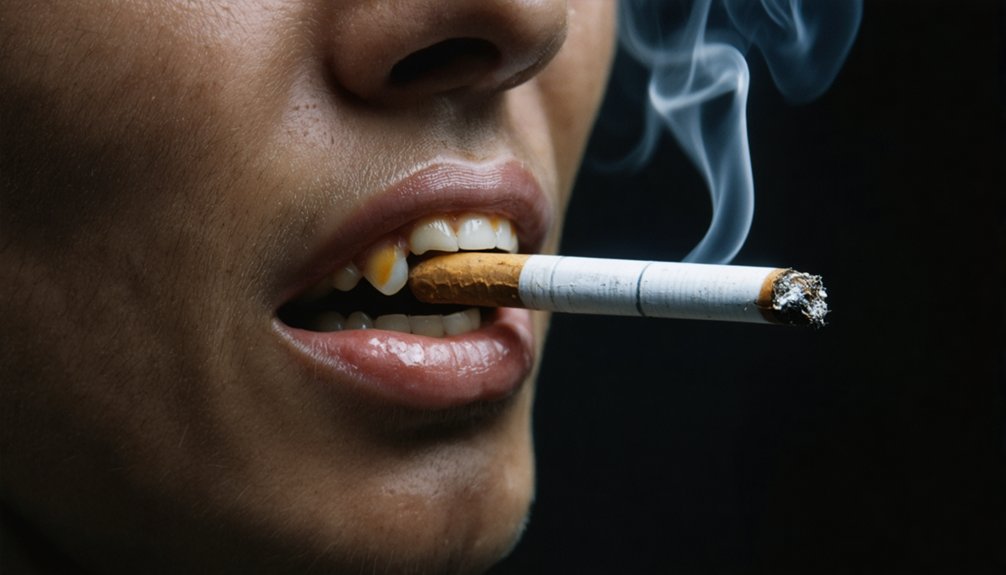
When you use tobacco in any form—whether you smoke cigarettes or chew it—nicotine and tar penetrate your enamel and bond aggressively to plaque, producing stubborn yellow-brown stains that resist ordinary brushing.
Smoking tends to cause more widespread surface discoloration, while chewing tobacco concentrates persistent staining in direct contact areas, typically along the gumline.
You can reduce tobacco-related discoloration by quitting use entirely, maintaining rigorous oral hygiene, and scheduling regular professional cleanings to remove deeply adherent deposits.
Tobacco’s Staining Mechanisms
Tobacco use stains teeth through two primary compounds: tar and nicotine. Tar, a dark, sticky byproduct of combustion, directly deposits brown and yellow pigments onto your enamel.
Nicotine, while colorless alone, turns yellow upon oxidation and bonds with oxygen in your mouth, intensifying discoloration over time.
These tobacco effects worsen considerably when plaque buildup is present. Plaque’s porous, adhesive surface traps tar and nicotine particles, making stains penetrate deeper into your enamel.
Standard brushing can’t fully reverse this process once it’s established.
Chewing tobacco introduces concentrated nicotine directly against your gum line, producing persistent brown stains.
Vaping, though combustion-free, still delivers nicotine that oxidizes and discolors enamel. The longer you use tobacco in any form, the more deeply these compounds embed themselves.
Smoking Versus Chewing Effects
Smoking and chewing tobacco damage your teeth through distinct mechanisms, though both produce persistent discoloration.
Smoking effects emerge as tar and nicotine penetrate enamel, depositing yellow-brown pigments that deepen with prolonged exposure. The combustion process accelerates plaque buildup, giving stains a stronger surface to adhere to. You’ll notice discoloration concentrated on front-facing surfaces most exposed to smoke.
Chewing impacts differ structurally. Direct tobacco contact with gum tissue and enamel forces concentrated pigments into microscopic enamel pores.
Chewing tobacco also elevates oral acidity, further eroding protective enamel and widening those pores. Both methods cause stains that bond tenaciously to existing plaque, making standard brushing insufficient for removal.
Your best defense involves cessation combined with professional cleaning to address established discoloration effectively.
Preventing Tobacco-Related Discoloration
Understanding how tobacco stains form gives you the foundation to prevent them effectively. Tobacco compounds bind aggressively to plaque, making consistent oral hygiene your primary defense.
Brush twice daily with fluoride toothpaste and floss once daily to minimize plaque buildup where stains anchor.
Tobacco cessation remains the single most impactful step you can take for your oral health. No preventive routine fully counteracts continued tobacco exposure.
If you’re not ready to quit, reduce frequency and rinse your mouth with water immediately after use to limit surface contact.
Schedule professional cleanings every six months, since hygienists remove calcified deposits your toothbrush can’t reach.
Combining tobacco cessation with disciplined daily hygiene and regular dental visits gives you the strongest control over tobacco-related discoloration.
How Poor Oral Hygiene Makes Teeth Discoloration Worse
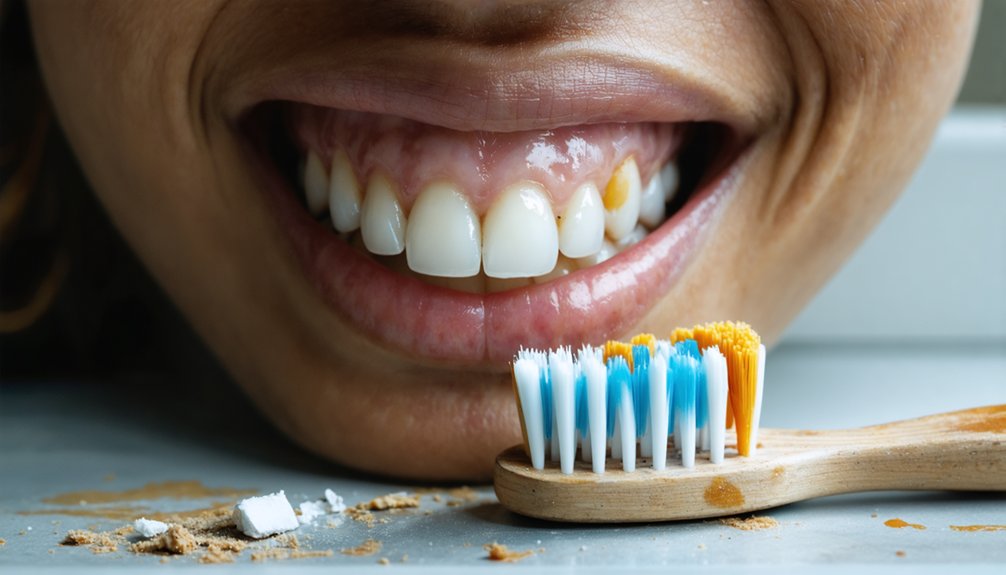
When you neglect daily brushing and flossing, plaque accumulates on your tooth surfaces and creates an adhesive base that traps pigments from food, beverages, and tobacco.
Mastering proper brushing techniques and understanding flossing importance gives you direct control over discoloration progression.
Mastering your brushing and flossing technique puts the power to prevent tooth discoloration directly in your hands.
Three evidence-based hygiene practices that minimize staining:
- Brush twice daily using fluoride toothpaste with systematic, angled strokes to disrupt plaque before it hardens into tartar.
- Floss once daily to eliminate interproximal plaque where staining compounds concentrate most heavily.
- Rinse with antibacterial mouthwash to reduce bacterial adhesion that accelerates pigment retention between cleanings.
Skipping any of these steps leaves stain-producing substances actively bonding to your enamel, compounding discoloration over time.
Medications That Cause Tooth Discoloration
Beyond the habits you control daily, certain medications can stain your teeth regardless of how diligently you brush and floss. Understanding medication types linked to discoloration helps you take proactive steps.
Antibiotics like tetracycline and doxycycline cause deep intrinsic staining when taken before age eight, with staining duration extending permanently into adulthood.
Antihistamines, antipsychotics, and high blood pressure medications contribute to surface discoloration over time.
Chlorhexidine and cetylpyridinium chloride mouth rinses produce noticeable brown stains with extended use.
Chemotherapy and head or neck radiation alter tooth color internally.
If you’re currently taking any of these medications, consult your dentist immediately. They can recommend targeted whitening treatments or preventive protocols that minimize discoloration while you continue necessary treatment.
Why Teeth Naturally Discolor as You Age

As you age, your enamel naturally thins from years of chewing, acidic exposure, and daily wear, making it less effective at concealing the dentin beneath it.
Dentin, the inner layer of your tooth, is naturally yellowish and becomes more visible as the protective enamel erodes over time.
This process is entirely biological, meaning even excellent oral hygiene can’t fully prevent the gradual yellowing that comes with aging.
Enamel Thins With Age
Aging naturally thins your tooth enamel, and this gradual erosion exposes the yellowish dentin layer beneath it.
Enamel thickness decreases over time due to cumulative wear from chewing, acidic foods, and daily exposure to staining agents. These aging effects are irreversible, making prevention critical.
You can slow enamel thinning by taking these evidence-backed steps:
- Limit acidic food and drink consumption to reduce chemical erosion on your enamel surface.
- Use fluoride toothpaste twice daily to strengthen remaining enamel and resist further degradation.
- Wait 30–60 minutes before brushing after consuming acidic substances to prevent abrading softened enamel.
Understanding how aging affects enamel thickness empowers you to make deliberate choices that preserve your tooth color and structural integrity longer.
Dentin Yellows Naturally
Dentin, the calcified tissue beneath your enamel, yellows progressively as you age through a process independent of staining from food or tobacco.
As your enamel thickness decreases over decades of use, the yellowish dentin beneath becomes increasingly visible, shifting your teeth’s overall appearance toward deeper yellow tones.
This process isn’t entirely preventable—genetic factors influence both how quickly your dentin yellows and how translucent your enamel remains throughout life.
However, you can slow visible yellowing by protecting your enamel through consistent oral hygiene and avoiding acidic substances that accelerate erosion.
Understanding that dentin yellowing is a biological inevitability, rather than a hygiene failure, helps you make informed decisions about whitening interventions and realistic expectations for maintaining your teeth’s appearance as you age.
Health Conditions That Discolor Teeth From the Inside
While external factors like coffee and tobacco stain teeth from the outside, certain health conditions and biological processes discolor them from within. Understanding these causes gives you greater control over your dental health outcomes.
Some teeth stain from the outside, but others discolor from within due to hidden health conditions and biological processes.
Three key contributors to internal discoloration include:
- Genetic factors — Your DNA determines your enamel’s natural thickness, translucency, and baseline color, making some individuals inherently more prone to yellowing.
- Systemic diseases — Liver disease, celiac disease, and calcium deficiency directly compromise tooth structure and alter color from within.
- Dental trauma — Injuries to teeth trigger internal bleeding within the pulp, causing permanent darkening that no surface whitening treatment can fully reverse.
Consulting your dentist early helps you address these conditions before discoloration becomes irreversible.
Internal Stains From Dental Trauma and Fillings
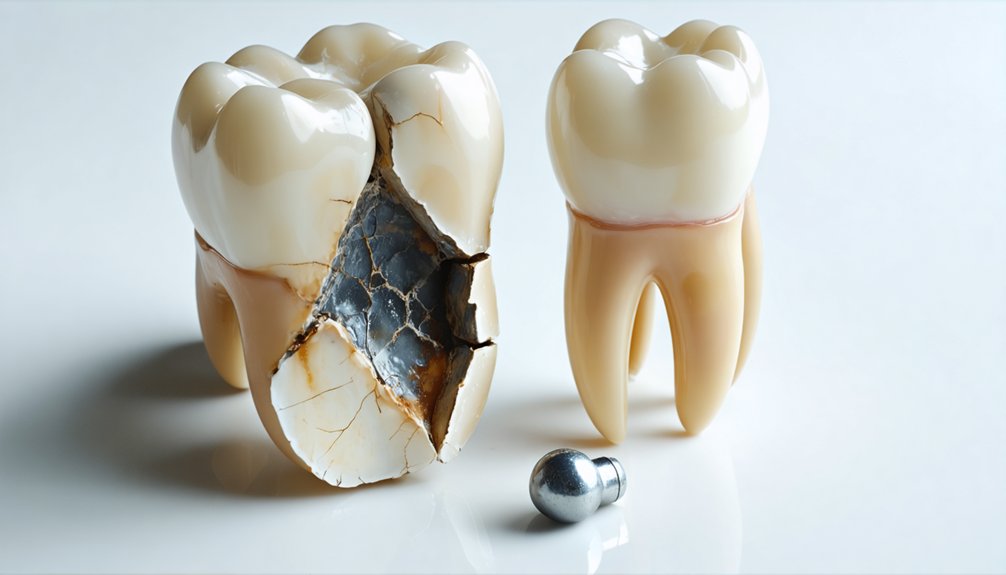
Two specific causes of internal tooth staining deserve closer attention: dental trauma and certain filling materials.
When you injure a tooth, blood vessels inside the pulp can rupture, releasing pigments that permanently discolor the dentin from within. You can’t reverse this through whitening alone—it often requires internal bleaching or a dental crown.
Silver amalgam fillings present a similar challenge. Over time, they cast a gray-black hue through the surrounding tooth structure, affecting teeth you’d otherwise consider healthy.
Composite resins offer a tooth-colored alternative that doesn’t produce this shadowing effect.
If you’ve experienced dental trauma or have older amalgam restorations, consult your dentist promptly. Early intervention gives you the best chance of managing internal discoloration before it becomes more visually significant or structurally complex.
How to Prevent Teeth Discoloration Every Day
Preventing teeth discoloration starts with consistent daily habits that target the root causes before stains take hold. You don’t need expensive teeth whitening treatments when prevention is done correctly.
- Brush twice daily using fluoride toothpaste and floss once daily to eliminate plaque, which anchors stains from food and tobacco to enamel surfaces.
- Rinse immediately after consuming coffee, tea, red wine, or soda to neutralize stain-causing compounds before they penetrate enamel.
- Use a straw for dark beverages to minimize direct contact with front teeth, and wait 30–60 minutes before brushing after acidic foods to prevent enamel erosion.
Scheduling regular professional cleanings reinforces these daily habits and removes buildup that at-home care can’t fully address.
Frequently Asked Questions
Can Teeth Whitening Treatments Reverse Deep Intrinsic Stains Permanently?
Whitening techniques can’t permanently reverse deep intrinsic stains. You’ll likely need professional treatments like veneers or bonding. Consistent stain prevention strategies, including brushing and limiting staining foods, help you maintain results and control discoloration effectively long-term.
Are Some People Genetically More Prone to Severe Teeth Discoloration?
Yes, genetic factors directly influence your susceptibility to severe teeth discoloration. Your genes determine natural tooth color, translucency, and enamel thickness—thinner enamel exposes more yellowish dentin, making you inherently more prone to noticeable discoloration regardless of lifestyle habits.
Does Drinking Fluoridated Water Protect Against or Worsen Teeth Staining?
Drinking fluoridated water generally offers fluoride benefits by strengthening your enamel, reducing stain susceptibility. However, excessive fluoride from multiple water sources can cause fluorosis, producing white spots or discoloration, so you’ll want to monitor your total fluoride intake carefully.
Can Children’s Teeth Discolor From the Same Causes as Adults?
Yes, your child’s teeth can discolor from similar causes, but unique factors like excessive fluoride and tetracycline exposure during tooth development make them more vulnerable. You’ll want to monitor their dietary habits and medications closely.
How Do Professional Dental Cleanings Differ From At-Home Whitening Products?
Professional cleanings remove stubborn plaque and tartar using specialized cleaning techniques, offering superior whitening effectiveness compared to at-home products. You’ll get targeted stain removal that over-the-counter whitening strips simply can’t replicate with their limited concentration formulas.
References
- https://my.clevelandclinic.org/health/symptoms/10958-tooth-discoloration
- https://www.webmd.com/oral-health/tooth-discoloration
- https://www.healthline.com/health/tooth-discoloration
- https://www.dental-tribune.com/news/top-10-causes-of-tooth-discoloration/
- https://www.freshdentalcare.co.uk/post/tooth-discoloration-causes-and-treatments
- https://www.naperville.dental/causes-of-tooth-discoloration-and-how-to-prevent-them/
- https://medlineplus.gov/ency/article/003065.htm
- https://myprimedental.com/10-causes-of-tooth-discoloration/
- https://patuxentorthodontics.com/tooth-discoloration-causes/
- https://citydentalnyc.com/tooth-discoloration-causes-treatment/