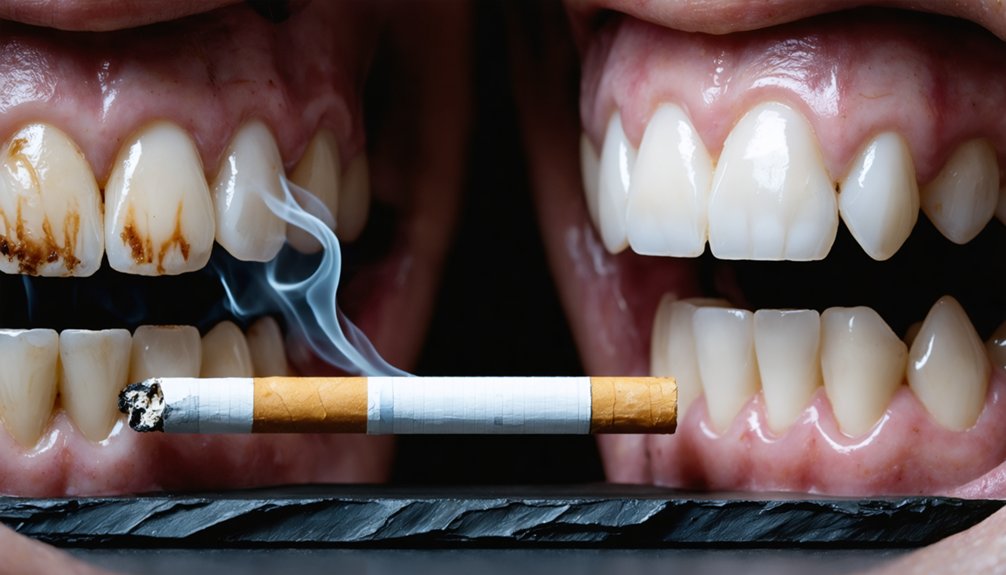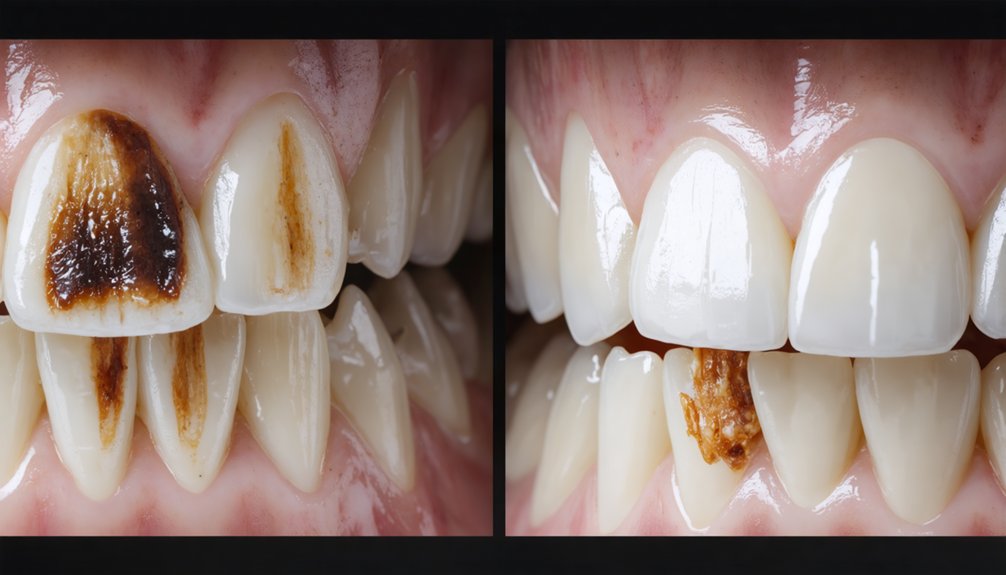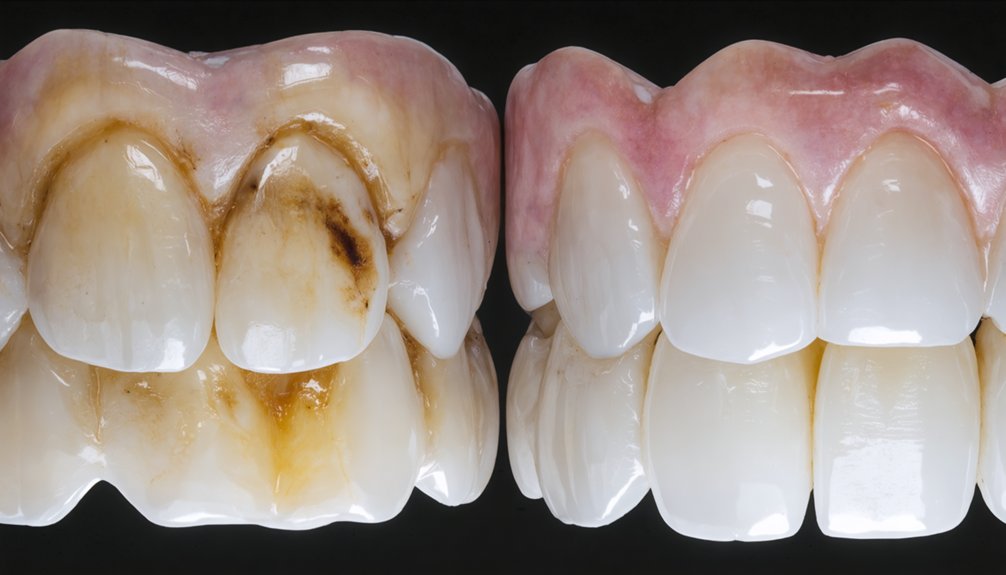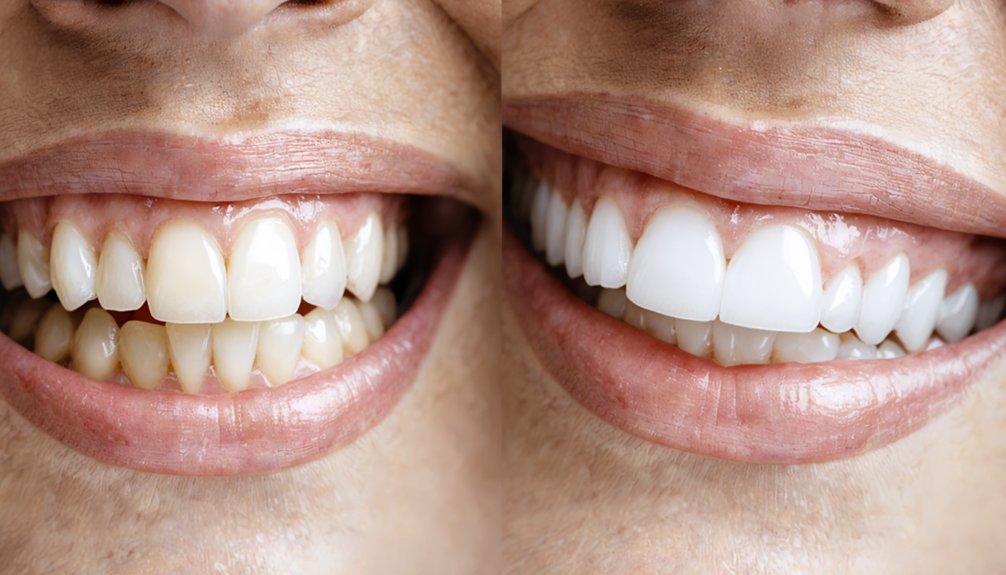
Smoking embeds nicotine and tar deep into your enamel, turning teeth yellow, brown, or gray over time. You can fight back with natural remedies like baking soda, over-the-counter whitening strips, or professional treatments using high-concentration peroxide gels. The right approach depends on how severe your stains are and how sensitive your teeth have become. Stick around, and you’ll discover exactly which whitening options work best for your situation.
Key Takeaways
- Nicotine and tar penetrate deep into enamel pores, requiring stronger whitening solutions beyond basic surface cleaning to effectively remove tobacco stains.
- Natural remedies like baking soda and activated charcoal safely lift surface tobacco stains without causing significant enamel damage.
- Over-the-counter whitening strips can lighten teeth 1–3 shades within 10–14 days, targeting moderate tobacco discoloration affordably.
- Professional in-office bleaching with high-concentration gels delivers rapid, dramatic results for severe tobacco stains unresponsive to OTC products.
- Avoiding smoking post-treatment, brushing twice daily, and limiting staining foods significantly prolongs whitening results for smokers.
Why Smoking Stains Teeth So Deeply
Smoking stains teeth so deeply because nicotine and tar don’t just sit on the surface—they penetrate the porous outer layer of enamel and embed themselves into the structure beneath. Over time, the smoking impact compounds, darkening your teeth enamel from within and making surface-level cleaning far less effective.
Heat from cigarette smoke also opens enamel pores wider, allowing staining compounds to penetrate deeper with every puff. You’re not just dealing with external discoloration—you’re facing structural infiltration that ordinary brushing can’t reverse.
The longer you smoke, the more entrenched these stains become, turning yellow hues into stubborn brown or gray tones. Understanding this process empowers you to choose whitening solutions strong enough to actually work against deeply embedded discoloration.
Natural Remedies That Lift Tobacco Stains at Home
Although deeply embedded tobacco stains demand serious treatment, several natural remedies can lift surface discoloration before you commit to professional intervention. Baking soda acts as a mild abrasive, scrubbing away surface stains without harsh chemicals.
Natural remedies can lift surface tobacco discoloration before professional intervention becomes necessary.
Activated charcoal binds to toxins and pulls discoloration from enamel effectively. Coconut oil pulling reduces plaque buildup, preventing further staining between treatments.
Herbal extracts, increasingly common in DIY kits, offer additional whitening support by targeting tobacco-related discoloration at the surface level.
Hydrogen peroxide mixed with baking soda creates a targeted paste that lifts stubborn nicotine residue efficiently.
Use these remedies cautiously, as abrasive pastes can damage enamel with overuse. Always consult your dentist before committing to any DIY approach to confirm your enamel and gums can tolerate it.
Which Over-the-Counter Whitening Products Actually Work?
When natural remedies aren’t enough to combat stubborn tobacco stains, over-the-counter whitening products offer a stronger, more reliable step up. You’ll find budget-friendly options that deliver measurable results without a dentist’s visit. Monitor teeth sensitivity closely, as some products may cause temporary discomfort. Choose wisely to maximize whitening longevity.
Here’s what actually works:
- Whitening strips lighten teeth one to three shades within 10–14 days
- Pharmacy whitening gels lift surface stains effectively for budget-conscious users
- OTC trays containing 3–10% carbamide peroxide target moderate tobacco stains
- Fluoride toothpaste provides a reliable daily alternative when other methods fall short
- Polishes and pastes offer flexible options for daily or occasional stain maintenance
Select products carrying the ADA Seal of Acceptance to guarantee both safety and proven efficacy.
When to Step Up to Professional Whitening Treatments
If over-the-counter products have failed to budge your tobacco stains, it’s time to contemplate professional whitening treatments. Dentists use custom trays with 10–22% carbamide peroxide, targeting stubborn discoloration that strips and gels simply can’t reach.
For severe staining, in-office power bleaching delivers dramatic results in a single visit. Your dentist applies a high-concentration gel, then activates it using laser therapy, which accelerates penetration deep into enamel without unnecessary surface damage.
Enamel preservation remains a priority throughout every professional procedure, distinguishing clinical treatments from aggressive DIY alternatives. Your dentist also identifies underlying gum issues before beginning, protecting your long-term oral health.
If you want faster, more controlled, and more reliable results, professional whitening puts that power directly in your hands.
How to Care for Your Teeth Right After Whitening
After whitening, you’ll want to avoid smoking for at least 48 hours.
Use a straw when drinking coffee or tea to prevent new stains from forming.
Brush twice daily for two minutes to maintain your results and keep enamel clean.
Floss daily as well, since nicotine and tar can settle between teeth and undo the progress you’ve made.
Avoid Post-Treatment Staining
The first 48 hours after whitening treatment are the most critical for protecting your results. Your dental enamel remains vulnerable, so your choices now directly determine how long your results last. Maintaining strong oral hygiene habits immediately reduces the risk of new stains setting in.
Take control by following these five protective steps:
- Avoid smoking for at least 48 hours to prevent tar from embedding into freshly treated enamel
- Rinse with water after any exposure to staining substances
- Use a straw when drinking coffee or tea to minimize enamel contact
- Floss daily to stop nicotine and tar from settling between teeth
- Brush twice daily for two minutes to maintain your results consistently
Your consistency now determines how long your brighter smile lasts.
Daily Brushing Maintains Results
Brushing twice daily for two minutes is your most reliable defense against new stains settling into freshly whitened enamel. Use a soft-bristled brush with fluoride toothpaste to remove surface deposits before they bond. Avoid aggressive scrubbing, which accelerates enamel erosion and undermines your whitening results over time.
Dental flossing daily removes nicotine and tar residue that brushing can’t reach between teeth, preventing discoloration from rebuilding in those tight spaces. Don’t skip this step—interproximal staining reverses professional results faster than most people expect.
Pair consistent brushing with an alcohol-free fluoride mouthwash to neutralize oxidized compounds before they darken your enamel. You’ve invested in a brighter smile; disciplined daily habits protect that investment and keep your results lasting considerably longer.
Floss To Prevent Restaining
Flossing daily keeps nicotine, tar, and staining compounds from settling into the tight spaces between your teeth where your brush can’t reach. Dental flossing paired with plaque removal eliminates buildup before it hardens and darkens enamel.
Take control of your results with these targeted habits:
- Floss every night before brushing to dislodge loosened particles
- Use waxed floss for smoother movement between tight contact points
- Move floss in a C-shape around each tooth to maximize plaque removal
- Follow flossing with an alcohol-free fluoride rinse to flush residue
- Replace standard floss with a water flosser for deeper interproximal cleaning
Skipping this step lets staining compounds accumulate fast, undoing your whitening progress within weeks.
Diet and Habit Shifts That Keep Smokers’ Teeth Whiter Longer

Choosing an antioxidant-rich diet helps naturally scrub enamel and fight internal stains.
While cutting back on sugar protects your teeth from discoloration caused by weakened enamel.
You’ll also want to avoid highly acidic foods that erode enamel and make staining worse over time.
Reducing your tobacco use isn’t just good for your overall health — it’s one of the most effective long-term strategies for keeping your teeth visibly whiter.
Smart Dietary Choices
While whitening treatments can brighten your smile, your daily dietary choices determine how long those results last—especially if you smoke. Don’t let dental myths mislead you—what you eat directly impacts enamel integrity and stain resistance. Even switching from coffee to herbal teas reduces surface discoloration markedly.
Take control of your results by adopting these smart dietary habits:
- Eat antioxidant-rich foods to naturally scrub enamel and fight internal stains
- Reduce sugar intake to prevent enamel weakening and discoloration
- Avoid highly acidic foods that erode enamel and accelerate staining
- Choose herbal teas over coffee or dark sodas to minimize contact staining
- Cut back on tobacco to support better long-term oral health outcomes
Breaking Tobacco Habits
Breaking tobacco habits isn’t just about protecting your lungs—it’s one of the most effective steps you can take to keep your teeth whiter longer. Smoking cessation dramatically reduces nicotine and tar exposure, the primary culprits behind persistent discoloration. Every cigarette you skip is one fewer opportunity for stains to embed into your enamel.
Strengthening your oral hygiene routine reinforces your progress. Brush twice daily, floss consistently, and rinse with alcohol-free fluoride mouthwash to eliminate oxidized nicotine before it darkens your teeth.
Chewing sugar-free gum for five minutes after smoking keeps your mouth fresher while you work toward quitting entirely.
Cutting back on tobacco doesn’t just preserve your whitening results—it gives you lasting control over your smile’s appearance and your overall oral health.
Can You Whiten Tobacco-Stained Teeth Without Damaging Them?
Tobacco stains are stubborn, but you can lift them safely if you approach whitening strategically. Protecting against dental erosion while achieving results requires choosing the right methods and sequencing them correctly.
Prioritize enamel strengthening before aggressive treatments to avoid sensitivity or damage.
Strengthen enamel first — rushing into aggressive whitening treatments invites sensitivity, damage, and setbacks you could easily avoid.
Follow these proven strategies:
- Use baking soda sparingly as a mild abrasive to lift surface stains without eroding enamel
- Choose ADA-approved whitening strips or gels rated for sensitive teeth
- Apply fluoride mouthwash daily to reinforce enamel before and after whitening
- Consult your dentist to rule out gum disease before starting any treatment
- Consider professional custom trays using 10–22% carbamide peroxide for stubborn tobacco stains
You control the outcome by staying consistent, choosing safe products, and working with a dental professional when necessary.
Frequently Asked Questions
How Long Does Professional Whitening Last for Active Smokers?
For those who indulge in tobacco, professional whitening typically lasts six months. Longevity concerns arise quickly due to staining recurrence. You’ll need consistent dental cleanings every three to four months to maintain your bright, confident smile effectively.
Are Whitening Results Covered by Dental Insurance for Smokers?
Dental insurance won’t cover whitening treatment costs since it’s cosmetic. You’ll need to pay out-of-pocket, but investing in professional whitening delivers transformative results. Explore insurance coverage for cleanings, which indirectly support your whitening goals.
Can Teeth Whitening Help With Yellowing Caused by Medications?
Medication stains can cast a stubborn shadow over your smile, but whitening effectiveness varies. You’ll find surface discoloration responds well, though deeper, intrinsic stains may require professional treatments to achieve noticeable results. Consult your dentist first.
Is Whitening Safe for Smokers Who Have Dental Crowns?
You can safely whiten natural teeth, but whitening won’t change your crowns’ color. Consider smoking cessation benefits for better dental crown durability. Always consult your dentist to guarantee treatments align with your specific restorations effectively.
How Young Is Too Young to Start Whitening Tobacco-Stained Teeth?
Age is your gatekeeper—you shouldn’t whiten before 18, as developing enamel needs protection. Youth considerations and age restrictions exist for good reason, so consult your dentist first to take control of your oral health safely.
References
- https://www.dawsondental.ca/site/blog/2025/08/26/how-to-whiten-teeth-smokers-vapers
- https://www.theweymouthdentist.com/teeth-whitening-for-smokers-what-you-should-consider/
- https://www.northamptondental.com/teeth-whitening-options-for-smokers/
- https://sunbit.com/knowledge-center/dental/dental-tips/smokers-teeth-whitening/
- https://www.allinthefamilydental.com/blog/teeth-whitening-for-smokers/
- https://www.healthline.com/health/how-to-remove-nicotine-stains-from-teeth
- https://clearclub.com/blogs/clearclub/10-effective-ways-to-whiten-teeth-after-smoking-or-taking-medications
- https://walkindentalclinic.ca/teeth-whitening-for-smokers/