During pregnancy, you should avoid peroxide-based whitening products because hydrogen peroxide and carbamide peroxide can absorb through your gum tissue and potentially reach your bloodstream. Research hasn’t established safe fetal exposure thresholds, so caution applies across all three trimesters. Safer alternatives include whitening toothpaste and professional cleaning. After birth, peroxide-based treatments are generally acceptable, though breastfeeding introduces additional considerations. Everything you need to make a fully informed decision is covered ahead.
Key Takeaways
- Peroxide-based whitening products are generally not recommended during pregnancy due to limited safety data on fetal exposure through gum absorption.
- Pregnancy hormones increase gum sensitivity, making oral tissues more reactive to whitening chemicals throughout all three trimesters.
- No specific trimester is considered safer for whitening; caution applies equally across the entire pregnancy.
- Whitening toothpaste and professional dental cleanings are the safest alternatives for managing stains during pregnancy.
- After birth, peroxide-based whitening is generally acceptable, though breastfeeding mothers should consult a dentist first.
What Teeth Whitening During Pregnancy Actually Does to Your Body
When you use a whitening product during pregnancy, the active ingredient — typically hydrogen peroxide or carbamide peroxide — contacts your oral tissues and may be absorbed through the gums in small amounts.
Pregnancy hormones already alter your saliva pH and increase gum sensitivity, which may heighten both irritation and tissue absorption. These changes can make your mouth more reactive to bleaching agents than it would be outside of pregnancy.
Whitening agents also interact with tooth enamel by temporarily increasing its porosity. Under normal circumstances, this effect is mild and reversible.
During pregnancy, however, your baseline oral environment is already compromised. Because research on fetal exposure through gum absorption remains scarce, clinicians can’t confirm a safe threshold — which is precisely why caution is the evidence-based default.
Why Peroxide Is the Main Whitening Risk During Pregnancy
Most whitening products rely on hydrogen peroxide or carbamide peroxide as their active bleaching agent, and these compounds sit at the center of pregnancy-related concerns. When you apply these agents, your gum tissue can absorb them, creating a potential route for chemical exposure beyond your mouth.
Dental safety guidance flags this absorption pathway because researchers haven’t established a confirmed safe threshold for fetal exposure. The evidence gap is the core problem — you’re not working with proven harm, but you’re also not working with proven safety.
Higher-concentration formulas used in professional LED or laser treatments amplify this concern. Understanding that peroxide is the specific variable driving caution helps you make a more informed decision rather than treating all whitening products as equally risky or equally acceptable.
Which Whitening Products Are Safest During Pregnancy?
Not all whitening products carry the same level of concern during pregnancy, and understanding the differences helps you make a more informed choice.
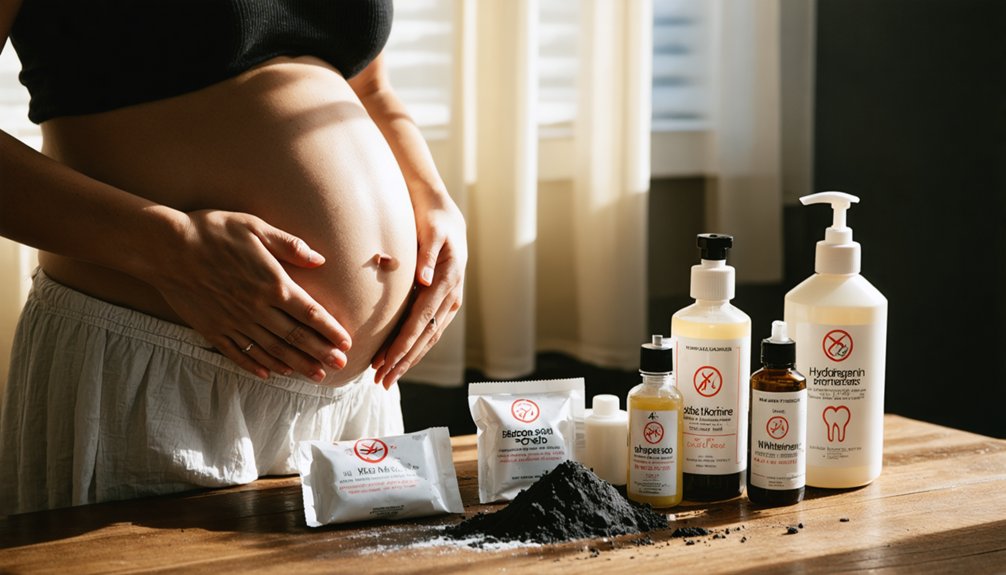
Peroxide-based systems—strips, trays, and LED treatments—are the primary products clinicians advise you to postpone.
Whitening toothpaste that relies on mild abrasives rather than bleaching agents is generally considered the more acceptable option.
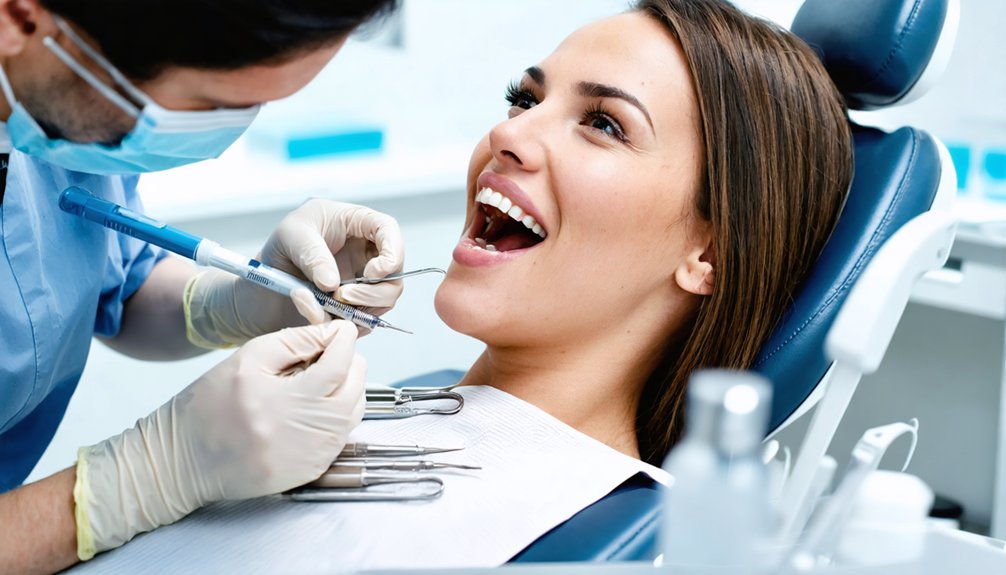
Professional cleaning remains the safest way to address surface staining.
Be cautious of dental myths suggesting that “natural remedies” like activated charcoal or baking soda are proven-safe alternatives; many are unregulated, potentially abrasive, and lack pregnancy-specific safety data.
Your best course is to consult your dentist before using any whitening product, since even lower-risk options should be evaluated within the context of your specific pregnancy.
Does Your Trimester Affect Whether You Can Whiten?
You might wonder whether certain trimesters are safer than others for whitening, but current guidance doesn’t draw those distinctions.
The caution applied in the first trimester carries through the second and third because the limiting factor isn’t trimester-specific risk — it’s a lack of evidence across the board.
Until researchers conduct pregnancy-focused studies on peroxide exposure, you’re working with the same uncertainty no matter how far along you are.
Trimester-By-Trimester Breakdown
When it comes to teeth whitening during pregnancy, your trimester doesn’t meaningfully change the guidance—caution applies across all three.
One of the more persistent dental myths is that waiting until the second trimester makes whitening acceptable. It doesn’t. The limiting factor isn’t fetal development stage—it’s the absence of trimester-specific safety data altogether.
Cosmetic concerns understandably feel more urgent as your body changes, but no current trimester-based evidence supports relaxing restrictions in the second or third trimester compared to the first.
Hormonal shifts that increase gum sensitivity persist throughout pregnancy, and peroxide exposure remains a consistent variable regardless of gestational age.
Your safest approach is to treat all three trimesters equally: postpone elective whitening and consult your dentist or OB before making any decisions.
Uncertainty Across All Trimesters
Trimester doesn’t change the core answer: current evidence doesn’t support whitening during any stage of pregnancy. The limiting factor isn’t timing — it’s the absence of reliable safety data across all three trimesters. No research identifies a safer window for peroxide-based cosmetic procedures during pregnancy, so postponing remains the consistent clinical recommendation regardless of how far along you are.
If you want more control over your appearance now, redirect your focus toward evidence-supported options. Professional cleaning removes surface staining without bleaching agents. Whitening toothpaste using mild abrasives carries lower risk than peroxide systems.
Alternative remedies marketed as “natural” aren’t automatically safer — many lack regulation and may still irritate sensitive pregnancy gums. Work with your dentist to identify what’s appropriate for your specific situation.
How to Brighten Your Smile Safely While Pregnant
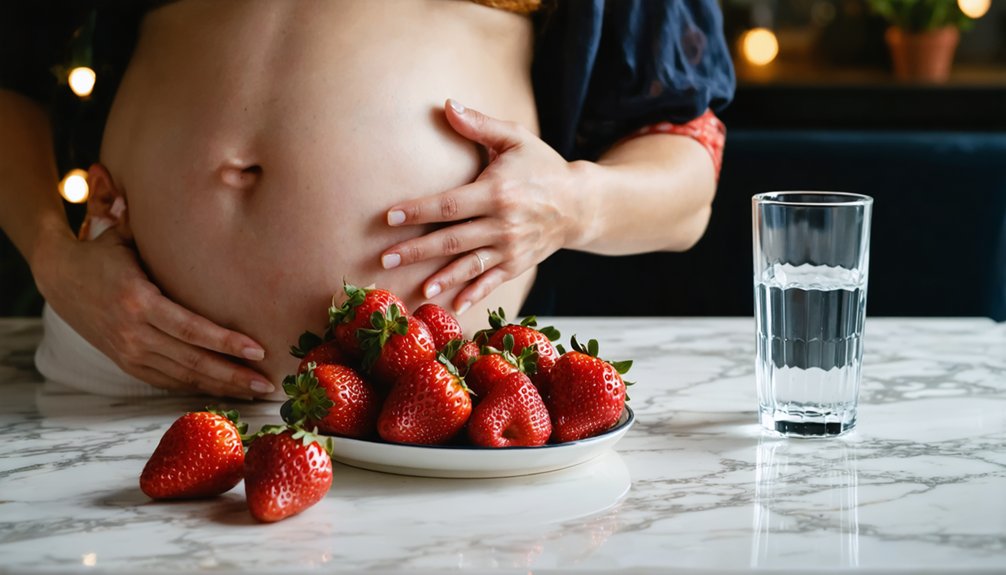
Although peroxide-based whitening isn’t recommended during pregnancy, you still have options for keeping your smile looking its best. Rather than pursuing cosmetic procedures that rely on bleaching agents, focus on approaches with a more established safety profile.
Professional dental cleaning remains the most clinically supported option. It removes surface stains effectively without chemical bleaching.
Whitening toothpaste that uses mild abrasives rather than peroxide is generally considered lower risk, though you should check the ingredient list carefully.
Be cautious with natural remedies like activated charcoal or lemon juice—these are unregulated, lack safety data in pregnancy, and some are abrasive enough to damage enamel.
Consult your dentist before adding anything new to your oral care routine during pregnancy.
When Is It Safe to Whiten Your Teeth After Birth?
Once you’ve given birth, the calculus around whitening changes considerably. Most dental sources don’t flag breastfeeding as a firm contraindication, but evidence remains limited.
If you’re not breastfeeding, you can reasonably consider whitening once your body has stabilized hormonally, since pregnancy-driven changes in saliva pH can temporarily affect dental enamel vulnerability and treatment response.
If you’re breastfeeding, consult your dentist before starting any peroxide-based system. Absorption through gum tissue is possible, and transfer into breast milk hasn’t been adequately studied. Many clinicians advise waiting until after weaning simply because uncertainty persists.
When you do proceed, start with lower-concentration products, follow manufacturer timing guidelines precisely, and schedule a professional cleaning first to establish a clean baseline for treatment.
Frequently Asked Questions
Can Teeth Whitening Affect Pregnancy Test Results or Hormone Levels?
Teeth whitening doesn’t affect pregnancy test results or hormone levels. However, you should note that hormonal fluctuations during pregnancy increase enamel sensitivity, making peroxide-based treatments more irritating. No evidence links whitening agents to measurable hormonal disruption.
Is Teeth Whitening Safe if You Are Trying to Conceive?
If you’re trying to conceive, you should postpone whitening treatments. Evidence remains limited, dental sensitivity may increase hormonally, and whitening retention gains aren’t worth uncertain peroxide exposure risks when conception could occur any cycle.
Do Dentists Legally Need to Ask if You Are Pregnant Before Whitening?
No universal legal requirement mandates dentists ask about pregnancy before cosmetic procedures, but ethical dental hygiene standards strongly encourage it. You should always disclose your pregnancy status before undergoing any whitening treatment.
Can Whitening Products Stain or Affect Your Baby’s Developing Teeth?
No direct evidence links whitening products to baby’s developing teeth. Consider a hypothetical case: prolonged peroxide exposure may heighten your dental sensitivity without affecting fetal enamel. Current data don’t support whitening longevity concerns transferring to your baby.
Does Pregnancy Itself Permanently Change the Natural Color of Your Teeth?
Pregnancy-related changes can cause temporary dental discoloration, but they don’t permanently alter your teeth’s natural color. You’re more likely experiencing increased staining from hormonal shifts, dietary changes, or morning sickness acid exposure—all manageable with proper dental care.
References
- https://www.babycenter.com/pregnancy/health-and-safety/is-it-safe-to-bleach-my-teeth-during-pregnancy_1245153
- https://www.mdsgdentistry.com/can-you-use-teeth-whitening-strips-while-pregnant/
- https://nvdentists.com/pregnancy-safe-teeth-whitening/
- https://www.estrellamountaindentistry.com/blogs/is-teeth-bleaching-safe-during-pregnancy/
- https://www.finestdentistry.com/2023/01/12/can-you-whiten-your-teeth-while-pregnant/
- https://www.thebump.com/a/whiten-teeth-pregnancy
- https://mouth.co.uk/debunking-common-myths-about-teeth-whitening-during-pregnancy/
- https://www.espiredental.com/blog/safe-ways-to-whiten-teeth-while-pregnant
- https://kidshealth.org/en/parents/tooth-whitening-pregnancy.html
- https://bumpbites.health/blogs/is-teeth-whitening-safe-during-pregnancy