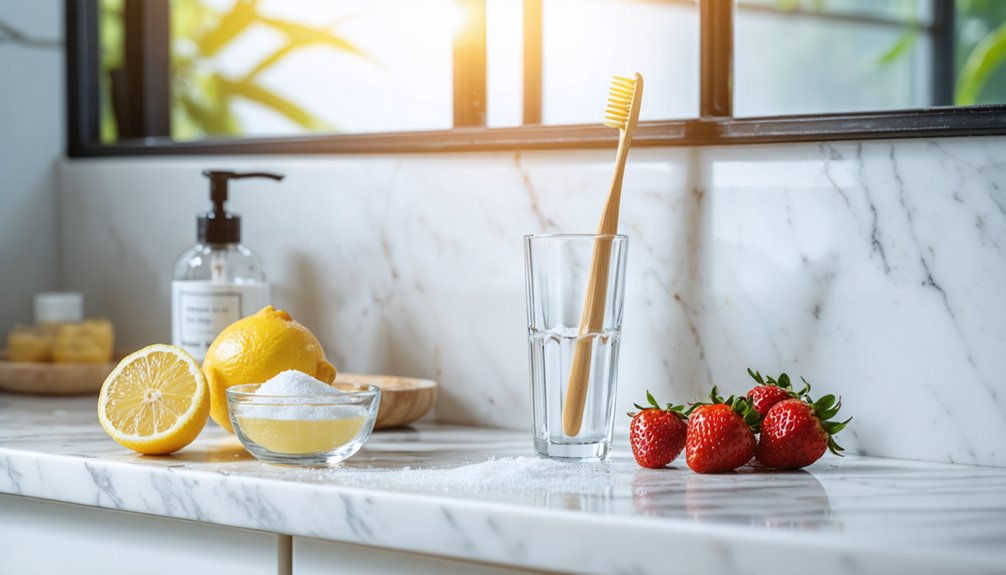
Tea stains your teeth through tannin-protein bonding, making reversal harder than simple surface cleaning. You can brighten stained teeth using whitening toothpaste, diluted baking soda, or carbamide peroxide products—all evidence-backed options that physically polish or oxidize surface discoloration. Avoid abrasive remedies like activated charcoal or acidic rinses, as they worsen enamel erosion over time. Pairing these techniques with smart drinking habits greatly reduces stain recurrence, and there’s considerably more to uncover about doing this safely and effectively.
Key Takeaways
- Whitening toothpaste uses gentle abrasives and mild peroxide to physically polish and bleach surface tea stains effectively.
- Baking soda mixed with water lifts stains when used lightly for 1–2 minutes, two to three times weekly.
- Follow baking soda treatments with fluoride toothpaste to help protect and remineralize enamel afterward.
- Peroxide treatments oxidize surface discoloration; carbamide peroxide products offer structured dosing, reducing guesswork and overuse risks.
- Wait at least 30 minutes after drinking tea before applying peroxide to avoid unnecessary enamel abrasion.
Why Tea Stains Teeth and Why It’s Hard to Reverse
Tea contains tannins—naturally occurring polyphenols that bind readily to the protein pellicle coating your enamel. Once attached, these compounds drive pigment adherence deep into microscopic enamel irregularities, making surface-level removal difficult. Repeated exposure compounds this effect, gradually shifting tooth color from white to yellow or brown.
Tea’s tannins don’t just stain—they chemically bond to enamel, driving pigment into microscopic surface irregularities with every sip.
Reversal is harder than prevention for two reasons. First, tannins bond chemically rather than sitting loosely on the surface. Second, aggressive scrubbing to remove them risks enamel erosion, which permanently weakens tooth structure and increases long-term staining vulnerability.
You’re fundamentally working against a self-reinforcing cycle—staining invites abrasion, and abrasion creates rougher surfaces that stain faster.
Understanding this mechanism lets you make smarter intervention choices rather than reaching for the harshest remedy available.
Drinking Habits That Prevent Tea Stains From Building Up
How long you steep your tea directly affects its tannin concentration, so shorter steep times produce a lighter brew with less staining potential.
If you’re drinking iced tea, using a straw reduces contact between the liquid and your front teeth, limiting surface pigment exposure.
These small habit adjustments won’t reverse existing stains, but they can slow the rate at which new discoloration builds up.
Steeping Time Matters
Something as simple as how long you steep your tea can influence how much staining accumulates on your teeth over time. Longer steeping releases higher tannin concentrations, increasing stain adhesion to dental enamel. Shortening steep time is a practical, low-effort adjustment with measurable impact.
Try these habit modifications:
- Steep for 1–2 minutes instead of 3–5 to produce a lighter, less pigment-dense brew
- Remove the bag promptly rather than letting it sit while you prepare your drink
- Choose lighter tea varieties like white or green tea, which release fewer tannins
- Observe your tea’s color — a darker cup typically signals higher staining potential
Small steeping adjustments give you direct control over your daily tannin exposure.
Consider Using Straws
Changing how you drink tea can be just as effective as changing what you drink. Using a straw redirects liquid past your front teeth, limiting tannin contact with enamel surfaces. This is particularly practical for iced or cold-brew teas, where straw use fits naturally into the habit.
Beyond straw use, drinking water alongside tea helps stabilize oral pH, reducing the acidic exposure that contributes to enamel erosion over time. When oral pH drops repeatedly, enamel becomes more vulnerable to both staining and structural wear.
You don’t have to eliminate tea entirely to see results. Small, consistent adjustments to how you consume it can meaningfully reduce cumulative stain buildup without requiring significant changes to your daily routine.
Rinse With Water Right After Every Cup
After each cup of tea, rinsing your mouth with plain water is one of the simplest and lowest-risk steps you can take to reduce stain buildup. Water dilutes tannins and tea flavorings before they adhere to enamel, cutting your staining risk without triggering enamel erosion the way acidic DIY rinses can.
Build this habit by visualizing:
- Swishing immediately after your last sip, holding water against your front teeth
- Tilting your head side to side to reach molars and interproximal spaces
- Spitting thoroughly to remove loosened pigment rather than swallowing it
- Drinking a full glass of water alongside your tea to continuously dilute staining compounds
Consistency matters more than intensity here—rinsing every time compounds protective results over weeks.
Whitening Toothpaste: The Easiest Fix for Tea Stains
Whitening toothpaste is typically the simplest first step you can take to address mild to moderate tea staining. These products use gentle abrasives and low concentrations of peroxide to lift surface stains with twice-daily brushing.
When selecting a product, you should look for the ADA Seal of Acceptance as a reliable quality marker.
How Whitening Toothpaste Works
For mild to moderate tea staining, whitening toothpaste is often the most practical starting point. It works through two primary mechanisms to lift surface discoloration without aggressive intervention:
- Gentle abrasives physically polish tannin deposits off enamel with each brushing session.
- Low-concentration peroxide penetrates lightly to break down pigment bonds at the surface level.
- Fluoride benefits reinforce enamel structure, counteracting minor enamel erosion that abrasives may introduce over time.
- Twice-daily consistency determines how effectively the formula reduces stain accumulation long-term.
Look for the ADA Seal of Acceptance when selecting a product—it confirms the abrasive level stays within a safe range.
Pairing whitening toothpaste with an electric toothbrush’s whitening mode can further improve stain removal compared with manual brushing alone.
Choosing ADA-Approved Options
Not all whitening toothpastes carry the same level of safety assurance, so the ADA Seal of Acceptance is the clearest marker you can use to narrow your options. Products earning this designation have met tested standards for both safety and efficacy, giving you a reliable benchmark when comparing formulas.
If you’re drawn to herbal tea benefits but still manage staining, an ADA-approved whitening toothpaste lets you maintain that habit without sacrificing tooth appearance. Look for formulas that also support enamel strengthening through fluoride, since fluoride reinforces mineral density and reduces long-term erosion risk.
Twice-daily use is the standard protocol. Avoid selecting toothpastes based solely on marketing claims. The Seal filters out products lacking verified evidence, keeping your selection process grounded in clinical data rather than packaging.
How to Use Baking Soda on Tea-Stained Teeth Without Damage
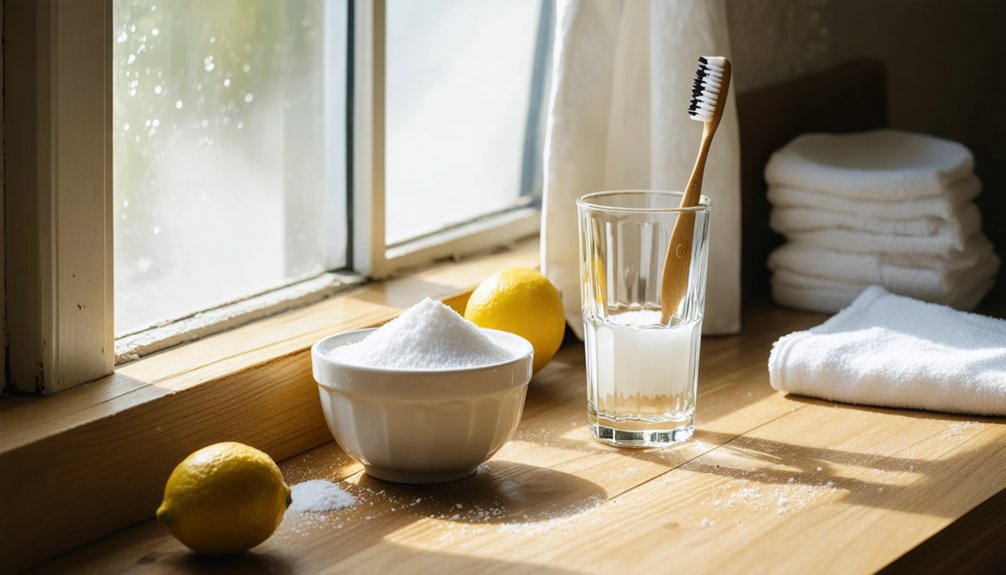
Baking soda can lift tea stains effectively, but you’ll need to use it carefully to avoid abrading enamel over time. Baking soda safety depends entirely on controlled application. Enamel erosion becomes a real risk with overuse, so precision matters.
Baking soda lifts tea stains, but careless use risks enamel damage. Controlled application is everything.
Follow this structured protocol:
- Mix a small amount of baking soda with water to form a thin paste, not a gritty scrub.
- Brush gently for one to two minutes using light, circular pressure.
- Limit applications to two to three times per week maximum.
- Follow immediately with fluoride toothpaste to help remineralize enamel.
Avoid substituting baking soda for your regular toothpaste entirely. Treat it as a targeted intervention.
If sensitivity develops, reduce frequency or discontinue and consult your dentist for supervised alternatives.
Peroxide Whitening for Tea Stains: What to Know Before You Start
When baking soda alone isn’t enough to lift stubborn tea stains, peroxide-based whitening is a logical next step. Hydrogen peroxide targets surface discoloration through oxidation rather than abrasion, making it a more targeted option for moderate staining.
You can apply it as a diluted rinse or mixed into a paste, but concentration and frequency directly affect outcomes and sensitivity risk.
Wait at least 30 minutes after drinking tea before using any peroxide treatment to avoid abrading softened enamel.
Carbamide peroxide products offer more structured dosing than DIY mixtures and reduce guesswork.
If you’re also exploring natural stain preventatives, switching to alternative herbal teas with lower tannin content reduces reoccurrence.
Persistent sensitivity during peroxide use signals a need for professional supervision rather than continued self-treatment.
DIY Teeth Whitening Remedies That Don’t Actually Work
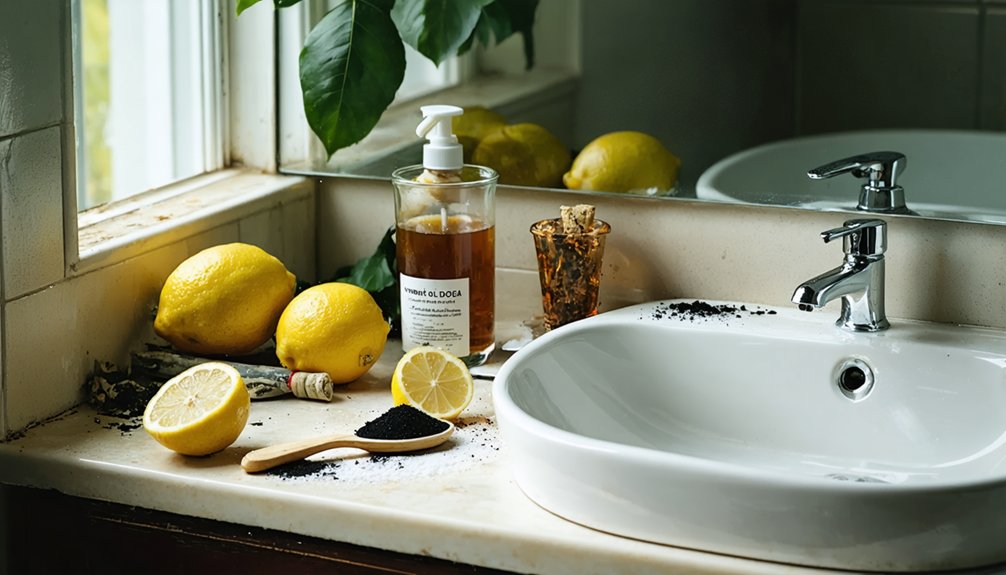
Although internet searches return dozens of DIY whitening remedies, several popular options lack meaningful evidence and carry real risks to enamel. Before you reach for trending natural remedies or unverified commercial products, understand what the evidence actually shows:
The internet overflows with DIY whitening remedies — but popular doesn’t mean proven, and trendy often means risky.
- Activated charcoal: High abrasivity can wear enamel despite its popular “detox” reputation.
- Strawberry rubs: Fruit acids temporarily brighten but don’t whiten, and they weaken enamel surfaces.
- Apple cider vinegar rinses: Repeated acid exposure erodes enamel faster than tea tannins do.
- Coconut oil pulling: No reliable evidence supports meaningful stain removal compared with standard brushing.
You’re better served by evidence-backed approaches than by remedies amplified through social media. Persistent staining often requires professional cleaning rather than repeated home abrasion that compounds the damage.
When to See a Dentist for Tea Stains Instead
Some tea stains resist every at-home method, and that’s your clearest signal to book a professional cleaning. Intrinsic discoloration—staining beneath the enamel surface—won’t respond to whitening toothpaste, baking soda, or peroxide rinses.
A professional cleaning removes calcified deposits and surface buildup that DIY abrasives can’t safely reach.
If staining persists after professional scaling and polishing, your dentist may recommend supervised bleaching with higher-concentration carbamide peroxide.
When discoloration is deeply structural, dental veneers become a clinically appropriate option, covering the tooth surface entirely rather than attempting to lift pigment from within.
You should also seek professional evaluation if you notice sensitivity, enamel erosion, or uneven results from repeated home treatments. Continued self-treatment in those cases risks compounding the damage rather than correcting it.
Frequently Asked Questions
Can Tea Staining Affect Dental Restorations Like Crowns or Veneers?
Yes, tea can stain your restorations differently than natural enamel, affecting dental material compatibility. Porcelain and composite respond unevenly to whitening agents, so you’ll want professional guidance to protect restoration longevity effectively.
Does the Temperature of Tea Influence How Quickly Stains Develop?
Hot tea’s like an open door—it widens your enamel’s pores, accelerating stain formation. Higher temperatures intensify tea composition’s tannin absorption, so you’ll develop discoloration faster drinking hot versus cold tea.
Are Children’s Teeth More Vulnerable to Tea Staining Than Adult Teeth?
Yes, children’s enamel is thinner and less mineralized, increasing staining susceptibility. You should limit your child’s tea intake, rinse their teeth with water afterward, and establish consistent brushing habits early to protect developing enamel.
Can Certain Medications Make Teeth More Prone to Tea Staining?
Yes, certain medications can increase your staining risks. Medication side effects like dry mouth reduce saliva’s natural cleansing action, letting tannins adhere more readily to enamel. Antihistamines, antidepressants, and antihypertensives commonly cause this vulnerability.
Does Teeth Whitening Treatment Affect Sensitivity to Hot or Cold?
About 38% of users report tooth sensitivity after whitening. Yes, whitening options can trigger sensitivity to hot or cold. You’ll often notice it’s temporary, but if it persists, you should consult your dentist promptly.
References
- https://www.advantagedental.com/blog/how-to-remove-coffee-and-tea-stains-from-your-teeth
- https://www.wikihow.com/Remove-Tea-Stains-from-Teeth
- https://crest.com/en-us/oral-care-tips/teeth-stains/tea-coffee-teeth-stains-how-to-avoid-remove-them
- https://www.reddit.com/r/tea/comments/39kk1u/tips_for_stained_teeth/
- https://scienceinsights.org/how-to-remove-tea-stains-from-teeth-what-works/
- https://clubwhitesmile.com/home-remedies-for-tea-stained-teeth/
- https://lp-dentistry.com/everyday-dentistry/how-to-whiten-teeth-after-coffee-and-tea-stains-effective
- https://cozyhomeclub.org/how-to-get-rid-of-tea-stains-on-teeth/
- https://www.smilearizonadentistry.com/blog/remove-coffee-stain-from-teeth
- https://krystaldental.ca/blog/coffee-tea-stains/