Whitening pens won’t work on deep stains because their peroxide gel can’t penetrate beyond your enamel’s surface. Intrinsic discoloration — caused by aging, tetracycline, fluorosis, or trauma — forms within your dentin, where a pen’s low-concentration peroxide never reaches. Saliva dilutes the gel quickly, cutting contact time even shorter. You’ll only see modest results on surface stains from coffee or tea. If your stains run deeper, there’s more you’ll want to know.
Key Takeaways
- Teeth whitening pens use hydrogen or carbamide peroxide to oxidize stains, but only reach surface-level enamel discoloration.
- Deep, intrinsic stains form beneath enamel within dentin, making them inaccessible to whitening pen peroxide.
- Low peroxide concentration and short contact time further limit pens from penetrating structural stains.
- Whitening pens work best on extrinsic stains from coffee, tea, wine, and light tobacco buildup.
- For deep or intrinsic stains, professional bleaching or veneers are the only effective treatment options.
What Counts as a Deep Stain?
Not all tooth discoloration responds the same way to whitening treatments, and the distinction starts with where the stain actually sits. Extrinsic stains form on the outer enamel surface, typically from coffee, tea, wine, or tobacco, and they’re the most accessible targets for cosmetic dentistry interventions.
Deep stains, however, are intrinsic, meaning they’ve penetrated below the enamel or developed within the dentin itself.
Intrinsic discoloration often results from aging, fluorosis, tetracycline use, or internal trauma. Natural remedies and over-the-counter tools rarely reach this layer effectively.
You’re not dealing with surface buildup here; you’re dealing with structural discoloration embedded in the tooth’s core. Knowing which type you have is the first step toward choosing a treatment that can actually produce results.
How Do Teeth Whitening Pens Remove Stains?
When you apply a whitening pen, the gel deposits a thin layer of hydrogen peroxide or carbamide peroxide directly onto your enamel, where it breaks down stain molecules through an oxidation reaction.
The effectiveness depends on how long that peroxide stays in contact with your teeth before saliva dilutes or washes it away.
Because pens deliver a relatively low concentration of peroxide with a short contact window, saliva interference becomes a meaningful factor limiting how deeply the gel can penetrate and act.
Peroxide Breaks Down Stains
Most teeth whitening pens rely on hydrogen peroxide or carbamide peroxide as the active bleaching agent. When you apply the gel, peroxide releases oxygen molecules that penetrate enamel and break apart stain compounds through oxidation.
This mechanism works well for extrinsic discoloration from coffee, tea, and wine. However, the thin gel layer and short contact time limit how deeply the peroxide can reach.
Internal discoloration, caused by aging, medications, or structural changes beneath the enamel, sits beyond where a pen’s concentration can act effectively.
Unlike professional cosmetic procedures that use higher peroxide concentrations with controlled application times, whitening pens deliver modest and temporary results. You’re working with a surface-level tool, which means deep stain compounds largely remain unaffected by standard pen formulations.
Gel Contacts Enamel Directly
Although the delivery method seems simple, direct enamel contact is what makes whitening pens functional at all. When you apply the gel, it adheres directly to your teeth enamel, allowing the peroxide to act on stain compounds without dilution from toothpaste or trays. That direct contact matters because it concentrates the active agent exactly where surface discoloration exists.
However, contact alone doesn’t guarantee depth. The gel layer remains thin, and your saliva begins breaking down peroxide shortly after application. For your oral health, this limited exposure time reduces risk of irritation, but it also restricts how far the peroxide penetrates.
You’re targeting the enamel surface effectively, but intrinsic stains sitting below that layer remain largely unaffected by this delivery mechanism.
Saliva Limits Whitening Effect
Your saliva starts neutralizing peroxide almost immediately after you apply a whitening pen. This saliva interference directly limits how much active ingredient reaches the enamel surface and how long it stays effective.
Before enamel absorption can occur at a meaningful depth, the peroxide concentration drops. Research confirms that salivary enzymes break down hydrogen peroxide rapidly, shortening the active window to just a few minutes in real-world conditions.
You lose a significant portion of the whitening agent before it can penetrate discoloration. To reduce this effect, you should apply the gel to dry teeth and keep your mouth open briefly after application.
Even then, the contact time remains short compared to tray-based systems that maintain consistent peroxide concentration against the enamel for extended periods.
Why Deep Stains Resist Whitening Pens
Deep stains resist whitening pens for a structural reason: they sit beneath the enamel surface, where thin peroxide gel and limited contact time can’t reach them effectively.
Intrinsic discoloration—caused by aging, medications, fluorosis, or tetracycline—forms within the tooth structure itself, placing it beyond what a pen’s peroxide concentration can penetrate.
Saliva further dilutes the gel before it can act meaningfully, compounding the limitation.
Your dental health history and the origin of the stain determine how your enamel responds—not just the product you apply.
If you’re serious about managing deep discoloration, cosmetic options like professional bleaching or veneers deliver what pens can’t.
A whitening pen won’t correct structural staining; it can only address what sits on the surface.
Which Stains Do Whitening Pens Actually Fix?
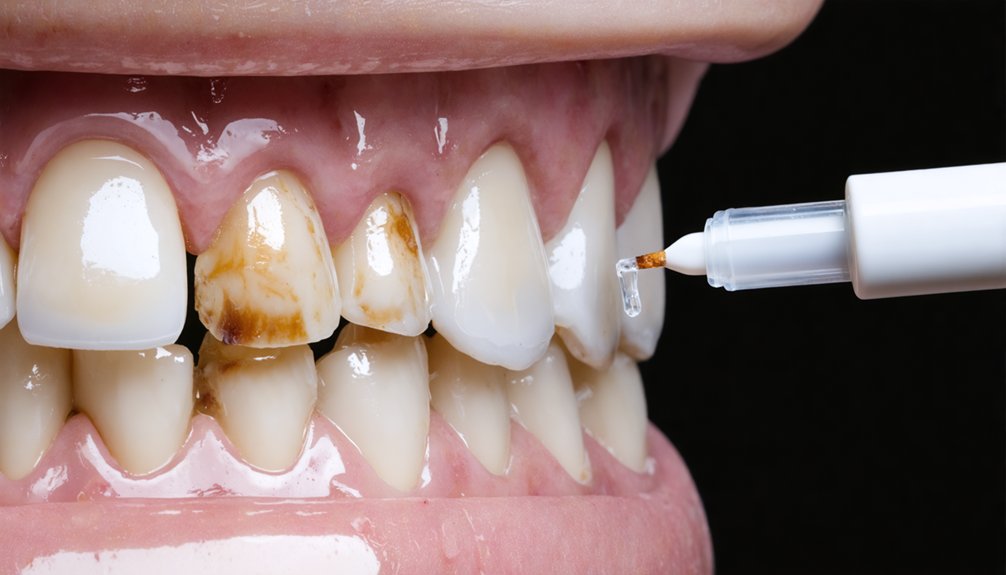
Knowing where pens fall short makes it easier to recognize where they actually hold up. Whitening pens perform best on extrinsic stains, which are surface-level discolorations caused by dietary habits like regular coffee, tea, or wine consumption. These stains sit on the enamel, making them accessible to the peroxide gel.
Tobacco stains may respond partially, particularly with consistent daily use. If you’ve relied on natural remedies for whitening with limited results, a pen may offer modest improvement for the same category of surface staining those remedies target.
However, pens won’t correct discoloration from aging, medications, fluorosis, or internal structural changes. They also won’t alter crowns, veneers, or fillings. Their effective range is narrow but real when the stain type matches their penetration capability.
How Much Whiter Will Your Teeth Actually Get?
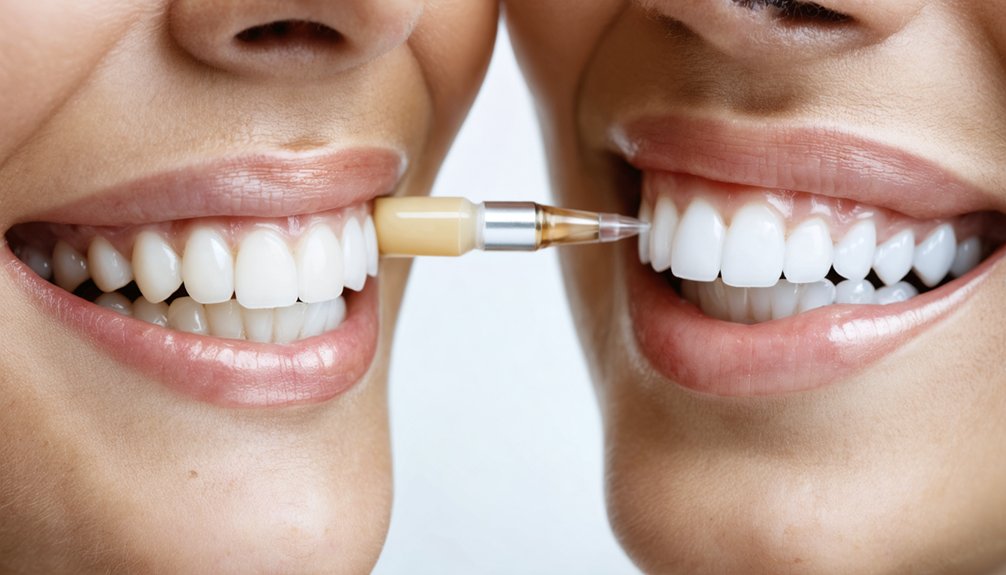
Realistic expectations matter before committing to any whitening routine. Whitening pens deliver modest, measurable results on surface stains, but they won’t replace cosmetic dentistry for significant discoloration.
Clinical evidence shows mild shade improvement after consistent daily use over roughly two weeks, particularly for extrinsic stains from coffee or tea. You’re not getting dramatic transformation.
Deep or intrinsic stains respond poorly regardless of frequency or brand. Natural remedies perform even less reliably than pens, offering minimal evidence-backed results.
What you can realistically expect is subtle brightening, perhaps one to two shades lighter, that helps maintain prior whitening results or cleans up minor surface buildup. If your baseline discoloration is significant, a pen won’t close that gap.
You’ll need professional-grade treatment to see meaningful change.
What Works on Deep Stains When Whitening Pens Don’t
When a whitening pen falls short, the stain type usually explains why, and that same stain type points toward what’ll actually work. Intrinsic stains from medications, fluorosis, or aging require treatments that penetrate deeper than any pen allows.
- Professional bleaching uses higher peroxide concentrations with extended contact time, giving you measurable control over severe discoloration.
- Cosmetic bonding covers stains entirely, offering a permanent solution when no bleaching agent can reach the source.
- Natural remedies like oil pulling or baking soda address only surface debris and won’t touch intrinsic stains, despite popular claims.
If your stain originates below the enamel, you need a clinical intervention. Matching the treatment to the stain type is how you stop wasting time on tools that were never designed for your problem.
Frequently Asked Questions
Can Whitening Pens Damage Enamel if Used Too Frequently?
Yes, overusing whitening pens can cause enamel erosion and heightened tooth sensitivity. If you apply them too frequently, you’re exposing your enamel to repeated peroxide contact, which weakens its structure and increases pain risk.
Are Whitening Pens Safe to Use During Pregnancy or Breastfeeding?
Over 85% of dentists advise avoiding whitening products while expecting. You should skip whitening pens during pregnancy—pregnancy safety data remains limited. Breastfeeding considerations follow the same caution, as peroxide absorption risks aren’t fully established for nursing infants.
How Long Do Whitening Pen Results Last Before Stains Return?
Your whitening pen’s stain removal results typically last a few weeks before stains return. Whitening duration depends on your diet and habits—coffee, tea, and wine accelerate fading, so you’ll need consistent reapplication to maintain results.
Can Whitening Pens Cause Uneven Whitening on Teeth With Fillings?
Yes, they can. If you have a composite filling on a front tooth, you’ll likely notice tooth discoloration contrast emerging — your enamel brightens, the filling doesn’t, and dental sensitivity may signal overuse driving uneven results.
Do Whitening Pens Expire, and Does That Affect Their Effectiveness?
Yes, whitening pens do expire. Once expired, ingredient stability declines, reducing peroxide potency and effectiveness. You should check expiration dates and address storage concerns by keeping pens capped, dry, and away from heat to preserve active compounds.
References
- https://drmarkshtern.com/blog/pros-and-cons-of-teeth-whitening-pens/
- https://mysmilesteeth.com/blogs/mysmiles-blog/why-should-you-use-teeth-whitening-pens-instead-of-strips
- https://alignerco.com/blogs/aesthetic/teeth-whitening-pens
- https://www.drbobsdentalcare.com/will-teeth-whitening-remove-stains/
- https://g-p-dental.com/whitening-pens-put-to-the-test-see-what-works/
- https://papedental.ca/teeth-whitening-pens/
- https://scienceinsights.org/how-do-teeth-whitening-pens-work-and-are-they-safe/
- https://www.drkhull.com/blog/2022/11/30/do-whitening-pens-really-work/
- https://www.korwhitening.com/teeth-whitening-pens-do-they-even-work/