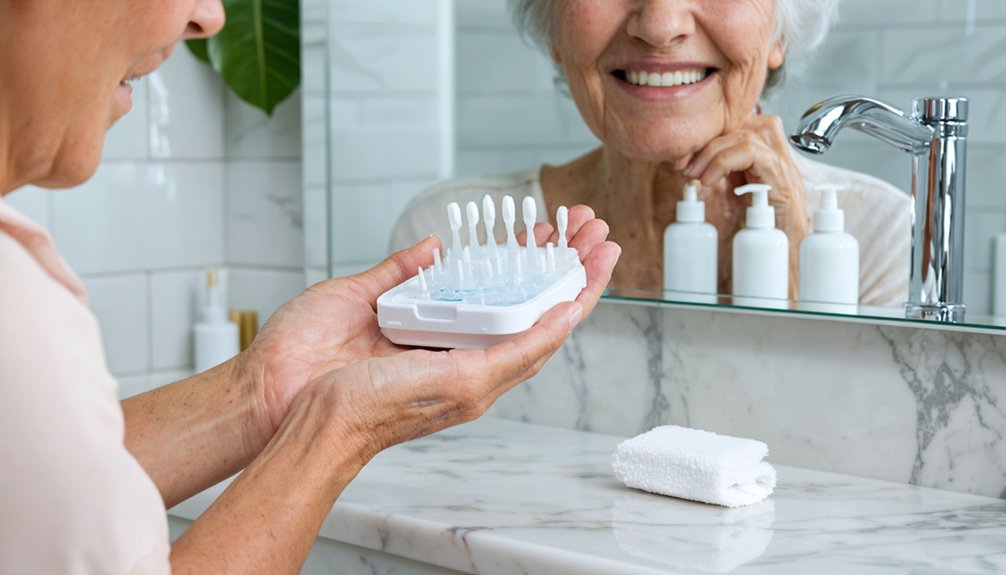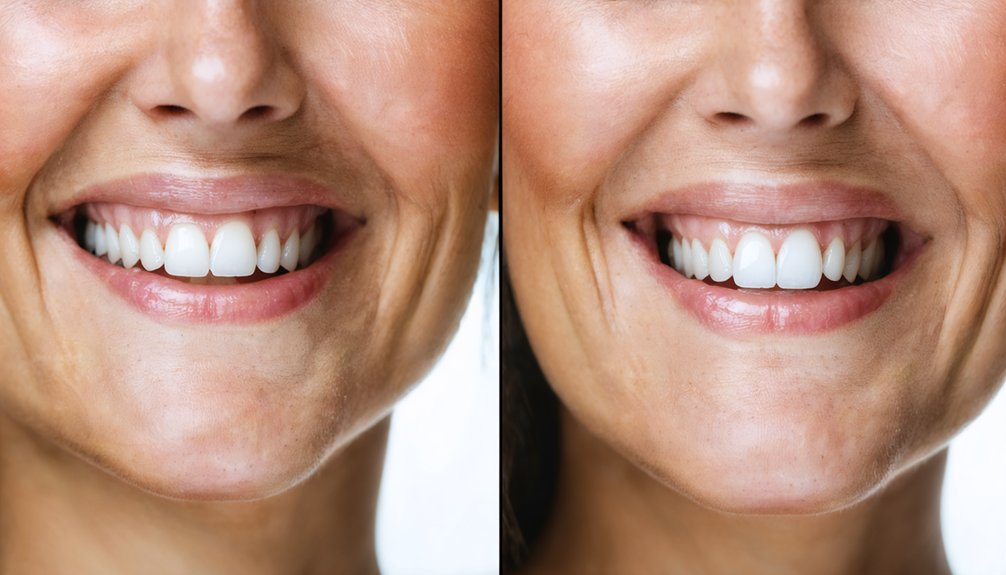
Teeth whitening on a fixed budget is absolutely achievable without sacrificing your smile’s health. You can find effective over-the-counter options like whitening toothpaste ($3–$5), strips ($15–$45), and budget kits ($11–$32) that deliver real results. However, you’ll want to assess your gum health and enamel thickness before starting any treatment, since seniors face unique sensitivity risks. Understanding your options fully can help you make the smartest, most cost-effective choice for your smile.
Key Takeaways
- Whitening toothpaste costs just $3–$5 and removes surface stains within two weeks, making it the most budget-friendly option for retirees.
- Whitening strips priced at $15–$45 provide deeper results in one to two weeks without requiring a dentist visit.
- Peroxide-free formulas like Lumineux protect sensitive teeth and aging enamel, which is especially important for older adults.
- Avoiding staining foods and drinks like coffee, tea, and red wine reduces the need for frequent and costly touch-up treatments.
- Ask your dentist about reduced-fee cleanings or payment plans to maintain brightness without straining a fixed budget.
Is Your Mouth Ready for Whitening as a Senior?
Before starting any whitening treatment, you need to confirm your mouth is in a condition that can handle the process safely.
Gum health is your first checkpoint—inflamed or receding gums increase your risk of chemical burns from peroxide-based products.
Next, assess your enamel thickness, since thin enamel amplifies sensitivity concerns and can make whitening painful rather than beneficial.
Thin enamel turns whitening from a cosmetic upgrade into a painful experience that does more harm than good.
Existing crowns, veneers, and bridges won’t respond to whitening agents, so factor that into your expectations.
If you’re managing gum disease or thin enamel, dental supervision isn’t optional—it’s essential.
A dentist can evaluate your oral condition and recommend treatments that prioritize whitening safety without compromising your long-term dental health.
Taking these steps first puts you in control of the process.
What’s Actually Inside Whitening Products?
Once your mouth clears the health checkpoints, understanding what’s inside whitening products helps you choose the right formula for your situation.
Most products rely on hydrogen peroxide or carbamide peroxide as their active ingredients. These compounds penetrate enamel to break apart stain molecules, but aging effects mean your enamel’s thinner, making sensitivity issues a real concern.
Peroxide-free options like Lumineux offer natural alternatives that prioritize enamel care without chemical aggression.
Don’t fall for whitening myths claiming baking soda delivers overnight results — it works slower but irritates gums less.
Product comparisons matter: LED kits require consistent peroxide gel application, while strips demand precise application techniques for even coverage.
Always follow safety precautions and consult your dentist if dental health complications arise during treatment.
Best Over-the-Counter Whitening Options Under $50
Whether you’re shopping on a tight budget or simply want to avoid the steep cost of professional treatments, over-the-counter whitening products deliver solid results for under $50.
Whitening toothpaste reviews consistently highlight options priced between $3 and $5 for surface stain removal within two weeks of regular use.
For deeper whitening, strips ranging from $15 to $45 provide visible improvement within one to two weeks.
Budget whitening kits, priced between $11 and $32, achieve results in seven to ten days. Brands like Crest 3D White offer 20 to 22 treatments for $30 to $50, making them a strong value.
If you have sensitive teeth, peroxide-free formulas like Lumineux reduce irritation without sacrificing noticeable results.
When Professional Whitening Is Worth the Cost
For retirees with significant discoloration or thin enamel, professional whitening delivers results that over-the-counter products simply can’t match.
In-office treatments cost between $500 and $1,000 per session, but they achieve up to 8 shades of improvement in a single hour. That’s a compelling cost justification when strips and kits have repeatedly failed you.
You’ll also benefit from dentist supervision if you have receding gums or existing crowns, since improper whitening risks chemical burns or uneven results.
Dentist-supervised take-home trays offer a middle ground, providing professional results at a lower price than in-office procedures.
If your smile’s condition demands precision and safety, investing in professional whitening isn’t an extravagance—it’s a calculated decision that protects both your oral health and your long-term results.
How Long Do Whitening Results Actually Last?
Your whitening results won’t last forever, and how long they hold depends heavily on the method you choose.
Over-the-counter strips typically maintain results for up to four months, while professional in-office treatments can extend that timeline considerably with proper care.
You’ll protect your investment by avoiding stain-causing foods and committing to regular dental cleanings and scheduled touch-ups.
Results Duration By Method
Most retirees want to know how long their whitening investment will actually hold up before committing to a method. Understanding whitening expectations and treatment timelines helps you make smarter budget decisions.
Whitening toothpaste addresses surface stains within two weeks but requires continuous use to maintain results.
Over-the-counter strips deliver visible improvement within one to two weeks, with results lasting up to four months.
At-home kits produce noticeable changes in seven to ten days under consistent application.
Professional in-office treatments achieve up to eight shades of improvement in a single hour, offering the longest-lasting outcome.
Your habits directly impact longevity. Avoiding coffee, tea, and tobacco extends results across every method.
Pairing any whitening approach with regular dental cleanings gives you maximum control over how long your results actually last.
Maintaining Your Whitening Results
Knowing how long results last is only half the equation—keeping those results requires consistent habits and the right maintenance strategy. Avoid stain-causing beverages like coffee, tea, and red wine, or use a straw to minimize contact with enamel.
Brush with whitening toothpaste twice daily to manage surface buildup between treatments. Schedule regular dental cleanings to prevent gradual discoloration from reversing your progress.
Don’t fall for whitening myths claiming one treatment delivers permanent results—no method does. Senior safety demands periodic reassessment of gum health and enamel thickness before repeating any whitening regimen.
Over-the-counter strip results typically last up to four months; professional treatments extend that timeline with proper care. You control longevity through disciplined dietary choices, consistent oral hygiene, and strategic touch-up timing.
How to Make Whitening Affordable on a Fixed Income
Although professional whitening treatments can cost up to $1,000 per session, you don’t need to stretch your budget to achieve a noticeably brighter smile. Budget-friendly alternatives like over-the-counter strips, whitening toothpaste, and at-home kits deliver visible results at a fraction of the cost — often between $11 and $50.
To maximize your investment, follow these whitening safety tips: confirm your gums are healthy before starting any treatment, choose peroxide-free formulas if you have sensitivity, and avoid stain-causing foods to extend your results.
Many dentists also offer payment plans, making supervised treatments accessible on a fixed income. Regular dental cleanings reduce the need for frequent whitening sessions, cutting long-term costs.
Strategic product selection and disciplined maintenance keep your smile bright without financial strain.
How to Keep Your Teeth White After Treatment

Once your whitening treatment is complete, you’ll need to avoid stain-causing foods like coffee, red wine, and berries to protect your results.
Schedule regular dental cleanings to remove surface buildup before it dulls your smile.
When fading occurs, use maintenance touch-up treatments—such as whitening strips or your dentist-prescribed tray—to restore brightness efficiently.
Avoid Stain-Causing Foods
After investing time and money into whitening your teeth, avoiding stain-causing foods is one of the most effective ways to protect your results. Stain prevention starts with deliberate dietary choices.
Coffee, tea, red wine, and dark berries carry high color intensity that penetrates enamel quickly. Beverage impacts are immediate, so use a straw when drinking pigmented liquids to minimize contact.
Adjust your meal planning to prioritize lighter-colored foods like chicken, rice, and cauliflower. Smart food alternatives reduce chromogen exposure without sacrificing nutrition.
Monitor your snacking habits closely—dark sauces, balsamic vinegar, and soy sauce accelerate discoloration between meals. Consistent oral hygiene, including brushing after staining foods, reinforces your whitening investment.
These targeted adjustments extend your results considerably, reducing the need for frequent retreatment.
Regular Dental Cleanings
Regular dental cleanings are one of the most reliable tools for preserving your whitening results long-term. Scheduling cleanings every six months removes tartar buildup and surface stains that dull your smile over time.
Your dental hygienist targets deposits that brushing and whitening products can’t fully address, keeping your oral health in check while extending your treatment’s effectiveness.
Consistent dental hygiene between appointments matters just as much. Brush twice daily, floss regularly, and rinse with a whitening or fluoride mouthwash to maintain your results.
If you’re on a fixed income, ask your dentist about reduced-fee cleanings or payment plans.
Skipping cleanings accelerates staining and increases future costs. Staying proactive gives you control over both your smile’s appearance and your long-term dental expenses.
Maintenance Touch-Up Treatments
Dental cleanings preserve your baseline, but touch-up treatments are what sustain the actual shade you achieved through whitening. Your maintenance frequency depends on your diet, lifestyle habits, and the whitening method you originally used.
Coffee, tea, and red wine accelerate discoloration, requiring more aggressive intervention.
For cost-effective control, stock touch-up products like whitening strips or toothpaste between professional appointments. Over-the-counter strips used once or twice monthly can extend results up to four months.
Whitening toothpaste used daily reinforces surface stain prevention without significant enamel stress.
If you used professional trays, your dentist can supply additional peroxide gel for periodic reapplication at home. This approach maintains your results without the expense of repeat in-office sessions, keeping your whitening investment working longer on a fixed budget.
Frequently Asked Questions
Can Whitening Treatments Interfere With Medications Commonly Taken by Retirees?
Whitening safety isn’t fully addressed in standard guidelines regarding medication interactions. You should consult your doctor before starting any whitening treatment, as certain medications can increase sensitivity or affect how your gums and enamel respond to peroxide.
Are Whitening Results Different for Natural Teeth Versus Dental Implants?
Ever wondered why your smile looks uneven after whitening? Whitening treatments only work on natural teeth—they won’t change the color of dental implants. You’ll need to match implant shades carefully with your dentist before starting any whitening regimen.
How Does Aging Enamel Respond Differently to Whitening Compared to Younger Teeth?
Your aging enamel’s reduced thickness makes it far more vulnerable to sensitivity issues during whitening treatments. You’ll absorb peroxide faster, increasing irritation risk. Thinner enamel also means you’re more susceptible to chemical damage, so you’ll need lower-concentration formulas.
Can Retirees With Dry Mouth Safely Use Whitening Products?
Like a desert landscape, dry mouth strips your teeth of protection. You’ll need to explore dry mouth remedies before pursuing safe whitening options, as reduced saliva heightens sensitivity risks and chemical irritation greatly.
Does Smoking or Tobacco Use Affect How Long Whitening Results Last?
Yes, smoking impact greatly shortens your whitening results. Tobacco staining reintroduces deep discoloration quickly, reducing strip results from 4 months to weeks. You’ll need frequent touch-ups, increasing costs substantially on your fixed budget.
References
- https://www.deltadentalnj.com/our-plans/individual-and-family-plans/dental-options-for-retirees
- https://www.sbdental.com/blog/budgetfriendly-teeth-whitening-options-that-deliver-real-results
- https://www.trysnow.com/blogs/news/teeth-whitening-for-seniors-safer-brighter-smiles-after-60
- https://www.rejuv-health.com/cosmetic-dentistry/teeth-whitening-cost/
- https://www.forbes.com/sites/forbes-personal-shopper/article/best-teeth-whitening-kit/
- https://www.aspendental.com/dental-services/cosmetic-dentistry/teeth-whitening/
- https://sunlakesdentistry.com/can-senior-teeth-be-whitened/
- https://www.lafayetteladentist.com/blog/is-there-affordable-teeth-whitening/
- https://www.aarp.org/health/conditions-treatments/teeth-whitening/
- https://deandentalsolutions.com/the-best-at-home-teeth-whitening-worth-trying/