You can whiten aging teeth at home by incorporating a few simple, natural methods into your routine. Try oil pulling with coconut oil each morning to lift surface stains. Apply a baking soda paste a few times weekly for gentle abrasion. Rinse with diluted hydrogen peroxide to brighten enamel safely. Build consistent brushing and flossing habits, and cut back on staining foods and nicotine. Keep going to discover exactly how each method works.
Key Takeaways
- Swish one tablespoon of coconut oil between teeth for 30 to 60 seconds each morning to lift stains naturally.
- Mix one teaspoon of baking soda with two teaspoons of water and gently brush across all tooth surfaces.
- Dilute 3% hydrogen peroxide equally with water and swish for one to two minutes a few times weekly.
- Brush twice daily, floss once, and use a straw for staining beverages to maintain brighter teeth consistently.
- Reduce coffee, tea, red wine, and nicotine intake to prevent stubborn stains from forming on aging enamel.
Use Oil Pulling to Whiten Aging Teeth Naturally
Oil pulling is a simple, natural method for whitening aging teeth that you can practice daily at home. To harness coconut oil benefits, place one tablespoon of coconut oil in your mouth each morning before eating or brushing. Since coconut oil solidifies at room temperature, allow it to melt briefly before beginning.
Master the swishing technique by rigorously moving the oil between your teeth for 30 to 60 seconds. This process draws out toxins and lifts surface stains effectively.
Never swallow the oil, as it accumulates bacteria and debris during the process. When finished, spit the oil into a trash can rather than your sink to prevent solidified oil from clogging your plumbing.
Practice this routine consistently every morning for best results.
Make a Simple Baking Soda Paste That Works
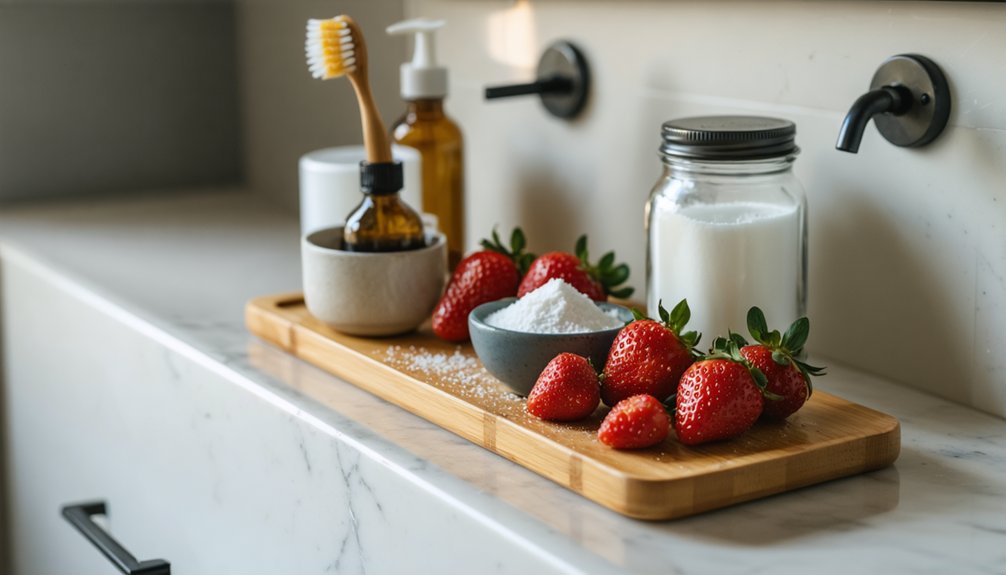
Baking soda paste requires just 2 ingredients you likely already have at home: mix one teaspoon of baking soda with two teaspoons of water to form a smooth, workable consistency.
Mix one teaspoon of baking soda with two teaspoons of water for an easy, two-ingredient whitening paste.
Among baking soda benefits, its mild abrasiveness effectively lifts surface stains without harsh chemical exposure, making it a practical option for aging teeth.
For paste application, load a soft-bristled toothbrush evenly and brush gently across all tooth surfaces. Rinse thoroughly afterward to eliminate residue and prevent gum irritation.
For enhanced whitening, combine baking soda with hydrogen peroxide and brush for one to two minutes twice daily over one week.
Don’t use this paste daily—occasional use protects enamel integrity and prevents sensitivity from developing over time with repeated abrasion.
Rinse With Hydrogen Peroxide the Right Way
Hydrogen peroxide is a powerful whitening agent, but using it incorrectly can burn soft tissue or damage enamel. To use it safely, dilute a 3% hydrogen peroxide solution to 1.5% by mixing equal parts peroxide and water. This concentration is effective for gradual whitening while maintaining enamel protection.
Use the diluted solution as a mouthwash before brushing, swishing for one to two minutes per session. Don’t apply undiluted 3% peroxide directly to your teeth — the concentration is too harsh for regular contact.
Limit usage to a few times per week rather than daily to reduce cumulative irritation risk.
Store your hydrogen peroxide in a cool, dark place to preserve potency and prevent premature degradation from light exposure.
Build Daily Habits That Keep Teeth Brighter
While whitening treatments can lift existing stains, the habits you build daily determine whether those results last. Brush for two minutes twice daily using a soft-bristled brush angled toward the gumline, where stains accumulate fastest.
Floss once daily to eliminate interdental buildup that causes yellowing. Replace your toothbrush every three months to maintain cleaning efficiency.
Routine adjustments at the dietary level matter equally. Use a straw for staining beverages, rinse with water after consuming coffee or wine, and eat firm produce like apples and carrots to naturally scrub enamel.
Teeth hydration through consistent water intake supports saliva production, which neutralizes acids and removes debris between brushings.
Semiannual professional cleanings reinforce these efforts by eliminating tartar your routine can’t address alone.
Cut Back on Foods and Habits That Cause Staining
Daily habits protect what you’ve already brightened, but what you consume and how you live determines how fast stains return. Your dietary choices and behavioral patterns directly control discoloration speed.
Target these staining sources immediately:
- Staining beverages — Reduce black tea, coffee, and red wine intake; rinse with water right after consuming them.
- Straws — Use them for iced drinks to minimize liquid contact with enamel surfaces.
- Sugary snacks — Limit frequency to protect enamel integrity and sustain healthy saliva flow.
- Smoking and vaping — Cease nicotine use entirely; it’s the primary driver of stubborn brown and yellow staining.
- Snacking frequency — Reduce it to allow saliva to naturally neutralize acids and clean tooth surfaces between meals.
Frequently Asked Questions
Can Aging Teeth Ever Return to Their Original Natural White Color?
You can’t fully restore your teeth’s original white color, but you’ll see significant improvement using natural remedies like oil pulling and baking soda, combined with lifestyle changes such as quitting smoking and adjusting your diet.
Are Over-The-Counter Whitening Strips Safe for Sensitive Aging Teeth?
Over-the-counter whitening strips can irritate sensitive aging teeth due to ingredient safety concerns around peroxide concentration. You’ll want to choose low-peroxide formulas, monitor sensitivity reactions closely, and consult your dentist before committing to any strip-based whitening regimen.
How Long Does It Typically Take to See Noticeable Whitening Results?
Ironically, patience is your greatest whitening tool. With natural whitening remedies like oil pulling or baking soda, you’ll notice results in two to four weeks. Professional whitening options deliver faster, visible changes within just a few days.
Does Teeth Whitening Work Differently on Crowns or Dental Veneers?
Whitening treatments don’t affect crowns care or veneer maintenance the same way they work on natural enamel. You’ll find these restorations remain their original shade, so consult your dentist before pursuing any whitening regimen.
Should People With Gum Disease Avoid Home Whitening Methods Entirely?
Imagine inflamed, bleeding gums worsening under harsh chemicals—you shouldn’t use most home whitening methods with active gum disease. Prioritize gum health first, then explore gentler whitening alternatives like oil pulling once your dentist confirms recovery.
References
- https://www.healthline.com/nutrition/whiten-teeth-naturally
- https://www.medicalnewstoday.com/articles/322421
- https://www.rejuv-health.com/cosmetic-dentistry/whiten-teeth-at-home/
- https://gentledental.interdent.com/resources/5-quick-easy-teeth-whitening-tips
- https://www.urmc.rochester.edu/news/publications/health-matters/diy-teeth-whitening-too-good-to-be-true
- https://www.aarp.org/health/conditions-treatments/teeth-whitening/
- https://www.thebondidentists.com.au/tips-for-whitening-your-smile-at-home/
- https://mypenndentist.org/dental-tips/2024/02/29/safe-ways-to-whiten-teeth-naturally/
- https://www.listerine.com/articles/teeth-whitening/whitening-teeth-instructions
- https://beamhealthclinics.co.uk/how-to-whiten-teeth-that-have-yellowed-with-age/