If you have crowns, whitening treatments won’t change their shade — only your natural teeth will brighten. This creates a visible color mismatch that worsens with aggressive whitening. Whitening agents can also erode crown surfaces, making them more prone to staining. Your safest approach involves a professional dental evaluation before starting any whitening treatment. Understanding exactly how whitening interacts with your restorations will help you make the right decision for your smile.
Key Takeaways
- Whitening agents cannot alter crown color, so natural teeth will brighten while crowns remain their original shade.
- A professional dental evaluation before whitening helps identify potential color mismatches between crowns and natural teeth.
- In-office whitening allows controlled application and real-time shade tracking, preventing excessive contrast between crowns and enamel.
- Custom whitening trays provide precise gel application, reducing unnecessary exposure of whitening agents to crown surfaces.
- If significant shade mismatch occurs after whitening, replacing existing crowns may be necessary for aesthetic consistency.
Why Crowns Don’t Respond to Whitening Treatments
Because dental crowns are made from nonporous materials like porcelain, ceramic, metal, or composite resin, whitening agents simply can’t penetrate their surfaces the way they do with natural enamel.
Hydrogen peroxide and carbamide peroxide work by entering porous enamel and breaking down stain molecules beneath the surface. Crown materials don’t have that porosity, so those agents have nothing to penetrate.
The practical consequence is straightforward: when you whiten your teeth, your natural enamel brightens while your crowns stay the same shade.
That mismatch becomes visible, and it often grows more noticeable the more aggressively you whiten. Understanding this biological and material reality helps you make smarter decisions about your whitening approach before you start treatment rather than after you’ve already created an uneven result.
Why Whitening Can Make Crowns Look Darker
When you whiten your natural teeth, the contrast between your brightened enamel and your unchanged crowns becomes more pronounced—and that shift can make your crowns appear darker than they actually are.
Whitening your natural teeth doesn’t lift crowns—it just makes the contrast between them impossible to ignore.
This is one of the most common whitening misconceptions—that crowns will simply keep pace with your natural teeth during treatment. They won’t.
Crown aesthetics are fixed at the time of fabrication; porcelain and resin don’t respond to bleaching agents the way enamel does. As your surrounding teeth brighten by several shades, your crowns remain at their original tone, creating a visible imbalance.
Understanding this outcome before you begin whitening lets you plan accordingly—whether that means timing your treatment strategically or consulting your dentist about crown replacement after whitening is complete.
The Real Risks of Whitening Around Crowns
Whitening around crowns carries risks that go beyond uneven color. When whitening agents contact crown surfaces, they can compromise crown durability in ways that aren’t immediately visible.
Watch for these specific risks:
- Surface glaze damage – Bleaching agents can erode the protective glaze, leaving crowns dull and rough.
- Increased stain retention – A damaged surface absorbs stains more readily over time.
- Visible color mismatch – Natural teeth brighten while crowns remain unchanged, creating contrast.
- Abrasive home remedy damage – Baking soda and similar scrubs scratch restorative surfaces permanently.
- Reduced restoration longevity – Surface breakdown accelerates wear and shortens crown lifespan.
You can’t reverse crown surface damage once it occurs, making prevention the only reliable strategy.
What Your Dentist Evaluates Before Whitening Around Crowns
Preventing that damage starts before any whitening product is applied. A thorough dental evaluation gives your dentist the information needed to build a safe, effective plan.
Protecting your smile starts before treatment—a thorough dental evaluation is the foundation of any safe whitening plan.
They’ll assess your crown materials—porcelain, ceramic, metal, or composite resin—to determine how each will respond to bleaching agents. They’ll also examine crown placement, current shade, surface integrity, and the condition of surrounding natural teeth.
This assessment identifies whether whitening will create a visible mismatch between your restorations and natural enamel. If your crowns are older or already mismatched, your dentist may recommend replacement rather than whitening alone.
When multiple restorations are present, a cosmetic consultation becomes especially important. Skipping this step puts both your results and your restorations at risk, making professional evaluation non-negotiable before treatment begins.
How In-Office Whitening Works Differently With Crowns
In-office whitening takes a more controlled approach than store-bought kits, and that distinction matters considerably when crowns are involved. Your dentist monitors shade changes in real time, applying whitening agents precisely while protecting crown materials from unnecessary exposure.
Key advantages of professional treatment include:
- Stronger bleaching concentrations applied with clinical precision
- Real-time shade tracking to prevent over-whitening natural teeth
- Controlled gel placement that minimizes contact with crown materials
- Immediate identification of color mismatches between restorations and natural enamel
- Adjustable treatment intensity based on your specific whitening goals and sensitivity
This level of oversight lets you whiten strategically rather than blindly.
You’ll see where natural teeth respond and where crown materials remain unchanged, giving you actionable information for deciding whether restoration replacement is the next logical step.
Why Custom Trays Are Safer for Whitening Around Crowns
Custom trays offer a meaningful advantage over generic whitening kits when crowns are part of your dental picture.
Because they’re molded precisely to your mouth, they confine the bleaching gel to your natural enamel rather than spreading it across restorations. That precision is central to both custom tray benefits and overall whitening safety.
Generic trays fit loosely, allowing gel to contact crown surfaces and risk dulling their glaze or creating uneven color results.
A dentist-prescribed custom tray minimizes that exposure, giving you greater control over where the whitening agent actually works.
You’ll also find it easier to track shade changes when the application stays consistent and targeted.
For anyone managing multiple restorations, custom trays represent the most controlled at-home whitening option available.
When Crown Replacement Becomes Necessary After Whitening
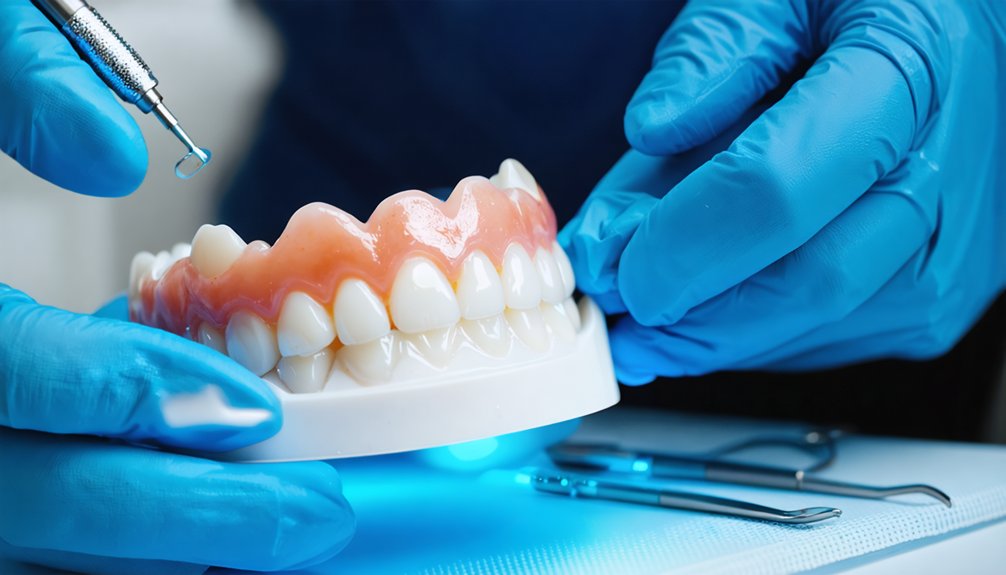
Even with careful tray use, whitening your natural teeth can leave your crowns visibly behind in shade. When that gap becomes noticeable, replacement is often the most reliable path to restoring aesthetic harmony and crown longevity.
Consider replacement when:
- Your natural teeth have brightened two or more shades beyond your crown’s current color.
- The shade mismatch appears in your smile zone, affecting visible front teeth.
- Your crown’s surface shows dullness or roughness from prior whitening attempts.
- Your dentist confirms that polishing won’t close the color gap.
- You’ve completed your full whitening cycle and your shade has stabilized.
New crowns can be fabricated to match your post-whitening shade precisely, giving you full control over your final result.
Frequently Asked Questions
Can Whitening Toothpaste Safely Maintain Brightness Around Existing Dental Crowns?
Like a gentle tide, whitening toothpaste can’t change your crowns’ shade. You’ll maintain brightness on natural teeth, but crown maintenance requires professional whitening techniques to prevent mismatches and avoid scratching your restoration’s surface glaze.
How Long Does Tooth Sensitivity Typically Last After Whitening Near Crowns?
Your sensitivity duration typically lasts 24 to 72 hours post-treatment. By choosing controlled whitening techniques under professional supervision, you’ll minimize discomfort, protect your crowns, and manage sensitivity more predictably than with unsupervised over-the-counter methods.
Does Dental Insurance Ever Cover Crown Replacement Following Professional Whitening Treatment?
Biting the bullet, insurance rarely covers crown replacement after whitening since it’s cosmetic. You’ll likely pay out-of-pocket. Explore whitening alternatives first to protect crown longevity and avoid unnecessary replacement costs altogether.
Are There Specific Foods That Stain Natural Teeth Faster Than Crown Materials?
Yes, staining foods like coffee, red wine, and berries penetrate your natural enamel faster than crown materials, since crowns don’t absorb pigments the same way, often making your restorations appear brighter over time.
How Often Should Professional Polishing Be Scheduled to Maintain Crown Appearance?
You should schedule professional polishing every six months for effective crown maintenance. This polishing frequency helps preserve your restoration’s surface, prevents stain buildup, and keeps your crowns looking their best alongside naturally whitened teeth.
References
- https://greenvalleysmilecare.com/blog/safest-teeth-whitening-options-for-crowns-bridges/
- https://www.artsci.dental/post/can-you-whiten-crowns
- https://www.fountainheaddentistry.com/is-it-safe-to-whiten-crowns-or-veneers/
- https://www.dentaris.com.mx/blog/does-teeth-whitening-work-on-veneers-and-crowns-understanding-the-effectiveness
- https://www.mismilesdental.com/can-i-whiten-crowns-or-capped-teeth/
- https://www.causewaydentistry.com/blog/teeth-whitening/whiten-crowns-or-veneers/
- https://mypalmvalleydental.com/can-you-whiten-teeth-with-crown/
- https://www.colgate.com/en-us/oral-health/teeth-whitening/can-you-whiten-a-crown
- https://www.alluredentistry.com/blog/can-i-have-teeth-whitening-done-if-i-have-a-dental-crown/
- https://greenlinedentalcare.com/can-you-whiten-your-teeth-if-you-have-fillings-or-crowns/