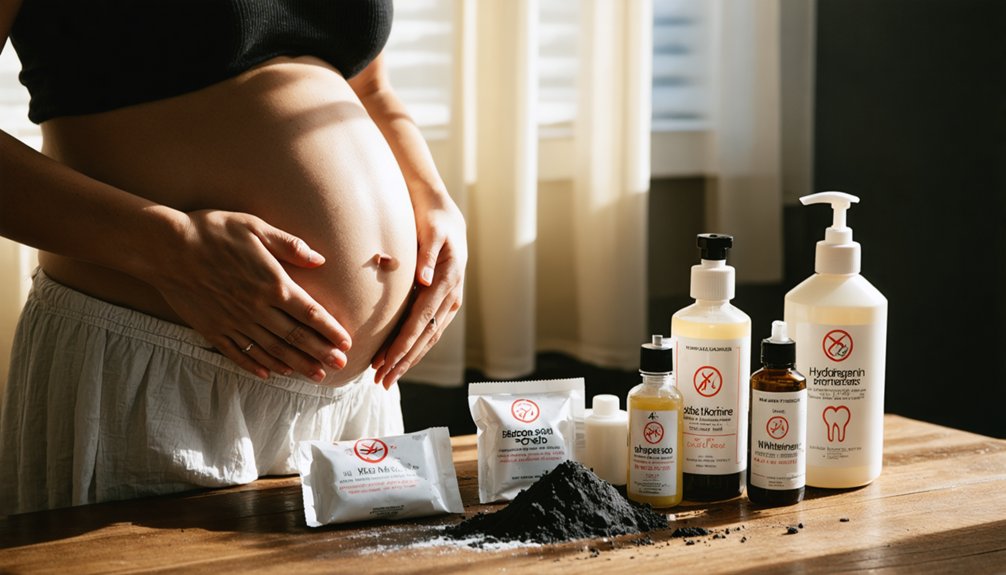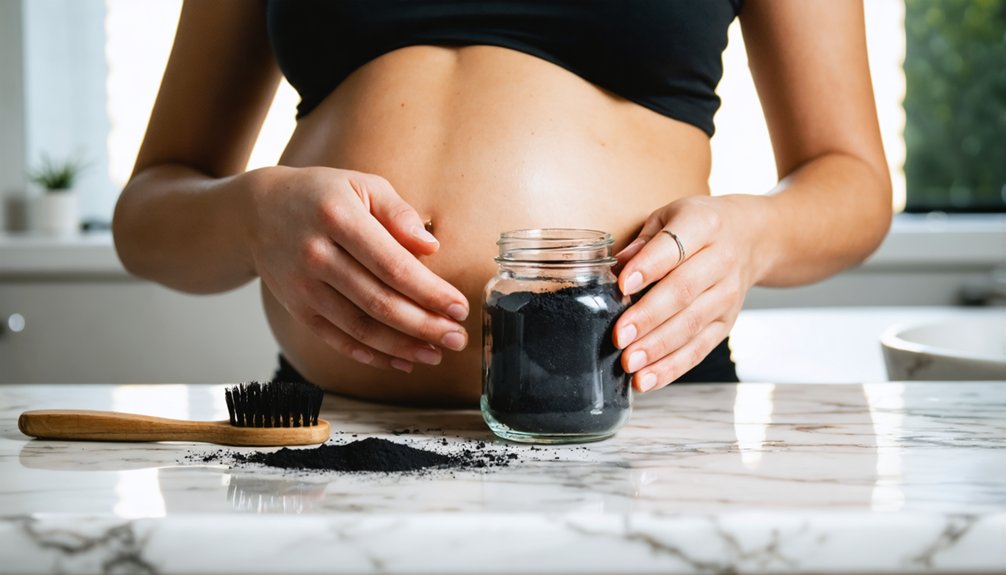
You should avoid charcoal teeth whitening during pregnancy, as no clinical evidence confirms it’s safe or effective. Its abrasive texture can wear down enamel, which is already more vulnerable due to hormonal changes. The ADA hasn’t endorsed charcoal whitening products, and pregnancy-specific safety data simply don’t exist. The risks of enamel erosion and heightened sensitivity outweigh any unproven cosmetic benefit. Keep exploring to understand what dentists actually recommend for protecting your teeth during pregnancy.
Key Takeaways
- Charcoal teeth whitening lacks scientific evidence for effectiveness and has not been endorsed by the American Dental Association for safety or results.
- No pregnancy-specific safety research exists for charcoal whitening, meaning absence of proven harm does not confirm it is safe.
- Charcoal’s abrasive nature can erode enamel, worsening tooth sensitivity that is already heightened by hormonal changes during pregnancy.
- Enamel erosion from charcoal abrasion is irreversible, exposing dentin and increasing sensitivity, posing unacceptable risks without proven cosmetic benefit.
- Dentists recommend deferring elective whitening until after pregnancy and breastfeeding, favoring ADA-approved toothpaste and professional cleanings instead.
Does Activated Charcoal Actually Whiten Teeth?
Before reaching for charcoal toothpaste, it’s worth understanding what the evidence actually says about its whitening ability. Activated charcoal hasn’t been scientifically proven to whiten teeth effectively. Despite widespread marketing claims, no robust clinical evidence confirms it removes intrinsic stains or delivers meaningful cosmetic results.
What researchers have confirmed is more concerning for your oral health: charcoal is abrasive. Regular use can wear down enamel, which directly increases teeth sensitivity and makes surfaces more vulnerable over time.
Ironically, enamel loss can cause teeth to appear yellower, not brighter.
The American Dental Association hasn’t endorsed charcoal for whitening due to insufficient evidence and documented abrasion risks.
If you’re evaluating this product during pregnancy, the risk-benefit balance is already unfavorable before safety concerns even enter the picture.
Is Charcoal Teeth Whitening Safe During Pregnancy?
Even setting aside charcoal’s questionable whitening ability, its safety profile during pregnancy adds another layer of concern. Like many natural remedies and cosmetic procedures, charcoal whitening lacks the pregnancy-specific research needed to confirm it’s safe for you or your baby.
Key reasons dental professionals advise against it:
- No robust pregnancy trials exist for charcoal-based products
- Enamel abrasion may worsen sensitivity, already heightened during pregnancy
- Absence of proven harm isn’t the same as confirmed safety
- Peroxide-free doesn’t mean risk-free—abrasion and unknown systemic effects remain concerns
The precautionary consensus is clear: defer elective cosmetic procedures until after pregnancy, and often until after breastfeeding.
Before making any decision, consult your dentist or obstetrician. You deserve guidance grounded in evidence, not assumption.
Why Dentists Recommend Waiting Until After Pregnancy
Dental professionals aren’t recommending this out of excessive caution—they’re responding to a genuine gap in safety evidence. No robust pregnancy-specific trials exist for charcoal whitening, and product efficacy itself remains unproven by the ADA. That combination—uncertain safety plus unverified results—makes the risk-benefit calculation straightforward: there’s no confirmed benefit to justify even an unclear risk.
Charcoal’s abrasive properties also raise concern for dental sensitivity, which already tends to increase during pregnancy due to hormonal changes. Using an abrasive, unvalidated product during that window can accelerate enamel wear and heighten discomfort.
Since whitening is elective, dentists consistently advise waiting until after pregnancy—and often until after breastfeeding—so you retain full control over a decision grounded in actual evidence.
Does the ADA Recommend Charcoal Whitening?
That recommendation to wait extends beyond pregnancy concerns alone—the ADA hasn’t endorsed charcoal whitening for anyone. Its position centers on insufficient evidence and real enamel safety risks. Before you consider charcoal for cosmetic benefits, here’s what the ADA’s stance actually reflects:
- Charcoal lacks peer-reviewed proof of effective whitening
- Its abrasive texture threatens enamel integrity over time
- No ADA Seal of Acceptance exists for charcoal whitening products
- Cosmetic benefits remain unestablished against documented abrasion risks
That risk-benefit imbalance matters even more during pregnancy, when you’re making decisions for two. Without ADA backing, you’re relying on a product that hasn’t cleared basic efficacy or enamel safety standards.
The smarter move is choosing ADA-accepted toothpaste and deferring any whitening until after your clinician clears it.
Enamel Abrasion: The Hidden Risk of Charcoal Products
Beyond whitening efficacy concerns, charcoal’s abrasive texture poses a direct structural threat to your enamel. Unlike conventional toothpaste, charcoal-based products carry a higher abrasion index, meaning repeated use accelerates enamel erosion rather than preserving it.
Once enamel wears away, it doesn’t regenerate. Abrasive damage from charcoal can expose the underlying dentin, increasing tooth sensitivity and paradoxically making your teeth appear more yellow over time.
During pregnancy, when your oral pH may already shift due to hormonal changes and morning sickness, introducing an abrasive agent compounds that vulnerability.
You’re not gaining a proven cosmetic benefit—you’re trading structural tooth integrity for an unsubstantiated outcome.
Controlling your oral health during pregnancy means choosing treatments backed by evidence, not ones that introduce preventable, irreversible risk.
Is Charcoal Toothpaste Safer Than Charcoal Whitening During Pregnancy?
When comparing charcoal toothpaste to charcoal whitening treatments, the distinction matters—but it doesn’t resolve the safety question during pregnancy. Both fall under natural remedies that lack robust pregnancy-specific evidence.
Charcoal toothpaste differs from intensive charcoal cosmetic procedures in several ways:
- It contains lower concentrations of charcoal than dedicated whitening treatments
- It typically doesn’t involve prolonged gum contact or bleaching agents
- Some sources consider it low risk if not swallowed, though evidence remains weak
- It’s still more abrasive than conventional ADA-accepted toothpastes
Neither option carries formal safety clearance for pregnancy. You’re making a risk-based decision without complete data either way. The precautionary recommendation remains consistent: defer cosmetic procedures until after pregnancy and consult your dentist before using any charcoal-based product.
What Happens to Whitening Agents Absorbed Through Your Gums
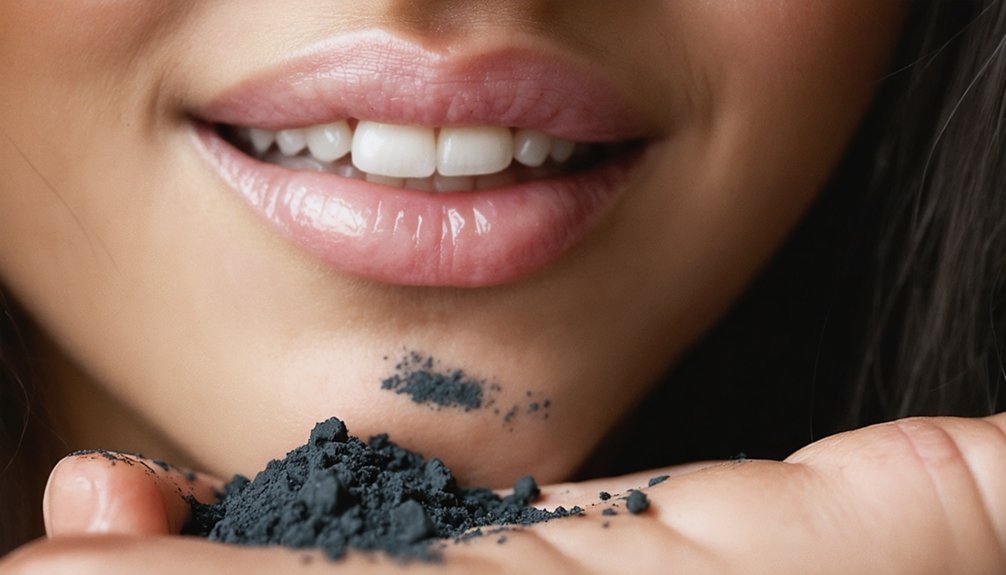
Whitening agents like hydrogen peroxide and carbamide peroxide don’t stay confined to your tooth surface—they’re absorbed through gum tissue and enter your bloodstream. During pregnancy, hormonal effects increase gum permeability and tissue sensitivity, which may accelerate that absorption.
Once these compounds enter circulation, they can reach the placenta. No study has definitively measured fetal harm from this pathway, but the absence of evidence isn’t clearance.
Dietary influence also matters—nutritional demands shift during pregnancy, affecting tissue integrity and metabolic processing of chemical compounds. You can’t fully control how your body handles absorbed agents when your physiology is already altered.
Because formal safety thresholds haven’t been established, most clinicians recommend eliminating this variable entirely by deferring whitening treatments until after pregnancy and breastfeeding conclude.
Pregnancy-Safe Whitening Alternatives Dentists Actually Recommend
Since eliminating peroxide-based and charcoal whitening during pregnancy leaves a real gap in your options, knowing what dentists actually consider safe helps you maintain your smile without introducing unnecessary risk. Rather than pursuing alternative natural remedies or unverified cosmetic dentistry options, focus on clinician-supported choices:
Eliminating peroxide and charcoal whitening during pregnancy means relying only on what dentists actually consider safe.
- ADA-accepted fluoride toothpaste with mild abrasives to reduce surface stains without enamel damage
- Professional dental cleanings, which safely remove plaque and extrinsic staining through mechanical polishing
- Proper brushing technique twice daily, which controls discoloration at the source
- Dietary adjustments, such as limiting coffee and tea, to prevent new staining
None of these options carry the absorption risks associated with bleaching agents. Confirm any toothpaste selection with your dentist or obstetrician before committing, since pregnancy-specific safety data remain limited even for standard products.
When to Ask Your Dentist About Whitening During Pregnancy
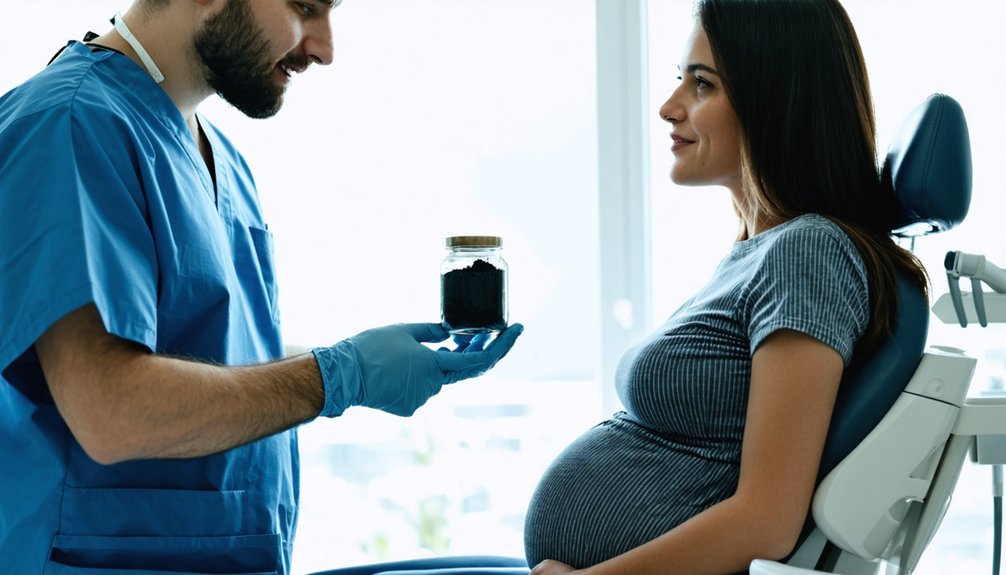
If you notice increased tooth sensitivity, gum changes, or feel pressure to whiten before a pregnancy milestone, those are clear signs to consult your dentist early rather than self-directing care.
During your appointment, ask specifically whether any whitening product is appropriate for your trimester, what ingredients to avoid, and whether deferring treatment until after breastfeeding is the safer option.
Timing matters—your first trimester is generally when clinicians advise the most caution, making early consultation the most effective way to align cosmetic goals with evidence-based pregnancy guidance.
Signs To Consult Early
Even before you consider any whitening product, certain situations make early dental consultation especially important during pregnancy. If any of the following apply, schedule a dental visit before exploring natural remedies or alternative treatments:
- You’ve noticed increased tooth sensitivity, bleeding gums, or enamel erosion since becoming pregnant.
- You’ve already used a charcoal or whitening product and have concerns about exposure.
- You have a history of gum disease, cavities, or prior dental work that may complicate whitening.
- You’re feeling pressure to pursue cosmetic treatments and want evidence-based guidance before acting.
These signs warrant professional input, not independent experimentation. Pregnancy changes your oral environment considerably, and what seemed low-risk before conception may carry different implications now.
Early consultation keeps you informed and in control of your decisions.
Questions To Ask
Once you’ve identified a reason to see your dentist, knowing what to ask makes that appointment more productive. Come prepared with specific questions that cut through marketing strategies designed to make charcoal products appear clinically validated when they aren’t.
Ask your dentist:
- Is any whitening safe during my trimester?
- Does this charcoal product contain peroxide or abrasive agents that risk enamel damage?
- What does current evidence say about systemic absorption through gum tissue?
- Are there pregnancy-safe alternatives with an ADA seal?
- Should I wait until after breastfeeding?
Also ask about environmental impact disclosures on product labels, since incomplete ingredient transparency can obscure compounds that haven’t been evaluated for pregnant patients. Your dentist can help you separate evidence from promotional claims.
Timing Your Appointment
Timing matters when you’re pregnant and considering any elective dental procedure, including whitening consultations. Schedule strategically to safeguard your oral health and minimize unnecessary exposure.
Optimal times to raise whitening with your dentist:
- Second trimester — generally the safest window for non-emergency dental visits
- Before conception — ideal for completing elective whitening without pregnancy-related restrictions
- Postpartum planning — use prenatal appointments to schedule whitening after delivery or breastfeeding ends
- During diet modification discussions — pair whitening questions with conversations about pregnancy cravings, acidity, and enamel protection
Avoid scheduling elective consultations during the first trimester, when fetal development is most critical, or the third trimester, when prolonged dental positioning is uncomfortable.
Coordinating timing with your obstetrician and dentist ensures any whitening decision aligns with your overall prenatal care plan.
Frequently Asked Questions
Can Charcoal Whitening Affect My Baby’s Tooth Development Later?
No clear proof links charcoal whitening to your baby’s tooth development, but dental safety data’s too limited to rule out risk. You’re better off waiting until after pregnancy to protect both of you.
Is Charcoal Teeth Whitening Safe During the Third Trimester Specifically?
You shouldn’t use charcoal teeth whitening in your third trimester. Dental safety data remain insufficient, and it’s not proven effective. It can worsen tooth sensitivity and enamel wear, so consult your dentist before proceeding.
Should I Stop Charcoal Toothpaste if I Become Unexpectedly Pregnant?
When in doubt, pause it out — stop using charcoal toothpaste if you become unexpectedly pregnant. Pregnancy safety isn’t guaranteed with these toothpaste ingredients, so consult your dentist promptly and switch to an ADA-approved alternative.
Can Morning Sickness Affect How Charcoal Toothpaste Interacts With Enamel?
Yes, morning sickness can worsen enamel erosion, and charcoal toothpaste’s abrasiveness may amplify tooth sensitivity. You’ll want to follow dietary restrictions, avoid brushing immediately after vomiting, and consult your dentist before continuing charcoal toothpaste use.
Are There Pregnancy Hormones That Make Teeth More Vulnerable to Charcoal Abrasion?
Yes, pregnancy hormones increase tooth vulnerability—your gums soften and enamel weakens while charcoal’s abrasiveness remains constant. You’re facing heightened risk, so you should avoid charcoal whitening and prioritize protective, pregnancy-safe oral hygiene instead.
References
- https://nvdentists.com/pregnancy-safe-teeth-whitening/
- https://www.healthline.com/health/pregnancy/activated-charcoal-pregnancy
- https://www.hbsdentalstudio.com/can-you-whiten-your-teeth-while-pregnant
- https://patient.enlightensmiles.com/blogs/teeth-whitening/teeth-whitening-during-pregnancy
- https://www.mdsgdentistry.com/can-you-use-teeth-whitening-strips-while-pregnant/
- https://www.romper.com/p/can-you-use-activated-charcoal-to-whiten-your-teeth-while-pregnant-expert-weighs-in-67349
- https://www.thebump.com/a/whiten-teeth-pregnancy
- https://www.estrellamountaindentistry.com/blogs/is-teeth-bleaching-safe-during-pregnancy/
- https://www.babycenter.com/pregnancy/health-and-safety/is-it-safe-to-bleach-my-teeth-during-pregnancy_1245153
- https://shunchild.com/article/is-charcoal-toothpaste-ok-during-pregnancy