The three most effective methods are a basic baking soda and water paste, a baking soda and hydrogen peroxide combination, and mixing baking soda into your regular toothpaste. Each works through mild abrasion to buff away surface stains from coffee, tea, and tobacco. However, your results depend on your stain type, application technique, and how strictly you follow frequency limits. The details behind each method matter more than most people realize.
Key Takeaways
- Mix 1 tbsp baking soda with 1 tbsp water, brush gently for 2 minutes, and rinse thoroughly, limiting use to twice weekly.
- Combine baking soda with hydrogen peroxide for stronger stain removal, but restrict this method to once weekly maximum.
- Mix baking soda into your regular toothpaste to support surface stain removal while maintaining fluoride cavity protection benefits.
- Always follow baking soda use with fluoride toothpaste to protect enamel and support overall oral health.
- Use a soft-bristled toothbrush and gentle circular motions to avoid accelerating enamel erosion during baking soda application.
How Does Baking Soda Actually Whiten Teeth?
Baking soda whitens teeth through mild abrasion rather than chemical bleaching. It physically buffs away surface stains from coffee, tea, tobacco, and wine without altering the dentin underneath.
You won’t achieve the dramatic results that professional cosmetic dentistry provides, but you can expect a modest one-to-two shade improvement on existing surface stains over time.
Understanding this distinction helps you maintain realistic expectations and sound dental hygiene practices. Baking soda doesn’t penetrate enamel or lighten your tooth’s natural color—it simply removes accumulated surface debris.
If you’re seeking deeper whitening, peroxide-based methods produce more significant results. For surface-level staining, however, baking soda offers a controlled, low-cost approach when you apply it correctly and avoid overuse that risks gradual enamel wear.
Which Baking Soda Method Works Best for Your Stains?
The baking soda method you choose should match the type of staining you’re dealing with. If you have surface stains from coffee, tea, or tobacco, a basic baking soda paste or a baking soda-toothpaste combination can produce modest results, typically around a one-to-two shade improvement over time.
However, if your discoloration originates in the dentin beneath the enamel, no baking soda method will correct it, as baking soda doesn’t bleach tooth structure and you’d need to consult a dental professional instead.
Matching Stains to Methods
Not all surface stains respond equally to baking soda methods, so matching the right approach to your stain type can improve your results.
If your discoloration stems from dietary habits—specifically coffee, tea, or wine—the basic baking soda and water paste used twice weekly typically addresses these surface deposits effectively.
Tobacco stains tend to be more stubborn, making the hydrogen peroxide combination a more practical choice, though you should limit that method to once weekly.
Age-related discoloration presents a different challenge entirely. Baking soda can’t lighten dentin, so if your yellowing originates beneath the enamel surface, no baking soda method will produce meaningful results.
In that case, you’d need peroxide-based professional treatments instead.
Knowing your stain source lets you avoid wasted effort and unnecessary enamel exposure.
Surface Stains vs. Deep Discoloration
Understanding why your teeth look discolored determines whether baking soda will help at all. Many oral health myths suggest baking soda whitens universally — it doesn’t. It only removes surface stains, not deep discoloration embedded in dentin.
Identify your stain type before choosing a method:
- Surface stains from dietary habits like coffee, tea, or wine respond well to baking soda’s mild abrasive action.
- Tobacco stains are surface-based but heavier, potentially requiring the hydrogen peroxide combination.
- Intrinsic discoloration from aging, medications, or trauma won’t respond to baking soda at all.
- Yellowing dentin requires professional bleaching, not abrasive pastes.
If your discoloration is intrinsic, continuing baking soda use risks enamel wear without delivering results. Match your method to your actual stain source.
The Basic Baking Soda and Water Paste Method
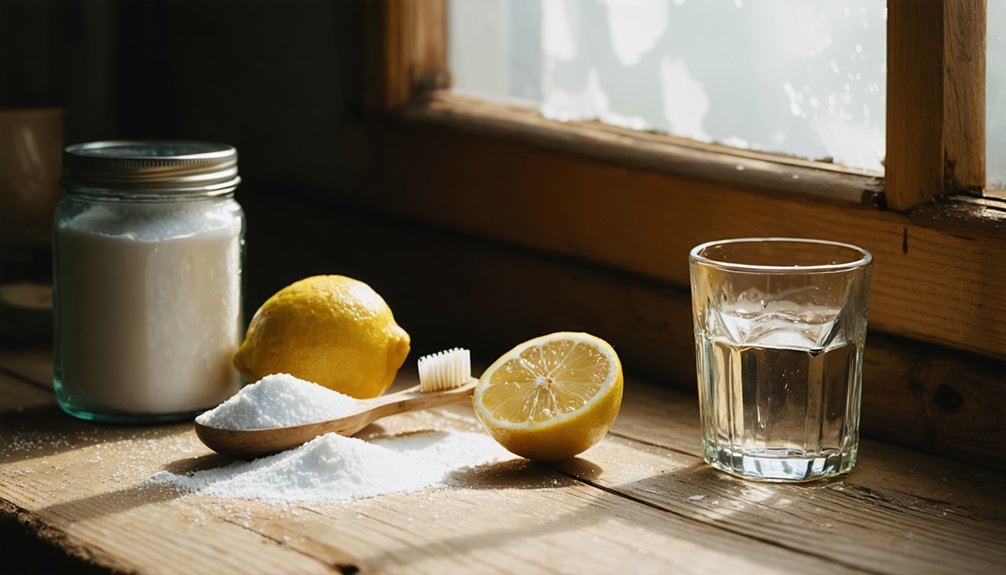
Making a basic baking soda paste requires just two ingredients: roughly 1 tablespoon of baking soda combined with 1 tablespoon of water to form a thick, workable consistency. Apply it using a soft-bristled toothbrush or your fingertips, brushing gently in circular motions for approximately two minutes.
Cover all tooth surfaces, prioritizing front teeth where surface stains from dietary habits like coffee, tea, or wine tend to accumulate most visibly.
Once finished, rinse your mouth thoroughly to remove all residue. Follow immediately with fluoride toothpaste to support enamel protection, since baking soda lacks fluoride and won’t substitute for standard oral hygiene practices.
Limit this method to once or twice weekly — daily use increases abrasive wear risk without delivering meaningfully better results.
How to Use Baking Soda With Hydrogen Peroxide
Combining baking soda with hydrogen peroxide produces a stronger whitening mixture than water alone, so you’ll want to apply extra caution with this method. This natural remedy can address surface stains more effectively, but misuse risks enamel damage.
Follow these steps precisely:
- Mix 1 tablespoon baking soda with 2 tablespoons hydrogen peroxide in a small bowl.
- Brush gently using soft circular motions for approximately 1 minute.
- Spit out the mixture completely and rinse thoroughly — never swallow it.
- Limit use to once per week maximum.
Sound dental hygiene requires you to follow baking soda brushing with fluoride toothpaste to protect enamel.
Peroxide-based methods typically yield more noticeable whitening results, but exceeding recommended frequency undermines their safety profile.
How to Add Baking Soda to Your Regular Toothpaste
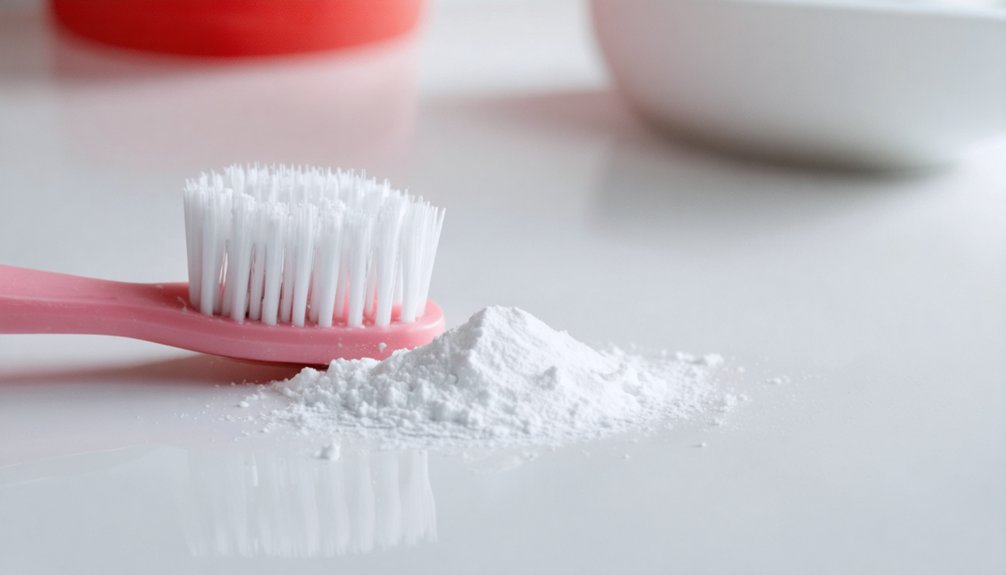
For a gentler daily-use option, you can mix baking soda directly into your regular toothpaste rather than using it as a standalone paste. Dip your soft-bristled toothbrush into baking soda, then apply toothpaste on top, or combine one teaspoon of baking soda with toothpaste in a small bowl before brushing normally.
This method supports your dental hygiene routine without displacing fluoride, which remains essential for cavity prevention. However, baking soda safety requires strict frequency limits—use this combination no more than twice per week.
Daily use isn’t more effective and raises enamel-wear concerns over time.
This approach targets surface stains from coffee, tea, or tobacco while keeping abrasive exposure controlled. You maintain the whitening benefit without compromising enamel integrity through overuse.
How Often Can You Use Baking Soda on Teeth?
Although baking soda offers real whitening benefits, you shouldn’t use it more than once or twice per week. Overuse raises enamel-wear concerns that could lead to costly restorative treatments—something your dental insurance may not fully cover.
Follow these frequency guidelines to protect your oral hygiene:
- Use basic baking soda paste no more than twice weekly.
- Limit hydrogen peroxide combinations to once per week.
- Resume fluoride toothpaste after every baking soda session to protect enamel.
- Avoid daily use—it’s unnecessary and increases abrasive damage risk.
Daily brushing with fluoride toothpaste remains non-negotiable for cavity prevention. Baking soda is a supplemental tool, not a replacement. Control your whitening schedule deliberately to preserve long-term enamel integrity.
Baking Soda Mistakes That Damage Enamel
Baking soda whitens teeth effectively, but common misuse mistakes accelerate enamel erosion faster than most people expect. Brushing too hard is the most damaging error—abrasive force compounds baking soda’s natural abrasiveness, thinning enamel over time. Using a hard-bristled toothbrush worsens this outcome considerably.
Exceeding twice-weekly applications strips protective enamel without improving whitening results. Skipping fluoride toothpaste afterward removes your primary defense against cavity formation, undermining your dental hygiene routine entirely.
Swallowing hydrogen peroxide mixtures introduces unnecessary chemical exposure. Many people also misunderstand baking soda’s limitations—it removes surface stains only, never alters dentin color, and delivers roughly a one-to-two shade improvement at best.
If you’re chasing dramatic results beyond that range, professional whitening remains the clinically appropriate and structurally safer option.
What Results Does Baking Soda Whitening Actually Deliver?
When you use baking soda, you’re targeting surface stains from coffee, tea, tobacco, and wine — not altering the underlying dentin color.
You can realistically expect a modest 1–2 shade improvement over time, provided you’re consistent and technique is correct.
If you want more dramatic whitening, peroxide-based methods outperform baking soda alone, as baking soda lacks the bleaching chemistry needed to lighten tooth structure itself.
Surface Stain Removal Only
Before committing to a baking soda whitening routine, you’ll want to understand what it can realistically deliver. Baking soda acts as a mild abrasive, targeting surface stains only. Your dietary habits—coffee, tea, wine, and tobacco—create those stains, and baking soda addresses them directly. It doesn’t alter dentin color beneath the enamel.
Manage your expectations with these documented limitations:
- Results typically reach only a 1–2 shade improvement on surface stains.
- Baking soda does not bleach underlying tooth structure.
- Overuse raises enamel erosion concerns due to its abrasive nature.
- Peroxide-based methods produce more significant whitening when deeper results are needed.
Understanding these boundaries helps you make informed, controlled decisions about your whitening approach.
Expected Shade Improvements
To maximize those modest results without triggering enamel erosion, pair baking soda sessions with consistent oral hygiene: use dental floss daily to eliminate plaque buildup between teeth.
Then follow baking soda brushing with fluoride toothpaste. If you’re chasing more dramatic whitening beyond surface-level correction, peroxide-based methods deliver stronger results.
Manage your expectations precisely—baking soda offers controlled, incremental improvement, not a transformative shade overhaul.
Limits Versus Peroxide
Baking soda removes surface stains through mild abrasion, but it doesn’t bleach the underlying dentin or alter your tooth’s natural color. If your discoloration runs deeper than surface-level dental plaque or residue, baking soda won’t deliver noticeable results.
Peroxide-based methods penetrate enamel to oxidize stain compounds, producing more significant whitening.
Consider these distinctions before choosing your method:
- Baking soda targets surface deposits like coffee, tea, and tobacco residue only.
- Peroxide combinations address deeper discoloration but increase tooth sensitivity risk.
- Overusing either method raises enamel-wear concerns without improving outcomes.
- Restricting peroxide blends to once weekly reduces sensitivity while managing expectations.
Match your method to your actual stain type, and don’t expect baking soda to replace clinically proven bleaching treatments.
Stains Baking Soda Cannot Remove on Its Own
While baking soda effectively removes surface stains from coffee, tea, wine, and tobacco, it can’t address stains that originate beneath the enamel. Dietary stains sitting on the enamel surface respond well to its mild abrasive action, but intrinsic discoloration is a different problem entirely.
Intrinsic discoloration develops within the dentin layer itself, often caused by aging, certain antibiotics like tetracycline, excessive fluoride exposure during tooth development, or trauma. No amount of surface scrubbing will reach these deeper stains.
Baking soda simply lacks the chemical capacity to penetrate enamel and alter dentin color.
If your discoloration appears yellowish-gray, deeply uniform, or hasn’t responded to consistent surface cleaning, consult a dentist.
Professional bleaching treatments use peroxide concentrations capable of targeting intrinsic staining more effectively.
Frequently Asked Questions
Can Children Safely Use Baking Soda to Whiten Their Teeth?
Children’s safety isn’t guaranteed with baking soda whitening—age considerations matter. You shouldn’t use it on kids without consulting a dentist first, as developing enamel is more vulnerable to abrasive wear than adult teeth.
Does Baking Soda Whitening Interact With Dental Crowns or Veneers?
Wondering about dental crown compatibility? Baking soda won’t whiten crowns or veneers—they’re stain-resistant materials. Veneer stain removal via baking soda risks surface scratching. You should consult your dentist before applying abrasive methods near restorations.
Should You Use Baking Soda if You Have Sensitive Teeth or Gums?
You should avoid baking soda if you’ve got sensitive teeth or gums, as its abrasiveness worsens irritation. Explore alternative whitening methods or gentler natural remedies, and consult your dentist before proceeding to maintain control over your oral health.
Can Baking Soda Help With Whitening After Orthodontic Treatment?
Baking soda brings back brightness by buffing surface stains post-braces, but it’s a mild alternative natural remedy. For deeper discoloration, you’ll want professional whitening treatments, as baking soda won’t bleach underlying dentin effectively.
Is Store-Bought Baking Soda Toothpaste as Effective as Homemade Paste?
Store-bought baking soda toothpaste’s chemical interactions differ from homemade natural remedies—you’ll get milder abrasion with added fluoride protection. Homemade pastes offer stronger whitening control, but you’re cautioned against overuse to prevent enamel wear.
References
- https://www.armandhammer.com/en/articles/how-to-whiten-teeth-with-baking-soda
- https://www.healthline.com/health/baking-soda-toothpaste
- https://www.urmc.rochester.edu/news/publications/health-matters/diy-teeth-whitening-too-good-to-be-true
- https://www.youtube.com/watch?v=uppRadBobUw
- https://pearlmoderndentistry.com/how-to-whiten-teeth-with-baking-soda/
- https://www.wellness.guide/baking-soda-for-teeth-whitening/
- https://oralhealthhq.com/teeth-whitening/baking-soda/
- https://www.wikihow.com/Whiten-Teeth-With-Baking-Soda
- https://www.healthandbeauties.com/2026/04/13/white-teeth-tips-at-home-with-baking-soda-easy-and-natural/
- https://pubmed.ncbi.nlm.nih.gov/29056186/