The concentration you choose depends on your sensitivity level and how quickly you want results. For beginners, 10% carbamide peroxide is the safest starting point. If you tolerate whitening well, 15%–22% carbamide peroxide delivers faster, more effective results. Concentrations above 22% require professional supervision to avoid tissue irritation. Keep in mind that carbamide peroxide is roughly one-third as potent as hydrogen peroxide, so comparing products accurately matters. The sections ahead break this down further.
Key Takeaways
- Beginners should start with 10% carbamide peroxide, offering a safe introduction with minimal sensitivity risk.
- Those with mild sensitivity should use 10%–15% carbamide peroxide for comfortable, gradual whitening.
- Most users achieve effective results with 20%–22% carbamide peroxide, balancing speed and tolerability.
- Concentrations above 22% increase sensitivity risks and require professional dental supervision for safe use.
- Fast results from 35%+ concentrations are possible but should only be used under dental guidance.
What Do Whitening Gel Concentration Numbers Actually Mean?
When you see a whitening gel labeled “10% carbamide peroxide” or “6% hydrogen peroxide,” that percentage reflects the active bleaching agent‘s concentration by weight within the gel formula. Higher numbers mean more peroxide is present, which accelerates oxidation of tooth stains but also increases exposure risk to soft tissue.
Carbamide peroxide breaks down into hydrogen peroxide and urea, making it roughly one-third as potent by concentration. A 30% carbamide peroxide gel delivers approximately 10% hydrogen peroxide to the tooth surface.
Carbamide peroxide is roughly one-third as potent as hydrogen peroxide at equivalent concentrations.
Understanding these ratios matters for ingredient safety because application methods vary — tray-based systems, strips, and in-office treatments each deliver peroxide differently.
Knowing what the number actually represents lets you compare products accurately and make informed decisions based on your sensitivity tolerance and whitening goals.
How Whitening Gel Concentration Affects Speed and Sensitivity
Once you understand what concentration numbers represent, the next logical question is how those numbers translate into real-world results — specifically, how fast the gel works and how much discomfort you’re likely to experience.
Higher concentrations accelerate whitening by delivering more active peroxide to enamel in less time. However, that speed comes with tradeoffs: stronger formulas increase sensitivity risk and reduce gel safety margins for unsupervised use.
Ingredient stability also matters — carbamide peroxide degrades more slowly than hydrogen peroxide, allowing longer tray contact without rapid irritation spikes.
Lower concentrations work gradually but are considerably more comfortable.
The relationship isn’t simply “stronger equals better.” You’re managing a direct tradeoff between treatment speed and tissue tolerance, and your sensitivity threshold should drive that decision as much as your whitening timeline does.
At-Home vs. Professional Whitening Gel Concentrations: Where Is the Line?
The boundary between at-home and professional whitening gels comes down primarily to peroxide concentration and who’s managing the application. The ADA recognizes 10% hydrogen peroxide and 10% carbamide peroxide as safe thresholds for unsupervised use. Beyond those levels, supervision matters.
Here’s where the line falls in practice:
- At-home safe zone: 10%–22% carbamide peroxide or up to 10% hydrogen peroxide
- Professional territory: 25%–40% hydrogen peroxide, applied with gum protection
- Brand reputation signals: Clinically recognized brands like Opalescence indicate formulation reliability
- Cost considerations: Higher-concentration professional treatments cost more but deliver faster, controlled results
You control the tradeoff. Choosing a concentration outside supervised ranges without guidance increases your sensitivity and irritation risk markedly.
Which Whitening Gel Strength Matches Your Sensitivity Level?
Sensitivity level is the single most practical filter for narrowing down which concentration actually works for you.
Sensitivity level is your most practical starting point — everything else follows from there.
If you experience discomfort regularly, start at 10% carbamide peroxide — it’s the gentlest clinically recognized option and minimizes irritation while still addressing mild teeth staining.
For moderate sensitivity, 15%–16% carbamide peroxide offers a measurable step up without excessive risk.
If you tolerate whitening well, 20%–22% carbamide peroxide represents the evidence-supported sweet spot — effective enough for meaningful whitening longevity, manageable enough for consistent use.
Above 22%, you’re entering territory where sensitivity risk rises sharply, and dental supervision becomes advisable.
Matching concentration to your sensitivity threshold isn’t compromise — it’s strategy.
Sustainable, repeated use at the right strength consistently outperforms aggressive treatment you can’t tolerate long enough to complete.
Best Whitening Gel Concentration for Beginners, Sensitive Teeth, and Fast Results
Whether you’re just starting out, managing persistent sensitivity, or pushing for faster visible results, the right concentration depends on where you fall in that spectrum.
- Beginners: Start at 10% carbamide peroxide — clinically recognized as safe for unsupervised use with minimal risk.
- Sensitive teeth: 15%–16% carbamide peroxide offers measurable whitening while reducing irritation through alternative application methods like shorter wear cycles.
- Most users: 20%–22% carbamide peroxide hits the evidence-backed sweet spot — effective, manageable, and consistent.
- Fast results: 35%+ requires dental guidance; ingredient safety considerations become critical at these concentrations.
You control the outcome by matching concentration to your tolerance, not chasing the strongest formula available. Higher isn’t always better — precision is.
Frequently Asked Questions
Can I Mix Different Whitening Gel Concentrations Together for Better Results?
Don’t mix gels — you’re opening a can of worms with unpredictable mixing safety risks. Combining concentrations compromises gel consistency, destabilizes peroxide levels, and reduces efficacy. Stick to one clinically appropriate concentration for controlled, evidence-based results.
How Should I Store Leftover Whitening Gel After Opening the Syringe?
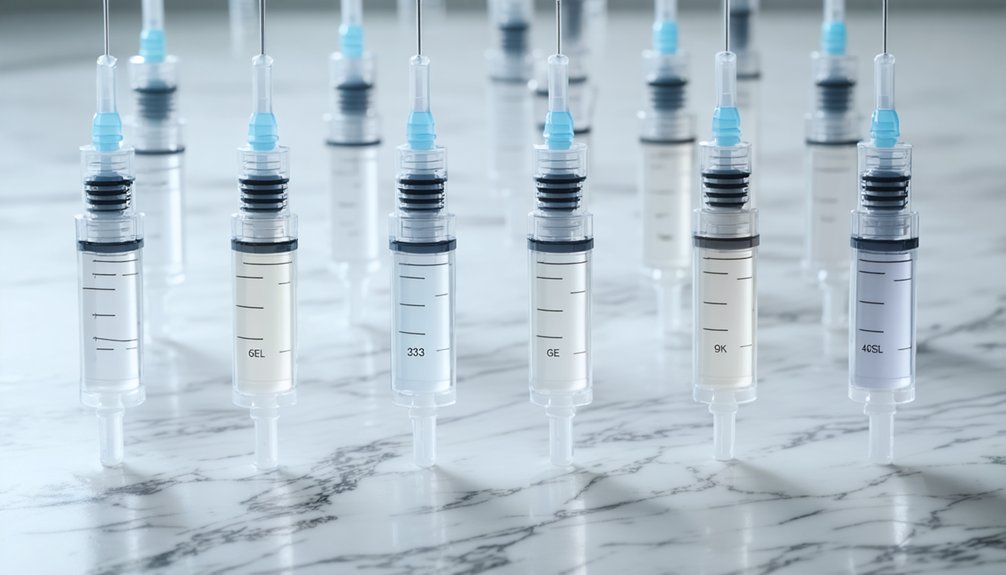
Recap your opened syringe tightly, then refrigerate it to maximize shelf life. These storage tips help you maintain gel potency and effectiveness, ensuring you’re always in control of consistent, reliable whitening results between sessions.
Does Whitening Gel Concentration Affect How Long Results Actually Last?
Concentration doesn’t determine how long results last—your application techniques and maintaining pH balance do. Higher-strength gels whiten faster, but you’ll preserve those results longer through consistent habits, not by choosing a stronger formula.
Are Whitening Gel Concentrations Regulated Differently Across Various Countries?
Yes, regulation differences exist globally—you’ll find that safety standards vary considerably. The EU caps hydrogen peroxide at 0.1% for over-the-counter products, while the US permits higher concentrations for home use without professional supervision.
Can Whitening Gels of Any Concentration Damage Existing Dental Restorations?
Whitening gels won’t damage restorations structurally, but they can’t whiten crowns, veneers, or fillings. For dental safety, you should consult your dentist before use, as mismatched shades post-treatment raise real restoration damage concerns.
References
- https://opalescence.com/pages/compare
- https://expertwhitening.com/products/44-teeth-whitening-gels
- https://nhdentistrybeverlyhills.com/press/a-dentist-shares-5-at-home-teeth-whitening-products-actually-worth-buying/
- https://www.youtube.com/watch?v=ExAqwfUk36A
- https://www.amazon.com/White-Teeth-Global-Carbamide-Whitening/dp/B00KWDZBRM
- https://www.laserglowspa.com/blogs/news/teeth-whitening-gel-strength-guide
- https://dentalpedia.co/article/whitening-gel-concentration-strength-levels.html
- https://www.dentistsanfrancisco.com/teeth-whitening-gel-ultimate-guide/
- https://www.dentalroundup.com/best/best-teeth-whitening-gel/
- https://www.double-white.com/best-teeth-bleaching-gel-ultimate-insight-for-safe-whitening.html