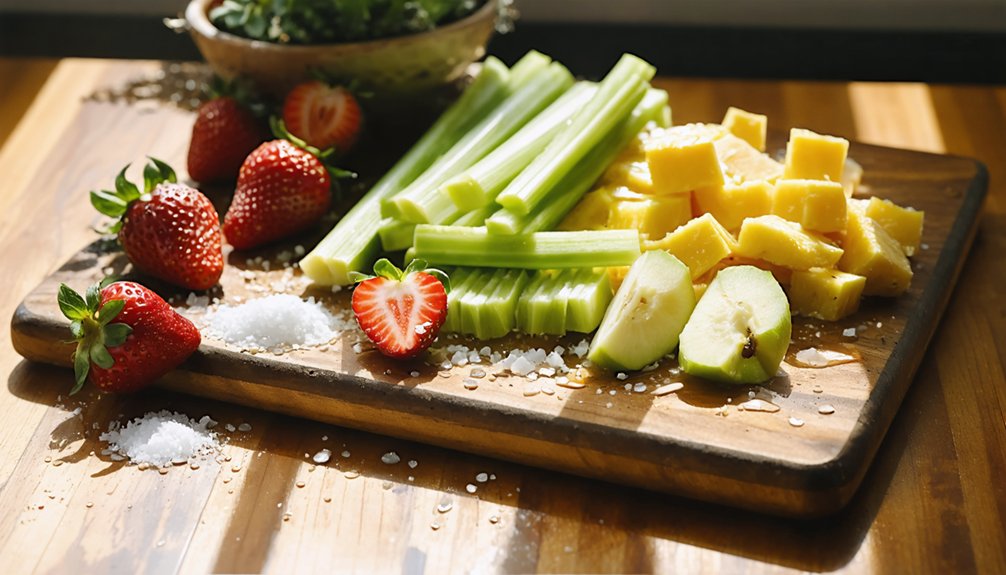
Certain foods can naturally protect your teeth from wine stains before they set. Pineapple’s bromelain enzyme breaks down plaque proteins that trap pigments, while apples’ malic acid lifts surface discoloration. Crunchy vegetables like carrots and celery mechanically scrub enamel as you chew. Cheese neutralizes wine’s acidity and strengthens enamel with calcium and phosphorus. Knowing *when* and *how* to eat these foods around wine makes all the difference in how well they actually work.
Key Takeaways
- Pineapple contains bromelain, an enzyme that breaks down plaque proteins and actively combats fresh wine stains on teeth.
- Apples produce malic acid, which lifts surface stains and stimulates saliva production to naturally defend against discoloration.
- Crunchy vegetables like carrots, celery, and raw broccoli mechanically scrub pigment deposits from enamel surfaces.
- Cheese neutralizes wine’s acidity and creates a protective barrier, preventing enamel erosion and reducing stain absorption.
- Almonds and walnuts act as natural exfoliants, buffing away discoloration while delivering calcium to strengthen weakened enamel.
Why Some Foods Reverse Wine Stains Better Than Whitening Strips
While whitening strips rely on peroxide to bleach stains after they’ve set, certain foods work preventatively—interrupting the staining process at the enzymatic and mechanical level before discoloration takes hold.
Bromelain in pineapple demonstrates measurable enzyme effectiveness by dismantling plaque proteins before wine pigments bind to enamel.
Malic acid in apples mirrors whitening toothpaste compounds, using controlled acidity levels to lift surface stains without harsh chemical exposure.
Cheese neutralizes wine’s acidity immediately, preventing enamel erosion that makes teeth more susceptible to pigment absorption.
You’re not waiting for damage to reverse—you’re stopping it. That’s the critical advantage.
These foods give you biochemical intervention in real time, something no strip applied hours later can replicate with the same precision.
The Best Fruits for Whitening Wine-Stained Teeth Naturally
Two fruits stand out for their clinically relevant whitening mechanisms: pineapple and apples.
Understanding pineapple benefits means recognizing bromelain, its naturally occurring enzyme, which actively breaks down plaque and targets protein-based wine stains similarly to commercial whitening agents. You’re fundamentally deploying enzymatic action each time you consume it post-wine.
Bromelain in pineapple enzymatically breaks down wine stains, working similarly to the active compounds in commercial whitening agents.
Apples work through a different but equally targeted pathway. Their concentrated malic acid stimulates saliva production, your mouth’s built-in stain defense system, while their crunchy texture mechanically scrubs discoloration from enamel surfaces.
Malic acid mirrors the active compounds found in whitening toothpastes, giving you a functional, food-based alternative.
Incorporating both fruits strategically after wine consumption lets you intervene early, before stains bond more permanently to enamel surfaces.
Crunchy Foods That Scrub Stains While You Eat
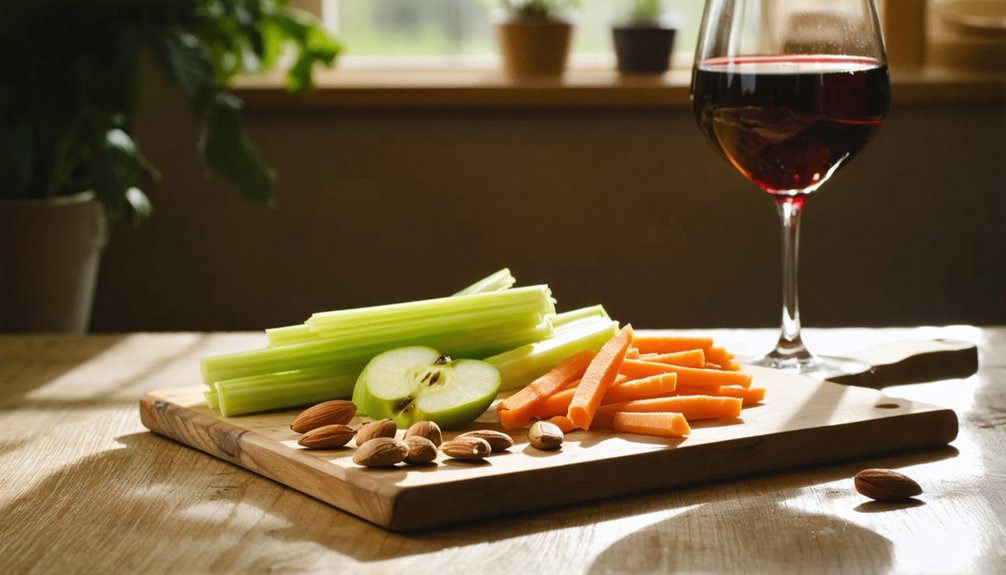
Fruits aren’t the only foods working mechanically against wine stains—crunchy vegetables and nuts deliver similar abrasive benefits through direct physical contact with enamel.
Carrots, celery, and raw broccoli florets act as natural scrubbing agents, dislodging pigment deposits before they penetrate deeper enamel layers. Their fibrous texture stimulates saliva production, enhancing your mouth’s natural cleansing capacity.
Nuts and seeds function as exfoliants, buffing discoloration from tooth surfaces with each chew. Walnuts, almonds, and sesame seeds are particularly effective, with sesame seeds contributing calcium that actively strengthens enamel structure.
Pairing abrasive fruits with crunchy vegetables creates a thorough mechanical defense against staining. Incorporating these foods during or after wine consumption gives you a proactive, food-based strategy for maintaining whiter teeth without relying solely on commercial products.
Dairy and Nuts That Rebuild Enamel Wine Breaks Down
Wine’s acidity actively erodes enamel, but dairy products and nuts help counteract this damage through targeted remineralization.
Cheese delivers calcium, phosphorus, and protein that directly support enamel remineralization by neutralizing acidic residue wine leaves behind. It also creates a protective barrier that reduces pigment adhesion on tooth surfaces.
The dairy benefits extend beyond neutralization. Low-fat varieties minimize associated health risks while still providing essential minerals your enamel needs to rebuild after acid exposure.
Nuts contribute complementary protection. Almonds, sesame seeds, and walnuts function as natural exfoliants, buffing surface discoloration while delivering calcium that strengthens weakened enamel. Their abrasive texture removes stain-causing pigments without harsh chemicals.
Pairing dairy and nuts with wine consumption gives you a proactive, food-based strategy for preserving enamel integrity.
When to Eat These Foods Around Wine for Best Results
Timing your intake of these foods around wine consumption greatly affects how well they protect and clean your teeth. Eat cheese, nuts, or crunchy vegetables *before* you drink to establish a protective enamel barrier and stimulate saliva production.
These timing strategies reduce stain adhesion from the first sip. During wine consumption, alternate bites of broccoli or apples to neutralize acids continuously.
After drinking, finish with pineapple to deploy bromelain’s enzymatic action against fresh stains before they set. Avoid brushing immediately after wine, as softened enamel becomes vulnerable to abrasion.
Strategic food combinations, such as pairing cheese with walnuts, multiply protective benefits by simultaneously remineralizing enamel and physically buffing surfaces.
Consistent application of these strategies gives you measurable control over wine-related discoloration.
Frequently Asked Questions
Can These Foods Replace Professional Dental Cleanings for Wine Stain Removal?
Sure, toss your dentist’s number—natural whitening foods boost your dental hygiene, but they can’t replace professional cleanings. You’ll need both strategies working together to effectively control and prevent stubborn wine stains from compromising your enamel.
Are There Foods That Make Wine Stains Permanently Worse Over Time?
Yes, you’re accelerating permanent wine staining when you consume acidic foods and dark pigmented items without proper dental hygiene. Prioritize stain prevention by avoiding coffee, tea, and sodas, which embed chromogens deeper into enamel over time.
How Long Does It Take for Food Remedies to Show Results?
Like a slow tide reshaping stone, you’ll notice home remedies improving stain prevention within 2–4 weeks of consistent use. Results aren’t instant—they’re cumulative, so you’ve got to stay disciplined daily.
Do Children Benefit From These Stain-Removing Foods the Same Way?
Yes, children’s dental health benefits from these foods, but differently. They don’t face wine stains, yet crunchy produce, cheese, and nuts still strengthen tooth enamel, prevent bacterial buildup, and support healthier, more resilient teeth long-term.
Can These Foods Help Remove Stains Caused by Other Beverages Too?
These foods are a universal shield—yes, they tackle stains from coffee, tea, and soda too. Fruit acids and natural abrasives actively combat discoloration regardless of the beverage source, giving you consistent protective control.
References
- https://andersondentalonline.com/foods-and-drinks-brighten-teeth/
- https://www.bupa.co.uk/newsroom/ourviews/teeth-staining-foods
- https://www.dentistbridgevillepa.com/articles/foods-and-drinks-that-can-stain-your-teeth-and-what-to-do-about-it
- https://www.goodrx.com/conditions/dental-care/foods-that-stain-your-teeth
- https://familydentistottawa.com/7-foods-staining-teeth/
- https://crest.com/en-us/oral-care-tips/teeth-stains/20-foods-and-drinks-that-stain-your-teeth
- https://www.colgate.com/en-us/oral-health/teeth-whitening/discolored-teeth-five-foods-that-cause-stains
- https://www.healthline.com/health/foods-that-stain-teeth