The five best home whitening kits for age-related stains are Snow Original, Opalescence GO, CaliWhite, Crest 3D Whitestrips, and HiSmile. As you age, thinning enamel exposes yellow dentin, requiring peroxide-based formulas that penetrate beyond surface deposits. Your sensitivity level and budget should guide your choice, since stronger concentrations deliver longer-lasting results on aging teeth. The right kit paired with the right technique makes all the difference.
Key Takeaways
- Snow Original Kit provides 75 treatments with dual serums and LED acceleration, making it ideal for persistent age-related stains.
- Opalescence GO uses 15% hydrogen peroxide to penetrate deep, established stains common in aging teeth.
- CaliWhite’s LED-enhanced formula can lift up to eight shades within seven days of consistent use.
- Crest 3D Whitestrips are ADA-accepted and effectively remove surface stains caused by years of dietary exposure.
- HiSmile offers a peroxide-free alternative, gently targeting extrinsic discoloration for those with sensitive aging teeth.
Why Teeth Yellow With Age and What Actually Reverses It
As you age, your teeth yellow through two distinct mechanisms: extrinsic staining from food, drinks, and tobacco depositing chromogens onto enamel surfaces, and intrinsic discoloration as enamel thins and the underlying dentin—naturally yellow—becomes more visible.
Understanding these teeth discoloration causes determines which interventions actually work.
Identifying the root cause of tooth discoloration is the first step toward choosing a treatment that actually delivers results.
Reversing yellowing depends on targeting the correct mechanism. Peroxide-based whiteners—hydrogen peroxide or carbamide peroxide—penetrate enamel and oxidize intrinsic chromogens, addressing both stain types.
Abrasive agents like sodium bicarbonate tackle surface deposits but don’t affect dentin color. LED light technology accelerates the oxidation process.
For age-related discoloration, where intrinsic yellowing dominates, peroxide concentration and contact time matter most. Choosing the right system means matching the product’s active chemistry to your specific discoloration type.
Which Kit Matches Your Sensitivity Level and Budget
Matching a whitening kit to your sensitivity level and budget prevents both discomfort and wasted spending. Your sensitivity levels and budget considerations should drive every purchase decision.
- High sensitivity, any budget: Zimba Whitening Strips omit hydrogen peroxide entirely, with 100% of testers reporting zero sensitivity or gum irritation.
- Moderate sensitivity, mid-range budget: Crest 3D Whitestrips use lower hydrogen peroxide concentrations and carry the ADA Seal of Acceptance, delivering 2.9 shades of whitening in 20 days.
- Low sensitivity, higher budget: Snow’s Original Kit provides 75 treatments with LED blue-light technology and extra-strength serum, maximizing results over six months.
Identifying where you fall on both scales lets you select a kit that delivers measurable results without compromising comfort or overspending.
The 5 Best Home Whitening Kits for Age-Related Stains
Budget and sensitivity narrow the field, but age-related staining presents its own distinct challenge.
Intrinsic discoloration—the kind that builds over decades—requires a targeted approach, making product comparisons essential before committing.
For effective teeth whitening against age-related stains, these five kits deliver measurable results:
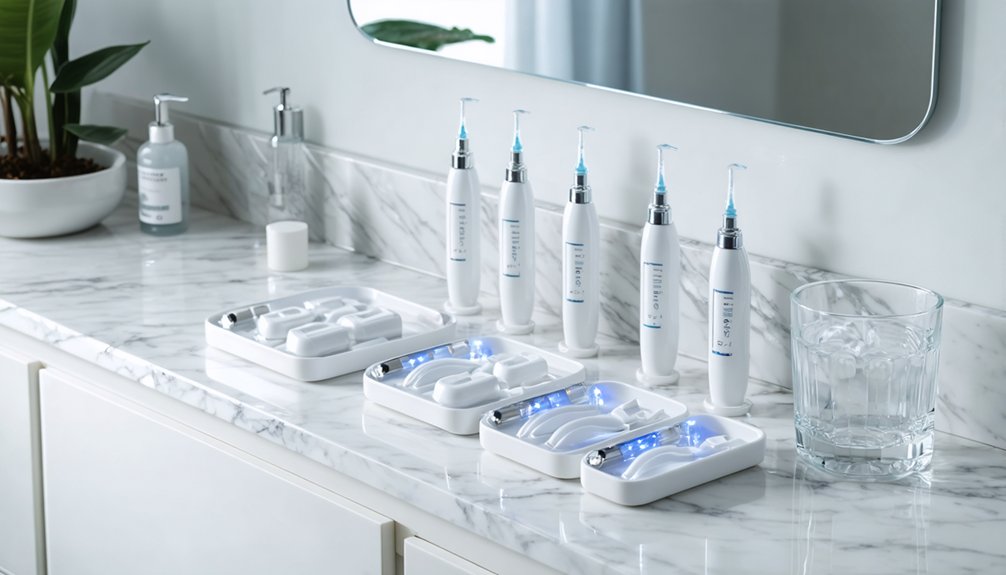
- Snow Original – 75 treatments with dual serums and LED acceleration
- Opalescence GO – 15% hydrogen peroxide for deep, established stains
- CaliWhite – LED-enhanced, lifts up to eight shades in seven days
- Crest 3D Whitestrips – ADA-accepted, removes surface stains most effectively
- HiSmile – Peroxide-free option targeting extrinsic discoloration gently
Each kit addresses a different stain profile.
You’ll achieve the best outcome by matching the kit’s mechanism to your specific discoloration type and severity.
How to Get Better Results From Your Whitening Kit at Home
Even the most effective whitening kit underperforms without proper technique. Applying consistent whitening techniques and following evidence-based maintenance tips maximizes your results and extends their longevity.
The most effective whitening kit still underperforms without the technique to back it up.
Follow these three protocols to optimize your outcome:
- Apply to clean, dry teeth. Brush beforehand and pat teeth dry to enhance gel adhesion and penetration efficiency.
- Adhere strictly to treatment schedules. Skipping sessions diminishes cumulative whitening effects, particularly for age-related, intrinsic stains requiring sustained exposure.
- Eliminate staining agents during treatment. Avoid coffee, red wine, and tobacco immediately after each session, when enamel pores remain temporarily open.
After completing your whitening cycle, schedule monthly maintenance sessions to counteract ongoing discoloration.
Consistent discipline between treatments determines whether you sustain your results or gradually lose them.
How Long Whitening Results Last on Aging Teeth
Whitening results on aging teeth typically last three to six months, though individual longevity depends on enamel density, dietary habits, and product strength.
Aging factors like enamel thinning and increased dentin exposure accelerate stain reabsorption, shortening whitening longevity compared to younger enamel.
You’ll extend results by limiting coffee, tea, and red wine while maintaining consistent oral hygiene.
Higher-concentration products, such as Opalescence GO’s 15% hydrogen peroxide or Snow’s extra-strength serum, deliver deeper penetration that sustains results longer.
Peroxide-free alternatives like Zimba or HiSmile require more frequent reapplication due to shallower stain removal.
Scheduling touch-up treatments every six to eight weeks maintains visible brightness and compensates for the accelerated discoloration that aging enamel experiences.
Frequently Asked Questions
Can Teeth Whitening Kits Damage Existing Dental Crowns or Veneers?
Whitening kits won’t damage crowns or veneers, but you’ll notice crown sensitivity and uneven results since they don’t whiten restorations. Prolonged use may compromise veneer longevity by weakening adhesive bonds over time.
Is It Safe to Whiten Teeth While Pregnant or Breastfeeding?
Like Hippocrates’ “first, do no harm,” whitening safety during pregnancy effects your baby too. You should avoid teeth whitening while pregnant or breastfeeding, as insufficient evidence confirms it’s safe for fetal or infant development.
How Soon After Whitening Can I Eat or Drink Normally?
After whitening, you’ll want to wait at least 30–60 minutes before eating or drinking. For ideal whitening timing, avoid staining foods and drinks for 24–48 hours. Following post-whitening care guidelines maximizes your results effectively.
Can Whitening Kits Worsen Existing Gum Disease or Cavities?
Yes, whitening ingredients can worsen existing gum disease or cavities—but you’re not powerless. You can protect your gum health by treating these conditions first, then choosing peroxide-free options like Zimba or HiSmile for safer whitening.
Do Whitening Kits Work Differently on Naturally Darker or Yellowish Teeth?
Yes, your naturally darker or yellowish tooth color affects whitening effectiveness. Intrinsic pigmentation responds slower to peroxide treatments, so you’ll likely need longer treatment durations or higher concentrations, like Opalescence GO’s 15% hydrogen peroxide, for noticeable results.
References
- https://beladentistry.com/5-best-at-home-whitening-tips-and-kits/
- https://www.menshealth.com/health/g33486702/best-teeth-whitening-products-kit/
- https://www.goodhousekeeping.com/health-products/g28723133/best-at-home-teeth-whitening-products/
- https://nhdentistrybeverlyhills.com/press/6-of-the-best-teeth-whitening-kits-in-the-drugstore/
- https://thetoothstation.com/blog/top-5-best-home-whitening-kits