Enhancing your smile starts with brushing twice daily using fluoride toothpaste and flossing consistently to prevent stain buildup. You’ll want to limit coffee, tea, and red wine, or use a straw to minimize contact with enamel. Natural remedies like baking soda and diluted hydrogen peroxide offer gradual brightening between professional treatments. Choosing the right whitening approach depends on your sensitivity and lifestyle. Keep exploring to uncover the clinical details behind each tip.
Key Takeaways
- Brush twice daily with fluoride toothpaste and floss regularly to remove surface stains and maintain overall oral hygiene effectively.
- Limit staining beverages like coffee, tea, and red wine, or use a straw to minimize direct contact with teeth.
- Apply baking soda paste once or twice weekly as a gentle, natural remedy to reduce surface tooth discoloration.
- Choose between at-home whitening kits or professional in-office treatments based on your lifestyle, budget, and stain severity.
- Schedule regular professional cleanings and use touch-up whitening strips periodically to preserve and extend your whitening results.
Daily Brushing and Hygiene Habits That Prevent Staining
Establishing consistent daily brushing habits forms the foundation of any effective teeth-whitening routine. You’ll want to brush twice daily using fluoride toothpaste, as it removes surface stains and disrupts plaque accumulation.
Mastering proper brushing techniques means using an electric toothbrush, whose oscillating action delivers superior stain and plaque removal compared to manual alternatives.
Flossing importance can’t be overstated—daily flossing eliminates food particles, plaque, and tartar that dull your enamel between teeth where brushes can’t reach.
Incorporating whitening toothpaste containing hydrogen peroxide accelerates gradual brightening through consistent use.
Additionally, rinse with water immediately after consuming acidic foods or drinks to neutralize enamel erosion.
These targeted hygiene practices give you direct, measurable control over your teeth’s appearance without requiring costly interventions.
Foods and Drinks That Stain Teeth and Slow Whitening Progress
While your brushing and flossing habits lay the groundwork for whiter teeth, the foods and drinks you consume daily can systematically undermine that progress. Staining beverages like coffee, tea, and red wine contain dark pigments and acids that erode enamel and embed discoloration over time.
Your brushing habits build a whiter smile—but daily food and drink choices can quietly dismantle that progress.
Smoking compounds this damage, producing persistent yellow-brown stains that resist routine cleaning.
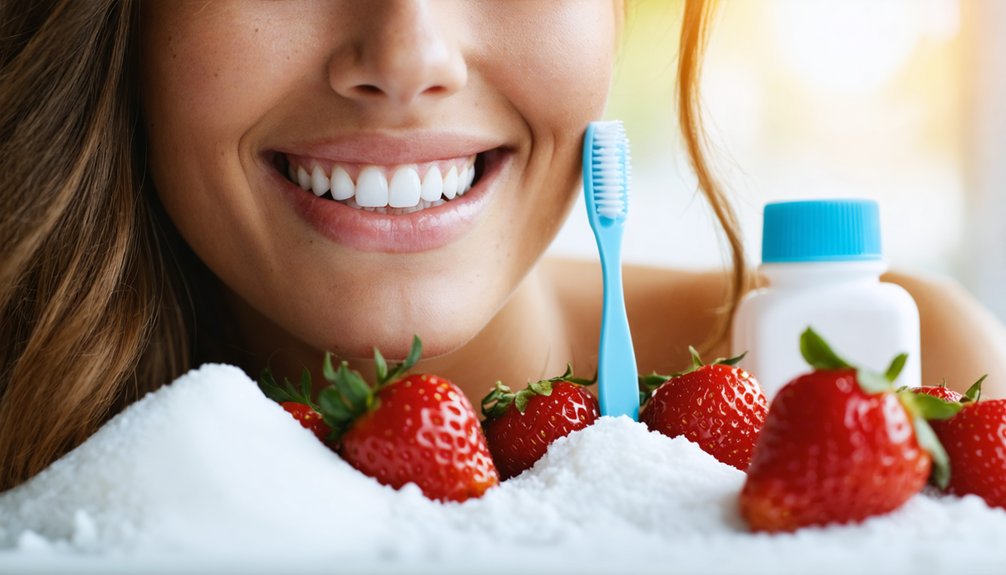
Pigment-rich foods such as berries adhere directly to enamel, accelerating discoloration between whitening sessions. Sugary snacks fuel bacterial acid production, further degrading enamel integrity.
You can limit contact by drinking staining beverages through a straw, consuming them in a single sitting, and rinsing immediately with water. Strategic dietary control isn’t optional—it’s a clinical necessity if you’re committed to sustaining measurable whitening results.
Natural Whitening Remedies That Actually Work
Beyond dietary adjustments, several natural remedies can meaningfully brighten your teeth when applied correctly. Understanding baking soda benefits positions you to use it strategically—its mild abrasive properties physically remove surface stains without harsh chemicals.
Apply a baking soda paste once or twice weekly, or combine it with diluted hydrogen peroxide for enhanced antibacterial and bleaching effects.
Coconut oil pulling offers another evidence-supported option. Swish one tablespoon of coconut oil for 10–15 minutes daily to reduce surface stains and oral bacteria. While results develop gradually, consistency delivers measurable improvement.
You can also use diluted hydrogen peroxide as a gentle rinse, and apply activated charcoal cautiously for its stain-absorbing properties.
Always monitor gum sensitivity and adjust frequency accordingly to protect enamel integrity.
Which Whitening Treatment Is Right for You?
Choosing the right whitening treatment depends on your budget, sensitivity level, and the severity of your stains.
At-home kits, including whitening strips and custom trays, offer convenience and cost-effectiveness, delivering gradual results over several weeks. However, they’re less potent than clinical alternatives and may produce variable outcomes depending on your compliance and stain type.
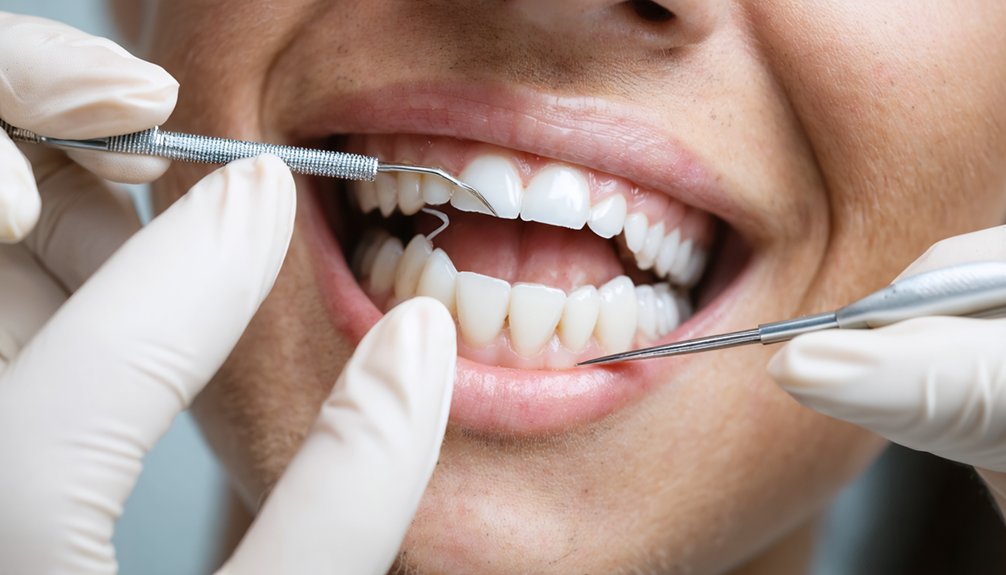
For stubborn or deep discoloration, professional consultations allow your dentist to assess your enamel condition and recommend targeted interventions, such as in-office hydrogen peroxide treatments or laser whitening, which deliver measurable results within a single session.
If you experience sensitivity, your dentist can prescribe lower-concentration formulas with protective protocols.
Ultimately, aligning your treatment choice with your clinical profile and lifestyle guarantees safer, more predictable, and longer-lasting whitening outcomes.
How Long Whitening Results Last and How to Extend Them
Whitening results aren’t permanent, and how long they last depends largely on your habits and the treatment method you chose.
Professional in-office treatments typically maintain whitening longevity between one and three years, while over-the-counter strips may fade within months. You control the outcome through consistent maintenance strategies.
Professional whitening can last up to three years — but only if you commit to consistent maintenance.
Brush twice daily with fluoride toothpaste, floss regularly, and schedule professional cleanings to preserve brightness. Limit coffee, tea, and red wine, or drink them through a straw. Quit smoking to prevent rapid discoloration.
Wait 30 minutes after consuming staining beverages before brushing to protect enamel. Apply touch-up whitening strips or custom trays periodically to counteract gradual dulling.
Your daily choices directly determine how effectively and how long your results endure.
Frequently Asked Questions
Can Teeth Whitening Treatments Affect Existing Dental Crowns or Veneers?
“You can’t judge a book by its cover.” Whitening treatments won’t change your crowns longevity or veneer compatibility—they’re stain-resistant. Consult your dentist to guarantee you’re achieving uniform brightness without compromising existing restorations.
Is Teeth Whitening Safe During Pregnancy or While Breastfeeding?
You should avoid whitening methods during pregnancy or breastfeeding due to unresolved safety concerns. Chemicals like hydrogen peroxide haven’t been fully studied in these conditions, so consult your dentist before pursuing any treatment.
At What Age Can Children or Teenagers Begin Whitening Their Teeth?
Ironically, you’re keen to whiten, yet patience protects young smiles best. Dentists typically recommend whitening methods after age 14-16, once permanent teeth fully develop. Always consult your dentist for personalized age recommendations before starting any whitening treatment.
Does Teeth Whitening Help With Internally Discolored or Dead Teeth?
Whitening limitations mean it won’t effectively address internal discoloration or dead teeth. You’ll need to explore alternative treatment options like veneers or crowns, as standard whitening effectiveness doesn’t penetrate compromised dental health from within.
How Does Genetics Influence Natural Tooth Color and Whitening Outcomes?
Studies show 90% of tooth color variation stems from genetic factors. Your enamel thickness, age influence, and inherited dentin shade determine whitening effectiveness. Dietary habits and lifestyle choices can further modify outcomes, but you can’t fully override genetics.
References
- https://longmontdentalloft.com/blog/teeth-whitening-tips/
- https://robisondental.com/13-amazing-teeth-whitening-tips-straight-from-a-dentist/
- https://drsandihamm.com/top-5-teeth-whitening-methods-explained-by-dr-sandi-hamm-dds-your-expert-guide-to-a-brighter-smile-in-mansfield-texas/
- https://bayouvistadental.com/top-5-teeth-whitening-tips-for-a-radiant-smile/
- https://www.pleasantfamilydentistry.com/blog/6-natural-ways-to-whiten-your-teeth
- https://www.northeastdentalarts.com/blog/what-is-the-least-damaging-way-to-whiten-your-teeth/
- https://fibonaccismile.com/top-5-teeth-whitening-methods-that-actually-work/
- https://www.atlantic-dental.com/blog/the-7-best-ways-to-whiten-teeth-fast
- https://www.aarp.org/health/conditions-treatments/teeth-whitening/