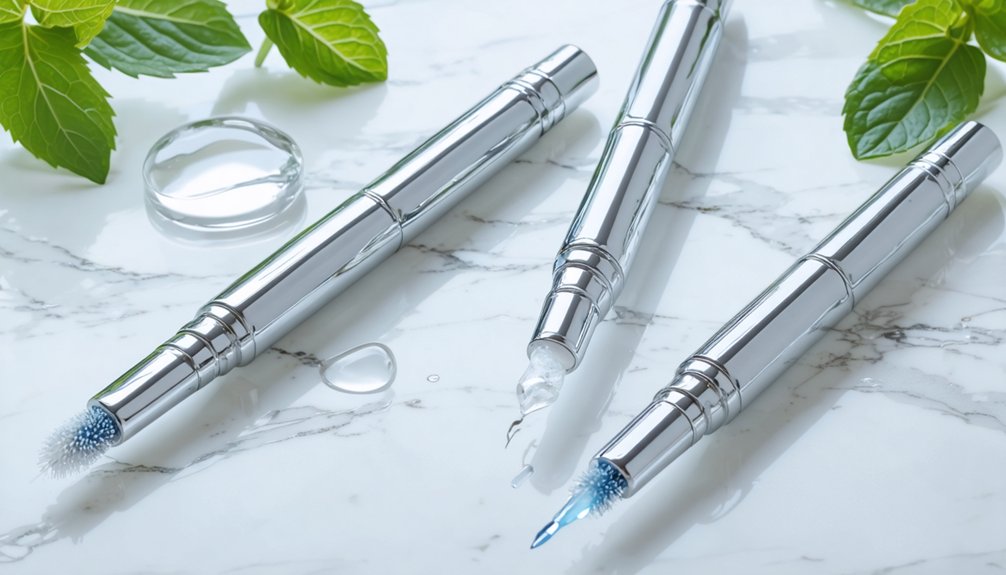
For on-the-go whitening, BURST, GLO, and Colgate each offer distinct advantages. BURST’s 9% hydrogen peroxide with aloe and xylitol targets both surface and intrinsic stains, delivering up to five shades in seven days. GLO’s plant-based formula provides gentler visible results after a single application. Colgate’s 3% formula minimizes sensitivity while gradually lifting stains over fourteen days. Your ideal choice depends on concentration tolerance, speed expectations, and stain type — all of which break down further ahead.
Key Takeaways
- BURST whitening pen delivers up to five shades whiter teeth in seven days using 9% hydrogen peroxide with soothing aloe and coconut oil.
- GLO provides visible whitening after a single application, making it ideal for quick touch-ups before events or outings.
- Colgate’s 3% hydrogen peroxide liquid-gel pen reported zero sensitivity cases, making it suitable for frequent on-the-go use.
- Silicone-bristle tips and built-in precision brushes allow even, controlled application directly onto teeth without mess or fraying.
- Maximize results by drying teeth first, applying post-meal, and avoiding food or drinks for 30 minutes after use.
What Should You Look for in a Teeth Whitening Pen?
When shopping for a teeth whitening pen, you’ll want to prioritize hydrogen peroxide concentration, as it’s the active ingredient that penetrates enamel to break down both surface and intrinsic stains.
Formulas range from 3% to 9%, so match the concentration to your sensitivity threshold and whitening goals.
Beyond concentration, evaluate pen features like applicator design. Silicone-bristle tips prevent fraying and maintain hygiene, while built-in brushes enable precise, seconds-long application.
Look for sensitivity-reducing ingredients — aloe, coconut oil, and xylitol protect enamel without compromising efficacy.
Application methods also matter. Some pens suit overnight use; others work as post-meal touch-ups. Choose a format that integrates into your routine.
Clinically tested formulas with hygienist endorsements give you verifiable evidence that the product delivers measurable results.
GLO vs. BURST vs. Colgate: Which Pen Actually Wins?
When choosing between GLO, BURST, and Colgate, you’ll find that each pen delivers measurably different whitening speeds. GLO works in a single application, BURST achieves up to five shades in seven days, and Colgate averages 1.6 shades over two weeks.
The ingredient profiles diverge just as sharply, with BURST using 9% hydrogen peroxide alongside aloe and xylitol. Colgate relies on a gentler 3% hydrogen peroxide gel, and GLO skips traditional peroxide in favor of plant-based antimicrobials and antioxidants.
If sensitivity is your concern, all three pens incorporate soothing agents, and 100% of testers across top-rated options reported no discomfort. This makes your final choice hinge primarily on how fast you want results.
Whitening Speed Compared
Speed matters when you’re comparing whitening pens, and the clinical data tells a clear story. GLO delivers visible results after a single application, making it your fastest option for immediate impact.
BURST achieves up to five shades of improvement within seven days, offering aggressive whitening duration without sacrificing application ease.
Colgate’s wand averages 1.6 shades over fourteen days, prioritizing gradual, sensitivity-free progress instead.
Your timeline dictates which pen wins. If you need results before an event, GLO’s single-use proof gives you the edge.
If you’re targeting deep stains systematically, BURST’s 9% hydrogen peroxide formula delivers measurable, week-long transformation.
If you’re sensitive and patient, Colgate’s controlled formula earns its place. Match the pen’s speed to your specific whitening goal.
Key Ingredients Breakdown
Ingredients determine how well a whitening pen performs, how safe it’s for daily use, and whether it’ll suit your specific oral chemistry.
Understanding formulation differences lets you match the product to your priorities.
BURST delivers 9% hydrogen peroxide alongside aloe, coconut oil, and xylitol—targeting both surface and intrinsic stains while actively reducing sensitivity and bacterial load.
That combination offers measurable ingredient benefits for users managing sensitivity alongside discoloration.
GLO skips high-peroxide concentrations, relying instead on plant-based antimicrobials and antioxidants—better suited if you prioritize oral health maintenance over aggressive whitening.
Colgate uses 3% hydrogen peroxide in a liquid-gel format, minimizing irritation while still penetrating enamel effectively.
Your choice depends on whether you’re optimizing for whitening intensity, sensitivity control, or antimicrobial support.
Sensitivity And Comfort
Sensitivity determines whether a whitening pen becomes part of your routine or gets abandoned after two uses. Each formula manages comfort factors differently, and those differences matter.
Colgate’s 3% hydrogen peroxide formula produced zero sensitivity reports across 100% of testers — a clinically significant result.
BURST addresses sensitivity levels proactively through aloe, coconut oil, and xylitol, which reduce bacterial load while cushioning enamel during 9% peroxide exposure. That’s a higher concentration managed through strategic buffering.
GLO relies on plant-based antimicrobials and antioxidants rather than heavy peroxide, making it inherently gentler on reactive teeth.
If you prioritize verified comfort data, Colgate wins outright. If you want active nourishment alongside whitening, BURST delivers. GLO suits sensitivity-prone users seeking a milder, antioxidant-supported approach.
How Fast Do Teeth Whitening Pens Actually Work?
How quickly a teeth whitening pen works depends on the formula’s concentration and the type of stain you’re targeting. Whitening speed varies considerably across products.
The BURST Precision Pen delivers up to five shades of improvement within seven days using 9% hydrogen peroxide. The GLO To Go Pen demonstrates clinically proven results after a single application. The Colgate Optic White Wand averages 1.6 shades over fourteen days with its 3% formula.
Clinically tested whitening pens deliver results ranging from 1.6 shades in two weeks to five shades in just seven days.
Application ease also influences outcomes. Pens with built-in brushes or precision tips reduce user error, ensuring consistent gel-to-tooth contact.
Surface stains respond faster than intrinsic discoloration, which requires hydrogen peroxide to penetrate enamel over multiple sessions. Match the formula’s concentration to your stain type for the most predictable, measurable results.
Which Whitening Pen Works Best for Sensitive Teeth?
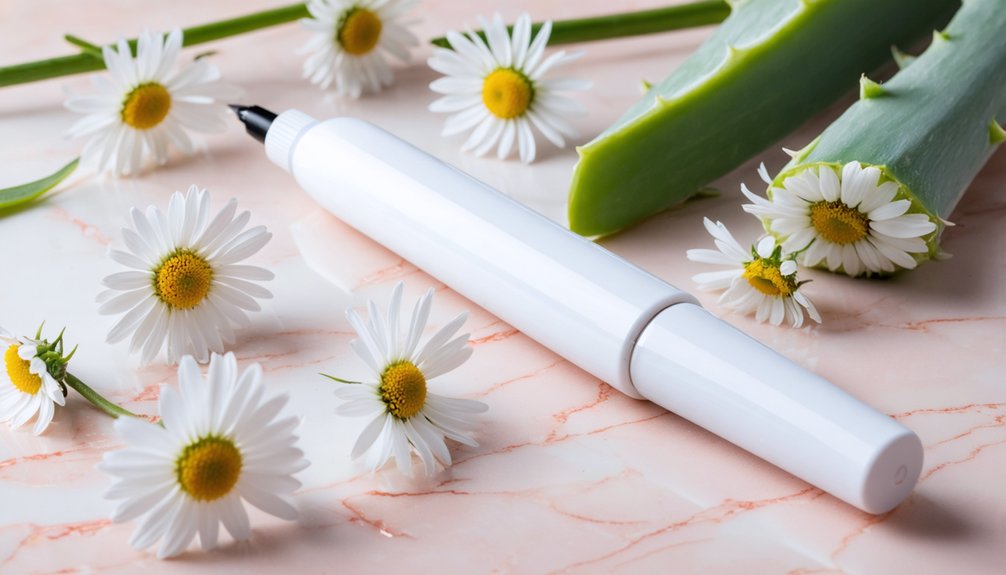
Choosing a whitening pen for sensitive teeth means prioritizing formulas that pair peroxide with active soothers. Your sensitivity factors determine which product delivers results without discomfort.
The BURST Precision Pen combines 9% hydrogen peroxide with aloe, coconut oil, and xylitol, directly addressing bacterial load and comfort levels simultaneously.
The Colgate Optic White Wand’s lower 3% hydrogen peroxide concentration reported zero sensitivity or gum irritation across all testers, making it your safest entry point.
GLO’s plant-based antimicrobials and antioxidants support tissue health without harsh chemical exposure.
You control outcomes by matching peroxide concentration to your tolerance threshold. Lower concentrations extend your treatment timeline but protect enamel integrity. Higher concentrations accelerate results but demand buffering ingredients to maintain acceptable comfort levels throughout use.
How to Use a Teeth Whitening Pen for Best Results
Once you’ve matched your formula to your sensitivity threshold, correct application technique determines whether that formula delivers its full whitening potential.
Applying haphazardly wastes product and compromises results. Precise application techniques and ideal timing maximize every use.
- Dry your teeth first. Saliva dilutes hydrogen peroxide, reducing its oxidizing efficiency. Blot teeth with a tissue before applying.
- Apply a thin, even layer. Twist the pen until gel flows, then paint each tooth surface systematically from canine to canine using controlled strokes.
- Time your application strategically. Use the pen post-meal when enamel is clean, and avoid eating or drinking for 30 minutes afterward to allow full penetration.
Can You Use a Teeth Whitening Pen Every Day?
Whether daily use of a teeth whitening pen is safe depends on the formula’s hydrogen peroxide concentration and your enamel’s baseline condition.
Low-concentration formulas, like Colgate’s 3% hydrogen peroxide wand, tolerate frequent application better than higher-concentration options like BURST’s 9% formula.
Not all whitening pens are created equal — lower concentrations allow for more frequent, forgiving daily use.
Follow these application tips to protect enamel during daily use:
- Limit sessions to once daily, preferably post-meal
- Monitor sensitivity — discontinue if discomfort develops
- Space high-concentration treatments to every other day
- Hydrate enamel by choosing formulas containing aloe or xylitol
You’re in control of your whitening timeline.
Cycling between maintenance and active treatment phases prevents overexposure. If sensitivity persists beyond 48 hours, reduce frequency and consult your dental hygienist before resuming.
Are Teeth Whitening Pens Safe for Daily Use?
How safe teeth whitening pens are for daily use depends largely on hydrogen peroxide concentration and your enamel’s current condition. Daily safety isn’t universal—it varies by formula strength and application frequency.
Three clinical benchmarks guide responsible use:
- Concentration thresholds — Colgate’s 3% H2O2 suits frequent use; BURST’s 9% warrants closer monitoring of sensitivity responses.
- Sensitivity indicators — If discomfort emerges, reduce application frequency immediately and consult your dentist.
- Enamel baseline — Pre-existing erosion or restorations disqualify daily application regardless of formula gentleness.
BURST’s aloe and xylitol and Colgate’s zero-sensitivity results among testers confirm that balanced formulas reduce risk—but you’re still responsible for tracking how your teeth respond.
Frequently Asked Questions
Do Teeth Whitening Pens Work on Crowns, Veneers, or Dental Implants?
Teeth whitening pens don’t improve whitening effectiveness on crowns, veneers, or implants—hydrogen peroxide only works on natural enamel. These dental surfaces resist oxidation, so you’ll notice uneven results if restorations don’t match your newly whitened natural teeth.
Can Teeth Whitening Pens Expire or Lose Effectiveness Over Time?
Like a fading star, hydrogen peroxide loses its oxidizing power over time. You’ll notice reduced whitening results past the shelf life. Store your product storage location cool and dry to preserve effectiveness longer.
Should You Eat or Drink Anything Before Applying a Whitening Pen?
Avoid eating or drinking 30 minutes before applying your whitening pen. You’ll optimize hydrogen peroxide absorption, reduce sensitivity concerns, and guarantee cleaner enamel contact. Follow these application tips: rinse first, dry teeth, then apply precisely.
Are Teeth Whitening Pens Safe to Use During Pregnancy or Breastfeeding?
With 9% hydrogen peroxide in some pens, you should avoid teeth whitening pens during pregnancy or breastfeeding. Consult your doctor first, as teeth sensitivity risks increase. You’ll find natural alternatives with plant-based antimicrobials safer for this period.
Can Children or Teenagers Safely Use Teeth Whitening Pens?
You shouldn’t let children use teeth whitening pens. Age restrictions typically exclude those under 18, as developing enamel faces higher sensitivity risks. Follow safety guidelines and consult your dentist before allowing teenagers to use any whitening products.
References
- https://gloscience.com/products/glo-to-go-teeth-whitening-pen
- https://burstoralcare.com/products/precision-whitening-pen
- https://www.goodhousekeeping.com/health-products/g28723133/best-at-home-teeth-whitening-products/