When choosing enamel-safe whitening products, you’ll want options backed by clinical evidence, not just marketing claims. Dentists typically recommend products with hydrogen peroxide concentrations between 6–10% for OTC strips or 10–22% carbamide peroxide for custom trays. You should also look for an RDA below 250 and added fluoride for enamel reinforcement. Avoid activated charcoal and acidic DIY trends that erode enamel. The right product depends on your specific dental profile—and there’s considerably more to contemplate.
Key Takeaways
- Dentist-recommended enamel-safe whitening products include Crest 3D White Glamorous strips (10% hydrogen peroxide) and Burst strips (6% concentration).
- The ADA defines enamel-safe products as those with a Relative Dentin Abrasivity (RDA) score below 250.
- Avoid activated charcoal, lemon juice, and baking soda, as these DIY trends cause irreversible enamel erosion.
- Potassium nitrate and fluoride are key ingredients in dentist-recommended products, reducing sensitivity and reinforcing enamel strength.
- Always consult a dentist before whitening, as enamel integrity, gum recession, and existing restorations affect safe product selection.
What “Enamel-Safe” Actually Means in Whitening Products
When choosing a whitening product, you’ll encounter the term “enamel-safe” on nearly every label — but it’s a marketing claim that demands scrutiny.
Enamel protection hinges on two measurable factors: peroxide concentration and abrasive content. Hydrogen peroxide and carbamide peroxide penetrate dental tissue without structurally degrading enamel when used within clinically validated concentrations.
Products exceeding safe thresholds — or containing high-abrasive compounds like activated charcoal or citric acid — actively erode your enamel.
One of the most persistent whitening myths is that natural or DIY alternatives are inherently safer than peroxide-based formulas. They aren’t.
The ADA evaluates abrasivity through the Relative Dentin Abrasivity scale, and any product below 250 RDA qualifies as enamel-safe.
You need verified data, not label language, to make an informed decision.
The Ingredients and Concentration Levels Dentists Actually Check
Before a dentist clears any whitening product for use, they’re evaluating two core variables: the active bleaching agent and its concentration.
Hydrogen peroxide and carbamide peroxide are the only agents with confirmed ingredient efficacy backed by clinical evidence. Hydrogen peroxide works directly; carbamide peroxide breaks down into hydrogen peroxide upon contact with saliva.
Only hydrogen peroxide and carbamide peroxide carry clinical proof — and carbamide simply converts to hydrogen peroxide once it contacts saliva.
Concentration safety thresholds matter considerably. Professional systems use 25–40% hydrogen peroxide under controlled conditions. OTC strips typically stay at 6–10%, while custom tray gels range from 10–22% carbamide peroxide.
Dentists also verify the presence of potassium nitrate for sensitivity management and fluoride for enamel reinforcement.
What they’re screening against is equally important: abrasive compounds like activated charcoal and acidic agents like citric acid, both of which erode enamel without producing verified whitening results.
In-Office Whitening: The Most Effective Enamel-Safe Option
Once the dentist has verified the right agent and concentration for your situation, in-office whitening represents the most controlled application of those principles.
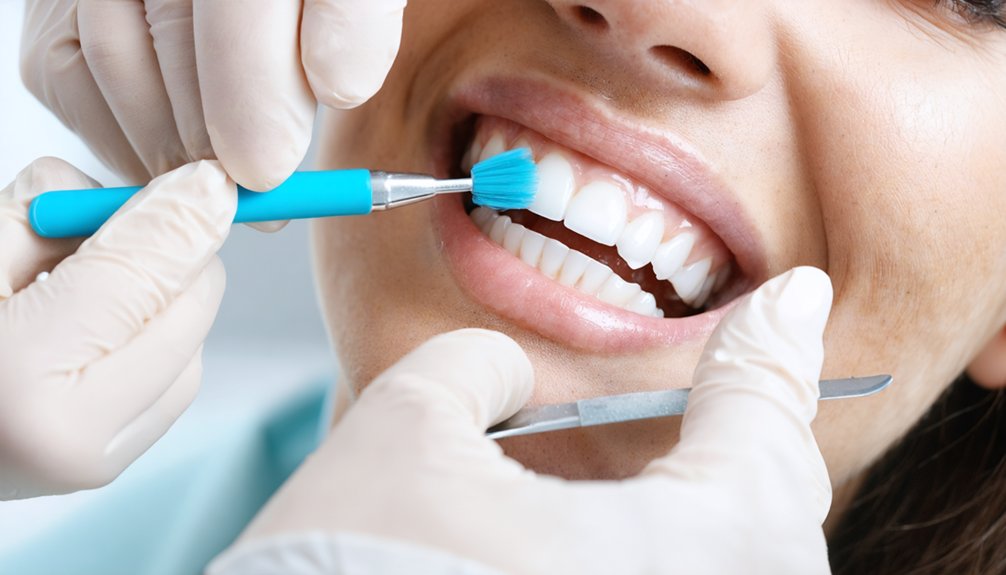
High-concentration hydrogen peroxide or carbamide peroxide gels are applied directly under clinical supervision, with protective barriers shielding your gums from irritation. Blue LED light or laser activation enhances whitening efficacy, delivering results up to 8 shades lighter in a single session.
In-office techniques eliminate the variables that compromise OTC outcomes—uneven gel contact, overuse, and unmonitored exposure time. Your enamel remains protected because a full dental exam precedes treatment, confirming tissue health before any peroxide contact occurs.
No other method matches this combination of concentration, precision, and real-time oversight, making it the most evidence-supported option for patients who prioritize both results and enamel integrity.
Custom Tray Systems Dentists Prescribe Most Often
When your dentist fits you for a custom tray system, they take precise impressions of your teeth to fabricate trays that hold whitening gel in consistent contact with each tooth surface.
You’ll typically receive a professional-strength gel like Opalescence in concentrations ranging from 10% to 35% carbamide peroxide, calibrated to your sensitivity level and whitening goals.
Your dentist monitors the process to prevent overuse, ensuring you achieve gradual, even results without compromising enamel integrity.
Professional Tray Fitting Process
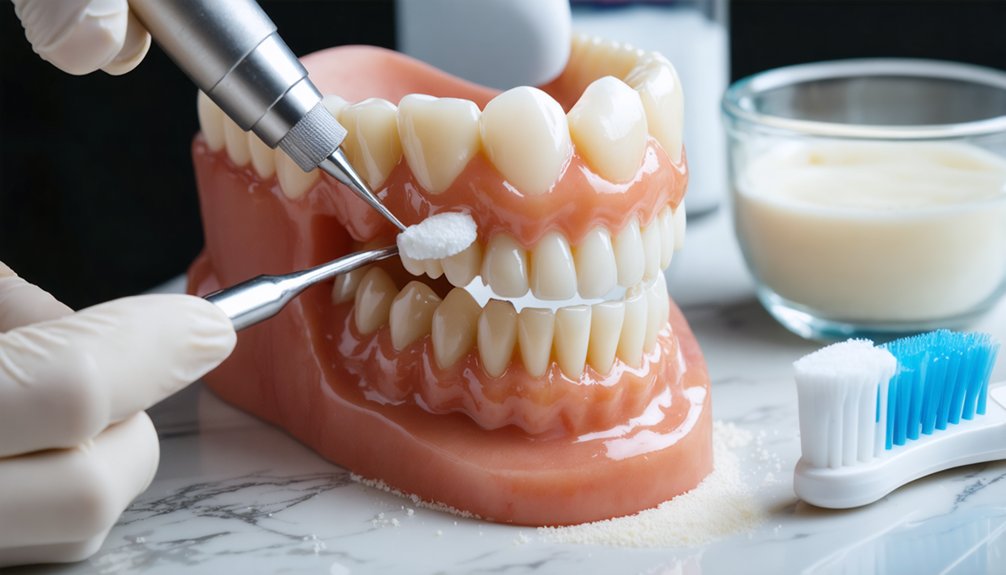
To get custom whitening trays, you’ll visit your dentist for a brief impressions appointment, during which they take precise molds of your upper and lower teeth using a polyvinyl siloxane or alginate material.
The lab then fabricates thin, flexible trays from these molds, ensuring exact product customization that maximizes gel contact with each tooth surface while protecting your gingival tissue.
This precise tray fitting eliminates the uneven coverage common with OTC strips or boil-and-bite alternatives.
Your dentist verifies the fit at a follow-up visit, checking for pressure points or gaps that could cause gum irritation or gel leakage.
Properly fitted trays let you control application frequency and gel concentration, giving you a structured, evidence-based whitening protocol rather than a guesswork-driven approach.
Recommended Gel Concentrations
Dentists most commonly prescribe three gel concentrations for custom tray systems: 10%, 15%, and 20% carbamide peroxide, with 10% carbamide peroxide serving as the standard starting point for most patients. This concentration breaks down to approximately 3.5% hydrogen peroxide, delivering gradual whitening while minimizing sensitivity risk.
If you tolerate 10% well, your dentist may advance you to 15% or 20% for faster, more pronounced results. Among recommended gel types, Opalescence stands out for incorporating potassium nitrate, which actively reduces sensitivity during ideal application.
You’ll typically wear your custom tray overnight for two to four hours, depending on your prescribed concentration. Higher concentrations require shorter application windows to protect enamel. Your dentist controls the protocol, ensuring you achieve effective whitening without compromising tooth structure.
Realistic Whitening Results: What Enamel-Safe Products Can Deliver
Understanding realistic expectations helps you choose the right whitening approach for your needs. Enamel-safe OTC products typically deliver one to three shades of improvement, while professional in-office treatments achieve up to eight shades lighter.
Don’t let whitening myths mislead you—no safe product produces instant dramatic results without trade-offs.
Sensitivity education is equally critical. Lower peroxide concentrations reduce post-treatment discomfort but require longer treatment timelines. Custom tray systems and strips with six to ten percent hydrogen peroxide balance efficacy with enamel safety.
Professional supervision maximizes outcomes while minimizing risk.
You should also know that restorations—crowns, veneers, or fillings—won’t respond to whitening agents. Only natural tooth enamel changes.
Aligning your expectations with clinical evidence guarantees you select the most effective, enamel-safe approach.
The Best Dentist-Recommended Whitening Strips for Sensitive Enamel
Whitening strips offer a practical middle ground between professional treatments and basic OTC toothpastes, particularly when you’re managing sensitive enamel.
For whitening strip effectiveness without compromising enamel integrity, dentists consistently recommend Crest 3D White Glamorous and Burst strips. Crest’s 10% hydrogen peroxide formula delivers up to 11 shades of improvement, while Burst’s 6% concentration prioritizes sensitivity reduction for reactive teeth.
Both options feature no-slip designs that maintain consistent gel contact for 30–60 minutes daily across 14-day treatment courses. You’ll achieve visible results within two weeks without the enamel erosion risk associated with abrasive DIY alternatives.
Since peroxides permeate dental tissues without structural damage, these dentist-tested strips target both extrinsic and intrinsic stains effectively. Note that existing restorations won’t respond to peroxide-based treatments.
Best ADA-Approved, Enamel-Safe Whitening Toothpastes for Daily Use
When selecting a whitening toothpaste for daily use, you should verify the ADA Seal of Acceptance, which confirms the product meets rigorous safety and efficacy standards.
You’ll want to choose low-abrasive formulas containing baking soda or silica, as these ingredients remove surface stains without compromising enamel integrity.
Consistent daily brushing with an ADA-approved whitening toothpaste delivers gradual stain removal while fluoride strengthens your teeth against decay and sensitivity.
ADA Seal Verification
The ADA Seal of Acceptance is your most reliable indicator that a whitening toothpaste meets verified safety and efficacy standards for daily enamel use.
ADA seal benefits extend beyond branding—each product undergoes independent clinical testing confirming both product efficacy and enamel compatibility before approval is granted.
When you’re selecting a whitening toothpaste, look for the seal directly on the packaging. It confirms the formula contains safe peroxide concentrations, low-abrasion agents, and fluoride for decay prevention.
Products without it haven’t cleared ADA’s verification threshold, regardless of marketing claims.
You shouldn’t rely on ingredient lists alone. Manufacturers self-report formulations, but only ADA-reviewed products carry third-party validation.
That distinction matters when your priority is protecting enamel integrity while achieving consistent, evidence-backed whitening results daily.
Enamel-Safe Abrasive Levels
Beyond seal verification, understanding a toothpaste’s abrasive level gives you a second, equally measurable safeguard for enamel.
The FDA and ADA use the Relative Dentin Abrasivity (RDA) scale to quantify how aggressively abrasive ingredients act on tooth surfaces. Safe daily-use toothpastes score below 250 RDA, though dentists typically recommend staying under 70 for ideal enamel protection.
Low-abrasive formulas containing silica or baking soda effectively remove surface stains without stripping enamel. High-RDA products, including some charcoal-based options, erode enamel over time, causing irreversible sensitivity and structural damage.
When selecting a whitening toothpaste, check manufacturer-published RDA values or ask your dentist directly. Controlling this single variable substantially reduces your cumulative abrasion risk during daily brushing.
Daily Use Benefits
Daily use of ADA-approved whitening toothpastes delivers compounding benefits that extend well beyond surface-level stain removal. Integrating these formulas into your daily oral hygiene routine strengthens enamel through consistent fluoride exposure while gradually lifting extrinsic stains without abrasive damage.
You’re building a protective foundation—one that reduces sensitivity risk and supports long term results rather than chasing periodic, high-intensity treatments.
Unlike aggressive whitening interventions, daily-use toothpastes maintain your baseline tooth brightness between professional sessions. Their low-abrasive silica and baking soda formulations remove biofilm and chromogens without compromising enamel integrity.
You control the pace of whitening, minimizing sensitivity while sustaining measurable improvements over weeks and months. Consistent application compounds results, making ADA-approved toothpastes the most clinically responsible option for enamel-conscious, long-term oral maintenance.
Whitening Products That Work Best for Sensitive Teeth
If you have sensitive teeth, choosing a whitening product with a lower peroxide concentration is key to minimizing discomfort while still achieving results. Conducting a sensitivity assessment before starting any whitening regimen helps you identify your tolerance threshold and select the appropriate formulation.
Clinically, 3% hydrogen peroxide or 10% carbamide peroxide delivers measurable product effectiveness without triggering significant post-treatment discomfort. Opalescence gels incorporate potassium nitrate as a desensitizer, directly targeting nerve sensitivity during treatment.
Burst whitening strips at 6% hydrogen peroxide offer another controlled option for sensitive users.
Custom-fitted tray systems prescribed by your dentist provide the most regulated approach, allowing you to adjust application duration and concentration precisely. You’ll avoid overexposure while maintaining consistent, trackable whitening progress under professional supervision.
DIY Whitening Trends That Damage Enamel
While professional and OTC-approved whitening products work within clinically established safety margins, many popular DIY trends don’t.
These methods cause irreversible enamel erosion, making DIY disasters costlier than any whitening treatment you’re avoiding.
Dentists consistently flag these four offenders:
- Activated charcoal – Highly abrasive particles physically scrape enamel away with repeated use.
- Lemon juice – Citric acid demineralizes enamel, permanently weakening tooth structure.
- Baking soda alone – Without buffering agents, abrasive overuse accelerates surface degradation.
- Undiluted essential oils – No clinical evidence supports whitening claims; chemical irritation damages soft tissue.
You can’t regenerate lost enamel. Once it’s gone, sensitivity, discoloration, and decay risk increase permanently.
Stick to dentist-tested, peroxide-based options that whiten without compromising your tooth structure.
Choosing the Right Enamel-Safe Whitening Product for Your Teeth
Before selecting a whitening product, you’ll need to assess your sensitivity levels, since high-peroxide treatments like in-office gels may worsen discomfort in sensitive teeth.
Lower concentrations like 3% hydrogen peroxide or 10% carbamide peroxide offer a safer alternative.
You should compare product strengths carefully, recognizing that professional systems achieve up to 8 shades of improvement while OTC strips and toothpastes typically deliver 1–3 shades.
Consulting your dentist first guarantees you choose an enamel-safe option matched to your dental health, minimizing the risk of overuse, uneven results, or enamel erosion.
Assessing Your Sensitivity Levels
Tooth sensitivity plays a decisive role in determining which whitening product is appropriate for your needs. Before selecting a treatment, evaluate your sensitivity indicators systematically:
- Mild sensitivity — You tolerate cold beverages without lingering discomfort; standard 10% carbamide peroxide strips or trays are suitable.
- Moderate sensitivity — You experience brief sharp pain with temperature changes; opt for 3% hydrogen peroxide formulas with potassium nitrate.
- Severe sensitivity — You have persistent discomfort; consult your dentist before any whitening attempt.
- Post-treatment sensitivity — Monitor reactions after initial use and adjust concentration downward if irritation develops.
Effective sensitivity management means choosing lower peroxide concentrations, gradual application methods, and dentist-supervised protocols.
Avoiding high-abrasive DIY alternatives protects your enamel while delivering controlled, measurable whitening outcomes.
Comparing Whitening Product Strengths
Whitening products span a wide range of peroxide concentrations, and understanding these differences helps you select the most effective and enamel-safe option.
Professional in-office treatments use high-concentration hydrogen peroxide, delivering up to 8 shades of improvement.
Custom tray systems offer mid-range whitening ingredient effectiveness through professional-strength gels, letting you control application pace.
OTC strips, like Crest 3D White Glamorous at 10% hydrogen peroxide, achieve 1–3 shades lighter through daily product application methods lasting 30–60 minutes.
ADA-approved toothpastes use the lowest concentrations, targeting surface stains through consistent brushing.
You’ll match concentration strength to your sensitivity tolerance and desired outcome.
Avoid charcoal or lemon juice alternatives—they erode enamel without delivering reliable whitening results.
Consulting Your Dentist First
Selecting the right concentration and product type comes down to more than personal preference—your dental health history determines which whitening options are safe for you.
Whitening consultations give you clinical data, not guesswork. Your dentist evaluates four critical factors before issuing dentist recommendations:
- Enamel integrity — thinned enamel eliminates high-concentration peroxide options
- Gum recession — exposed dentin increases sensitivity risk with stronger formulas
- Existing restorations — crowns and veneers don’t respond to peroxide treatments
- Active decay or infection — both require treatment before any whitening begins
Skipping this step risks enamel erosion, uneven results, or worsening sensitivity.
You’re making a clinical decision, so treat it like one—consult your dentist first.
Frequently Asked Questions
Can Whitening Products Permanently Alter the Color of Dental Restorations?
No, whitening products can’t permanently alter your dental restorations’ color. They won’t respond to treatment, so you’ll notice mismatched shades. Consider restoration longevity and whitening efficacy together—consult your dentist before starting any regimen.
How Long Do Professional Whitening Results Typically Last Before Retreatment Is Needed?
Professionally polished results persist six to twelve months before you’ll need retreatment. You can control whitening frequency by managing diet and habits, while strategic touch-up techniques using custom trays maintain your ideal shade efficiently.
Is Teeth Whitening Safe During Pregnancy or While Breastfeeding?
You should avoid teeth whitening during pregnancy due to pregnancy safety concerns, as peroxide effects on fetal development aren’t fully studied. Follow breastfeeding precautions similarly—consult your dentist before resuming any whitening treatments postpartum.
At What Age Can Teenagers Safely Begin Using Whitening Products?
You can safely start whitening products at 14, once permanent teeth fully erupt. Prioritize teenage dental health by choosing low-concentration formulas, ensuring whitening product effectiveness without compromising developing enamel.
Does Dental Insurance Ever Cover Professional Whitening Treatments?
Most dental insurance doesn’t cover professional whitening since it’s cosmetic. You’ll want to check your plan’s coverage options and ask your dentist about treatment frequency to manage out-of-pocket costs effectively.
References
- https://www.goodrx.com/conditions/dental-care/is-teeth-whitening-safe
- https://cedardentalgroup.com/teeth-whitening-recommended-by-dentist/
- https://nobledentalcares.com/blog/best-teeth-whitening-products-recommended-by-dentists-1
- https://www.healthline.com/health/dental-and-oral-health/best-teeth-whitening
- https://www.premierdentalohio.com/blog/teeth-whitening-options-which-one-is-right-for-you
- https://www.ada.org/resources/ada-library/oral-health-topics/whitening
- https://www.jeffreyburns.com/safe-teeth-whitening-options/