Stained teeth respond well to targeted overnight treatments that combine mechanical removal, chemical bleaching, and antimicrobial action in a single evening routine. Start by brushing with a baking soda paste to lift surface stains, follow with a diluted hydrogen peroxide rinse to break down deeper discoloration, and finish with coconut oil pulling to reduce bacteria. Preparing your teeth beforehand and maintaining consistent habits afterward makes all the difference—and the full step-by-step breakdown ahead covers everything you need.
Key Takeaways
- Brush with baking soda paste using circular motions for 1-2 minutes to scrub away surface stains and prime enamel.
- Rinse with a 1:1 hydrogen peroxide and water solution, swishing for 60 seconds to break down residual stain molecules.
- Finish with coconut oil pulling for 15-20 minutes to reduce remaining stains and harmful bacteria.
- Apply whitening strips firmly against teeth before bed for one hour of uninterrupted peroxide contact overnight.
- Protect gums with petroleum jelly and use desensitizing toothpaste beforehand to minimize irritation and sensitivity during treatment.
Why Your Teeth Look Stained in the First Place
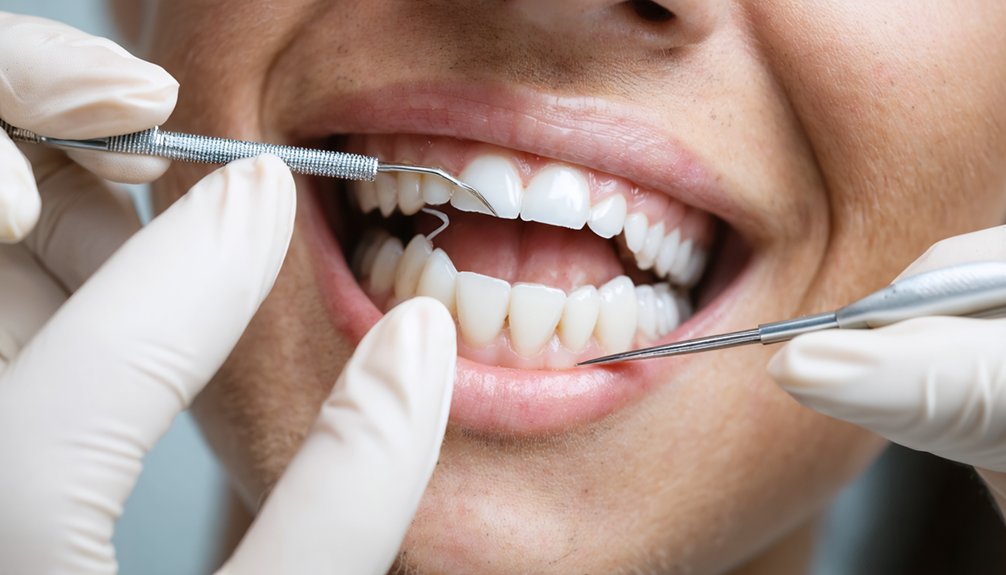
Teeth staining occurs through two primary mechanisms: extrinsic discoloration, where surface deposits from food, drink, and tobacco accumulate on the enamel, and intrinsic discoloration, where pigments penetrate the dentin beneath.
Teeth stain through two mechanisms: surface deposits on enamel and pigments penetrating deeper into the dentin beneath.
Dietary impacts from coffee, tea, and red wine accelerate both processes. Aging effects thin enamel naturally, exposing darker dentin underneath — a reality no whitening myths will reverse.
Your lifestyle factors, including poor dental hygiene and tobacco use, compound stain causes markedly. Neglecting preventive measures like consistent brushing and flossing allows plaque to calcify, locking pigments deeper into enamel health-compromising biofilm.
Understanding your specific stain type matters before choosing any treatment. Surface stains respond well to abrasive and peroxide-based methods, while intrinsic discoloration requires sustained, targeted intervention.
Prepare Your Teeth Before Any Whitening Treatment
Before applying any whitening treatment, you’ll need to brush and floss thoroughly to clear debris and plaque that would otherwise block whitening agents from contacting enamel directly. Skipping this step reduces treatment efficacy and wastes product.
Next, address gum protection by applying a thin layer of petroleum jelly or lip balm along the gumline. This creates a barrier against peroxide-based agents that cause tissue irritation.
If you experience tooth sensitivity, apply a desensitizing toothpaste containing potassium nitrate 30 minutes before treatment. This temporarily blocks dentinal tubules, reducing nerve exposure during whitening.
Finally, limit staining consumables—coffee, tea, red wine, and tobacco—for at least two hours prior. Clean, protected teeth absorb whitening agents more uniformly, delivering measurably better results with reduced risk of sensitivity or irritation.
Use Whitening Strips for the Fastest Overnight Results
Whitening strips deliver the fastest at-home results by using thin, flexible polyethylene strips coated with a peroxide-based gel that adheres directly to enamel.
Apply them before bed for one hour of uninterrupted contact, maximizing whitening effectiveness without trays or messy gels.
Press each strip firmly against your upper and lower teeth, ensuring full surface contact. The peroxide-based gel penetrates enamel, breaking down stain molecules and producing noticeable results overnight.
Darker starting shades will show the most dramatic improvement.
If you have sensitive teeth, monitor for gum irritation, as the one-size-fits-all design doesn’t account for individual anatomy.
Consistent nightly application yields progressive whitening over one to two weeks, making strips your most efficient solution for rapid, measurable results.
Make a Baking Soda Paste to Whiten Teeth Overnight
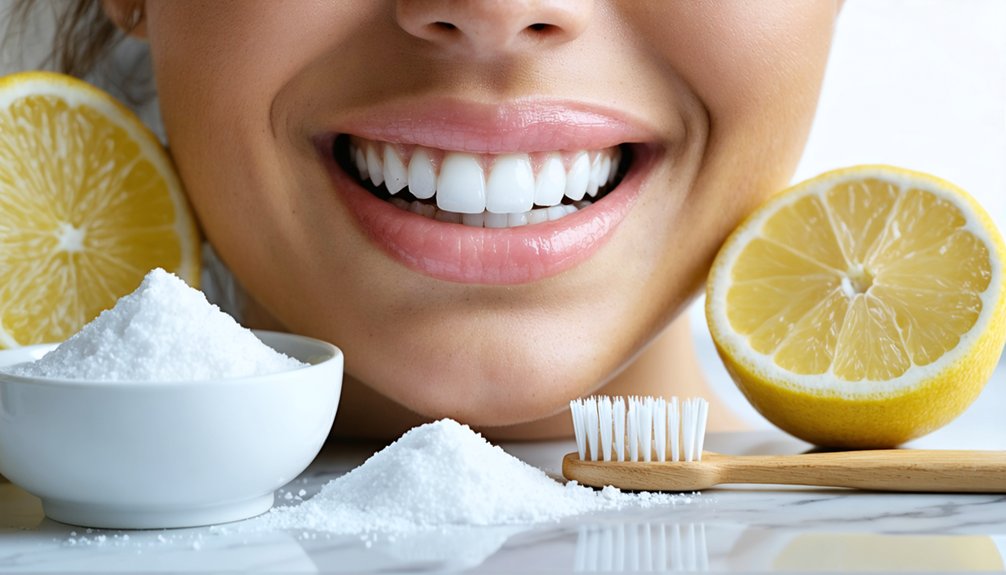
Baking soda’s mild abrasiveness scrubs away surface stains while its alkaline properties inhibit bacterial growth, making it an effective overnight whitening option.
To apply it correctly, mix 1 teaspoon of baking soda with 2 teaspoons of water to form a paste, then brush for 1-2 minutes no more than 2-3 times per week to protect your enamel.
For enhanced stain-breaking results, you can combine the paste with hydrogen peroxide before brushing.
Baking Soda Paste Benefits
Although it lacks the intensity of professional treatments, a baking soda paste offers a practical, low-cost solution for lifting surface stains overnight. Its mild abrasive properties physically scrub enamel, enabling effective stain removal without harsh chemicals.
You’ll also benefit from plaque reduction, as baking soda disrupts bacterial biofilm accumulation along the gumline.
Beyond cosmetic improvements, it supports broader oral hygiene by creating an alkaline environment that inhibits bacterial growth. For safe usage, limit application to two or three times weekly, brushing for one to two minutes each session. Exceeding this frequency risks enamel wear over time.
Combining baking soda with hydrogen peroxide amplifies stain-breaking effects, giving you greater control over your whitening results while maintaining a straightforward, accessible routine.
Proper Application Technique
Applying the paste correctly determines how effectively it removes stains without compromising enamel. Before application, brush and floss to clear debris, ensuring direct paste contact with tooth surfaces. Use application tips that maximize coverage: apply in small, controlled circular motions for 1-2 minutes, focusing on stained areas.
- Limit sessions to 2-3 times weekly; overuse accelerates enamel erosion.
- Maintain strip adhesion principles—keep paste concentrated on enamel, avoiding prolonged gum contact to prevent irritation.
- Combine with hydrogen peroxide by mixing both ingredients for enhanced stain-breaking penetration.
Rinse thoroughly after brushing to remove all residue. Protect your gums beforehand with petroleum jelly, reducing chemical exposure.
Consistent, precise application—not excessive frequency—delivers measurable whitening results within one to two weeks.
Use Hydrogen Peroxide to Lift Stubborn Stains
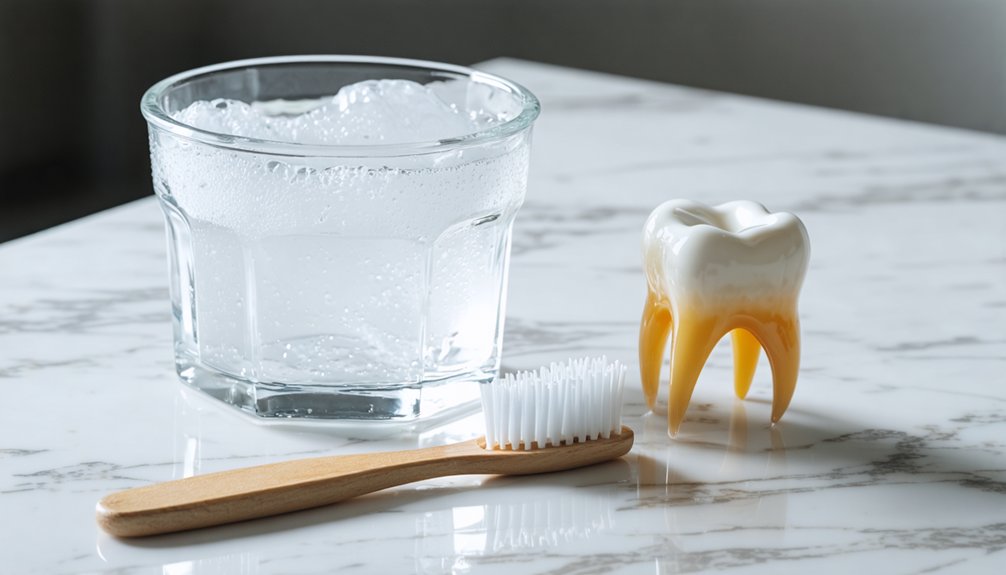
Hydrogen peroxide works as a natural bleaching agent by breaking down the molecular bonds responsible for tooth discoloration, making it one of the most effective at-home solutions for stubborn stains.
For safe stain removal, dilute 3% hydrogen peroxide 1:1 with water, then swish the solution for 30 to 60 seconds. Limit application to two to three times per week to prevent enamel erosion. Never swallow the mixture, and rinse your mouth thoroughly afterward.
For enhanced results, combine hydrogen peroxide with baking soda and brush twice daily for one week. This pairing amplifies stain-breaking efficacy while maintaining a controlled, systematic approach to whitening.
Since hydrogen peroxide shares its active compound with professional treatments, you’re applying clinically validated chemistry at a safer, home-appropriate concentration.
Try Oil Pulling to Whiten Teeth Without Harsh Chemicals
If you prefer a chemical-free approach, oil pulling offers a gentle yet effective method for reducing surface stains and oral bacteria.
Swish one tablespoon of coconut oil for 15–20 minutes daily, as its antimicrobial properties break down plaque without exposing your enamel to acidic or abrasive agents.
Traditional mustard oil combined with salt serves as an alternative, delivering both antibacterial and mild abrasive action for enhanced stain removal.
Oil Pulling Benefits
Oil pulling offers a gentle, chemical-free alternative for whitening teeth while supporting overall oral health. This holistic approach integrates natural whitening into your daily routine without compromising enamel safety.
Key benefits you’ll gain from oil pulling:
- Bacteria reduction: Swishing coconut oil for 15–20 minutes removes harmful bacteria and plaque, targeting surface stains at their source.
- Enamel safety: Unlike peroxide-based treatments, oil pulling removes stains without exposing enamel to acid or erosive compounds.
- Traditional methods validated: Mustard oil with salt delivers additional antibacterial and mildly abrasive action, reinforcing centuries-old practice with functional results.
Incorporate oil pulling into your nightly regimen for compounding oral health improvements.
You’ll notice visible results within 2–3 days when practiced consistently alongside complementary whitening techniques.
Best Oils To Use
Choosing the right oil determines how effectively you’ll remove surface stains while protecting enamel integrity.
Coconut oil remains the most evidence-supported choice for oil pulling due to its high lauric acid content, which actively disrupts bacterial membranes and reduces plaque accumulation. Its mild flavor also makes 15-20 minute sessions manageable.
For a more aggressive approach, traditional mustard oil combined with salt delivers dual oil benefits: antibacterial action from allyl isothiocyanate compounds and mechanical abrasion from salt particles. This combination targets stubborn surface deposits effectively.
You can also incorporate diluted essential oils like peppermint or clove into your chosen natural oils base to enhance antimicrobial performance.
Whichever oil you select, consistency determines your results—daily pulling progressively lifts stains without exposing enamel to acidic or erosive compounds.
Combine These Methods the Night Before for Faster Results
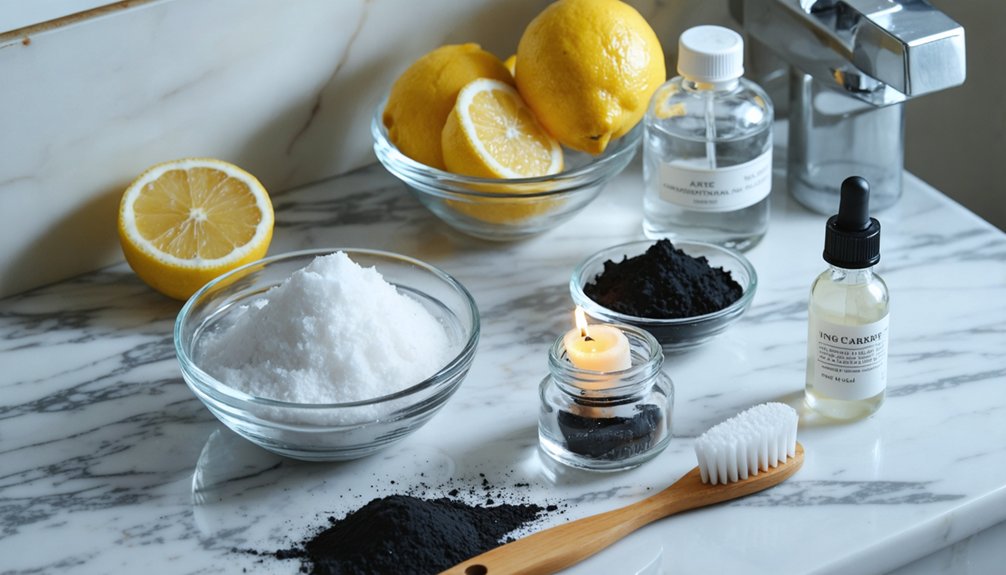
When used together strategically, baking soda, hydrogen peroxide, and oil pulling create a compounding whitening effect that outperforms any single method alone.
Your overnight regimen should follow a precise sequence to maximize each method’s effectiveness through combination techniques.
Follow this exact overnight sequence to unlock each method’s full whitening potential through powerful combination techniques.
- Start with baking soda paste: Brush for 1-2 minutes to scrub surface stains and prime enamel for deeper treatment.
- Follow with hydrogen peroxide rinse: Swish a 1:1 diluted solution for 60 seconds to break down residual stain molecules.
- Finish with oil pulling: Swish coconut oil for 15-20 minutes to eliminate bacteria and remove loosened debris.
Apply whitening strips last before sleeping. Consistent execution of this sequence delivers measurable results within one week.
Keep Your Teeth White Long After Treatment
Maintaining your results requires consistent daily habits that prevent new stains from forming. Brush twice daily with whitening toothpaste and floss every night to eliminate plaque before it hardens into stain-trapping tartar.
Follow with an alcohol-free mouthwash to neutralize bacteria without drying out your gums.
Your dietary choices directly impact how long your whitening results last. Limit coffee, tea, red wine, and tobacco—the primary culprits behind recurring discoloration.
When you do consume staining beverages, use a straw to minimize contact with enamel.
Schedule professional dental cleanings every six months for deep stain removal that home methods can’t achieve.
For ongoing teeth maintenance, reapply your chosen whitening method monthly rather than waiting for visible staining to return.
Frequently Asked Questions
Can Whitening Methods Work on Dental Crowns or Veneers?
Whitening methods won’t work on crowns or veneers, as they’re made from non-porous materials. You’ll need professional replacements to match new tooth shades, prioritizing crowns longevity and veneers maintenance through regular dental consultations and cleanings.
Is Teeth Whitening Safe During Pregnancy or Breastfeeding?
Like a shield protecting precious life, you should avoid teeth whitening during pregnancy. Pregnancy safety concerns and potential breastfeeding effects from peroxide absorption aren’t fully studied, so you’d want to consult your dentist before proceeding.
How Does Age Affect the Effectiveness of Teeth Whitening Treatments?
Age factors considerably influence whitening effectiveness. As you age, your enamel thins and dentin darkens, making treatments less effective. You’ll need consistent use of peroxide-based methods to achieve noticeable results on deeper, age-related discoloration.
Can Whitening Treatments Interact With Prescription Medications You Take?
Whitening interactions with your medications can occur. Certain medication effects, like blood thinners or photosensitizers, may amplify gum sensitivity or reduce efficacy. You should consult your prescribing physician before starting any peroxide-based whitening regimen.
Are Overnight Whitening Methods Safe for Children and Teenagers?
Should you risk children’s dental health for cosmetic results? Overnight whitening safety isn’t recommended for children and teenagers, as developing enamel’s more vulnerable to peroxide damage. You should consult a pediatric dentist before attempting any whitening treatments.
References
- https://www.eastridgedentalgreenbay.com/whiten-teeth-overnight/
- https://www.familydentalcare.com/how-to-make-your-teeth-whiter-overnight/
- https://www.myimagedental.com/blog/whiten-teeth-at-home-one-day/
- https://www.youtube.com/watch?v=S8kPjMd8akI
- https://www.healthline.com/nutrition/whiten-teeth-naturally
- https://www.medicalnewstoday.com/articles/322421
- https://www.mydentaloffice.com/10-home-remedies-for-whiter-teeth-that-actually-work/
- https://www.armandhammer.com/en/articles/how-to-whiten-teeth-with-baking-soda
- https://shop.colgate.com/blogs/teeth-whitening/how-to-whiten-teeth-overnight