You should avoid whitening mouthwash during pregnancy. Its two main active ingredients — hydrogen peroxide and alcohol — carry potential risks to fetal development, and no established safety threshold exists for pregnant women. The FDA hasn’t issued specific guidelines, and manufacturers frequently include cautionary pregnancy labels. Dentists recommend skipping elective whitening treatments entirely until after delivery. If you want to know what’s safe to use instead, there’s plenty more to explore below.
Key Takeaways
- Whitening mouthwash contains hydrogen peroxide and alcohol, both of which may pose developmental risks during pregnancy.
- Dentists advise against using whitening mouthwash during pregnancy, recommending postponement until after delivery.
- The FDA has not established specific safety guidelines for whitening mouthwash use during pregnancy.
- Alcohol in mouthwash can absorb through oral tissues, raising particular concern during the first trimester.
- Safer alternatives include alcohol-free fluoride mouthwash, regular brushing, and flossing to maintain oral health.
Is Whitening Mouthwash Safe During Pregnancy?
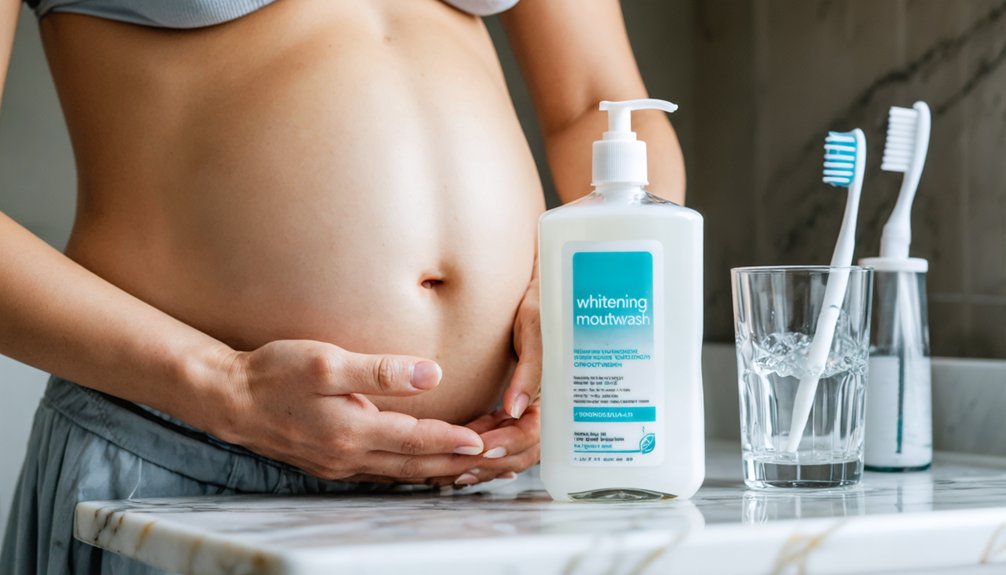
When you’re pregnant, even routine product choices require careful consideration—and whitening mouthwash is no exception. Most dental and obstetric professionals advise against using whitening mouthwash during pregnancy, classifying it as an elective cosmetic treatment rather than essential care.
Whitening effects come at a potential cost to pregnancy health. These products often contain hydrogen peroxide or alcohol—chemicals that carry absorption risks and lack definitive fetal safety data.
The FDA hasn’t established specific safety guidelines, and manufacturers frequently include cautionary pregnancy labels.
You should prioritize alcohol-free, fluoride-based mouthwashes instead. The American Pregnancy Association recommends postponing cosmetic procedures until after delivery.
Until clearer evidence exists, avoiding whitening mouthwash is the most clinically sound decision you can make for yourself and your developing baby.
What’s Actually in Whitening Mouthwash?
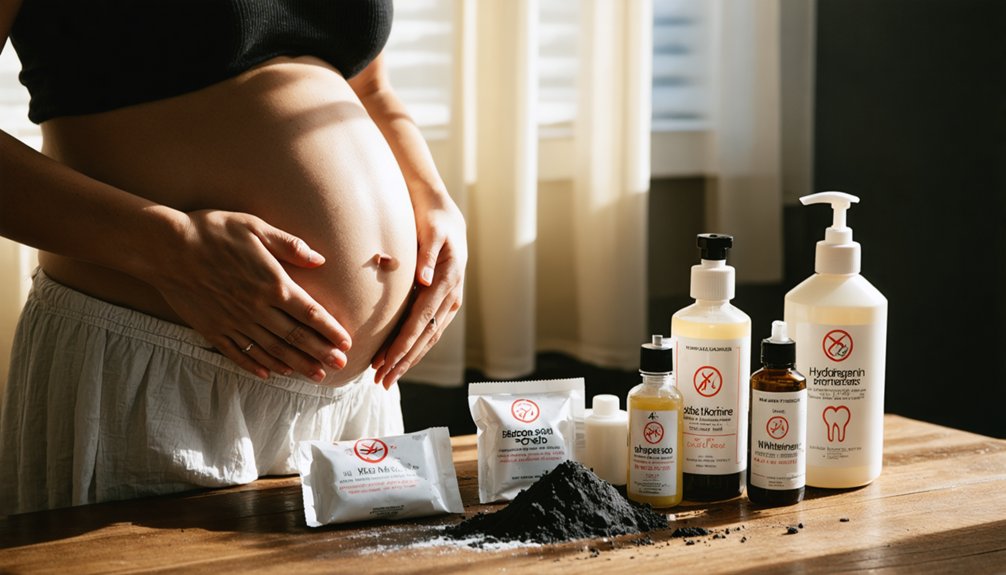
When you use a whitening mouthwash, you’re typically exposing yourself to two primary active ingredients: hydrogen peroxide and alcohol.
Hydrogen peroxide is a bleaching agent that can be absorbed through oral tissues and potentially swallowed, raising concerns about fetal exposure during pregnancy.
Alcohol, commonly used as a solvent and preservative in these formulations, carries its own set of risks, particularly during the first trimester when fetal organ development is most vulnerable.
Key Whitening Ingredients
Before reaching for a whitening mouthwash, it’s worth understanding what’s actually inside the bottle. Most formulations rely on hydrogen peroxide as the primary bleaching agent, directly responsible for whitening effectiveness. Concentrations vary widely, and higher percentages carry greater risk of irritation or systemic absorption if swallowed.
Many products also contain alcohol, which acts as an antimicrobial carrier but raises ingredient safety concerns during pregnancy, particularly in the first trimester.
Additional components often include sodium fluoride, flavoring agents, and surfactants.
You should note that manufacturers rarely disclose precise chemical concentrations on consumer labels, limiting your ability to make fully informed decisions.
Reviewing the full ingredient list and cross-referencing it with your dentist’s guidance gives you the clearest picture of what you’re actually using.
Alcohol and Peroxide Risks
Although whitening mouthwashes appear straightforward, two primary ingredients—alcohol and hydrogen peroxide—carry specific risks you shouldn’t overlook during pregnancy.
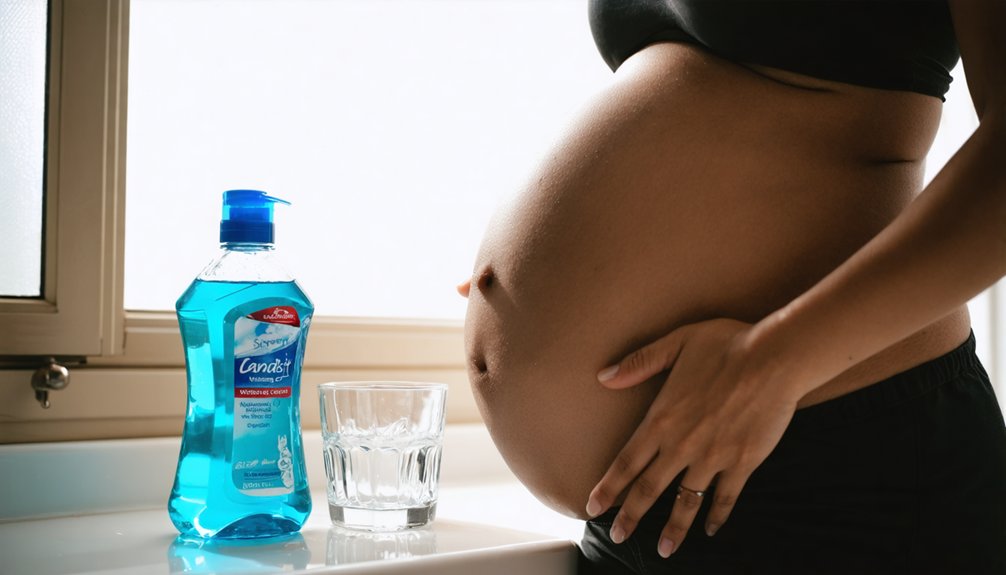
Understanding alcohol effects helps you make informed decisions: alcohol-based rinses can absorb through oral tissues and may pose developmental concerns, particularly during the first trimester. Even small exposures warrant caution when fetal vulnerability is highest.
Peroxide concerns are equally significant. Hydrogen peroxide, a bleaching agent in many whitening formulas, can be inadvertently swallowed during rinsing.
While concentrations in mouthwashes are lower than professional treatments, no established safety threshold exists for pregnant women. Regulatory bodies haven’t confirmed these products are safe for fetal development, and manufacturers themselves include cautionary pregnancy labels.
You’re better positioned choosing alcohol-free, fluoride-based alternatives until definitive safety data becomes available.
Why Dentists Recommend Skipping Whitening Mouthwash While Pregnant
Dentists typically recommend skipping whitening mouthwash during pregnancy because the potential risks to fetal development outweigh any cosmetic benefit.
The American Dental Association advises caution with high-percentage hydrogen peroxide, and most obstetric professionals support postponing elective cosmetic treatments until after delivery.
Whitening misconceptions often lead you to believe these rinses are harmless, but bleaching agents can be swallowed, and alcohol-containing formulas pose additional concerns during early trimesters.
Whitening rinses may seem harmless, but swallowed bleaching agents and alcohol-based formulas raise real concerns during pregnancy.
Prioritizing your oral health doesn’t require whitening products. Routine brushing, flossing, and alcohol-free fluoride mouthwash effectively maintain dental hygiene without introducing unnecessary chemical exposure.
Since the FDA hasn’t established specific safety guidelines for whitening products during pregnancy, and manufacturers include cautionary labels, following your dentist’s conservative guidance is the most evidence-based decision you can make.
What the FDA and ADA Say About Whitening Mouthwash
When considering whitening mouthwash during pregnancy, you’ll find that the FDA hasn’t established specific safety guidelines for these products, leaving a significant regulatory gap.
The ADA advises caution with high-percentage hydrogen peroxide formulations and doesn’t specifically endorse whitening rinses for expectant mothers.
You should also note that manufacturers themselves often include cautionary labels advising against use during pregnancy, reinforcing the conservative stance of both regulatory bodies.
FDA’s Regulatory Stance
Understanding the FDA’s position on whitening mouthwash during pregnancy requires acknowledging a critical gap: the agency hasn’t established specific safety guidelines for teeth-whitening products used while pregnant.
This absence stems from broader regulatory challenges — the FDA hasn’t conducted or mandated official safety assessments specifically targeting these products during pregnancy.
What this means for you is straightforward: no definitive evidence confirms whitening mouthwash is unsafe, but limited data doesn’t equal clearance.
Manufacturers recognize this uncertainty, which is why many include cautionary labels advising against use during pregnancy.
You shouldn’t interpret regulatory silence as an endorsement. Without conclusive research guiding the FDA’s stance, the prudent approach is treating these products as elective and unnecessary — particularly when safer, well-studied alternatives exist for maintaining your oral health.
ADA’s Safety Recommendations
The ADA takes a cautious stance on whitening products during pregnancy, specifically advising against formulations containing high-percentage hydrogen peroxide. Their ADA guidelines prioritize dental safety by recommending that you postpone elective cosmetic treatments, including whitening mouthwashes, until after delivery.
While the ADA doesn’t issue an outright ban, it encourages you to consult your dentist before introducing any whitening product into your routine. Products carrying the ADA Seal of Acceptance are preferred for general oral care, but that endorsement doesn’t extend to whitening rinses used during pregnancy.
Instead, the ADA supports maintaining oral health through brushing, flossing, and using alcohol-free fluoride mouthwash.
You’re better positioned to protect both your health and your baby’s by deferring whitening treatments until postpartum.
Pregnancy-Safe Alternatives to Whitening Mouthwash
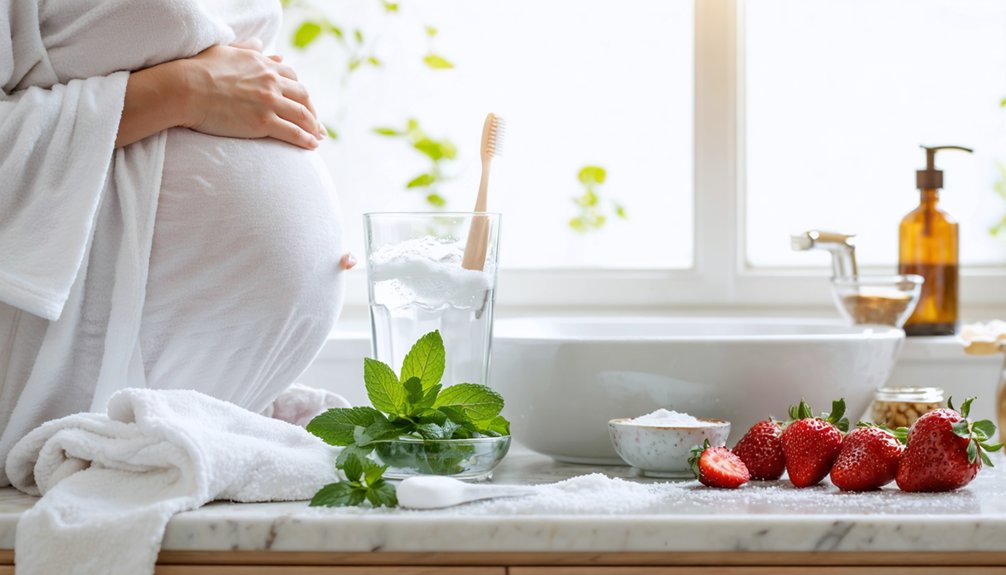
Although whitening mouthwash isn’t recommended during pregnancy, you’ve got several safer alternatives that support oral hygiene without exposing your baby to unnecessary chemical risks.
Alcohol-free, fluoride-based mouthwashes maintain strong enamel and reduce bacterial buildup without bleaching agents. For natural whitening, whitening toothpastes with mild abrasives offer a controlled, lower-risk option compared to rinses containing hydrogen peroxide or alcohol.
Regular brushing with standard fluoride toothpaste remains the clinical cornerstone of pregnancy-safe oral hygiene. Charcoal toothpaste provides mild natural whitening if used carefully and avoided when swallowing is a concern.
Chlorhexidine mouthwash is appropriate short-term if your dentist prescribes it. Before introducing any new product, consult your dentist or obstetrician to confirm it aligns with your specific health profile and trimester.
Can You Use Whitening Mouthwash While Breastfeeding?
Once you’ve delivered, the question of whitening mouthwash safety doesn’t fully resolve—breastfeeding introduces its own set of concerns.
Some experts caution that chemicals in whitening formulations, particularly hydrogen peroxide and alcohol, could transfer into breast milk, potentially exposing your infant to bleaching agents. While definitive evidence remains limited, the precautionary principle supports applying the same safety measures you used during pregnancy.
You’re in control of minimizing exposure risks by postponing whitening treatments until after you’ve completed breastfeeding.
The consensus among dental and obstetric professionals supports this timeline. Monitoring breastfeeding effects requires vigilance, and introducing unnecessary chemical variables complicates that process.
Stick with alcohol-free, fluoride-based mouthwashes during this period and consult your dentist before resuming any elective whitening regimen.
When Is Whitening Mouthwash Safe to Use Again?
After you’ve finished breastfeeding, most dental and obstetric professionals consider whitening mouthwash safe to resume. This timing aligns with established whitening safety guidelines, which prioritize eliminating any chemical exposure risk to your infant.
Once you’re no longer pregnant or nursing, hydrogen peroxide-based rinses no longer carry the same fetal or neonatal concerns.
Before reintroducing whitening products, schedule a dental consultation to assess your pregnancy oral health recovery. Hormonal shifts during pregnancy can affect enamel integrity, meaning your teeth may require evaluation before whitening treatments begin.
Your dentist can recommend appropriate product concentrations based on your current enamel condition. Starting with lower-percentage formulas reduces sensitivity risk.
Resuming whitening responsibly, rather than immediately, guarantees you’re making an informed, evidence-based decision that protects your long-term dental health.
Frequently Asked Questions
Can Whitening Mouthwash Cause Pregnancy Complications in the Third Trimester?
No definitive evidence confirms whitening mouthwash causes third-trimester complications, but you should avoid toxic ingredients like hydrogen peroxide and alcohol. Protect your oral health by choosing safer, fluoride-based alternatives and consulting your dentist before use.
Are Natural or Herbal Whitening Mouthwashes Safer Options During Pregnancy?
Natural or herbal whitening mouthwashes aren’t necessarily safer—herbal ingredients lack dedicated safety studies for pregnancy. You should consult your dentist before using any whitening product, as “natural” doesn’t automatically mean risk-free for your baby.
How Long Before Conceiving Should You Stop Using Whitening Mouthwash?
There’s no established timeline, but you should discontinue whitening ingredients before trying to conceive to protect early fetal development. Prioritize your dental health with fluoride-based alternatives and consult your dentist for personalized, evidence-based guidance.
Can Whitening Mouthwash Affect Pregnancy Test Accuracy or Hormone Levels?
No evidence suggests whitening mouthwash affects pregnancy test accuracy or hormone fluctuations. You shouldn’t worry about test sensitivity being compromised. However, you should still consult your dentist before using any whitening products during pregnancy.
Do Whitening Mouthwash Risks Differ Between First and Second Pregnancies?
Risks don’t differ between first and second pregnancies. You should prioritize first trimester considerations, as alcohol-based ingredients pose heightened concerns. Second trimester safety remains similar—consult your dentist before using any whitening mouthwash regardless of pregnancy number.
References
- https://nvdentists.com/pregnancy-safe-teeth-whitening/
- https://www.healthtap.com/questions/1469047-is-it-safe-to-use-listerine-whitening-mouthwash-while-pregnant/
- https://www.drbrite.com/blogs/be-natural-health-tips-clean-beauty-care/safe-teeth-whitening-while-pregnant-or-breastfeeding
- https://www.d4dentist.ie/post/dental-care-during-pregnancy
- https://www.thebump.com/a/whiten-teeth-pregnancy
- https://icybeardental.com/blogs/blog/can-i-whiten-my-teeth-whilst-pregnant
- https://verimom.com/blog/pregnancy-safe-toothpaste-and-oral-care
- https://www.breckdental.com/blog/can-you-use-regular-mouthwash-when-pregnant/
- https://www.glowdental.co.uk/some-facts-about-teeth-whitening-during-pregnancy/
- https://www.natrusmile.com/blogs/news/is-teeth-whitening-during-pregnancy-recommended