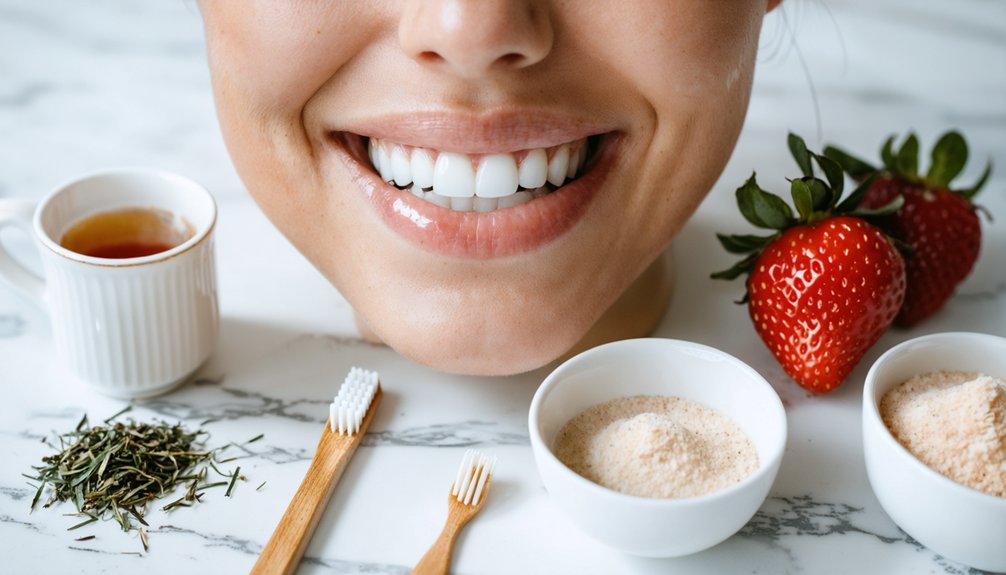
You can whiten tea-stained teeth using hydrogen peroxide strips, baking soda paste, natural remedies like strawberries and activated charcoal, preventive daily habits, and professional dental cleaning. Each method targets tannin stains at different depths, from surface-level abrasion to clinically administered whitening treatments. Consistency is key, and combining methods typically accelerates visible results. Whether you’re managing mild discoloration or deeply embedded stains, the detailed breakdown ahead will help you choose the right approach for your needs.
Key Takeaways
- Hydrogen peroxide whitening strips improve brightness by 3–4 shades, delivering measurable results within 1–2 weeks of consistent use.
- Baking soda paste gently lifts superficial tea stains through mild abrasion; limit use to 2–3 times weekly to protect enamel.
- Mashed strawberries and activated charcoal naturally break down surface stains but should only be used 1–2 times weekly.
- Daily habits like rinsing with water after tea, using straws, and brushing twice daily effectively prevent new staining.
- Professional dental cleaning with ultrasonic scaling and cold light whitening can deliver noticeable shade improvements within a single 60-minute session.
Hydrogen Peroxide Strips That Lift Tea Stains Fast
Over-the-counter hydrogen peroxide strips rank among the fastest at-home solutions for lifting tea stains, delivering measurable results within 1–2 weeks of consistent use.
Clinical trials confirm they improve tooth brightness by 3–4 shades, demonstrating strong whitening efficiency for tannin-based discoloration. You’ll apply strips containing a 1–2% peroxide concentration directly to enamel for the recommended duration, allowing the active agent to penetrate and break down stain molecules.
Clinical trials confirm whitening strips improve tooth brightness by 3–4 shades, breaking down tannin-based stains effectively.
Higher peroxide concentration formulations accelerate results but may trigger temporary sensitivity, which typically resolves once treatment ends. To maintain control over outcomes, follow manufacturer guidelines precisely and avoid exceeding application frequency. If sensitivity persists, reduce usage intervals.
For deeper discoloration, consult a dentist about professional-grade gels offering customized peroxide concentration levels beyond what retail products provide.
How Baking Soda Paste Removes Tea Stains at Home
Baking soda paste works as a mild abrasive that lifts superficial tea stains without compromising enamel integrity. To prepare it, mix ¼ to ½ teaspoon of baking soda with water until a paste forms. Brush gently for one to two minutes, then rinse thoroughly.
The baking soda benefits extend beyond stain removal — its alkaline composition neutralizes acids that weaken enamel protection over time. Limit application to two to three times per week to prevent over-abrasion.
For stronger results, combine baking soda with a small amount of hydrogen peroxide, which enhances stain-lifting capacity. Clinical evidence confirms consistent use reduces stain intensity by approximately 20% within two weeks.
You’re taking a controlled, evidence-supported approach to whitening when you incorporate this method into your routine strategically.
Strawberries and Activated Charcoal for Tea Stain Removal
When seeking gentler alternatives to chemical whitening agents, strawberries and activated charcoal offer two distinct natural mechanisms for reducing tea discoloration.
Strawberry enzymes work by breaking down surface bacteria while the fruit’s natural fibers mechanically lift stain deposits. Mash four to five strawberries and apply the mixture directly to your teeth for five minutes to activate this cleansing process effectively.
Activated charcoal operates differently, using adsorption to pull stain molecules away from enamel. Mix charcoal powder with water to form a paste, then brush gently for three minutes before thoroughly rinsing.
Charcoal effectiveness depends on consistent application, so limit use to one to two times weekly to avoid potential enamel abrasion. Both remedies provide measurable natural whitening without introducing harsh chemical agents into your routine.
Daily Habits That Stop Tea Stains Before They Set
Reactive treatments like charcoal and strawberries address stains already embedded in enamel, but preventing discoloration from taking hold is far more efficient.
Preventive oral hygiene gives you systematic control over stain formation before it becomes a removal problem.
Rinse your mouth with water immediately after drinking tea. Effective rinsing techniques reduce staining potential by 40% by flushing tannins before they bond to enamel.
When drinking iced tea, use a straw to minimize direct contact with tooth surfaces entirely.
Brush twice daily with fluoride toothpaste, but wait 30 minutes post-consumption to avoid weakening acid-softened enamel.
Floss daily to eliminate plaque, which accelerates tannin-driven discoloration.
These habits don’t just slow staining—they interrupt the mechanism that causes it.
Professional Dental Cleaning for Deep Tea Stain Removal
Daily habits and at-home remedies manage surface discoloration effectively, but deep-set tea stains that resist brushing require professional intervention.
Ultrasonic scaling eliminates accumulated plaque, tartar, and embedded tea discoloration within a single clinical visit. If you’re dealing with persistent staining, cold light whitening accelerates the chemical breakdown of stain molecules, delivering noticeable shade improvements within one 60-minute session.
Ultrasonic scaling and cold light whitening eliminate deep tea stains in a single, precise clinical visit.
Your dentist customizes peroxide concentrations based on your teeth sensitivity threshold, minimizing discomfort while maximizing whitening outcomes.
Whitening frequency at the professional level is typically manageable through biannual visits, preventing stubborn accumulation before it becomes resistant to treatment. Scheduling cleanings every six months gives you consistent control over discoloration progression.
Professional treatment isn’t reactive—it’s a precise, evidence-based strategy for maintaining long-term enamel brightness.
Frequently Asked Questions
Can Oil Pulling Effectively Remove Stubborn Tea Stains From Teeth?
Yes, you can effectively use oil pulling as part of your natural remedies routine. Swishing coconut oil daily for 15–20 minutes supports oral hygiene by reducing bacteria 50%, actively removing surface tea stains.
How Does Drinking Tea Through a Straw Prevent Tooth Discoloration?
When tea stains, you don’t have to. Using a straw’s benefits across all tea types minimizes direct enamel contact, considerably reducing tannin exposure and helping you actively control discoloration before it starts.
Is Rinsing With Water Immediately After Tea Drinking Actually Effective?
Yes, it’s effective. When you rinse immediately after drinking, you’ll reduce staining potential by 40%. Incorporate proper rinsing techniques consistently, and consider tea alternatives to further minimize discoloration and maintain your enamel’s natural brightness.
How Often Should Tea Drinkers Visit Dentists for Stain Prevention?
Stay ahead of the curve — you should visit your dentist every six months for stain prevention. Regular professional cleanings actively maintain your dental hygiene, removing stubborn tea deposits before they permanently compromise your enamel’s brightness.
Does Flossing Help Reduce Tea Staining Between Teeth Over Time?
Yes, flossing techniques directly support stain prevention by eliminating plaque buildup that accelerates tannin discoloration between teeth. When you floss daily, you’re actively removing the bacterial foundation that allows tea stains to penetrate and accumulate over time.
References
- https://www.advantagedental.com/blog/how-to-remove-coffee-and-tea-stains-from-your-teeth
- https://www.amazing-green-tea.com/tea-staining.html
- https://krystaldental.ca/blog/coffee-tea-stains/
- https://pearlysmiledentalstudio.com/teeth-whitening-options-for-coffee-and-tea-drinkers/
- https://www.reddit.com/r/tea/comments/39kk1u/tips_for_stained_teeth/
- https://www.wikihow.com/Remove-Tea-Stains-from-Teeth
- https://clubwhitesmile.com/teeth-whitening-remedies-for-tea-stain-removal/
- https://crest.com/en-us/oral-care-tips/teeth-stains/tea-coffee-teeth-stains-how-to-avoid-remove-them
- https://www.oreateai.com/blog/effective-ways-to-remove-tea-stains-from-your-teeth/358d01fa0e58cef793a8ed2d71a0d8f3
- https://clubwhitesmile.com/whitening-treatments-for-stubborn-tea-stains/