Genetic tooth discoloration originates within your enamel and dentin, making it resistant to most store-bought whitening products. You’ll need professional-grade solutions, like in-office hydrogen peroxide treatments, custom bleaching trays, or laser-assisted whitening, to target intrinsic pigmentation safely and effectively. For severe cases, dental veneers offer a long-lasting alternative. Natural remedies can support enamel health but won’t reverse genetic staining. The sections ahead break down exactly which methods work best for your situation.
Key Takeaways
- Genetic tooth discoloration is intrinsic, embedded in dentin or enamel, making most over-the-counter whitening products ineffective for treatment.
- In-office treatments using 25–40% hydrogen peroxide can safely address intrinsic stains, with visible results within 60–90 minutes.
- Custom bleaching trays with professional-grade gels provide controlled application, achieving measurable color improvement beyond surface stains.
- Dental veneers offer a long-lasting solution for severe genetic discoloration, lasting 10–20 years with proper maintenance.
- Avoiding acidic beverages and using daily fluoride helps maintain whitening results and protect enamel from further damage.
What Causes Genetic Tooth Discoloration?
Genetic tooth discoloration originates from intrinsic pigmentation embedded within the dentin or enamel, making it fundamentally different from surface stains caused by diet or lifestyle.
Genetic tooth discoloration runs deeper than surface stains — it’s embedded within the enamel and dentin itself.
Unlike dietary staining, you can’t simply brush or rinse it away. Genetic factors influence both the natural color of your dentin and your enamel thickness, determining how much underlying pigmentation shows through the tooth’s surface.
Thinner enamel allows darker dentin hues to become more visible, intensifying discoloration. Conditions like amelogenesis imperfecta or dentinogenesis imperfecta directly disrupt enamel and dentin formation at the developmental level.
Because this discoloration is structural rather than superficial, standard whitening toothpaste won’t correct it. Understanding its origin helps you select interventions that actually target intrinsic pigmentation, rather than wasting time on ineffective surface-level treatments.
Why Most Whitening Products Can’t Fix Genetic Yellowing
When you use most whitening products, you’re targeting surface stains rather than the intrinsic pigmentation embedded within your dentin or enamel.
Whitening toothpastes and strips rely on mild abrasives or low-concentration peroxides that effectively lift dietary stains but can’t penetrate deeply enough to alter genetically determined tooth color.
Even higher-concentration peroxide formulations face structural limitations when it comes to changing the intrinsic hue of dentin, which sits beneath the enamel layer and largely determines your tooth’s baseline color.
Surface Stain Versus Intrinsic
There’s a fundamental distinction between surface stains and intrinsic discoloration that determines which whitening treatments will actually work for you.
A surface stain sits on your enamel’s exterior, deposited by coffee, tea, or dark foods. An intrinsic stain originates within the dentin or enamel structure itself, often driven by genetics.
Understanding this difference lets you make precise treatment decisions:
- Surface stains respond to peroxide-based strips, whitening toothpaste, and professional bleaching
- Intrinsic stains resist most over-the-counter products entirely
- Genetic intrinsic discoloration requires professional intervention like veneers or high-concentration in-office bleaching
- Misidentifying your stain type wastes money and delays effective treatment
If your yellowing persists despite consistent whitening product use, you’re likely dealing with intrinsic discoloration requiring professional evaluation.
Peroxide Limitations On Dentin
Even high-concentration peroxide products struggle to correct genetic yellowing because the discoloration originates within the dentin layer, sitting beneath the enamel’s surface.
Peroxide concentrations ranging from 25–40% can penetrate enamel, but they can’t reliably alter deeply embedded intrinsic pigmentation. You’re fundamentally treating a structural issue with a surface-oriented solution.
Higher peroxide concentrations also increase dentin sensitivity, creating a practical ceiling on how aggressively you can pursue bleaching.
Pushing beyond recommended limits risks nerve irritation and enamel degradation without delivering meaningful color correction. The discoloration simply doesn’t respond the way extrinsic stains do.
If your yellowing is genetically rooted, standard peroxide-based products won’t deliver the outcome you’re expecting.
Understanding this limitation lets you redirect toward interventions—like veneers—that actually target the source.
Professional Bleaching Options That Work on Intrinsic Stains
When over-the-counter products fall short on intrinsic stains, professional bleaching offers a clinically proven alternative.
In-office treatments use 25–40% hydrogen peroxide concentrations, delivering rapid, measurable color improvement that reaches beyond surface discoloration.
If you prefer a take-home option, your dentist can fit you with custom bleaching trays that allow controlled, precise application of professional-grade gels for sustained results.
In-Office Bleaching Treatments
Over-the-counter products can brighten surface stains, but if you’re dealing with intrinsic discoloration embedded within the dentin or enamel, in-office bleaching is one of the few clinically validated options that can actually reach it.
In-office techniques use high-concentration hydrogen peroxide (25–40%), delivering whitening efficacy that at-home kits simply can’t match.
Key advantages you should know:
- Treatment safety: A trained clinician controls concentration levels and monitors soft tissue exposure throughout the procedure.
- Patient comfort: Desensitizing agents are applied pre-treatment to minimize sensitivity.
- Color matching: Results are calibrated against a shade guide for measurable, precise outcomes.
- Procedure duration: Most sessions complete within 60–90 minutes, producing immediate, visible improvement.
You’re not guessing—you’re receiving a controlled, evidence-based intervention.
Custom Professional Tray Systems
Custom professional tray systems give you a clinically effective alternative when in-office treatment isn’t feasible, without sacrificing the ability to address intrinsic discoloration.
Your dentist fabricates trays precisely molded to your dental anatomy, ensuring consistent gel contact across all surfaces — a core custom tray benefit that generic strips can’t replicate.
Bleaching gel effectiveness depends heavily on controlled peroxide exposure. Dentist-supplied carbamide peroxide gels, typically ranging from 10–22%, release active ingredients gradually, penetrating enamel to target dentin-level pigmentation responsible for genetic discoloration.
You apply the trays on a structured schedule, maintaining measurable oversight of your treatment progression.
Patients with thin enamel or sensitivity should discuss modified concentrations with their dentist.
Used correctly, custom tray systems deliver documented, sustained whitening outcomes with minimized risk.
Are Dental Veneers Right for Severe Genetic Discoloration?
Severe genetic discoloration often resists conventional bleaching because it originates within the dentin or enamel itself, making surface-level treatments ineffective. If you’re dealing with this condition, dental veneers offer a permanent, controlled solution worth serious consideration.
Veneer longevity typically spans 10–20 years with proper maintenance, justifying the higher treatment costs for candidates with irreversible pigmentation.
With proper care, veneers last 10–20 years—making them a worthwhile investment for permanent discoloration.
Key factors to evaluate before committing:
- Veneers bond directly over existing teeth, masking intrinsic discoloration completely.
- Treatment costs range considerably based on material choice—porcelain versus composite.
- Thin enamel may complicate candidacy, requiring prior dental assessment.
- Regular brushing, flossing, and avoiding stain-causing foods extend veneer lifespan.
Consult your dentist to confirm whether your discoloration severity and enamel condition make veneers your most effective long-term investment.
How Laser and Light Treatments Accelerate Whitening Results
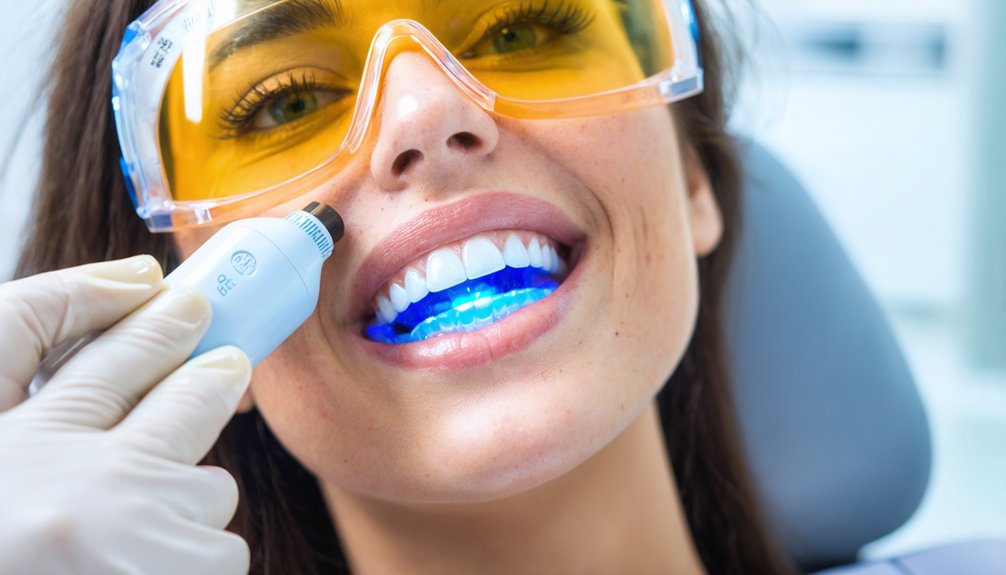
Laser and light-assisted whitening procedures deliver results in a single appointment by accelerating the oxidation process that breaks down stain compounds.
Laser technology activates high-concentration hydrogen peroxide gels (25–40%), dramatically improving whitening efficiency compared to passive application. Light activation triggers a faster chemical reaction, enabling significant color enhancement within one session.
You’ll benefit from treatment speed that’s unmatched by over-the-counter alternatives, making this method ideal when you need controlled, rapid outcomes.
Patient comfort is maintained through protective barriers applied to soft tissues before gel activation. Recovery time is minimal—most patients resume normal activities immediately. However, temporary sensitivity may occur.
Confirm your candidacy with a dental professional, particularly if you have thin enamel or existing sensitivity concerns.
Custom Trays and OTC Gels for Genetic Yellowing
When rapid in-office results aren’t accessible or necessary, custom bleaching trays paired with dentist-supplied gels offer a highly effective alternative for addressing genetic yellowing.
Custom tray benefits include precise gel placement, minimized gum exposure, and controlled peroxide delivery targeting intrinsic dentin pigmentation.
Custom trays deliver precise gel placement, limit gum exposure, and target intrinsic dentin pigmentation with controlled peroxide.
- Custom trays use dentist-formulated gels exceeding OTC concentrations for deeper color correction
- OTC gel effectiveness is limited to surface stains; genetic yellowing requires higher-grade peroxide
- Carbamide peroxide gels release active ingredients gradually, reducing sensitivity during extended wear
- Concentrations above 10% require dental supervision to prevent enamel compromise
You maintain treatment timing and frequency, giving you measurable control over outcomes.
OTC kits remain a secondary option when professional trays aren’t feasible, though their efficacy against intrinsic discoloration remains considerably lower.
Natural Practices That Support: But Won’t Reverse: Genetic Staining
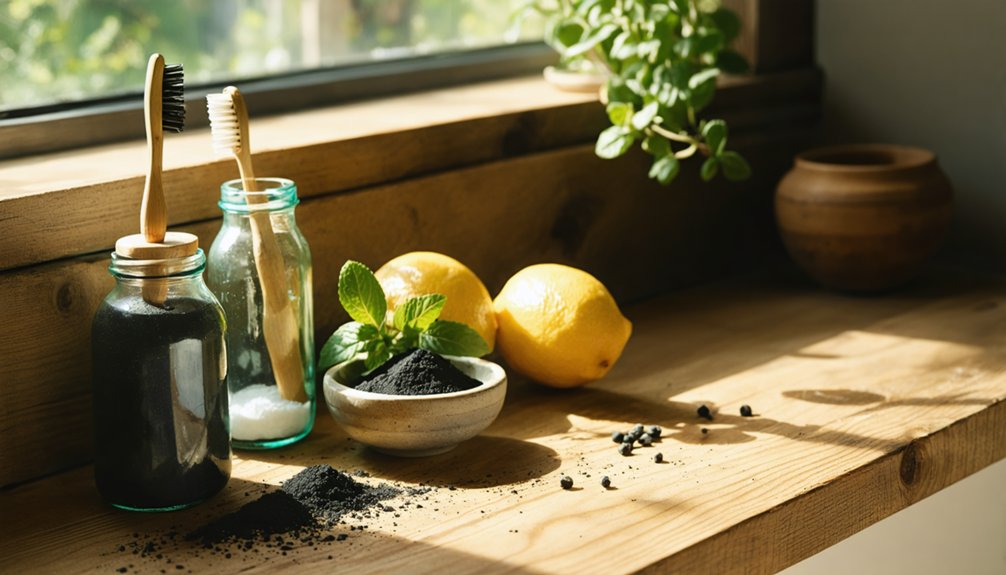
Natural practices offer meaningful oral health support, but they can’t reverse the intrinsic pigmentation embedded in your dentin or enamel.
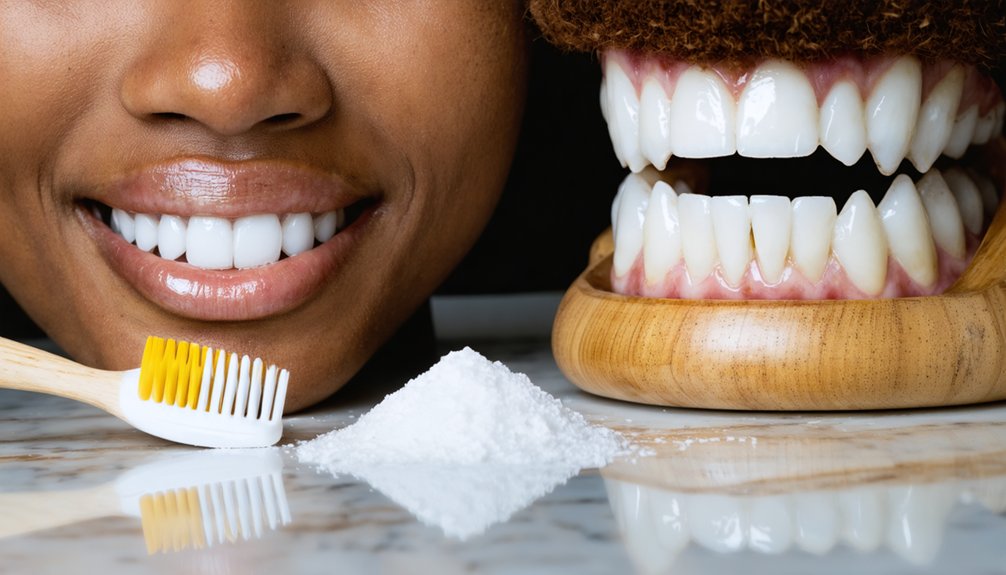
Natural remedies like baking soda paste work as gentle abrasives, removing surface buildup without altering your genetic baseline. Limit baking soda use to two to three times weekly to protect enamel integrity.
Dietary changes also play a supportive role. Consuming calcium-rich foods like milk and cheese shields enamel from acid erosion.
Drinking water regularly rinses away surface debris, while reducing sugar intake limits bacterial growth that accelerates discoloration. Avoid acidic foods and beverages, and wait 30 to 60 minutes before brushing after exposure.
These practices preserve what professional treatments achieve, but they won’t address the structural color originating from within your tooth.
How to Avoid Making Genetic Discoloration Worse
Although you can’t change your genetic baseline, you’ll make it considerably worse by exposing your teeth to substances that accelerate surface staining and enamel erosion.
Genetic factors already determine your enamel thickness and dentin pigmentation, so protecting existing enamel becomes your primary defense.
Avoid these documented aggravators:
- Acidic beverages — soda and citrus weaken enamel, intensifying stain penetration
- Activated charcoal products — excessive abrasion accelerates enamel thinning beyond your genetic predisposition
- Vinegar and lemon juice “remedies” — unsupported by evidence and structurally damaging
- Frequent coffee and red wine consumption — compounds surface discoloration over genetically pigmented dentin
Use fluoride daily, drink water consistently, and wait 30–60 minutes before brushing after acidic exposure.
These aren’t optional habits — they’re protective necessities.
How Long Do Whitening Results Last for Genetic Staining?
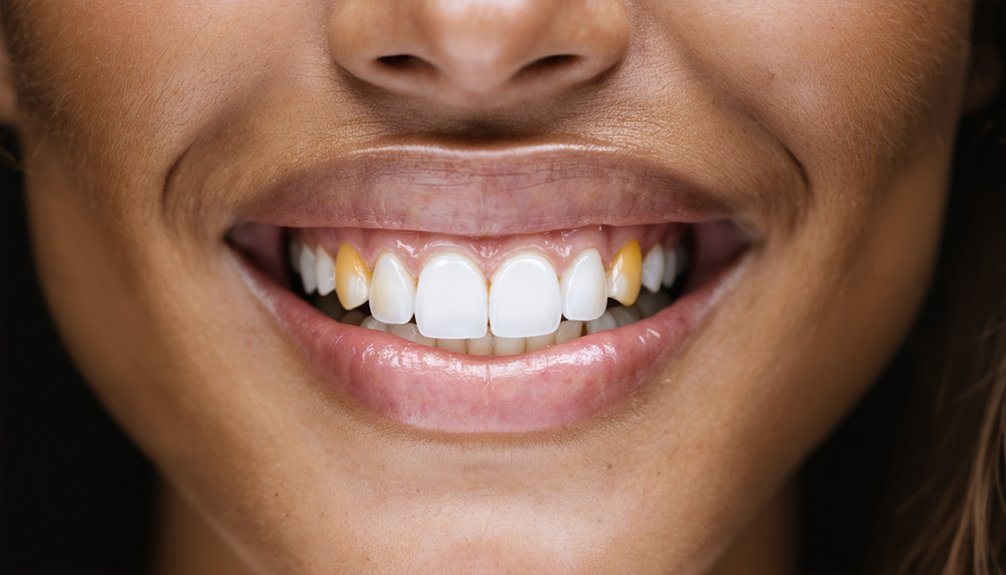
How long your whitening results last depends heavily on the treatment method you choose and how consistently you maintain protective habits afterward.
For genetic staining, whitening longevity varies greatly because genetic factors influence intrinsic pigmentation within the dentin, making results harder to sustain than with surface stains.
Professional bleaching typically lasts one to three years with proper maintenance. Veneers offer near-permanent coverage, making them the strongest option for deep genetic discoloration.
Over-the-counter treatments produce shorter-lived results, often fading within months.
To extend your results, you’ll need to avoid stain-causing foods, use fluoride consistently, and schedule periodic touch-up treatments.
Without disciplined maintenance, genetic pigmentation reasserts itself faster, reducing the duration of any whitening intervention you’ve chosen.
Frequently Asked Questions
Can Genetic Tooth Discoloration Worsen With Age Over Time?
Yes, your genetic tooth discoloration can worsen over time. Age factors like enamel thinning reveal deeper dentin, while heredity influences your pigmentation baseline, making discoloration more pronounced. You’ll notice gradual changes requiring proactive whitening interventions.
Is Genetic Yellowing Covered by Dental Insurance Plans?
Dental insurance typically won’t cover cosmetic treatments for genetic factors causing yellowing. Since insurance coverage excludes aesthetic procedures, you’ll need to explore out-of-pocket options like professional bleaching or veneers to effectively address intrinsic discoloration.
At What Age Should Genetic Discoloration Treatment Begin?
Timing truly transforms treatment success. You should begin addressing genetic factors after permanent teeth fully erupt, typically around age 14–16. Early intervention lets you consult a dentist, assess discoloration severity, and strategically plan the most effective whitening approach.
Can Pregnancy Affect the Severity of Genetic Tooth Discoloration?
Pregnancy hormones can intensify your genetic tooth discoloration by increasing enamel sensitivity and altering your oral environment. You’ll want to prioritize strict oral hygiene and make targeted dietary changes to minimize additional staining during this vulnerable period.
Do Whitening Results Differ Between Children and Adults Genetically?
Imagine a teen and parent with the same genetic yellowing — you’d see different results. Children’s developing enamel responds unpredictably to whitening techniques, while adults tolerate treatments better as genetic factors stabilize with maturity.
References
- https://www.dentalcareofmidfl.com/six-simple-ways-whiten-teeth-naturally/
- https://www.ada.org/resources/ada-library/oral-health-topics/whitening
- https://my.clevelandclinic.org/health/symptoms/10958-tooth-discoloration
- https://riverwalkdental.ca/can-teeth-that-are-genetically-yellow-be-whitened/
- https://onlinelibrary.wiley.com/doi/10.1111/iej.13711
- https://pmc.ncbi.nlm.nih.gov/articles/PMC4058574/
- https://scienceofbiogenetics.com/articles/how-to-whiten-yellow-teeth-caused-by-genetic-factors
- https://www.cda-adc.ca/en/oral_health/procedures/teeth_whitening/index.asp
- https://www.i20familydental.com/blog/2023/10/13/all-about-teeth-whitening-and-genetics/
- https://www.mouthhealthy.org/all-topics-a-z/teeth-whitening