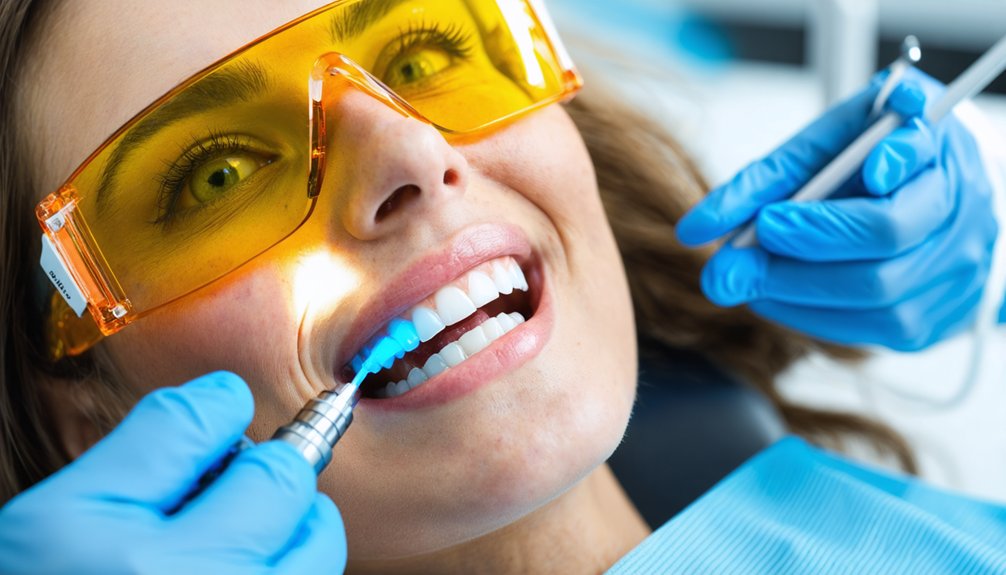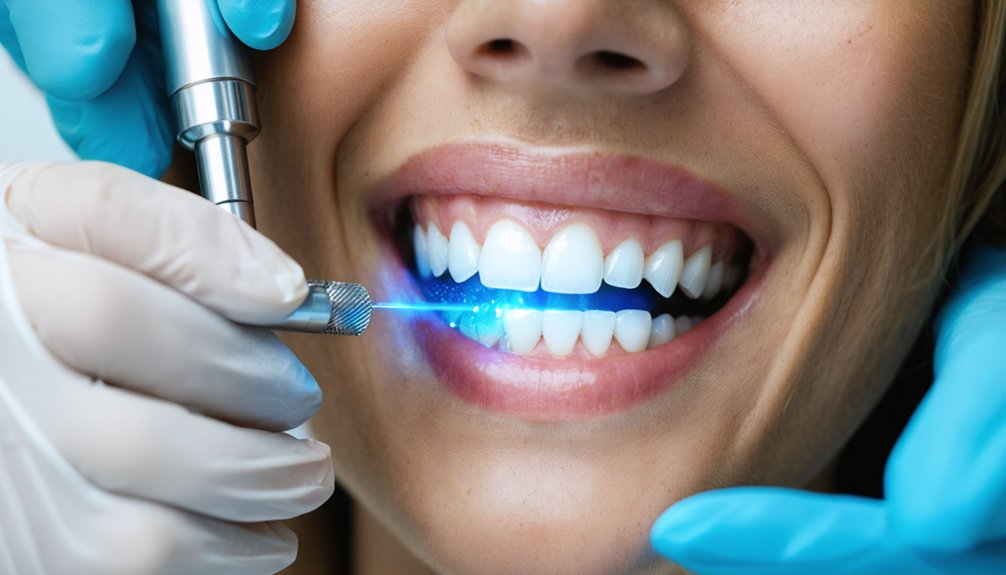
Laser teeth whitening costs between $100 and $1,000 per session, but you can reduce that expense considerably with the right approach. Dental membership plans offer 20%-50% discounts, while seasonal promotions can cut costs by another 10%-30%. You can also use HSA or FSA funds to pay pre-tax dollars. For milder staining, at-home kits under $25 provide a practical alternative. Keep exploring to uncover strategies that match your budget and whitening goals.
Key Takeaways
- Dental membership plans offer 20%-50% discounts on laser whitening, significantly reducing per-session costs ranging from $100 to $1,000.
- Time appointments during seasonal promotions to access 10%-30% discounts on cosmetic dental procedures.
- Use HSA or FSA pre-tax funds to lower actual out-of-pocket laser whitening expenses.
- Consider at-home kits under $25 for gradual results if laser whitening costs exceed your budget.
- Maintain whitening results with consistent brushing and touch-ups to reduce the need for costly repeat sessions.
What Does Laser Teeth Whitening Actually Cost?
Laser teeth whitening carries a wide price range depending on your location, provider, and the severity of your staining. Per-session costs typically fall between $100 and $1,000, with total out-of-pocket expenses reaching $400 to $1,800 when multiple sessions are required.
Laser teeth whitening costs vary widely — expect to pay anywhere from $100 to $1,800 out of pocket.
Severely stained teeth often need two to four sessions, each lasting 60 to 90 minutes.
One of the most persistent pricing myths is that dental insurance offsets these costs. It won’t. Insurance coverage is effectively nonexistent for laser whitening because it’s classified as a cosmetic procedure. You’ll pay entirely out of pocket.
Understanding actual cost ranges helps you plan strategically rather than react to unexpected bills. Knowing what you’ll likely spend puts you in control of your whitening decisions from the start.
How to Pay Less Per Session Without Sacrificing Results
Reducing your per-session cost doesn’t require compromising treatment quality if you know where to look. Since dental insurance rarely covers laser whitening, you’ll need to be strategic.
Dental membership plans frequently offer 20% to 50% off cosmetic procedures, making them a practical alternative to traditional coverage.
Seasonal promotional discounts—typically 10% to 30%—are worth timing your appointment around. Ask your provider directly; many advertise these offers inconsistently.
Third-party financing through options like CareCredit spreads costs without delaying treatment.
If your HSA or FSA account covers cosmetic whitening expenses, using pre-tax dollars effectively lowers your real out-of-pocket cost.
Comparison tools and dental marketplaces also help you identify lower-priced qualified providers.
Combining two or more of these strategies compounds your savings without affecting clinical outcomes.
At-Home Whitening Alternatives Worth Considering
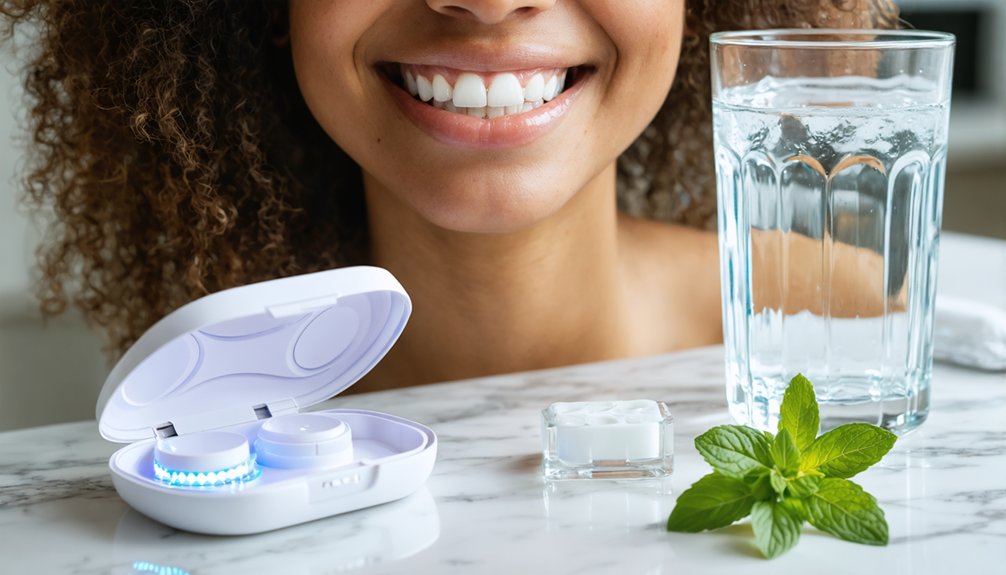
When in-office laser whitening isn’t financially feasible, several at-home options deliver noticeable results at a fraction of the cost. Whitening strips containing 6% hydrogen peroxide, worn 30 to 60 minutes daily, produce measurable shade changes when used consistently. Prefilled trays with 10% hydrogen peroxide offer another effective, low-cost alternative.
Despite persistent whitening myths, baking soda paste used a few times weekly provides mild abrasive action but won’t replace peroxide-based systems for significant discoloration. Similarly, natural remedies like oil pulling lack strong clinical evidence for meaningful whitening outcomes.
For maintenance, whitening toothpaste priced between $5 and $15 reduces surface staining effectively. Avoid overusing any peroxide product, as excessive application increases enamel sensitivity without accelerating results proportionally.
Laser Whitening vs. At-Home Kits: Which Fits Your Budget?
Choosing between laser whitening and at-home kits comes down to cost tolerance, timeline, and severity of discoloration.
Laser whitening delivers faster, more dramatic results but costs $500 to $1,000 per session, and dental insurance rarely covers it.
At-home kits using hydrogen or carbamide peroxide cost under $25 and produce noticeable improvement with consistent use, though results take longer.
A professional consultation helps you determine which option aligns with your staining severity and budget.
If your discoloration is mild, strips or trays offer controlled, cost-effective results.
If staining is severe, multiple in-office sessions may be unavoidable.
Evaluate your timeline, weigh total projected costs, and factor in financing options before committing.
Your decision should be data-driven, not driven by marketing claims.
How to Make Your Laser Whitening Results Last
After investing in laser whitening, maintaining your results depends on consistent daily habits and deliberate avoidance of staining exposures. Since dental insurance rarely covers this cosmetic procedure, protecting your investment through proactive maintenance directly reduces your need for repeat treatment duration and associated costs.
Adopt these evidence-based habits to extend your results:
- Limit staining exposures by reducing coffee, red wine, and tobacco, and use a straw when consuming pigmented beverages.
- Brush twice daily with a soft-bristled brush and floss daily to prevent plaque-related discoloration.
- Schedule touch-up treatments every 6 to 12 months, using at-home whitening strips or trays to sustain your shade between professional sessions.
Consistent application of these strategies gives you measurable control over how long your whitening results remain effective.
Frequently Asked Questions
Is Laser Teeth Whitening Safe for People With Sensitive Teeth?
If you have tooth sensitivity, you should consult your dentist before pursuing laser safety protocols, as laser whitening is considered the riskiest whitening method and may intensify discomfort or enamel vulnerability in sensitive individuals.
How Long Does a Single Laser Whitening Appointment Typically Take?
Like clockwork, your single laser whitening appointment typically runs 60 to 90 minutes. You’ll want to factor this into your cost comparison and treatment preparation planning, ensuring you’re in full control of your schedule and budget.
Can Laser Whitening Damage Existing Dental Crowns or Veneers?
Laser whitening won’t damage your crowns or veneers, but dental crown compatibility is limited since restorations don’t respond to bleach. You’ll also face veneer staining risk if surrounding natural teeth lighten, creating visible color mismatches.
Are There Age Restrictions for Receiving Laser Teeth Whitening Treatment?
Like a gatekeeper, age restrictions shape your treatment eligibility. Most dentists won’t perform laser whitening on patients under 16, as developing enamel’s more vulnerable. You’ll need a consultation to confirm you’re a suitable candidate.
Does the Cause of Tooth Discoloration Affect Laser Whitening Success?
Yes, the cause directly affects your results. Dietary habits causing surface stains respond well, but tooth aging-related discoloration often requires more sessions. You’ll achieve better outcomes when you understand your stain’s origin beforehand.
References
- https://www.rejuv-health.com/cosmetic-dentistry/teeth-whitening-cost/
- https://www.sbdental.com/blog/budgetfriendly-teeth-whitening-options-that-deliver-real-results
- https://www.atlanticdentalcare.net/our-blog/what-is-the-best-way-to-whiten-teeth
- https://www.colgate.com/en-us/oral-health/teeth-whitening/cheap-teeth-whitening-tricks
- https://www.goodhousekeeping.com/health-products/g28723133/best-at-home-teeth-whitening-products/
- https://clubwhitesmile.com/budget-friendly-laser-teeth-whitening-tips/
- https://www.healthline.com/health/dental-and-oral-health/laser-teeth-whitening
- https://shop.colgate.com/learn/guide-to-affordable-teeth-whitening
- https://boomcloudapps.com/patient-blog/laser-teeth-whitening-cost-how-to-save-big-on-dental-care-with-or-without-insurance/