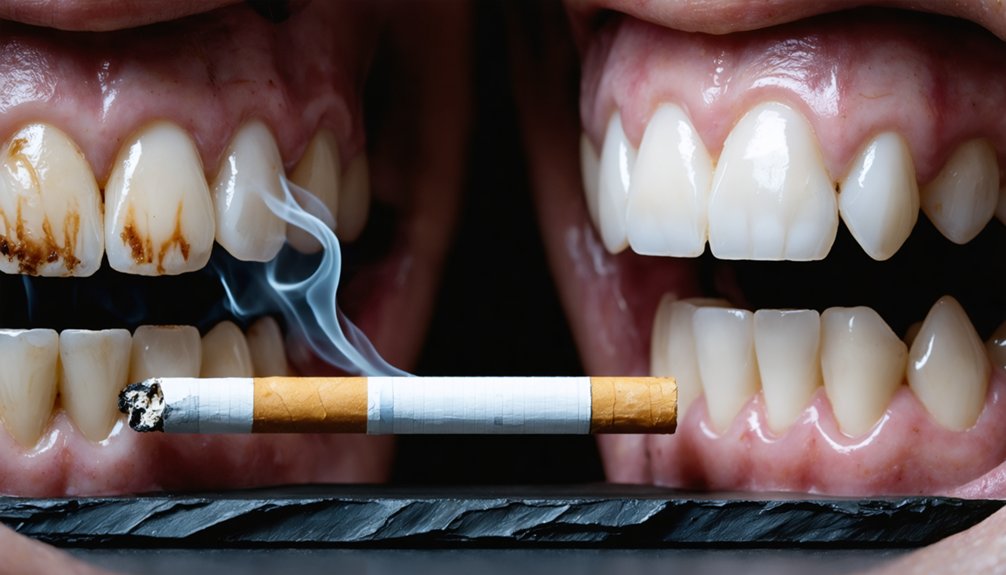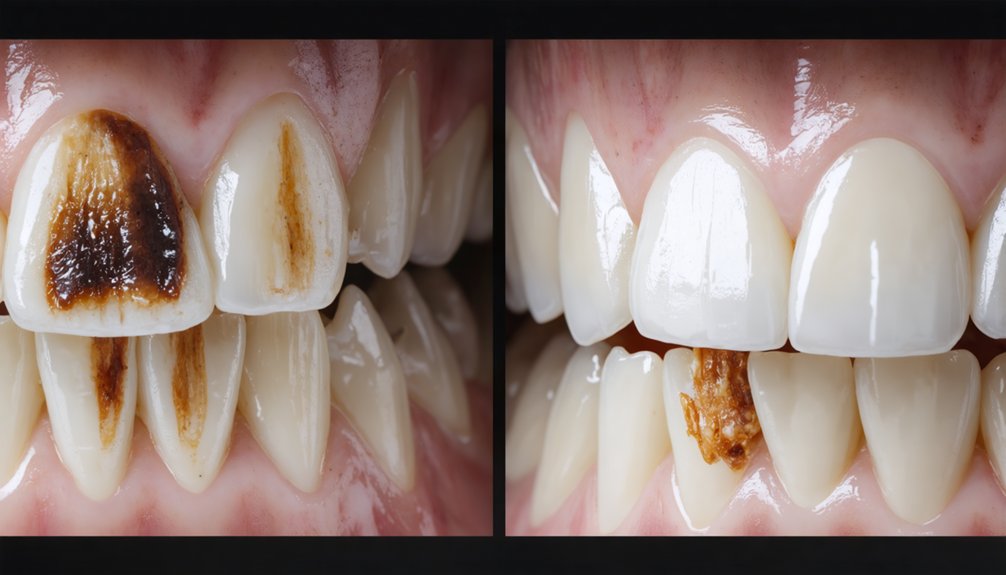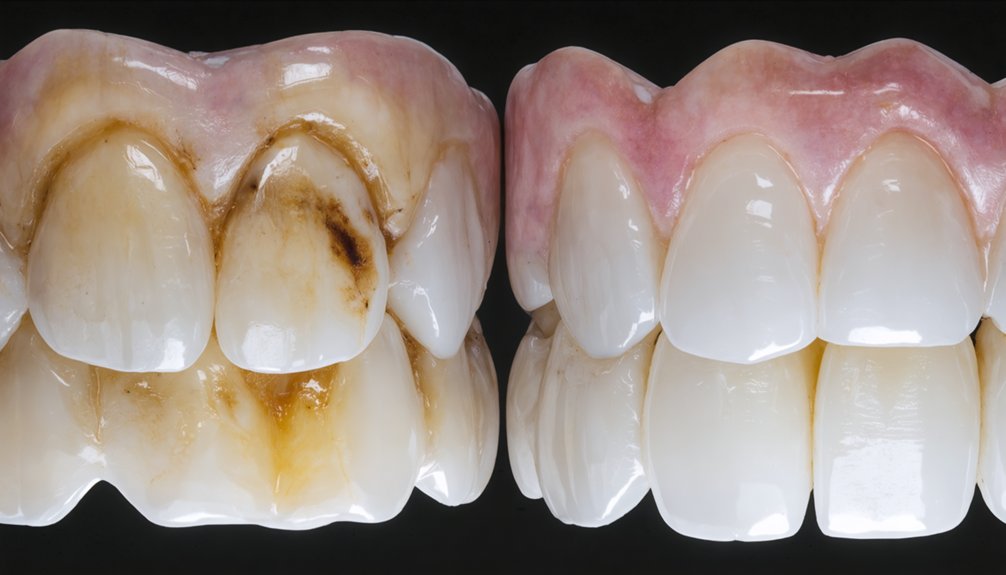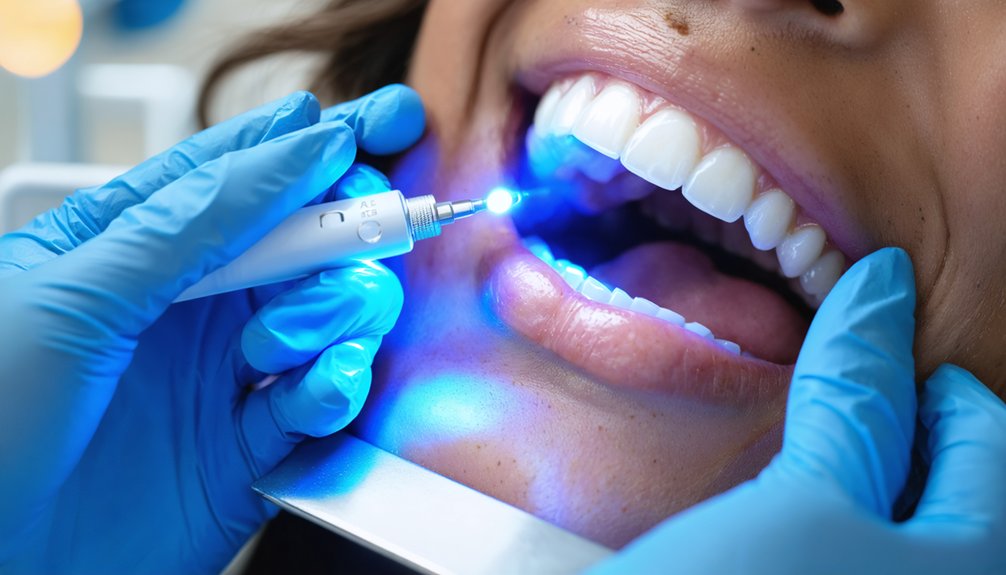
If you’re a smoker looking to restore your smile, laser whitening is your most effective option for eliminating deep nicotine and tar stains. It uses high-concentration peroxide activated by focused light energy, which accelerates oxidation and breaks down chromogens embedded in enamel and dentin. Unlike at-home kits or standard bleaching trays, you’ll see dramatic results in a single session. Keep exploring to discover which specific treatment best fits your staining level and budget.
Key Takeaways
- Laser whitening is the most effective option for smokers, using high-concentration peroxide activated by light to break down deep tobacco stains.
- A single in-office laser session delivers professional-strength results, making it ideal for severe discoloration from years of smoking.
- Laser energy accelerates peroxide breakdown, producing oxygen radicals that penetrate enamel and dentin to target embedded nicotine and tar.
- Sessions typically cost $500–$1,500, with pricing influenced by location, stain severity, and any required preparatory treatments.
- Touch-up sessions every 6–12 months, combined with regular cleanings and whitening toothpaste, help maintain results despite continued smoking.
Why Tobacco Stains Are So Difficult to Remove
Tobacco stains are particularly stubborn because nicotine and tar penetrate beyond the enamel’s surface and embed themselves into the tooth’s porous structure, making simple brushing or standard whitening strips largely ineffective against deep discoloration.
Enamel erosion accelerates this process, as dietary acids weaken the outer layer, creating more pathways for stain compounds to infiltrate deeper tissue. Once tar molecules bond with the dentin beneath compromised enamel, surface-level treatments can’t reach them.
You’re also dealing with cumulative buildup—years of repeated exposure create layered staining that resists low-concentration peroxide formulas entirely. This is why standard over-the-counter products fail smokers consistently.
Removing these embedded stains requires high-concentration agents capable of breaking molecular bonds within the tooth’s structure, not just lifting surface residue.
How Laser Whitening Breaks Down Smoker Stains
When tobacco smoke repeatedly contacts your enamel, nicotine and tar compounds penetrate beyond the surface layer and embed within the tooth’s porous dentin, making superficial cleaning ineffective.
Laser whitening targets these deep stains by activating a high-concentration peroxide gel applied directly to your teeth. This triggers an accelerated oxidation reaction that breaks apart the chromogen molecules responsible for discoloration.
The focused light energy drives this chemical process deeper and faster than passive gel application alone, allowing a single session to address staining that years of brushing can’t reverse.
Stain Penetration Mechanism
Smoker stains penetrate enamel through two primary compounds found in tobacco — tar and nicotine — which bind deeply to the enamel’s porous surface over time. Enamel porosity increases with age and acidic exposure, giving stain molecules easier access to deeper structural layers.
Laser whitening addresses this by:
- Activating high-concentration peroxide gel to oxidize deeply embedded stain molecules
- Using laser energy to accelerate the breakdown reaction within the enamel’s porous matrix
- Fragmenting chromogenic compounds so they’re small enough to lift from the enamel surface
This targeted mechanism makes laser treatment particularly effective against years-old tobacco discoloration that OTC products can’t reach. You’re not just removing surface residue — you’re chemically disrupting stains at the structural level where they’ve bonded.
Light Activation Process
Here’s how the light activation process actually works once the peroxide gel is applied to your teeth. The laser or specialized light targets the gel, generating controlled heat energy that accelerates the chemical breakdown of peroxide molecules. This reaction produces oxygen radicals that penetrate your enamel and dentin, directly attacking the tobacco chromogens responsible for stain absorption deep within the tooth structure.
The lighting effects aren’t merely cosmetic theater—they’re functionally critical. Without light activation, peroxide works considerably slower, limiting how deeply the oxidation reaches.
The concentrated energy allows the reaction to access stains that surface-level treatments can’t touch. You’re practically forcing an accelerated oxidative process into the stain layers, breaking molecular bonds that have built up from years of tobacco exposure and giving you faster, more dramatic results in a single visit.
In-Office Laser Whitening: Best for Deep Smoker Stains
For smokers dealing with deep, years-old tobacco stains, in-office laser whitening is typically the most effective single-session solution available. High-concentration peroxide gel penetrates compromised dental enamel where stain absorption has occurred over years of tobacco exposure.
For deep tobacco stains, in-office laser whitening delivers what years of at-home treatments simply cannot.
A laser then activates the gel, accelerating the breakdown of embedded discoloration faster than any at-home method can achieve.
This approach is best suited when you need:
- Rapid results from a single appointment
- Professional-strength chemistry targeting severe tobacco discoloration
- Supervised treatment that protects gum tissue during the process
Costs typically range from $500 to $1,500 per session. While that’s a significant investment, no other method delivers comparable results this quickly for heavy smoker staining.
Laser vs. Professional Bleaching: Which Works Better for Smokers?
Both in-office laser whitening and professional bleaching use high-concentration peroxide to break down tobacco stains, but they’re not identical treatments.
Laser whitening activates the peroxide gel with a specialized light or laser, accelerating the reaction for faster, more dramatic results in a single visit.
Professional bleaching achieves comparable depth but may rely more on chemistry than light activation.
For smokers with severe discoloration, laser whitening typically delivers faster visible improvement.
However, if you have concerns about dental sensitivity or compromised enamel strength, professional bleaching lets your dentist adjust concentration and exposure time more precisely.
That control can reduce irritation risk without sacrificing effectiveness.
Your dentist can assess your enamel condition and stain severity to determine which approach delivers the best outcome for your specific situation.
Dentist Trays: The Gradual Option for Heavy Smokers
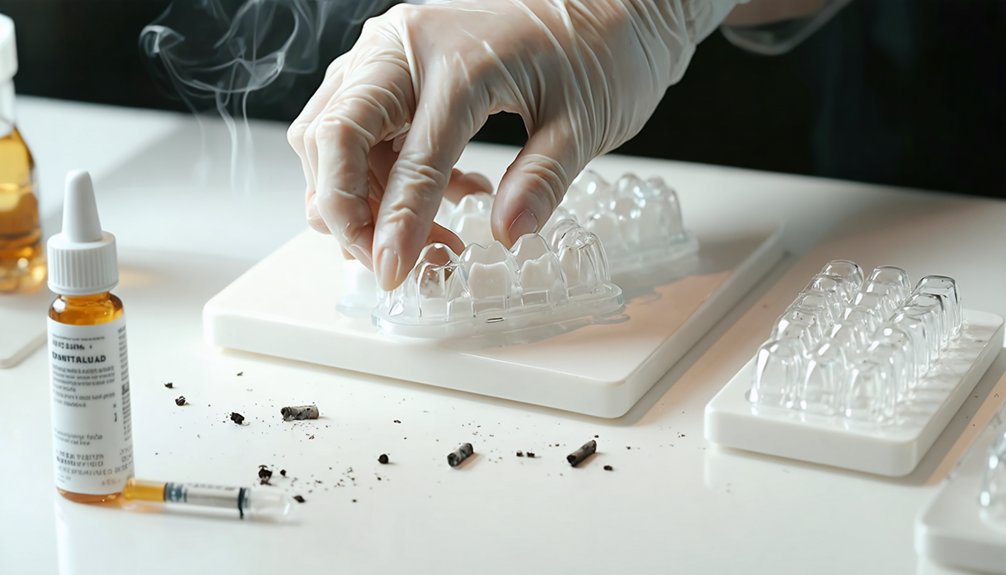
If you’re a heavy smoker seeking controlled whitening at home, dentist-prescribed custom trays offer a precise fit that delivers even gel coverage while protecting your gums from irritation.
Your dentist fills these trays with professional-strength peroxide gel—stronger than anything available over the counter—ensuring the formula penetrates deep tobacco stains more effectively.
You’ll typically see gradual results over 10 to 14 days, making this method better suited for steady improvement rather than single-visit transformation.
Custom Tray Fit Benefits
Custom-fitted trays give you one of the most practical advantages in professional take-home whitening: uniform gel coverage across every tooth surface. Unlike generic options, trays molded to your dental anatomy eliminate gaps where teeth whitening agents fail to penetrate consistently.
This precision delivers three measurable benefits:
- Even distribution of peroxide gel across irregular tooth surfaces and contours
- Gum protection by minimizing gel overflow onto sensitive tissue during treatment
- Controlled contact time that lets you manage whitening intensity session by session
For heavy smokers, inconsistent gel contact means uneven results. Custom trays eliminate that variable, giving you predictable outcomes across each treatment cycle. You’re not guessing—you’re working with a system engineered around your specific mouth structure.
Professional Gel Strength
The trays guarantee consistent coverage, but what actually breaks down tobacco stains is the gel inside them—and professional-strength formulas operate at a different level than anything available over the counter.
Dentists prescribe hydrogen peroxide or carbamide peroxide at concentrations that drive deeper gel penetration into enamel, targeting the discoloration compounds that years of smoking embed below the surface. Over-the-counter alternatives simply can’t match that chemical reach.
This deeper action also supports more precise color matching, since stronger formulas lift staining more uniformly across all tooth surfaces rather than producing patchy results.
You’re not just getting a stronger product—you’re getting a controlled delivery system that works with the tray’s fit to maximize contact time, coverage, and ultimately, the consistency of your whitening outcome.
Gradual Results Timeline
Unlike in-office laser treatments that deliver immediate results, dentist-prescribed trays work on a gradual timeline—typically 10 to 14 days before meaningful whitening becomes visible, with heavier smoker stains often requiring extended use beyond that window.
This controlled approach suits those who prioritize precision over speed. To optimize outcomes, follow this protocol:
- Maintain consistent dental hygiene before and during treatment to guarantee gel contacts enamel without plaque interference.
- Monitor tooth sensitivity throughout each session—reduce wear time if discomfort escalates, as prolonged exposure can aggravate enamel.
- Track stain reduction weekly to assess whether extended use is necessary.
Custom trays deliver professional-strength gel evenly across all surfaces, giving you measurable, controlled progress rather than a single high-intensity appointment you can’t adjust mid-process.
LED Kits vs. Laser Whitening: Worth It for Smokers?
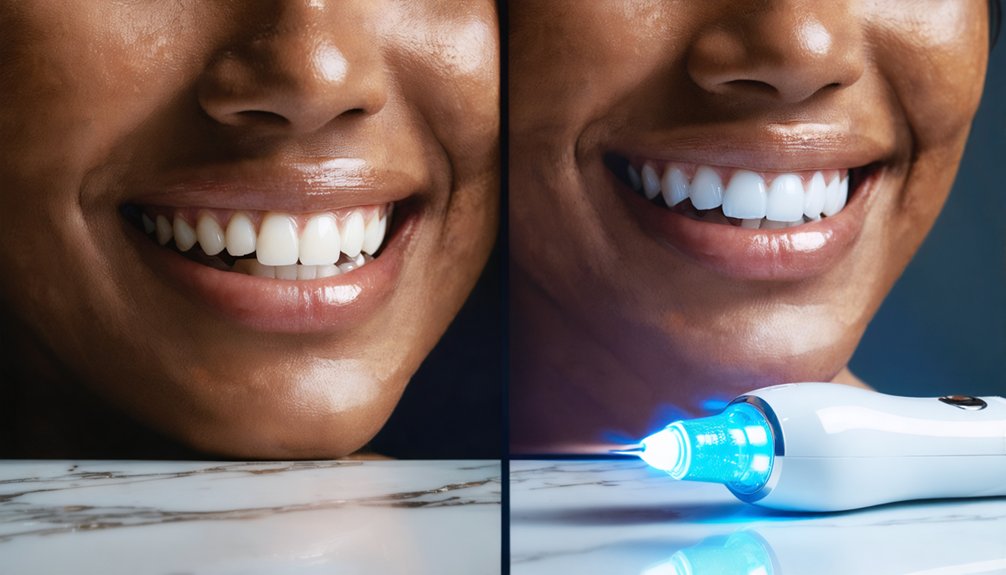
When choosing between LED kits and in-office laser whitening, smokers face a clear trade-off between convenience and clinical strength. LED kits use light-activated carbamide peroxide and work best as a whitening maintenance tool after professional treatment, not as a primary solution for deep tobacco stains. Their lower peroxide concentrations rarely penetrate years-old smoker discoloration effectively.
In-office laser whitening delivers high-concentration peroxide activated by a specialized light, producing measurable results in a single session. For heavy smokers, that clinical strength matters.
While dental insurance typically doesn’t cover cosmetic whitening, the cost of laser treatment is often justified by its superior stain removal capability. If you’re managing severe discoloration, LED kits won’t match laser performance—they’re better reserved for upkeep between professional sessions.
How Much Does Laser Whitening for Smokers Cost?
Laser whitening for smokers typically costs between $500 and $1,500 per session, with pricing influenced by your provider’s location, clinic overhead, and the severity of tobacco staining. Before committing, factor in these cost-related variables:
- Pre-treatment professional cleaning improves gel penetration and directly affects your final results.
- Tooth sensitivity management, such as desensitizing agents, may add to your total appointment cost.
- Touch-up sessions every 6 to 12 months are likely if you continue smoking post-treatment.
Your dental hygiene baseline also affects value—heavily stained teeth with tartar buildup require more preparation, potentially increasing costs.
Investing in a single high-concentration laser session often delivers stronger ROI than repeated over-the-counter purchases that fail against deep tobacco discoloration.
How to Keep Teeth White If You Still Smoke
Maintaining whitened teeth while continuing to smoke demands a consistent, multi-layered approach rather than relying on a single product or habit. Schedule professional cleanings every six months to remove plaque barriers before they trap new tobacco pigment.
Plan touch-up whitening sessions every six to twelve months, and check whether your dental insurance covers any associated costs, since coverage varies markedly by provider.
Brush twice daily using a low-abrasion whitening toothpaste to manage surface staining without accelerating enamel wear. If tooth sensitivity develops after repeated treatments, switch to a sensitivity-formulated toothpaste containing potassium nitrate and reduce whitening frequency.
Avoid smoking immediately after any whitening session, as freshly treated enamel absorbs stains faster.
Combining these strategies gives you measurable control over re-staining.
Frequently Asked Questions
Can Laser Whitening Damage Existing Dental Crowns, Veneers, or Fillings?
Laser whitening won’t damage your crowns, veneers, or fillings, but it won’t whiten them either. Dental material compatibility limits laser whitening effectiveness to natural enamel only, so you’ll notice uneven coloration between treated teeth and existing restorations.
How Many Laser Whitening Sessions Do Heavy Smokers Typically Need?
Want faster results? You’ll typically need 1–3 sessions, but smoking cessation and consistent oral hygiene directly control how many you require—heavy staining often demands follow-up treatments every 6–12 months.
Is Laser Whitening Safe for Smokers With Sensitive Teeth or Gums?
Laser whitening can be safe for you, but it’s likely to increase teeth sensitivity and gum irritation. Inform your dentist beforehand so they can adjust gel concentration and exposure time to minimize discomfort effectively.
Should Smokers Avoid Smoking Immediately Before a Laser Whitening Appointment?
Yes, you should avoid smoking before your appointment. Fresh smoking hazards—including residual chemicals—worsen tooth discoloration and compromise gel adhesion. Abstaining beforehand ensures cleaner enamel contact, maximizing the laser whitening treatment’s effectiveness and delivering more controlled, ideal results.
Does Dental Insurance Ever Cover Laser Whitening Treatments for Smokers?
Most dental insurance plans don’t cover laser whitening, as it’s classified as cosmetic. For treatment affordability, you’ll typically pay $500–$1,500 out-of-pocket per session, so you should confirm insurance coverage details directly with your provider.
References
- https://simpletooth.com/teeth-whitening-options-for-smokers/
- https://www.thesmilenova.com/post/the-ultimate-guide-to-teeth-whitening-for-smokers
- https://parkwaysmiles.com/teeth-whitening-for-smokers/
- https://novellydentistry.com/teeth-whitening-for-smokers-what-you-need-to-know/
- https://friedmandentalgroup.com/teeth-whitening-for-smokers-solutions-to-remove-tobacco-stains/
- https://www.amazon.com/teeth-whitening-smokers/s?k=teeth+whitening+for+smokers
- https://thecommonmom.com/best-teeth-whitening-for-smokers/
- https://clubwhitesmile.com/teeth-whitening-laser-treatment-for-smokers/
- https://www.theweymouthdentist.com/teeth-whitening-for-smokers-what-you-should-consider/
- https://pearldentalgroup.ca/best-teeth-whitening-for-smokers/