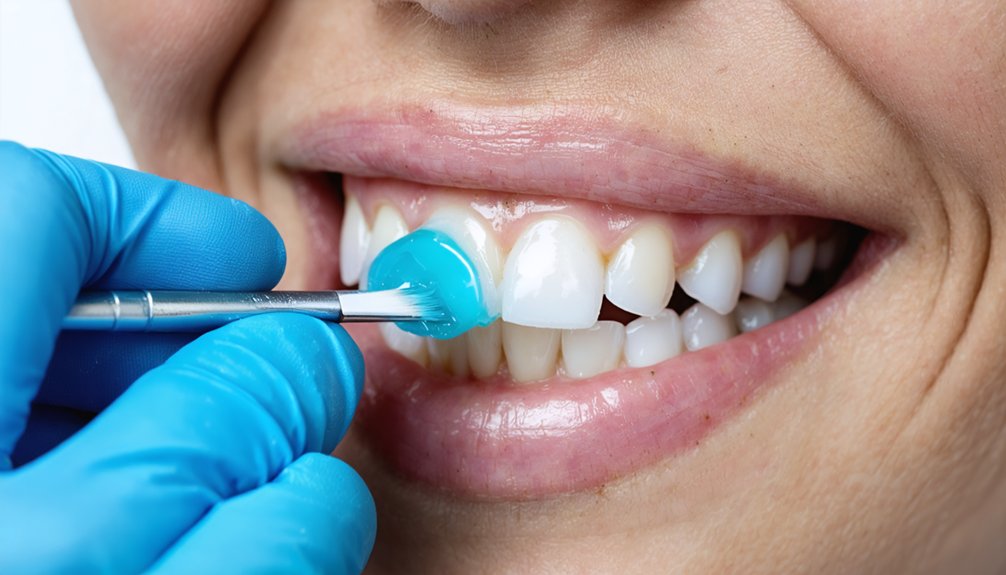
Most over-the-counter whitening products aren’t FDA approved. The FDA classifies them as cosmetics, which don’t require pre-market approval—only post-market oversight. Products claiming to chemically alter tooth color fall under drug classification and face stricter scrutiny, but most strips, toothpastes, and gums don’t meet that threshold. When you see “FDA registered” on a label, that’s not the same as approved. Understanding these distinctions can help you make smarter, safer choices about the products you use.
Key Takeaways
- Most OTC whitening products are regulated as cosmetics, not FDA-approved drugs, meaning they don’t undergo pre-market safety or efficacy review.
- “FDA-registered” and “FDA-approved” are not interchangeable; registration simply documents a facility, not product safety or effectiveness.
- Cosmetic whitening products like strips and toothpastes don’t require FDA approval unless they claim to chemically alter tooth color.
- Products containing higher peroxide concentrations may be classified as drugs, requiring stricter regulatory oversight than standard OTC cosmetics.
- The ADA Seal of Acceptance is a more reliable indicator of product safety and efficacy than FDA-registration claims.
Are OTC Whitening Products FDA Approved?
When shopping for whitening products, you’ll likely encounter bold marketing claims—but most over-the-counter whitening products aren’t FDA-approved drugs. Instead, they’re regulated as cosmetics or OTC oral-care products, which involves a different, less rigorous oversight pathway.
One of the most persistent dental myths is that “FDA-registered” equals “FDA-approved”—it doesn’t. Registration simply means a facility is documented with the agency, not that its products have been reviewed for safety or effectiveness.
FDA-registered does not mean FDA-approved—registration simply documents a facility, not product safety or effectiveness.
Your cosmetic concerns are valid, but don’t let misleading labels drive your decisions. FDA approval requires demonstrated evidence of safety and efficacy for a specific drug use—a standard most whitening strips, toothpastes, and gums never meet.
Scrutinize labels carefully, and prioritize products carrying the ADA Seal of Acceptance as a more reliable quality indicator.
What FDA Approval Actually Means for Dental Products
FDA approval isn’t a blanket endorsement—it’s a product-specific determination that the agency has reviewed sufficient evidence of safety and effectiveness for a defined intended use. For dental products, that distinction carries real weight.
Prescription drugs and certain medical devices follow rigorous approval pathways, meaning the FDA has evaluated clinical data before market entry. Historical regulations shaped these standards specifically for products making therapeutic claims—treating disease, altering biological function, or modifying tissue.
Cosmetic products operate under a different framework. They don’t require pre-market FDA approval, only post-market oversight.
Consumer awareness matters here: when a whitening product carries “FDA-approved” language, you need to ask what was actually approved—the drug, the device, or simply a registered facility. Those aren’t interchangeable, and conflating them leads to misinformed purchasing decisions.
FDA Approval vs. FDA Registration: Not the Same Thing
Many consumers mistake FDA registration for FDA approval, but the two carry fundamentally different regulatory meanings. Registration simply means a facility has notified the FDA of its existence—it doesn’t confirm that the agency reviewed the product for safety or effectiveness.
You’ll encounter this distinction regularly in marketing strategies designed to make products appear more credible than they are. Companies may prominently display “FDA registered” language on whitening product packaging, exploiting gaps in consumer awareness to imply regulatory endorsement.
Don’t equate registration with approval. FDA approval requires documented evidence of a product’s safety and efficacy for a specific intended use.
When you’re evaluating OTC whitening products, treat any “FDA registered” claim as a neutral data point—not a safety guarantee or a substitute for genuine regulatory review.
How the FDA Actually Classifies OTC Whitening Products
When you pick up a whitening product at the drugstore, the FDA’s classification of that product determines what legal claims it can carry and what regulatory scrutiny it has faced.
The agency draws a firm line between cosmetics, which only alter appearance, and drugs, which treat or prevent a condition—and most OTC whitening strips, toothpastes, and gums fall on the cosmetic side of that line.
You should also know that FDA registration, which manufacturers may use in their marketing, isn’t the same as FDA approval and carries no assurance that the product’s safety or effectiveness has been reviewed.
Cosmetic Versus Drug Classification
How the FDA classifies a whitening product determines whether it’s regulated as a cosmetic or a drug—and the distinction matters more than most labels suggest. If a product only alters appearance by removing surface stains, the FDA treats it as a cosmetic.
If it claims to bleach or chemically change tooth color, it crosses into drug territory. These legal distinctions directly affect what safety and efficacy data a manufacturer must provide before selling the product.
Marketing claims often blur this line. Companies strategically word their labeling to stay within cosmetic classification, avoiding the stricter drug approval process.
When you evaluate a whitening product, don’t rely on packaging language. Look at the active ingredients, their concentrations, and whether the intended action is surface-level or structural—that tells you what you’re actually buying.
FDA Registration Versus Approval
“FDA-registered” and “FDA-approved” aren’t interchangeable terms, yet whitening product marketing routinely treats them as though they are. Registration simply means a facility has notified the FDA of its existence — it doesn’t confirm the agency reviewed that product’s safety or effectiveness.
Historical regulations established this distinction deliberately, yet consumer misconceptions persist because brands leverage “registered” language to imply legitimacy they haven’t earned.
FDA approval requires documented evidence, agency review, and explicit clearance for a specific use. Registration requires none of that.
When you see “FDA-registered” on a whitening strip box, you’re reading a filing status, not an endorsement. Recognizing this distinction lets you evaluate product claims accurately, rather than defaulting to marketing language designed to manufacture confidence that regulatory scrutiny hasn’t actually provided.
What Ingredients Do FDA-Regulated Whitening Products Contain?
Whether a whitening product falls under FDA oversight often comes down to its active ingredients. The two most common are hydrogen peroxide and carbamide peroxide. Concentration levels matter: dentist-dispensed products typically carry higher percentages than store-bought strips or toothpastes.
When you’re reviewing product labeling, look specifically for these actives and their listed concentrations. Lower-concentration OTC products generally fall into the cosmetic category, not the drug category, which affects what ingredient safety standards apply.
Some whitening toothpastes and gums rely on abrasives or enzymes to remove surface stains rather than bleach enamel. Those formulations follow a different regulatory path entirely.
Knowing what’s in a product tells you more about its actual regulatory status than any marketing claim printed on the package.
Do OTC Whitening Products Actually Work?
Effectiveness varies depending on the type of stain you’re trying to address. OTC whitening products can reduce extrinsic stains, but intrinsic discoloration responds less predictably. Ingredient transparency directly affects your ability to evaluate what you’re using and whether it matches your specific need.
Key factors that determine whether a product works for you:
- Peroxide concentration: Higher levels act faster but raise safety concerns around sensitivity and gingival irritation.
- Product type: Strips deliver more consistent contact than toothpastes, which primarily polish surface stains.
- Duration and frequency: Results depend on following instructions precisely—deviation increases risk without improving outcome.
- Tooth condition: Restorations, veneers, and crowns don’t respond to peroxide-based whitening.
If your staining is severe or intrinsic, a dentist-supervised treatment will outperform any OTC option.
Are OTC Whitening Products Safe to Use?
Safety is the logical next question once you’ve determined whether a product can actually deliver results. Most OTC whitening products are generally safe when you use them as directed.
Transient tooth sensitivity and gingival irritation are the most commonly reported side effects, and both typically resolve after you stop treatment.
However, you need to apply critical thinking to marketing strategies before purchasing. Companies frequently use language like “FDA registered” to imply regulatory endorsement that doesn’t exist. That’s a legal consideration worth understanding — registration isn’t approval, and misleading labeling can obscure actual risk profiles.
Check ingredient concentrations, follow usage instructions precisely, and look for the ADA Seal of Acceptance.
For higher-risk cases or intrinsic staining, dentist-supervised treatment remains the more controlled, evidence-backed option.
Why “FDA Approved” Claims on Whitening Products Are Misleading
When you see “FDA approved” on a whitening product label, you need to understand that registration and approval aren’t interchangeable terms.
The FDA requires many cosmetic manufacturers to register their facilities, but that registration doesn’t mean the agency has reviewed or cleared the product for safety and effectiveness.
You can spot misleading claims by checking whether the label specifies an actual approved drug or device pathway rather than simply referencing FDA registration.
Registration Versus Approval Explained
One of the most misleading claims you’ll encounter in whitening product marketing is the label “FDA approved,” and understanding why requires knowing the difference between FDA registration and FDA approval. These aren’t interchangeable terms, and conflating them obscures critical distinctions in regulatory pathways and product safety.
- FDA approval means the agency reviewed evidence confirming a product’s safety and effectiveness for a specific use.
- FDA registration simply means a facility has notified the FDA of its existence — it’s administrative, not evaluative.
- “FDA registered” doesn’t confirm that any whitening product has been tested, cleared, or approved.
- Companies exploit this confusion by displaying registration language to imply legitimacy they haven’t earned.
When you see “FDA registered” on a whitening product, treat it as a disclosure requirement met — nothing more.
Spotting Misleading FDA Claims
How do you recognize when a whitening product’s FDA claim crosses from disclosure into deception? Start with language. Phrases like “FDA registered,” “FDA compliant,” or “FDA recognized” are marketing jargon, not approval designations. None of them confirm that the FDA reviewed the product for safety or efficacy.
Next, demand ingredient transparency. Check the label for active ingredients, peroxide concentrations, and intended use classifications. If a product markets itself as cosmetic yet claims FDA approval as a drug, that’s a direct contradiction worth flagging.
You should also verify independently. The FDA maintains a searchable drug approval database. If a product doesn’t appear there, its FDA claim isn’t legitimate. Scrutinizing labels carefully puts you in control of what you use and what you believe.
Does the ADA Seal Mean More Than FDA Registration?
Although both terms appear on product labels and marketing materials, the ADA Seal of Acceptance and FDA registration aren’t interchangeable—and understanding the distinction can help you make a more informed purchasing decision.
The ADA Seal involves voluntary submission to defined certification standards, requiring manufacturers to demonstrate safety and efficacy evidence. FDA registration simply documents a facility’s existence—not product approval.
When evaluating whitening products, consider these distinctions:
- The ADA Seal reflects reviewed clinical evidence; FDA registration does not
- Marketing claims using “FDA registered” carry no safety guarantee
- ADA-accepted products meet specific oral-care performance benchmarks
- FDA registration is procedural, not an endorsement of effectiveness
If you want verified assurance rather than regulatory-sounding language, the ADA Seal gives you a more meaningful, evidence-backed reference point.
When OTC Whitening Products Aren’t Enough to See a Dentist
Knowing what a label actually means puts you in a better position to recognize when OTC products have reached their practical ceiling. If surface stains persist after consistent, directed use, intrinsic discoloration is likely the source, and no OTC strip or toothpaste will resolve it.
You should also check product expiration dates, since degraded peroxide loses efficacy and may still cause sensitivity without delivering results.
Compromised gingival health is another clear indicator: active inflammation, recession, or periodontal disease makes self-administered bleaching inappropriate and potentially harmful. Dentist-supervised treatment allows for customized concentration, fitted trays, and monitored exposure.
If you’re managing restorations, crowns, or veneers, OTC products won’t match existing shades. These scenarios require clinical evaluation, not another box from the pharmacy shelf.
Frequently Asked Questions
Can Whitening Products Change the Color of Dental Crowns or Veneers?
Like painting glass, whitening products can’t penetrate crowns or veneers—you won’t change their color. Dental material compatibility limits cosmetic dentistry implications, so your restorations stay fixed while natural teeth whiten unevenly around them.
How Long Do OTC Whitening Results Typically Last Before Fading?
Your OTC whitening results typically last three to six months before fading. Product longevity depends on your diet and habits. Manage dental sensitivity by following instructions precisely, and maintain results with consistent, controlled reapplication as needed.
Are Whitening Products Safe to Use During Pregnancy or Breastfeeding?
You should avoid whitening products during pregnancy and while breastfeeding. Pregnancy safety data on peroxide absorption remains limited, and breastfeeding considerations include unknown transfer risks. Consult your dentist before resuming any whitening treatment.
Can Children or Teenagers Safely Use OTC Teeth Whitening Products?
Like medieval alchemists chasing gold, you may seek quick results, but Children safety demands caution. Teenagers use of OTC whitening products isn’t recommended until permanent teeth fully develop; consult your dentist first.
Do Store-Brand Whitening Products Work as Well as Name-Brand Ones?
Store-brand whitening products can work as well as name-brand ones if they contain comparable peroxide concentrations. You’ll get stronger results through professional whitening, which dental insurance occasionally covers, giving you greater control over outcomes.
References
- https://gloscience.com/blogs/blog/does-the-fda-approve-teeth-whitening-products
- https://www.fda.gov/consumers/health-fraud-scams/skin-facts-what-you-need-know-about-skin-lightening-products
- https://www.cadentalgroup.com/what-you-need-to-know-about-teeth-whitening-and-the-fda/
- https://www.ada.org/resources/ada-library/oral-health-topics/whitening
- https://www.forbes.com/sites/forbes-personal-shopper/article/best-teeth-whitening-kit/
- https://www.fda.gov/drugs/drug-safety-communications/fda-works-protect-consumers-potentially-harmful-otc-skin-lightening-products
- https://www.fda.gov/consumers/health-fraud-scams/fda-warns-consumers-skin-products-containing-mercury-andor-hydroquinone
- https://www.fda.gov/consumers/skin-facts-what-you-need-know-about-skin-lightening-products/skin-product-safety
- https://www.fda.gov/drugs/historical-status-otc-rulemakings/rulemaking-history-otc-skin-bleaching-drug-products