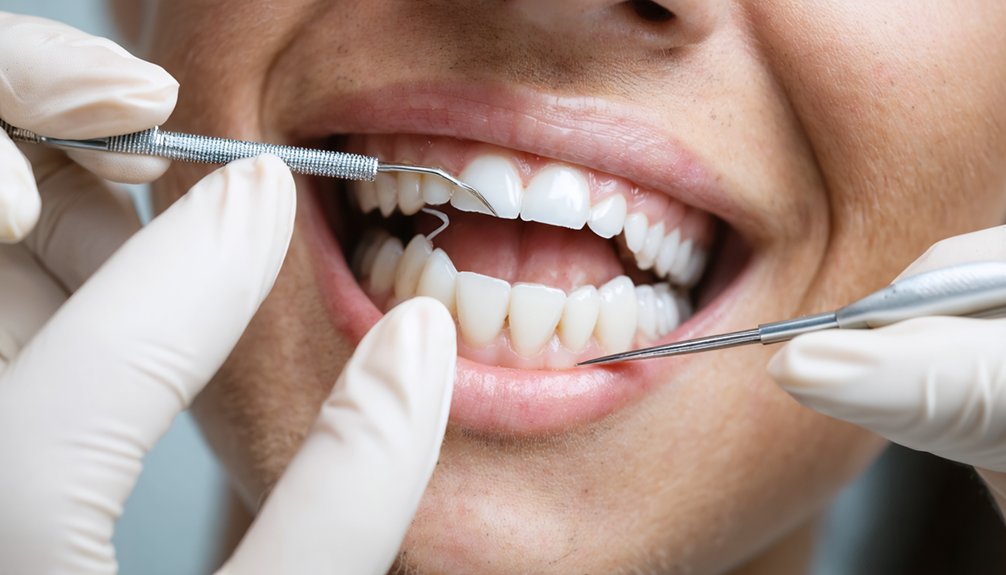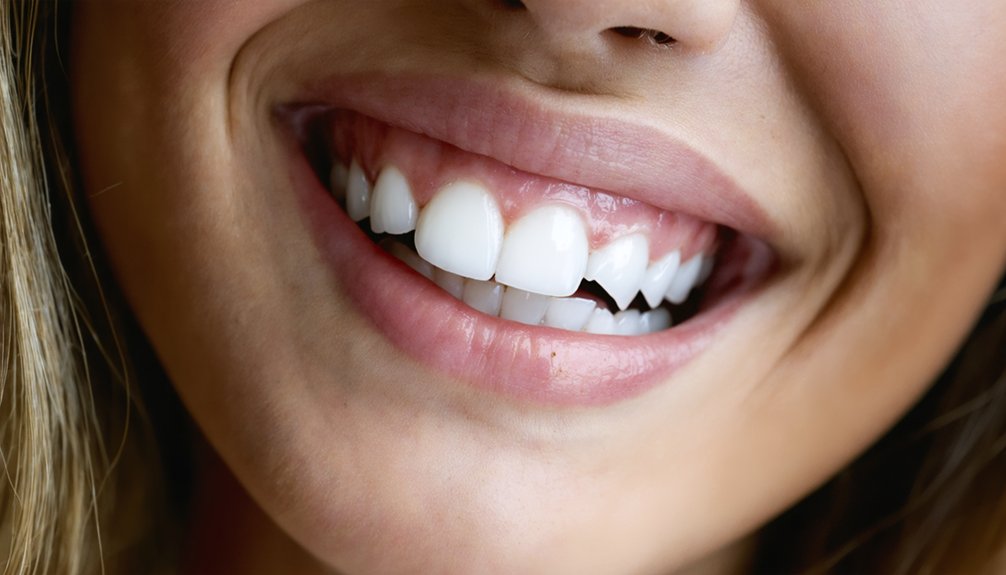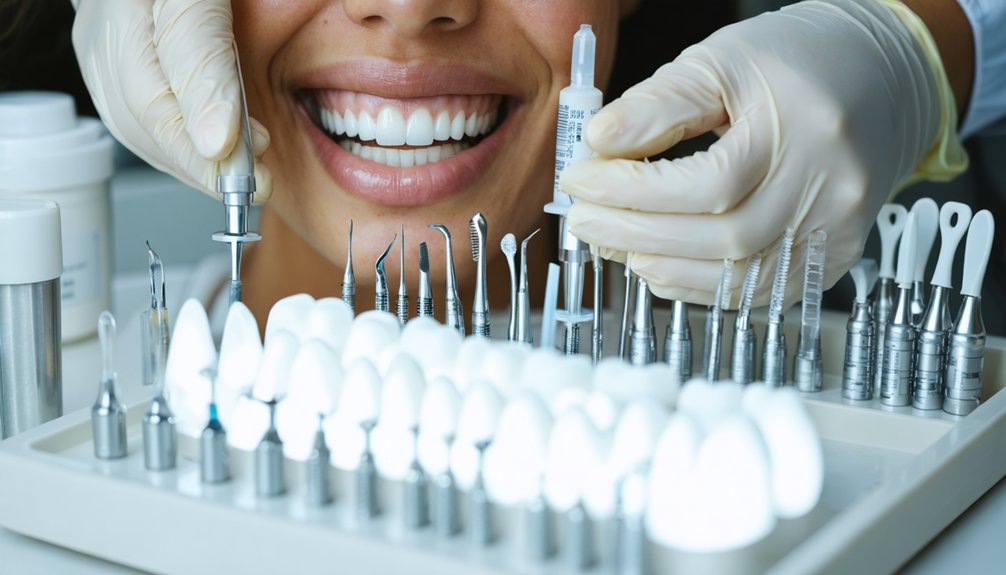
A professional teeth whitening procedure follows a clear sequence to guarantee safe, even results. Your dentist reviews your dental history, records your baseline shade, and identifies any conditions needing treatment first. A professional cleaning removes plaque and debris before gel application. Protective barriers shield your gums, and a 15%–35% hydrogen peroxide gel is applied in multiple 15–20 minute rounds. Post-treatment fluoride application and aftercare instructions protect your results. Keep scrolling to uncover what each step involves.
Key Takeaways
- A dental exam assesses tooth sensitivity, discoloration type, and overall oral health before selecting the appropriate whitening method and concentration.
- Professional cleaning removes plaque and tartar, ensuring even gel penetration and preventing uneven whitening results.
- A lip retractor, gingival barrier, and desensitizing compound are applied to protect soft tissues before gel application.
- Professional-grade hydrogen peroxide gel (15%–35%) is applied in 2–3 rounds of 15–20 minutes for controlled, effective whitening.
- Post-treatment fluoride application, shade documentation, and aftercare instructions help maintain results and minimize sensitivity.
Your First Teeth Whitening Consultation and Shade Check
Before any whitening begins, your dentist will review your dental history, examine your teeth and gums, and check for active conditions like cavities or gum disease that must be treated first. Addressing these issues beforehand guarantees the bleaching agents work safely and effectively.
Before whitening begins, your dentist must address cavities or gum disease to ensure bleaching agents work safely.
Your dentist will also assess existing tooth sensitivity, since heightened sensitivity can influence which whitening method and concentration is most appropriate for you.
Dental discoloration is then categorized by type and severity, helping determine realistic outcome expectations.
A baseline shade measurement is recorded using a standardized shade guide, giving you a precise reference point for comparing pre- and post-treatment results.
This initial consultation also determines whether in-office or at-home whitening better aligns with your specific dental condition and whitening goals.
Why a Professional Cleaning Comes Before Teeth Whitening
Before your whitening appointment, your dentist will perform a professional cleaning to remove plaque, tartar, and surface debris that would otherwise block even gel penetration.
Clean tooth surfaces allow the bleaching agent to contact enamel uniformly, reducing the risk of patchy or inconsistent results.
Your dentist will also identify and address any active cavities or gum disease, since treating these conditions before bleaching protects both your oral health and the effectiveness of the procedure.
Removing Surface Debris First
Getting a professional cleaning before teeth whitening is one of the most overlooked yet critical steps in the process. Plaque, tartar, and surface debris sit on your enamel and block direct contact between the whitening gel and your tooth surface. When that barrier remains, the bleaching agent works unevenly, producing inconsistent results.
Your dental hygiene routine at home doesn’t remove calcified deposits — only professional stain removal tools can. A trained hygienist eliminates those stubborn buildups, giving the whitening gel clean, unobstructed enamel to penetrate.
This single step directly controls how evenly and effectively the bleaching agent performs.
Skipping the cleaning doesn’t save time — it undermines the entire procedure. Prioritize the cleaning first, and you position yourself for measurably better whitening outcomes.
Ensuring Even Gel Coverage
Once plaque and tartar are cleared from your enamel, the whitening gel can spread across each tooth surface without interference. Debris acts as a barrier, creating uneven contact between the bleaching agent and your teeth. Without a clean surface, you’re likely to see patchy results rather than consistent whitening.
Even gel coverage also matters for managing tooth sensitivity. When the gel distributes evenly, you reduce the risk of concentrated exposure in specific areas, which can trigger sharper post-treatment discomfort.
Check whether your dental insurance covers the professional cleaning beforehand, as some plans classify it as a preventive service. Securing that coverage lowers your out-of-pocket cost while ensuring your enamel is properly prepared, giving the whitening agent full, unobstructed contact with every visible tooth surface.
Addressing Oral Health Issues
A professional cleaning does more than polish your smile—it reveals oral health problems that could compromise your whitening results or cause harm if left untreated. Plaque and debris block even gel contact, while untreated cavities or gum disease can intensify dental sensitivity when exposed to high-concentration bleaching agents.
Your dentist will assess your oral hygiene status, identify active disease, and prioritize treatment before any whitening begins. Skipping this step means risking uneven results, unnecessary discomfort, or worsening existing conditions.
A baseline shade measurement is also recorded during this phase, giving you a precise reference point to evaluate actual improvement. Controlling these variables before treatment starts puts you in the strongest position for predictable, effective whitening outcomes.
How to Prepare Your Teeth the Day Before Your Appointment
The day before your whitening appointment, you’ll want to brush and floss thoroughly to clear away plaque and debris that could interfere with even gel contact.
If you’ve already discussed tooth sensitivity during your dental consultations, consider using a sensitivity-formulated toothpaste the night before to reduce discomfort during treatment.
Avoid over-the-counter whitening products in the days leading up to your appointment, as they can heighten irritation and compromise your results.
Skip tobacco use, since it worsens staining and weakens whitening outcomes.
Plan to eat a full meal before your appointment, as you’ll likely need to avoid food and drinks during and shortly after treatment.
These targeted preparations ensure the whitening agent works efficiently and that your experience remains controlled and predictable.
How Your Gums Stay Protected During Teeth Whitening
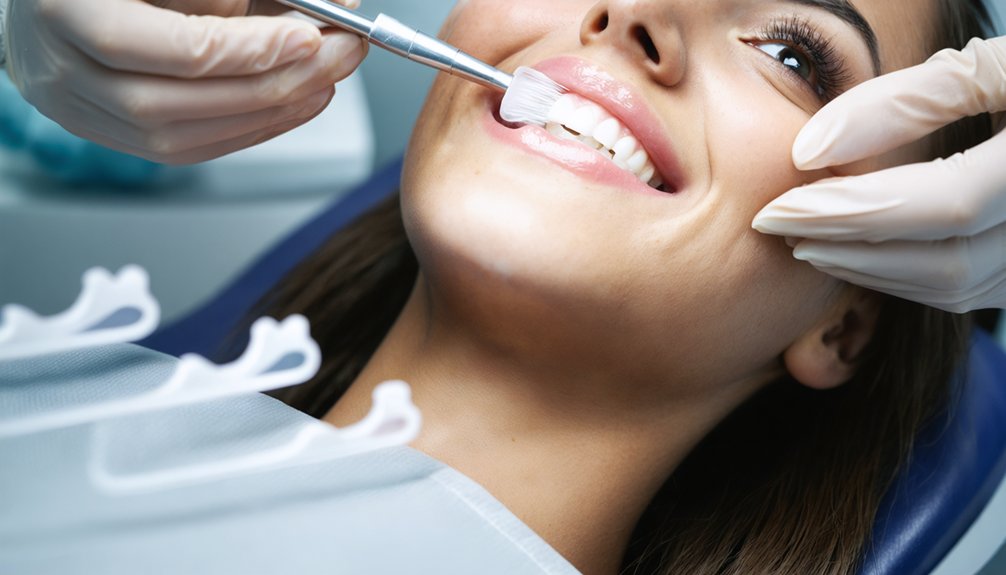
During in-office whitening, your dentist uses several protective measures to shield your gums and soft tissue from the high-concentration bleaching agents.
To guarantee soft tissue safety and minimize gum sensitivity, your dentist applies protection in a specific sequence:
To guarantee soft tissue safety, your dentist applies protective measures in a precise, non-negotiable sequence before bleaching begins.
- Lip retractor – holds your lips away from your teeth, preventing direct contact with bleaching gel.
- Gingival barrier – a protective resin applied along your gumline to block chemical exposure.
- Eye and lip shielding – additional coverage to protect surrounding tissue throughout the procedure.
- Pre-treatment desensitizing compound – applied before bleaching begins to reduce gum sensitivity and discomfort.
These steps aren’t optional—they’re essential. High-concentration peroxide can burn unprotected tissue, so each layer of protection directly controls your comfort and safety during treatment.
Why Professional Whitening Gel Is Stronger Than Store-Bought
When your dentist applies whitening gel, you’re receiving a hydrogen peroxide concentration typically ranging from 15% to 35%—far beyond what over-the-counter strips or gels contain.
That higher concentration allows the bleaching agent to penetrate enamel more effectively, breaking down deeper stains in a single appointment rather than over weeks of repeated at-home use.
As a result, you’ll see faster, more dramatic shade changes that store-bought products simply can’t match.
Higher Peroxide Concentration Levels
One of the most notable differences between professional and store-bought whitening products is peroxide concentration. Professional gels contain considerably higher levels, giving you faster, more controlled results.
Here’s how concentration levels compare:
- Store-bought strips typically contain 3%–10% hydrogen peroxide, limiting their effectiveness on deeper stains.
- Professional in-office gels range from 15%–35% hydrogen peroxide, penetrating enamel more aggressively.
- Higher concentrations accelerate oxidation, breaking down stubborn chromogens embedded within enamel strength layers faster than OTC alternatives.
- Tooth sensitivity increases proportionally with concentration, which is why dentists apply protective barriers and monitor exposure time carefully.
Because professionals control application time and protect surrounding tissue, you get stronger whitening outcomes while minimizing unnecessary risks that unmonitored high-concentration products would otherwise create.
Faster, More Visible Results
Professional whitening gels produce results in a single session that store-bought strips can’t match over several weeks. The difference comes down to concentration. In-office bleaching agents typically range from 15% to 35% hydrogen peroxide, while most over-the-counter products stay below 10%. That gap in strength means you’re achieving measurable shade improvement in roughly 40 minutes to 1.5 hours rather than waiting weeks for gradual change.
Your dentist also controls application precisely, protecting soft tissue while maximizing gel contact with enamel. This controlled environment lets you push concentration levels higher without unnecessary risk.
Yes, tooth sensitivity can occur, but your provider manages it with desensitizing compounds and fluoride application post-treatment. You’re not guessing—you’re getting a clinically directed process that delivers faster, visible, and more reliable outcomes.
How the Whitening Gel Gets Applied to Your Teeth
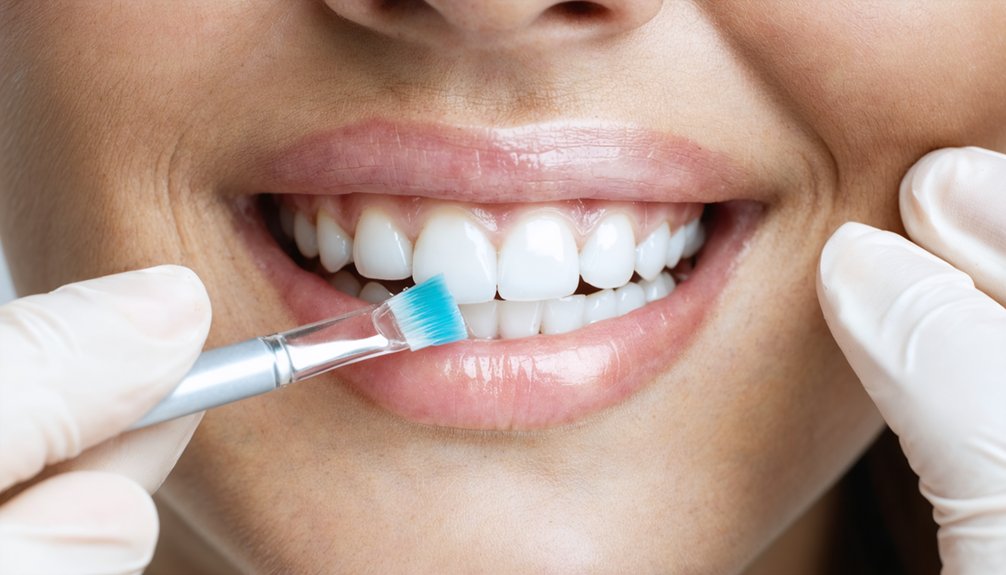
Once the protective barriers are in place, your dentist applies the whitening gel—typically a hydrogen peroxide or carbamide peroxide solution at concentrations ranging from 15% to 35%—directly to the front teeth. Teeth whitening safety depends on precise application and bleaching agent stability throughout each cycle.
Most systems follow a structured process:
- Gel application – The dentist coats only the visible front teeth evenly.
- Timed exposure – Each application sits for a controlled interval, typically 15–20 minutes.
- Multiple rounds – Two to three applications occur within one session for stronger results.
- Rinsing between cycles – Fresh gel replaces spent solution, maintaining consistent bleaching agent stability.
The full appointment typically runs 40 minutes to 1.5 hours, keeping you in control of your outcome.
How Multiple Gel Rounds Work During One Whitening Session
During a single whitening session, your dentist applies the gel in two to three separate rounds rather than one continuous exposure. Each round typically lasts 15 to 20 minutes, allowing controlled gel penetration into the enamel while limiting prolonged chemical contact with tooth structure.
After each interval, your dentist removes the spent gel, evaluates the shade change, and determines whether another application is necessary. This staged approach gives you and your provider precise control over the final outcome.
Spacing the applications also supports enamel protection by preventing excessive dehydration or chemical stress that a single extended exposure might cause.
What Your Dentist Does After the Whitening Gel Comes Off
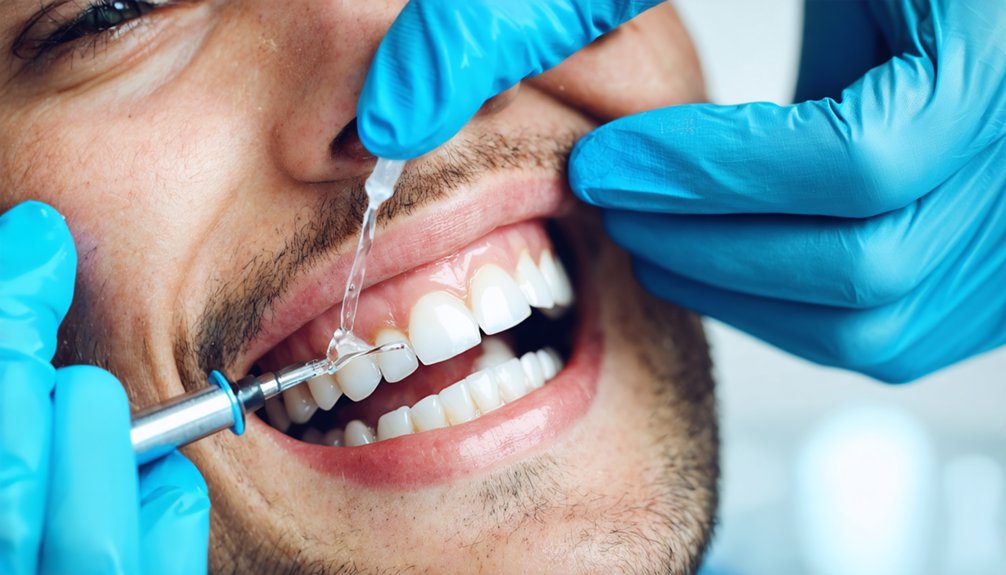
After the final gel round comes off, your dentist rinses your teeth thoroughly with water and removes the gingival barrier protecting your gum tissue.
From there, the post-whitening evaluation follows a structured sequence:
- Shade comparison – Your dentist measures your new tooth color against your baseline shade to document the improvement.
- Fluoride application – A fluoride treatment is applied to ease sensitivity and support enamel recovery.
- Additional round assessment – Your dentist determines whether your results meet your target or if another round is warranted.
- Aftercare instructions – You’ll receive specific maintenance guidance to protect your investment.
Since dental insurance rarely covers cosmetic whitening, understanding these cost considerations upfront helps you make informed decisions about touch-up treatments and long-term maintenance planning.
Foods and Habits to Avoid Right After Teeth Whitening
Your teeth are especially vulnerable in the hours immediately following whitening, so what you eat and do next directly affects how long your results last. Avoid acidic beverages, coffee, tea, red wine, and deeply pigmented foods for at least a few hours post-treatment. These substances penetrate enamel more easily when it’s freshly treated, accelerating re-staining.
Tobacco use must stop entirely—smoking undermines whitening results and compromises your oral hygiene routine’s effectiveness.
If you have dental veneers alongside natural teeth, note that veneers don’t respond to bleaching agents, making post-whitening stain prevention even more critical for maintaining a uniform appearance.
Maintain consistent oral hygiene by brushing twice daily and flossing once daily. Protecting your investment immediately after treatment gives your results the best chance of lasting considerably longer.
How to Maintain Your Teeth Whitening Results Between Touch-Ups
Keeping your whitening results intact between touch-ups requires consistent, deliberate habits rather than passive maintenance. You’ll protect your investment by following a disciplined routine that addresses staining, sensitivity, and enamel health simultaneously.
Maintaining whitening results demands consistent, deliberate habits—not passive hope that your investment will protect itself.
- Brush twice daily and floss once daily to prevent surface stain accumulation.
- Limit whitening toothpaste to one or two uses weekly; overuse worsens tooth sensitivity.
- Schedule professional cleanings every six months—check whether your dental insurance covers these visits, as consistent cleanings significantly reduce new staining.
- Plan touch-ups every six months to two years, adjusting frequency based on your diet and habits.
Controlling these variables directly extends your results. Ignoring any single factor compromises the entire maintenance strategy, shortening the lifespan of your whitening outcome.
Frequently Asked Questions
Does Teeth Whitening Work on Dental Crowns, Veneers, or Implants?
Teeth whitening doesn’t work on dental crown whitening or implants—they won’t respond to bleach. For veneer color matching, you’d need replacement. Consult your dentist to guarantee your restorations align with your natural teeth’s new shade.
Can Teeth Whitening Cause Permanent Damage to Tooth Enamel?
Don’t lose sleep over it—professional whitening won’t permanently damage your enamel. You may experience temporary tooth sensitivity, but enamel erosion isn’t a proven outcome when you follow dentist-recommended protocols and concentrations correctly.
Is Professional Teeth Whitening Safe During Pregnancy or Breastfeeding?
You should avoid professional teeth whitening during pregnancy for pregnancy safety concerns, as bleaching agents may pose unknown risks. For breastfeeding considerations, consult your dentist before proceeding, since limited safety data currently exists.
How Much Does a Professional Teeth Whitening Procedure Typically Cost?
Like a spectrum of light, costs vary: you’ll typically spend $300–$1,000 for professional whitening. Your cost comparison should factor in whitening duration—longer sessions and stronger concentrations naturally drive prices higher.
At What Age Can Someone Safely Undergo Professional Teeth Whitening?
You can typically undergo professional teeth whitening once you’re 18, meeting standard age eligibility requirements. Safety considerations include fully erupted permanent teeth and no active dental issues—your dentist’ll confirm you’re ready.
References
- https://www.webmd.com/oral-health/teeth-whitening
- https://www.cedarbrookdental.com/articles/what-to-do-before-teeth-whitening-treatment
- https://www.ntfcdentistry.com/blog/brighten-10-teeth-whitening-methods/
- https://www.hopkinsmedicine.org/health/treatment-tests-and-therapies/teeth-whitening
- https://www.gentledental.com/resources/articles/teeth-whitening
- https://www.knollwooddentalcare.com/blog/teeth-whitening-step-by-step/
- https://www.healthpartners.com/blog/safe-teeth-whitening/
- https://www.suttonpda.com/in-office-teeth-whitening/