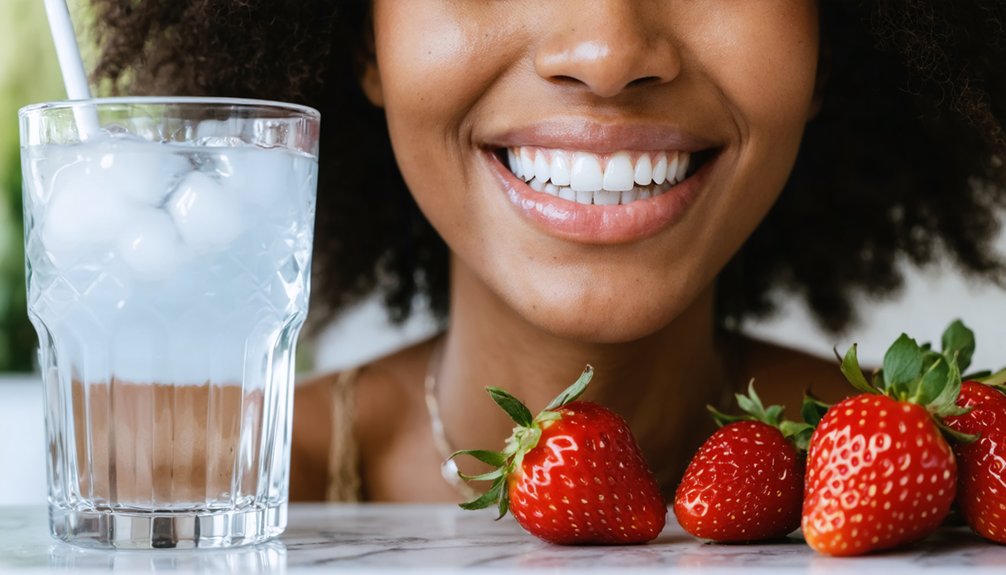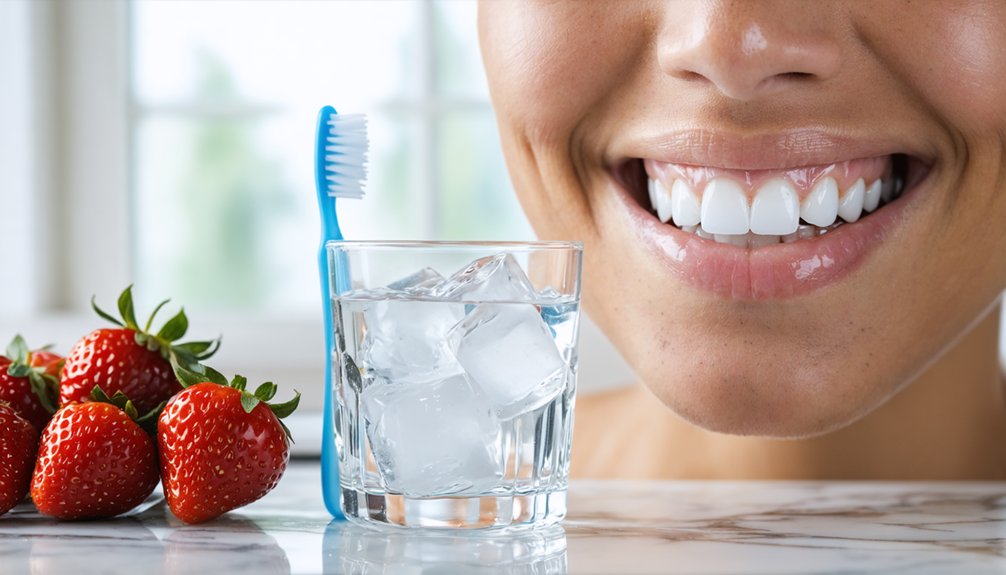
Maintaining white teeth requires consistent daily habits that go beyond occasional whitening treatments. You’ll need to brush twice daily with fluoride toothpaste, floss before bed, and rinse with water after consuming staining beverages. Avoid tobacco, limit pigment-heavy foods and drinks, and schedule professional cleanings every six months. Your dietary choices, product selection, and lifestyle behaviors collectively determine how long your results last—and every strategy covered ahead gives you greater control over the outcome.
Key Takeaways
- Brush twice daily with fluoride toothpaste and floss before bedtime to remove plaque and enhance fluoride penetration against stains.
- Eat crunchy fruits and vegetables like apples and carrots to naturally cleanse teeth and stimulate saliva production.
- Use a straw for pigmented drinks and rinse with water immediately after to minimize enamel staining.
- Quit tobacco entirely, as tar and nicotine cause immediate discoloration and reverse any whitening results achieved.
- Schedule professional cleanings every six months and use whitening toothpaste to maintain brightness between treatments.
How Daily Brushing Habits Keep Teeth White
Brushing at least twice daily for two minutes per session forms the foundation of stain prevention, as consistent mechanical action removes surface debris before pigments can penetrate enamel. You’ll reinforce this protection by spacing sessions roughly twelve hours apart, maintaining steady coverage throughout the day.
Brushing twice daily, spaced twelve hours apart, removes surface debris before pigments can permanently penetrate enamel.
Use fluoride toothpaste to support enamel integrity and reduce surface staining. If you have dental sealants, confirm that your toothpaste and technique are compatible with their maintenance.
An electric toothbrush delivers stronger plaque removal than manual alternatives, giving you measurable control over buildup.
Guard against enamel erosion by waiting thirty to sixty minutes before brushing after acidic food or beverage exposure. Replace your toothbrush every few months to ensure bristle effectiveness remains consistent and cleaning performance doesn’t silently decline.
The Right Way to Floss for Whiter Teeth
Flossing daily removes plaque and food particles from between your teeth, where discoloration commonly begins and a toothbrush can’t reach.
You should guide the floss carefully along each tooth’s surface to lift debris rather than snapping it against the gumline.
This consistent habit reduces the conditions that allow stains to develop and set in the interproximal spaces.
Daily Flossing Fundamentals
While brushing handles tooth surfaces, it can’t reach the tight spaces between teeth where plaque and staining compounds accumulate. Daily flossing closes that gap, and your dental floss techniques determine how effective plaque removal actually is.
Use roughly 18 inches of floss, winding most of it around your middle fingers, leaving a clean section for each contact point. Guide the floss gently between teeth using a zigzag motion, curving it against each tooth’s surface and sliding beneath the gumline. Avoid snapping the floss, which irritates gum tissue and reduces precision.
Work through every contact point systematically, top and bottom. Flossing once daily, preferably before brushing at night, allows fluoride toothpaste to penetrate freshly cleaned interproximal surfaces, maximizing both stain prevention and enamel protection.
Reducing Stains Between Teeth
The spaces between your teeth collect staining compounds that a toothbrush can’t physically reach, making floss your primary tool for interproximal discoloration control. Daily flossing disrupts plaque colonies before pigments bond to proximal surfaces, directly reducing the discoloration that accumulates where enamel is most vulnerable.
Use gentle C-shaped strokes against each tooth surface, avoiding aggressive snapping that accelerates enamel erosion along the gumline. If you have dental sealants, floss carefully around sealed margins to preserve their integrity while still clearing pigmented debris. Follow each flossing session by rinsing with water to flush dislodged particles before they resettle.
Consistent technique matters more than frequency spikes—daily controlled flossing outperforms irregular aggressive sessions for long-term interproximal clarity and sustained whiteness between professional cleanings.
When to Use Whitening Toothpaste and Mouthwash
Whitening toothpaste and mouthwash work best as maintenance tools rather than primary treatments, so you’ll get the most value from them when you’re managing surface staining rather than trying to reverse deep discoloration.
If you’ve recently completed a whitening strip treatment, incorporating whitening toothpaste into your twice-daily routine helps extend those results by controlling new tooth stain accumulation.
Use whitening mouthwash as a supplementary step, not a replacement for brushing or flossing. These products contain mild abrasives or low-concentration peroxide compounds that target surface pigments effectively within that limited scope.
Avoid using them excessively, as overuse can contribute to enamel sensitivity.
Consult your dental provider before adding these products if you have existing sensitivity, restorations, or significant discoloration requiring professional-grade intervention.
Foods That Naturally Support Whiter Teeth
Beyond what you avoid eating, what you actively choose to eat can support a brighter smile through mechanical and nutritional pathways. Raw, crunchy foods like apples, carrots, and celery create mild abrasive friction against enamel surfaces, helping dislodge minor surface stains during chewing.
Calcium-rich foods, including dairy and dark leafy greens, reinforce enamel density, reducing vulnerability to discoloration over time.
Pair these dietary choices with consistent oral hygiene practices for compounding benefit. Tongue scraping removes bacterial buildup that contributes to overall oral degradation, while dental sealants protect enamel from pigment penetration in high-risk areas.
Fibrous produce also stimulates saliva production, your mouth’s natural cleansing mechanism. Treating food selection as an active tool rather than a passive choice gives you measurable control over long-term tooth appearance.
Drinks That Stain Your Teeth (And What to Do Instead)

Beverages like coffee, tea, red wine, and dark sodas rank among the most consistent sources of tooth discoloration, depositing chromogens and tannins directly onto enamel with repeated exposure. For effective stain prevention, use a straw to minimize direct contact between pigmented liquids and your teeth. Swish water immediately after consuming staining drinks to flush residual pigments before they bind.
Avoid brushing within 30 minutes of acidic beverages to prevent enamel abrasion. Staying well-hydrated supports consistent saliva flow, which naturally neutralizes acids and clears debris. Substituting plain water between meals reduces cumulative stain exposure considerably.
These behavioral adjustments complement teeth whitening treatments by preserving results longer. Controlling your drink habits is one of the most precise, high-impact strategies available for maintaining visible brightness.
Drink Habits That Stop Stains Before They Set
What you drink matters, but how you drink it matters just as much. Small behavioral adjustments around your beverage choices can considerably reduce stain prevention challenges before they compound.
Use a straw when consuming coffee, tea, soda, or red wine. It minimizes direct pigment contact with enamel surfaces. After drinking anything dark, swish water immediately to displace residual pigments before they bind. Don’t wait—timing here is critical.
Stay consistently hydrated throughout the day. Adequate water intake sustains saliva flow, your mouth’s natural cleansing mechanism.
Between meals, default to plain water rather than repeatedly exposing enamel to acidic or chromogenic beverages.
Limit snacking frequency. Each additional exposure resets the acid and stain cycle. Controlling when and how you drink is a precise, actionable strategy for maintaining enamel brightness long-term.
Why Tobacco Destroys Your Tooth Color
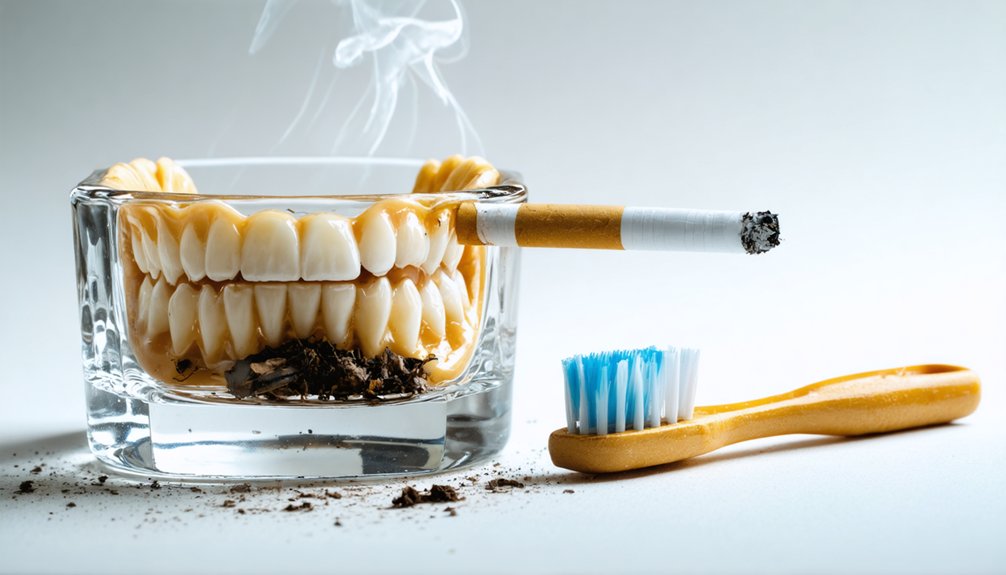
Tobacco ranks among the most destructive habits for tooth color, and the mechanism is direct. Tar and nicotine penetrate enamel pores, producing tobacco stains that resist standard brushing. Nicotine itself is colorless but oxidizes on contact with oxygen, turning yellow.
Tar deposits accelerate oral pigmentation across all tooth surfaces, often progressing to brown or black discoloration with sustained use.
You can’t reverse this damage through whitening alone if you continue using tobacco. Quitting stops new stain accumulation immediately and allows professional cleaning to address existing discoloration more effectively.
Every whitening treatment you invest in loses longevity while tobacco use continues. If maintaining visible results matters to you, eliminating tobacco isn’t optional — it’s the prerequisite that makes every other whitening strategy sustainable.
Professional Cleanings vs. At-Home Whitening Options
Once you’ve addressed tobacco, the next variable in your whitening strategy is deciding between professional cleanings and at-home options. Professional cleanings, scheduled every six months, remove tartar and surface stains that routine oral hygiene can’t eliminate alone. They deliver consistent, measurable results.
At-home options—whitening toothpaste, touch-up trays, and occasional baking soda or hydrogen peroxide use—offer maintenance between visits. However, don’t let dental myths mislead you: at-home remedies work best as supplements, not replacements. Overusing abrasive agents damages enamel and undermines long-term brightness.
Your most controlled approach combines both: professional treatments for baseline correction and at-home tools for ongoing maintenance. Consult your dentist before selecting any whitening product to ensure it aligns with your enamel condition and prior treatment history.
How to Maintain White Teeth After Whitening
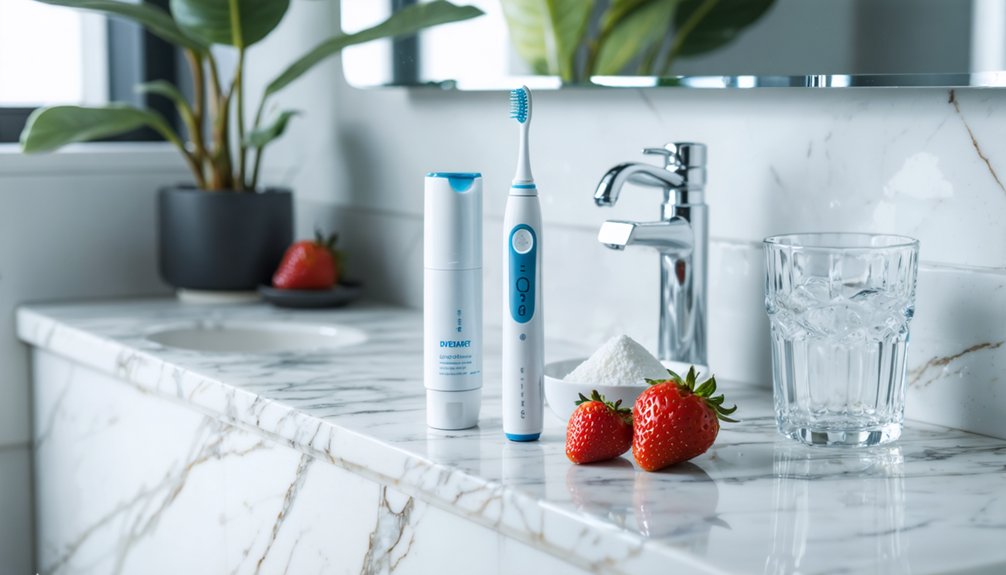
After whitening, maintaining results depends on consistent daily habits that limit re-staining and preserve enamel integrity. Your oral hygiene routine forms the foundation—brush twice daily with fluoride or whitening toothpaste, floss consistently, and rinse with water after consuming staining beverages.
Use a straw when drinking coffee, tea, or wine to minimize direct tooth contact.
Schedule professional cleanings every six months to remove surface deposits before they compromise your dental aesthetics. Request touch-up whitening when fading becomes noticeable.
Avoid tobacco entirely, as tar and nicotine rapidly reverse whitening outcomes. Limit high-stain foods and reduce snacking frequency to decrease cumulative pigment exposure.
You control how long your results last—disciplined diet choices, protective drink habits, and structured hygiene protocols determine the longevity of your whitened smile.
How Long Whitening Results Actually Last
Whitening results typically last anywhere from a few months to three years, depending on the method used and your daily habits. Factors like tobacco use, frequent consumption of staining beverages, and inconsistent oral hygiene accelerate fading considerably.
You can extend your results by scheduling routine cleanings every six months, using whitening toothpaste, and requesting touch-up treatments when brightness begins to decline.
Whitening Results Timeline
How long your whitening results last depends largely on the method used and how consistently you maintain your oral habits afterward. In-office treatments typically deliver results lasting six months to two years.
At-home oral appliance systems with custom trays generally fall within a similar range, contingent on usage compliance and enamel preservation practices. Strip-based and over-the-counter options tend to fade faster, often within one to three months.
Your behavioral choices directly control longevity. Limiting staining beverages, avoiding tobacco, and maintaining twice-daily brushing with fluoride toothpaste extend visible results measurably.
Scheduling cleanings every six months removes accumulating surface deposits before they degrade brightness. When fading becomes noticeable, targeted touch-up treatments can restore prior results without requiring a full retreatment cycle.
Factors Affecting Longevity
Although the whitening method you choose sets a baseline, your daily habits determine how long results actually hold. Tobacco use, frequent consumption of staining beverages, and poor oral hygiene accelerate discoloration regardless of treatment strength.
Dental flossing removes interdental plaque before it mineralizes into tartar, directly extending visible brightness between professional cleanings. Enamel protection matters equally—acidic foods and drinks erode enamel’s surface layer, exposing the yellower dentin underneath and reducing treatment longevity.
You control these variables through consistent brushing, strategic dietary limits, and routine six-month cleanings. At-home touch-up treatments can address gradual fading when introduced early.
The more precisely you manage stain exposure and maintain enamel integrity, the longer your whitening investment performs at a clinically meaningful level.
Maintaining Results Longer
Results from professional whitening treatments typically last anywhere from six months to two years, depending on how consistently you manage the habits covered in the previous section. You extend that window by treating oral hygiene as a non-negotiable daily protocol rather than an occasional effort.
Brush twice daily, floss every day, and rinse after stain-prone beverages to maintain the baseline your treatment established. Stain prevention compounds over time—each small habit either preserves or erodes your results.
Schedule dental cleanings every six months to remove tartar and surface discoloration before it accumulates. When fading begins, request a touch-up whitening session rather than waiting for significant regression.
You control the timeline; the variables are dietary discipline, hygiene consistency, and professional maintenance frequency.
Frequently Asked Questions
Can Certain Medications Cause Permanent Tooth Discoloration Over Time?
Yes, certain medications can cause permanent tooth discoloration. Tetracycline antibiotics and excessive fluoride are well-documented discoloration causes. You should discuss medication side effects with your dentist to explore protective or corrective treatment options proactively.
Does Teeth Whitening Work the Same on Dental Crowns and Veneers?
“You can’t fit a square peg in a round hole”—whitening won’t alter dental crown durability or veneer stain resistance. You’re treating synthetic materials; they don’t respond to bleaching agents like natural enamel does.
Are Whitening Treatments Safe for People With Sensitive Teeth or Gums?
Whitening treatments can irritate sensitive teeth or gums, so you’ll want to consult your dentist first. Home remedies and natural alternatives like baking soda carry risks too—use them cautiously and prioritize professional guidance over unsupervised protocols.
Can Genetics Determine How White Your Teeth Naturally Appear?
Yes, your genetic predisposition directly shapes your teeth’s natural coloration—some inherit bright enamel, others darker dentin. You can’t override genetics entirely, but consistent brushing, diet control, and professional cleanings let you maximize your naturally determined baseline.
Does Teeth Whitening Affect the Strength or Structure of Enamel?
Whitening treatments can cause temporary enamel erosion and tooth sensitivity, especially with overuse. You’ll minimize structural risk by following recommended protocols, avoiding daily peroxide application, and consulting your dentist before beginning any whitening regimen.
References
- https://mypenndentist.org/dental-tips/2021/08/02/maintain-white-teeth/
- https://www.reddit.com/r/Adulting/comments/17ohe5f/how_do_people_keep_their_teeth_so_white/
- https://www.fairviewdentalcare.com/blog/7-habits-people-white-teeth/
- https://www.healthline.com/nutrition/whiten-teeth-naturally
- https://andersondentalonline.com/foods-and-drinks-brighten-teeth/
- https://health.clevelandclinic.org/how-to-whiten-teeth
- https://creating-smiles.com/daily-habits-to-maintain-your-teeth-whitening/
- https://www.studiodentaltx.com/articles/blog-7-steps-for-whiter-teeth
- https://www.sydneyparkdental.com.au/7-ways-to-keep-your-teeth-white/
- https://www.thedentalexpress.com/dental-blog/easy-tips-to-keep-your-teeth-super-white/