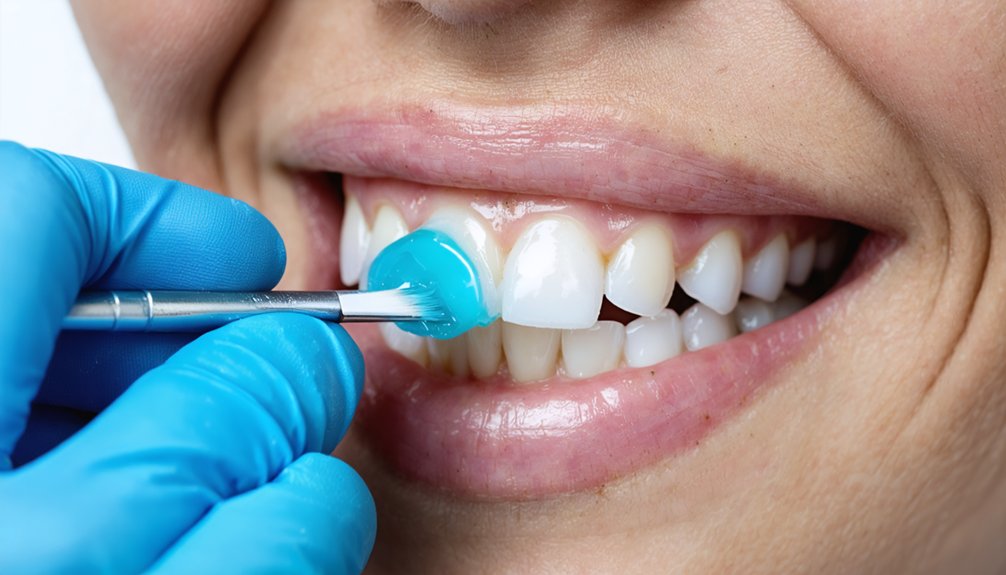
To avoid whitening tooth infection risks, you’ll need to start with a professional dental exam, choose only ADA-accepted products, and use custom-fitted trays that prevent gel from reaching your gums. Apply whitening gel sparingly, follow recommended intervals, and never ignore warning signs like swelling, pus, or persistent pain beyond 48 hours. Stop treatment immediately if serious symptoms appear. The precautions ahead can make the difference between a safe result and a serious complication.
Key Takeaways
- Get a dental exam before whitening to identify cavities, gum disease, or cracked teeth that increase infection risk with peroxide exposure.
- Use only ADA-accepted whitening products, as unregulated kits contain unpredictable peroxide levels linked to burns and infections.
- Use custom-fitted trays to prevent gel seepage onto gums, and remove overflow immediately during application.
- Follow recommended whitening intervals to allow enamel remineralization and prevent cumulative soft tissue damage.
- Stop whitening immediately if swelling, pus, persistent pain, or bad taste develop, and seek prompt dental evaluation.
Get a Dental Exam Before You Start Any Whitening
Before you whiten, get a dental exam. A licensed dentist can identify cavities, cracked teeth, gum recession, and active gum disease before peroxide ever touches your enamel. These conditions elevate your infection risk significantly, and no teeth whitening protocol should begin without ruling them out first.
Your oral hygiene baseline also matters. Existing plaque, tartar, or inflamed tissue reacts unpredictably to whitening agents, increasing your chances of irritation, chemical burns, or bacterial complications.
A pre-whitening exam gives you a clear picture of your oral health status and confirms whether you’re a safe candidate.
Skipping this step means proceeding blind. You’re exposing vulnerable tissue to concentrated peroxide without knowing what’s underneath.
One exam before treatment puts you in control and eliminates preventable risks from the start.
Choose Only ADA-Accepted Whitening Products
Not all whitening products carry the same safety standard, and that gap matters when you’re putting concentrated chemicals near your gum tissue. One of the most persistent whitening myths is that stronger or cheaper products deliver equivalent results without added risk. They don’t.
Not all whitening products are equal — and that gap becomes dangerous when concentrated chemicals meet unprotected gum tissue.
Unregulated kits have been linked to mouth burns, blistering, and infection-like complications from unpredictable peroxide concentrations.
ADA-accepted products meet established safety and efficacy benchmarks, giving you a reliable baseline before treatment begins. Dental myths often frame professional-grade oversight as unnecessary, but product quality directly affects how your soft tissue responds to repeated peroxide exposure.
Check for the ADA Seal before purchasing. If a product lacks transparent labeling or verified acceptance, it’s not worth the infection risk it introduces.
Why Unlicensed Whitening Products Raise Your Infection Risk
Unlicensed whitening products skip the safety checkpoints that protect your gum tissue from chemical injury. Without dental licensing requirements, manufacturers face no obligation to verify peroxide concentrations, test formulations, or ensure tray compatibility. That regulatory gap translates directly into unpredictable chemical safety risks for you.
When gel concentrations exceed safe thresholds, soft tissue absorbs excessive peroxide, creating conditions where bacteria can enter compromised gum margins. Enforcement reports have linked illegal kits to burns, blistering, mouth infections, and nerve damage. These aren’t rare outliers; they’re predictable consequences of unverified chemistry applied without clinical oversight.
You lose the protection a pre-treatment exam provides, which would otherwise identify existing gum disease or cracked teeth before peroxide exposure. Choosing unlicensed products removes every safeguard standing between your oral tissue and serious injury.
Use Custom-Fitted Trays to Stop Gel Reaching Your Gums
Choosing the right delivery method matters just as much as choosing a licensed product. Poor tray fitting allows peroxide gel to seep onto gingival tissue, increasing your infection and irritation risk considerably. Controlled gel application starts with a tray designed precisely for your anatomy.
Delivery method precision matters — poor tray fitting lets peroxide seep onto gingival tissue, escalating irritation risk significantly.
Follow these four protective practices:
- Get custom trays made by your dentist — they conform exactly to your arch, minimizing leakage points.
- Apply gel sparingly — overfilling forces excess peroxide toward your gumline.
- Check for discomfort immediately — burning within minutes signals gel contact with soft tissue.
- Never use generic trays — ill-fitting options compromise both tray fitting precision and safe gel application.
Precision here directly reduces your soft-tissue injury risk.
Apply Whitening Gel Sparingly to Reduce Soft-Tissue Contact
Most whitening accidents trace back to a single mistake: using too much gel. Overfilling your tray forces peroxide onto soft tissue, increasing irritation and infection risk.
For effective gum protection, apply a thin, precise line of gel—enough to coat each tooth’s surface without pooling at the edges.
Before inserting your tray, wipe away any overflow immediately. This single step during gel application considerably reduces peroxide-to-gum contact.
More gel doesn’t accelerate results; it only amplifies risk.
Follow your product’s recommended amount exactly. If you’re using a dentist-provided kit, your provider has calibrated the correct volume for your tray dimensions.
Disciplined application keeps peroxide where it belongs—on enamel—and away from the tissue that’s most vulnerable to chemical injury.
Ask Your Dentist to Monitor Gum Health During Treatment
Scheduling routine gum checks with your dentist during whitening treatment lets a professional catch early signs of irritation, recession, or infection before they escalate.
Your dentist can identify warning signs—such as redness, swelling, or unusual tissue changes—that you might overlook at home.
This professional oversight protects your soft tissue from cumulative peroxide damage and markedly lowers your risk of developing a whitening-related complication.
Gum Checks Prevent Complications
Regular gum checks during whitening treatment can catch soft-tissue problems before they escalate into something more serious. Your dentist can identify early warning signs that you might overlook at home. Monitoring gum health throughout the process keeps complications from becoming infections.
Ask your dentist to evaluate these four indicators at each visit:
- Redness or swelling along the gumline that signals peroxide irritation
- Soft tissue blanching caused by gel seeping through poorly fitted trays
- Persistent tenderness that doesn’t resolve between whitening sessions
- Recession changes indicating that repeated bleaching is affecting gum integrity
Catching these signs early lets you adjust technique, concentration, or frequency before damage worsens. Proactive monitoring puts you in control of your outcome.
Spotting Early Warning Signs
Knowing what to look for between dental visits gives you an added layer of protection that gum checks alone can’t provide. Swelling, pus, persistent pain, or a bad taste aren’t normal whitening side effects—they signal potential infection requiring immediate evaluation. Don’t let whitening myths convince you that discomfort is simply part of the process.
Temporary sensitivity is expected, but burning that lingers after gel removal, or gum tissue that stays red and inflamed, demands attention. One persistent dental myth suggests that stronger discomfort means deeper whitening action—it doesn’t. It means something is wrong.
Stop treatment immediately if these warning signs appear, document what you observe, and contact your dentist before resuming any whitening protocol.
Professional Oversight Protects Tissue
Professional supervision transforms whitening from a guesswork process into a monitored, tissue-protective protocol. Your dentist identifies vulnerabilities before peroxide contacts your teeth or gums, reducing preventable injury.
Ask your dentist to monitor these four tissue-protection checkpoints:
- Pre-treatment exam — Detects caries, recession, and existing gum disease before exposure begins.
- Custom tray fitting — Eliminates gel seepage that irritates soft tissue and triggers inflammation.
- Concentration selection — Matches peroxide strength to your sensitivity threshold, minimizing cumulative damage.
- Mid-treatment evaluation — Catches early gingival irritation before it escalates into infection-like complications.
Unlicensed whitening skips every checkpoint above. Professional supervision isn’t optional if tissue protection is your priority—it’s the mechanism that keeps bleaching safe, controlled, and clinically defensible.
Stick to Recommended Whitening Intervals: Not More
Sticking to recommended whitening intervals is one of the simplest ways you can protect your teeth and gums from cumulative damage. Overusing whitening treatments compromises dental hygiene by stripping enamel faster than tooth remineralization can restore it, leaving surfaces vulnerable to irritation and bacterial infiltration.
Each whitening session creates a temporary window of increased porosity and sensitivity. When you repeat treatments too frequently, that window never fully closes, compounding structural stress on enamel and soft tissue.
Published reviews confirm that aggressive bleaching alters tooth microstructure over time.
Follow the specific intervals your dentist recommends or those outlined on ADA-accepted products. If you’re tempted to whiten more often for faster results, recognize that you’re trading long-term tissue integrity for short-term aesthetics—a trade that increases your infection risk.
Know the Warning Signs That Separate Sensitivity From Infection
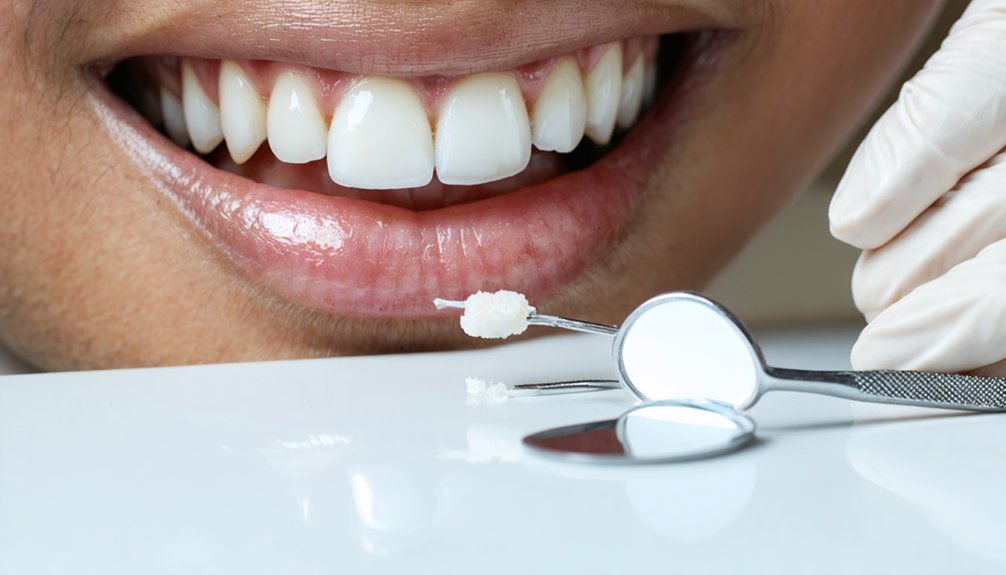
Temporary tooth sensitivity during or after whitening is normal, but you should recognize when symptoms cross into infection territory. Red flags include swelling, pus, a persistent bad taste, or pain that doesn’t fade within a day or two after treatment ends.
If you notice any of these signs, stop whitening immediately and seek dental evaluation before resuming any bleaching protocol.
Normal Sensitivity Versus Infection
Knowing the difference between 3 common post-whitening experiences—mild sensitivity, irritation, and infection—helps you respond appropriately instead of dismissing a serious warning sign. Your tooth enamel and saliva protection naturally buffer minor discomfort, but certain symptoms demand immediate attention.
Recognize these four distinct signals:
- Normal sensitivity – Brief, mild discomfort during or after treatment that resolves within 24–48 hours.
- Irritation – Temporary gum redness or tenderness caused by gel contact, fading within a day.
- Infection warning – Persistent swelling, pus, foul taste, or throbbing pain lasting beyond 48 hours.
- Structural concern – Shooting or spontaneous pain suggesting nerve involvement requiring dental evaluation.
Stop whitening immediately if symptoms escalate beyond mild sensitivity. Early identification keeps minor reactions from progressing into complications requiring clinical intervention.
Red Flag Symptoms Listed
Six specific red flags separate a normal whitening response from a developing infection that needs clinical attention. If you notice any of the following after teeth whitening, stop treatment immediately and contact your dentist.
- Swelling that spreads beyond the treatment site
- Pus or discharge around the gumline or a treated tooth
- Persistent or worsening pain that doesn’t resolve within 48 hours
- Bad taste that signals bacterial activity, not gel residue
- Fever or systemic symptoms accompanying oral discomfort
- Blistering or open tissue along the gumline
Dental safety depends on your ability to distinguish temporary sensitivity from these escalating signs.
Each red flag indicates tissue compromise that peroxide exposure may have triggered or worsened.
Early clinical intervention prevents minor irritation from becoming a serious, harder-to-treat complication.
When To Stop Whitening
Recognizing red flags is only half the equation—you also need to know when those signs mean you should stop whitening entirely rather than push through discomfort. Whitening gels can shift from beneficial to damaging quickly when warning signs are ignored.
Stop whitening immediately if you experience:
- Swelling, pus, or a bad taste — these signal infection, not sensitivity.
- Persistent burning — indicates gel seepage onto soft tissue, compromising gum integrity.
- Prolonged sensitivity beyond 48 hours — suggests tooth enamel stress requiring recovery time.
- Visible gum redness that worsens — points to cumulative soft-tissue injury from repeated exposure.
Pushing through these symptoms risks permanent damage. Discontinuing treatment early gives your tooth enamel and gingival tissue time to recover before complications escalate.
Stop Whitening Immediately If These Symptoms Appear
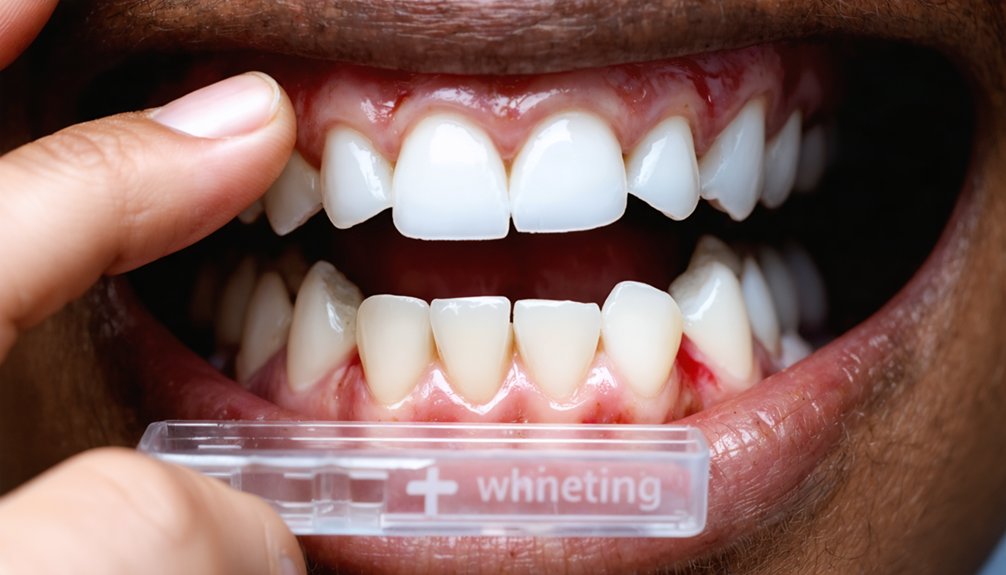
While mild sensitivity during whitening is normal, symptoms like swelling, pus, a persistent bad taste, or unrelenting pain aren’t—they can signal an active infection or serious soft-tissue injury. Stop teeth whitening immediately if any of these appear.
Swelling, pus, or unrelenting pain aren’t normal whitening side effects—they’re warning signs. Stop treatment immediately.
Burning sensations during treatment often indicate gel has breached your gum barrier, requiring immediate reassessment before continuing. Irritation that doesn’t resolve quickly warrants a dental evaluation, particularly after aggressive or repeated bleaching sessions.
Protecting your dental health means recognizing when discomfort crosses from expected to dangerous. Early discontinuation prevents worsening soft-tissue damage and reduces the likelihood of secondary complications.
Don’t attempt to push through abnormal symptoms—contact your dentist promptly. Catching problems early keeps minor irritation from escalating into something significantly harder to treat.
How to Prevent Whitening Infections From Coming Back
Preventing whitening infections from coming back takes more than stopping treatment at the first sign of trouble—it requires addressing the habits that created the risk in the first place. Strengthen your dental hygiene routine and eliminate the conditions that allow re-infection to occur.
- Schedule a dental exam before every whitening cycle to support cavity prevention and identify vulnerabilities.
- Use only custom-fitted trays to eliminate gel seepage onto gum tissue.
- Follow recommended whitening intervals—avoid repeating treatment too soon after completing a cycle.
- Choose ADA-accepted products with verified peroxide concentrations, not unregulated kits.
Consistent dental hygiene between sessions reduces bacterial load, protecting soft tissue from peroxide-related irritation.
You control recurrence by controlling your protocol—precision and professional oversight make the difference.
Frequently Asked Questions
Can Whitening Gel Cause Infections if You Have Dental Implants?
Like a gate left unguarded, whitening gel near implants can invite irritation. You’re not at high infection risk, but dental implant sensitivity demands whitening gel safety through professional supervision to protect surrounding gum tissue effectively.
Does Teeth Whitening Affect Crowns, Veneers, or Bonded Restorations Differently?
Whitening gel won’t change your crowns, veneers, or bonded restorations—it only works on natural enamel. You’ll risk crown discoloration mismatches and veneer sensitivity if you overuse peroxide without professional guidance tailored to your specific restorations.
Are Children or Teenagers at Higher Infection Risk From Whitening Products?
Yes, children and teenagers face higher risks. Their developing enamel and pulp chambers are more vulnerable. Prioritize pediatric safety and teen oral health by ensuring professional supervision before you allow any whitening treatment for younger patients.
Can Certain Medications Increase Your Vulnerability to Whitening-Related Gum Infections?
Yes, certain medications heighten your infection susceptibility. Immunosuppressants, corticosteroids, and dry-mouth-inducing drugs amplify medication impact by reducing your body’s defenses, making gum tissue more vulnerable to peroxide irritation and whitening-related infections.
Does Diet After Whitening Affect Your Chances of Developing Gum Infections?
Yes, diet restrictions matter post-whitening. You’ll reduce infection risk by avoiding acidic or sugary foods that irritate sensitized tissue. Pair this with strict oral hygiene to protect vulnerable gums and minimize bacterial buildup effectively.
References
- https://adanews.ada.org/huddles/experts-weigh-in-on-teeth-whitening/
- https://adanews.ada.org/huddles/risks-of-frequent-teeth-whitening/
- https://ada.org.au/policy-statement-2-2-8-teeth-whitening-bleaching-by-persons-other-than-dental-practitioners
- https://adanews.ada.org/huddles/hazards-of-unlicensed-tooth-whitening/
- https://bentonvilledentist.com/blog/does-teeth-whitening-cause-tooth-infection-pain/
- https://www.ada.org/resources/ada-library/oral-health-topics/whitening
- https://health.clevelandclinic.org/is-teeth-whitening-safe
- https://pubmed.ncbi.nlm.nih.gov/11908348/
- https://pmc.ncbi.nlm.nih.gov/articles/PMC4058574/
- https://www.nature.com/articles/s41407-019-0059-9