To remove honey and maple syrup stains, act within minutes before the sugar crystallizes and bonds to fibers. Scoop away excess syrup with a spoon, working inward from the edges—never rub. Rinse fabric with cold water from the reverse side, then apply dish soap and let it dwell before rinsing thoroughly. Never use hot water or a dryer until the stain’s completely gone. Every surface and stain severity requires its own approach.
Key Takeaways
- Act quickly and use a spoon or dull knife to lift excess syrup before it sets, working from the edges inward.
- Avoid rubbing the stain, as friction drives sugar deeper into fibers and spreads the residue further.
- Rinse fabric with cold water from the reverse side to prevent sugar from bonding deeper into the material.
- Apply a few drops of dish soap, let it sit for several minutes, then rinse thoroughly and repeat if needed.
- Never place stained fabric in a dryer until the stain is fully removed, as heat permanently sets it.
Act Fast: Why Timing Matters With Syrup Stains
When honey or maple syrup hits a surface, your window for easy cleanup starts closing immediately. Syrup consistency determines how quickly it penetrates fabric fibers or grips carpet pile. Thicker honey moves slowly but bonds fast once it starts drying. Maple syrup, being thinner, spreads wider in less time.
As either syrup dries, stain color deepens and sugar crystallizes into the material, making removal markedly harder. You’ll need more product, more effort, and more time once that happens.
Your first move is mechanical: scrape or lift the excess with a spoon or dull knife before touching it with water. Don’t rub. Don’t wait. Acting within minutes keeps you in control of the stain instead of the stain controlling you.
Remove Excess Syrup Before You Touch the Stain
Before you add any liquid or cleaning agent to the stain, lift away as much excess syrup as possible using a spoon or dull knife. Work from the edges inward so you don’t spread the residue further across the fabric.
Whatever you do, don’t rub the sticky area—friction drives the sugar deeper into the fibers and makes removal considerably harder.
Lift Before You Blot
Your first move with any honey or maple syrup spill is to remove as much of the excess as possible before you do anything else. Stain prevention starts here—the less residue that penetrates the fibers, the easier your cleanup becomes. Residue analysis is simple: the more you let sit, the more you’ll fight later.
Use this sequence:
- Grab a spoon or dull knife immediately.
- Scoop or scrape inward toward the center to avoid spreading.
- Lift—don’t drag—the syrup off the surface.
- Repeat until no visible excess remains before blotting.
Don’t rub the untreated area. Friction drives sticky residue deeper into fabric fibers, compounding the problem. Control the spill first, then move to treatment.
Avoid Rubbing the Residue
Once you’ve lifted the excess syrup, your instinct might be to scrub what’s left—resist it. Rubbing drives sticky residue deeper into fibers and spreads it across a wider area, compounding the problem.
Texture considerations matter here: loosely woven or plush fabrics trap sugar particles faster under friction, making removal considerably harder. Instead, blot straight down with a clean cloth, applying controlled, even pressure.
For colorfast fabrics, aggressive scrubbing risks more than just stain spreading—it can lift dye or distort the weave. Work from the outer edge inward to contain the stain’s perimeter.
Every motion should be deliberate. You’re not removing the stain yet; you’re preventing it from becoming worse before treatment begins. Patience at this stage protects the fabric and keeps your options open.
Cold Water or Warm Water: Which Should You Use?
Once you’ve lifted the excess syrup, your next decision is water temperature, and it matters more than you might expect.
For fabric, you’ll want to use cold water during the initial rinse to avoid setting the sugar into the fibers.
For carpets, upholstery, and hard surfaces, warm water works better because it dissolves sticky sugar residue faster and more effectively.
Cold Water for Fabric
When treating honey or maple syrup stains on fabric, start with cold water for the initial rinse. Cold water prevents the sugar from bonding deeper into the fabric fiber and limits early stain color setting before you apply any treatment.
Follow this sequence:
- Rinse immediately from the reverse side of the fabric to push residue outward.
- Use steady cold running water for several minutes until the area no longer feels sticky.
- Avoid rubbing the stain, which spreads residue and forces it further into the fabric fiber.
- Inspect the stain color before moving forward — only proceed to soap treatment once excess syrup is flushed out.
Cold water gives you control at the most critical stage of removal.
Warm Water for Surfaces
For sticky surface spills like honey or maple syrup, warm water is the right choice. Unlike fabric, hard surfaces and carpet fibers don’t absorb residue as deeply, so warm water’s ability to reduce syrup viscosity works directly in your favor. Heat loosens the sugar structure, making it easier to blot and lift cleanly.
Stain timing still matters here. Fresh spills respond faster, but even dried deposits rehydrate effectively when you apply warm water and let it sit briefly before blotting. Don’t rush this step—give the water time to break down crystallized residue before wiping.
Work from the outer edge inward, use a clean cloth, and rinse the area thoroughly afterward. Leftover dissolved sugar will attract dirt if you don’t remove it completely.
How to Use Dish Soap to Break Down Syrup Residue
Dish soap is one of the most effective tools for cutting through sticky syrup residue because its surfactants actively break down sugar.
When syrup thickening or residue crystallization has occurred, dish soap gives you a reliable solution for restoring the surface.
Follow these four steps precisely:
- Apply a few drops of liquid dish soap directly onto the stained area.
- Work it in gently using your fingers or a soft brush — don’t scrub aggressively.
- Let the soap sit for several minutes to fully penetrate and loosen the residue.
- Rinse thoroughly, repeating if any stickiness remains.
Skipping the wait time reduces effectiveness.
Letting the soap dwell gives its surfactants time to break the sugar’s bond with fabric or carpet fibers completely.
How to Get Syrup Stains Out of Clothing
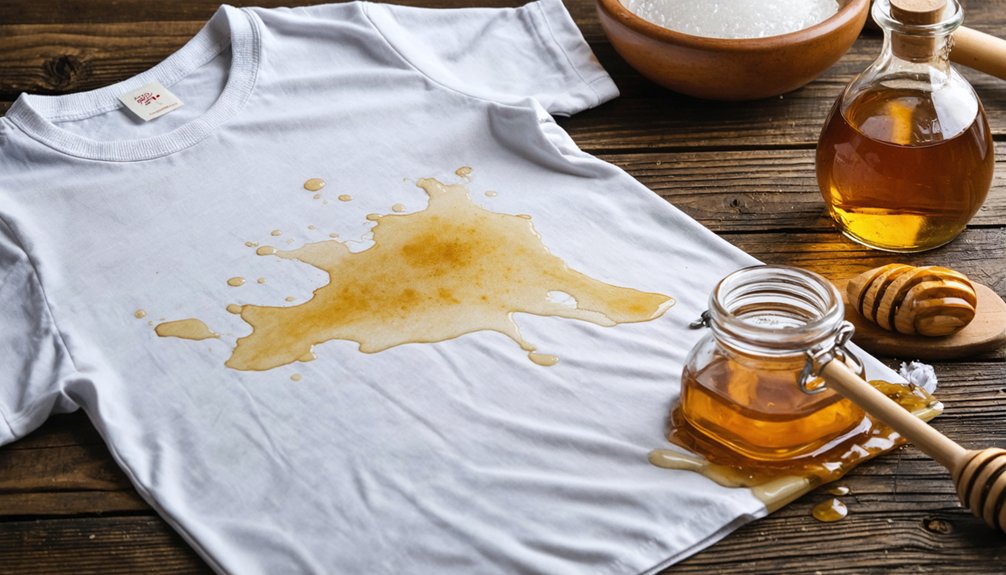
Before tossing a syrup-stained garment into the wash, you’ll need to pre-treat it by applying dish soap directly to the stain, working it in gently, and letting it sit for several minutes.
Then wash the item with the hottest water the care label permits, using your regular detergent.
Always inspect the fabric before drying, since heat will permanently set any remaining stain.
Pre-Treat Before Washing
Pretreating a syrup stain before washing dramatically improves your chances of full removal. Skip this step, and you risk setting the stain permanently — especially once heat gets involved.
For reliable stain prevention and color preservation, follow this sequence precisely:
- Scrape off excess syrup using a dull knife or spoon — never rub.
- Flush the stain from the reverse side with cold water for several minutes.
- Apply a few drops of liquid dish soap directly onto the stain, working it in gently with your fingers.
- Let the soap sit for five minutes to break down the sugar residue before laundering.
Once pretreated, wash immediately using the hottest water the fabric’s care label permits.
Check Before Drying
Once you’ve finished washing, don’t move the garment to the dryer yet — check the stain first. Heat sets sugar residue permanently into fibers, turning a removable discoloration into lasting fabric damage. This single step is critical for fabric protection.
Inspect the treated area in good lighting. If discoloration or stickiness remains, repeat the pretreatment and wash cycle before applying any heat.
For light-colored garments, apply hydrogen peroxide to stubborn residue, test it on a hidden area first, and rewash.
Stain prevention at this stage means never assuming one wash cycle is enough. Only when the fabric looks and feels completely clean should you put it in the dryer. That final check keeps you in full control of the outcome.
What to Do When the Syrup Stain Has Already Dried
Dried syrup stains require a bit more effort, but they’re far from impossible to remove. Syrup crystallization hardens the residue into fibers, making it resistant to standard rinsing. Rehydrating the deposit is your first move to prevent stain diffusion during removal.
- Soak a clean cloth in warm water and press it firmly onto the dried stain for several minutes.
- Once softened, scrape away loosened crystallized residue with a dull knife or spoon.
- Apply a few drops of dish soap directly to the area, working it in gently with your fingers.
- Rinse thoroughly, inspect the stain, and repeat if discoloration remains before laundering on the hottest setting safe for the fabric.
When to Use Hydrogen Peroxide on a Stubborn Stain
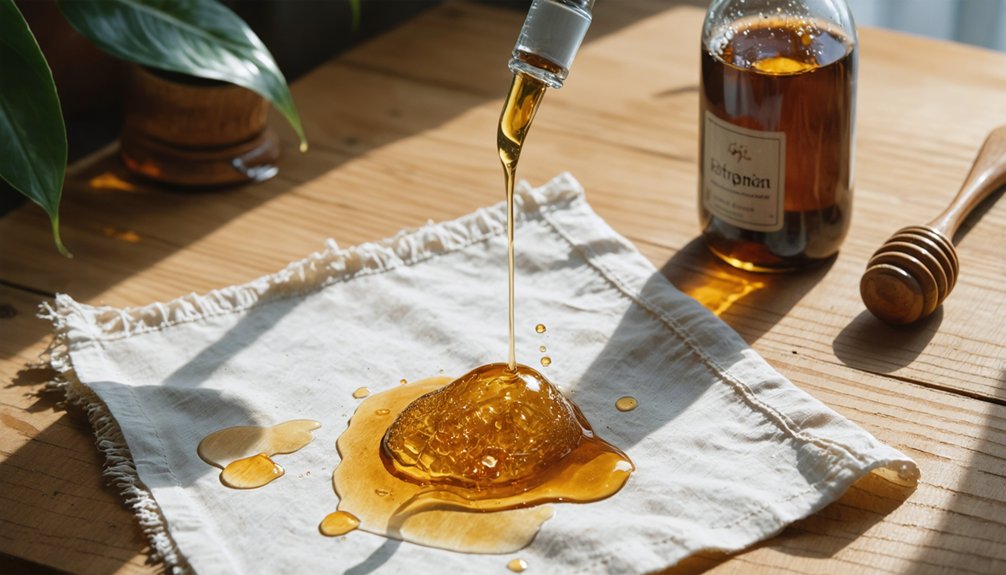
When standard dish soap and repeated washing still leave a faint discoloration on white or light-colored fabric, hydrogen peroxide is your next option. Apply a small amount directly to the stain, let it sit for several minutes, then rinse thoroughly.
Stubborn stains no match for dish soap? Hydrogen peroxide applied directly and rinsed thoroughly is your next move.
Before committing to full stain treatment, test hydrogen peroxide on a hidden section of fabric first, since it can lighten certain dyes or damage delicate fibers. Wear gloves during application to protect your skin.
After rinsing, inspect the area carefully before placing the garment in the dryer, because heat will permanently set any remaining discoloration. If the stain persists, repeat the treatment once more.
Reserve hydrogen peroxide strictly for white or colorfast light fabrics where standard methods have already failed.
Getting Maple Syrup Out of Carpet Without Spreading the Mess
Maple syrup on carpet demands fast action before the sugar dries and bonds to the fibers. Syrup consistency makes it prone to spreading if you rub or press carelessly. Work methodically to keep control of the mess.
- Lift excess syrup using a spoon or dull knife, moving inward from the edges.
- Blot firmly with a clean cloth, never rubbing, to prevent the stain color from spreading deeper.
- Apply warm water mixed with a few drops of dish soap, then blot repeatedly until residue lifts.
- Rinse thoroughly with fresh water, blotting until the area feels clean and no longer sticky.
Inspect before the carpet dries. Remaining sugar attracts dirt and restains the area quickly.
Removing Syrup Spills From Hard Floors and Countertops
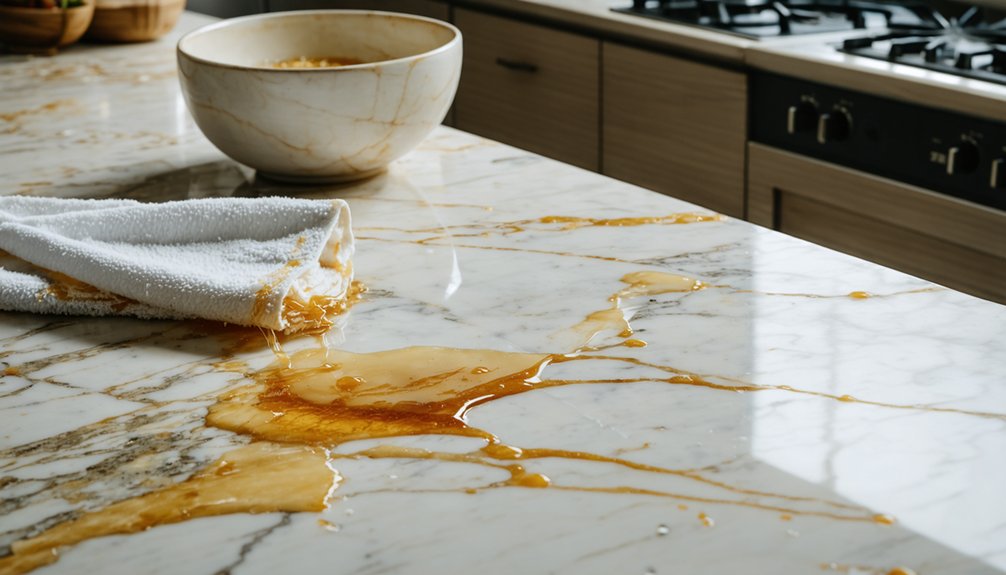
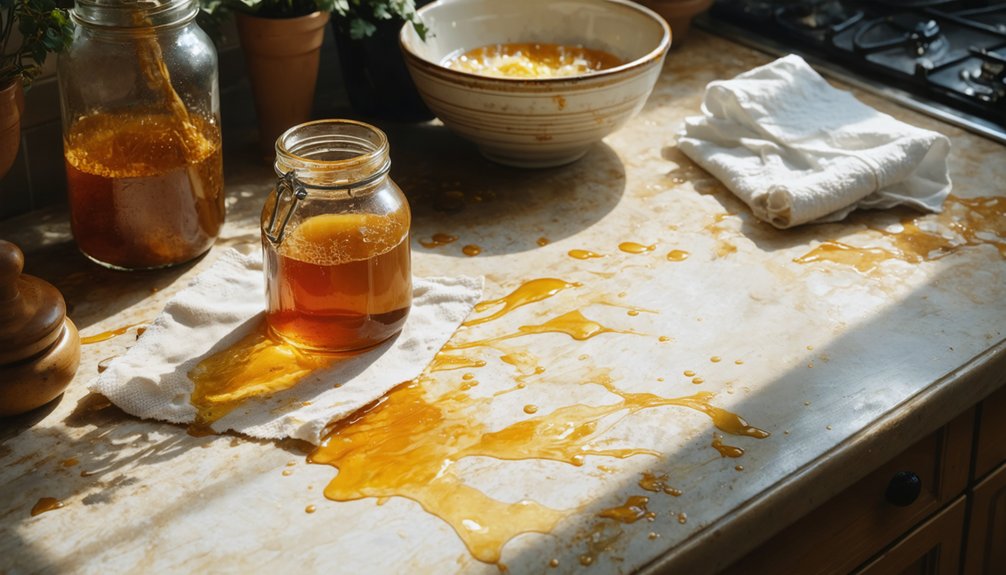
Syrup spills on hard floors and countertops are easier to handle than carpet, but letting them dry turns simple cleanup into scrubbing work. Act immediately by scraping up excess syrup with a dull knife or spoon.
Whether you’re dealing with honey, which has deep historical uses across cultures, or modern flavor variations like infused maple syrups, the cleanup method stays consistent.
From ancient honey to modern infused syrups, the cleanup approach remains the same regardless of what spilled.
Apply warm water directly to the sticky residue to dissolve the sugar bonds. Add a small amount of dish soap, then wipe firmly with a clean cloth. Rinse the surface thoroughly to eliminate soap film and dissolved sugar.
Any leftover residue will attract dirt quickly. For dried, crystallized buildup, let warm soapy water sit for two minutes before wiping, then rinse completely.
Don’t Rub, Don’t Heat: Mistakes That Set Syrup Stains Permanently
Two instincts — rubbing the stain and reaching for hot water — will make a syrup spill considerably harder to remove. Both actions accelerate syrup crystallization and push residue deeper into fibers, reducing stain resistance to any treatment that follows.
Avoid these four mistakes:
- Rubbing the stain spreads sticky residue outward and drives it further into fabric or carpet fibers.
- Applying hot water before pretreating bonds sugar to fibers, making it markedly harder to lift.
- Placing stained fabric in the dryer before confirming the stain is gone sets it permanently.
- Skipping the inspection step after washing gives heat a chance to lock in any remaining residue.
Control the process from the first moment, and you’ll avoid irreversible damage.
Frequently Asked Questions
Can Honey or Maple Syrup Stains Damage Fabric Permanently Over Time?
Like a slow-moving tide, yes, they can permanently set. You must act fast — vinegar cleaning and baking soda help break down residue before heat seals sugar deep into fibers, causing irreversible discoloration.
Does Maple Syrup Stain Differently Than Honey on the Same Fabric?
Yes, they do differ. Maple syrup’s darker pigments cause faster color change, while honey’s thicker viscosity slows stain absorption but spreads wider. You’ll tackle each differently, so act immediately before either sets permanently into fibers.
Are Certain Fabric Types More Vulnerable to Sticky Sugar Stains?
While fabric durability doesn’t guarantee stain resistance, you’ll find natural fibers like cotton and linen absorb sticky sugar stains faster than synthetics. Act immediately—delicate silks and wool demand gentler treatment to avoid fiber damage.
Can Syrup Stains Cause Mold or Mildew if Left Untreated Too Long?
Yes, untreated syrup stains can trigger mold growth and compromise mildew prevention. Sugar residue retains moisture, creating ideal conditions for fungi. You must act quickly, removing all sticky residue to keep your fabrics and surfaces clean.
Is Professional Cleaning Ever Necessary for Stubborn Syrup Stains?
Like a stubborn ghost, some stains won’t budge. If your DIY solutions and household products repeatedly fail after multiple treatments, you’ll want professional cleaning to fully restore delicate or heavily saturated fabrics.
References
- https://www.askteamclean.com/us/en/laundry/remove-honey-stains-from-your-clothes.html
- https://dgfloors.com/how-to-remove-honey-stains/
- https://www.thespruce.com/remove-honey-or-syrup-stains-2146863
- https://www.greenhouseecocleaning.com/stain-buster-honey/
- https://ecohaus.cz/en/blogs/stains/jak-odstranit-skvrnu-od-medu
- https://homeupright.com/how-to-remove-honey-stains/
- https://beekeepercorner.com/get-rid-of-honey/
- https://modernhometools.com/how-to-get-rid-of-honey/
- https://www.clotheslyne.com/blog/how-to-get-honey-out-of-clothes/
- https://stainremovalguides.com/guides/remove-honey-from-white-clothes