When choosing a whitening product, you’ll want brands backed by clinical evidence and ADA acceptance. Dentists most frequently recommend Crest 3D Whitestrips, Opalescence Go, Lumineux, Colgate Optic White, Supersmile, Boka, Arm & Hammer, Tom’s of Maine, Hismile, and Bite. Each targets different needs—sensitivity, budget, or whitening intensity—using peroxide-based, hydroxyapatite, or abrasive mechanisms. Understanding how each brand works and what dentists actually look for will help you make the most informed choice.
Key Takeaways
- Crest 3D Whitestrips is the most clinician-endorsed OTC whitening system, with multiple variants carrying the ADA Seal of Acceptance.
- Opalescence Go offers professional-style whitening with prefilled trays, containing potassium nitrate and fluoride to minimize sensitivity.
- Colgate Optic White is consistently dentist-recommended for daily whitening, targeting surface stains with incremental, practical results.
- Lumineux Whitening Strips provide a peroxide-free, sensitivity-friendly alternative for users prioritizing comfort over dramatic whitening results.
- Boka uses hydroxyapatite to restore enamel mineral content, offering a science-backed, non-bleaching alternative for sensitivity-prone users.
What Dentists Look for in a Whitening Product
When dentists evaluate a whitening product, they prioritize three core criteria: clinically verified efficacy, safety for enamel and soft tissue, and suitability for the patient’s sensitivity level.
Dental safety isn’t negotiable—products must demonstrate that their active ingredients, typically peroxide-based compounds, won’t compromise enamel integrity or irritate gingival tissue under normal use conditions. ADA acceptance serves as a reliable benchmark here, signaling that a product meets established safety and performance standards.
Dental safety is non-negotiable—ADA-accepted products ensure peroxide compounds won’t compromise enamel or irritate gingival tissue.
Beyond that, dentists factor in customer preferences, matching product format—strips, trays, or toothpaste—to your lifestyle, compliance habits, and whitening goals.
If you have sensitive teeth, they’ll steer you toward lower-concentration formulas. If you want fast, dramatic results, they’ll recommend higher-strength peroxide systems. Your needs drive the recommendation.
Crest 3D Whitestrips: Most Dentist-Recommended Whitening Strip
When you apply Crest 3D Whitestrips, the strips deliver hydrogen peroxide directly to your enamel, where it breaks down chromogens responsible for discoloration.
Several variants—including Glamorous White, Vivid White, and Sensitive White—carry the ADA Seal of Acceptance, confirming they meet established standards for safety and efficacy.
That seal matters because it signals independent verification, not just manufacturer claims.
How Whitestrips Work
Crest 3D Whitestrips work by pressing a hydrogen peroxide gel directly against your tooth enamel, where it penetrates the surface and breaks down discolored molecules within the dentin beneath. The peroxide releases free radicals that oxidize stain compounds caused by food pigments, coffee, and lifestyle habits like smoking or frequent wine consumption.
Unlike natural remedies such as activated charcoal or oil pulling, which only address surface debris, hydrogen peroxide chemically alters intrinsic staining at a molecular level. You apply the flexible strips to both arches, hold them in place for the instructed duration, then remove them.
Consistent use over the directed treatment period delivers cumulative whitening. The mechanism is evidence-backed, which explains why this format remains the most clinician-endorsed over-the-counter whitening delivery system available.
ADA Acceptance Explained
What does ADA acceptance actually mean for a whitening product? It means the manufacturer submitted clinical evidence proving the product is both safe and effective. The ADA doesn’t hand out acceptance arbitrarily — you’re looking at verified testing, not marketing claims. This distinction matters when sorting through teeth whitening myths that inflate or dismiss aesthetic impacts without evidence.
Crest 3D Whitestrips earned ADA acceptance across multiple variants, including Glamorous White and Sensitive White, signaling that these strips meet a defined clinical standard. When you choose an ADA-accepted product, you’re removing guesswork from your decision. You’re selecting based on documented outcomes rather than anecdotal promises.
For anyone prioritizing measurable results and verified safety, ADA acceptance functions as your most reliable filter in a crowded whitening market.
Opalescence Go: Professional-Style Whitening Without the Office
If you want professional-style whitening at home, Opalescence Go delivers through prefilled, ready-to-use trays that eliminate the custom fitting process you’d get in a dental office.
Its peroxide-based formula produces stronger results than most OTC strips, making it a frequent recommendation among dentists for patients who need effective whitening between professional visits.
You’ll typically find it priced between $100 and $150, and it’s more commonly dispensed through dental offices than standard retail channels.
Prefilled Tray Convenience
For those who want professional-grade whitening without scheduling an in-office appointment, Opalescence Go offers a prefilled tray system that closely mirrors what dental practices use. Each tray arrives pre-loaded with a hydrogen peroxide gel, eliminating the guesswork of manual application. You simply seat the flexible tray, allow the recommended contact time, and remove it—no mixing, no custom impressions required.
One persistent teeth whitening myth is that only in-office treatments deliver measurable results. Opalescence Go challenges that assumption directly. Its formulation supports both whitening efficacy and oral health impact by incorporating ingredients like potassium nitrate and fluoride, which help manage sensitivity and strengthen enamel during treatment.
For users who want clinical precision outside a dental chair, this system delivers structured, controlled results.
Professional-Strength Whitening Results
Opalescence Go achieves whitening results that closely rival in-office treatments because its prefilled trays deliver hydrogen peroxide directly against the tooth surface for a controlled, sustained contact period.
Unlike natural whitening methods such as oil pulling or activated charcoal—approaches that teeth whitening myths frequently overstate—Opalescence Go uses clinically validated peroxide chemistry to oxidize intrinsic stains at the enamel level. You’re not relying on surface abrasion or unverified home remedies; you’re applying a professionally formulated concentration that dental offices routinely dispense.
That distinction matters when you want measurable, predictable outcomes. The tray design maximizes solution contact and minimizes saliva dilution, two variables that directly determine whitening efficacy.
If professional-grade results without a clinical appointment are your benchmark, Opalescence Go meets that standard precisely.
Pricing And Availability
Pricing reflects Opalescence Go’s position as a near-clinical product: most 2026 dentist guides place it between $100 and $150, which sits above typical OTC strip systems but well below the cost of an in-office whitening session.
Its pricing strategies align with its distribution model—you’ll find it primarily through dental offices rather than mass-market retailers, which reinforces its clinical credibility. Product availability outside professional channels is limited, so you’ll likely need to contact your dentist or order through a dental supplier.
That controlled distribution isn’t accidental; it positions Opalescence Go as a premium, professionally adjacent option rather than a commodity product. If you want near-office results and are willing to pay for them, the pricing reflects genuine value rather than branding markup.
Lumineux Whitening Strips: The Gentler Peroxide-Free Option
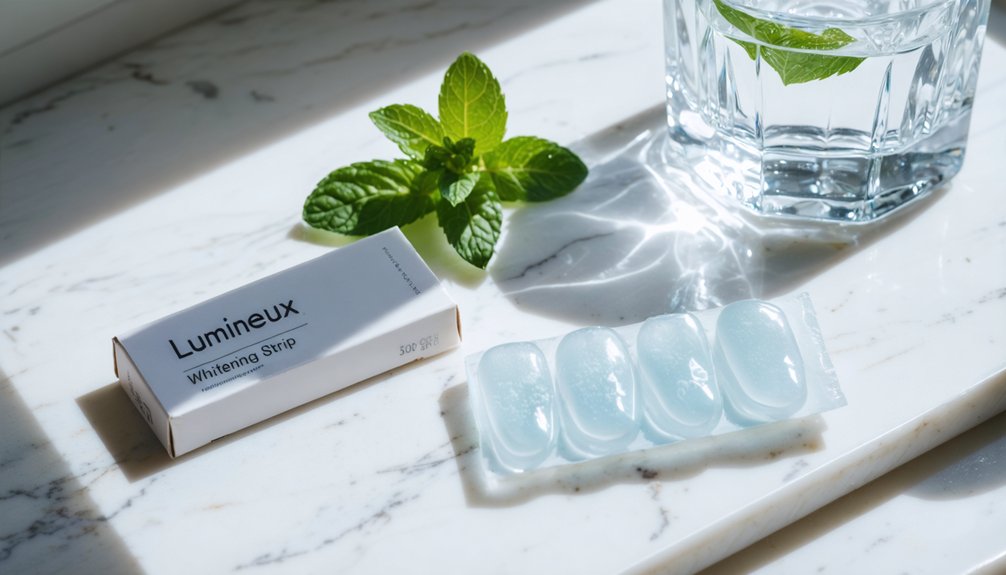
Lumineux Whitening Strips stand out in the crowded whitening-strip market because they skip peroxide entirely, relying instead on a gentler formulation designed for enamel-conscious and sensitivity-prone users. If you experience discomfort with conventional peroxide-based strips, Lumineux offers a viable alternative without abandoning your whitening timeline altogether.
However, you should calibrate your expectations: peroxide-free formulas typically produce more modest dental shade improvements compared to peroxide-based competitors like Crest 3D Whitestrips. Expert roundups consistently position Lumineux as a comfort-first option rather than a maximum-efficacy one.
If your priority is gradual, low-irritation whitening rather than rapid, dramatic results, Lumineux fits that objective precisely. It’s best suited for maintenance or mild stain correction rather than significant shade advancement within a compressed timeframe.
Hismile and Bite: Strip Alternatives Worth Considering?
If you’ve grown tired of conventional strip systems, Hismile and Bite offer format-level alternatives worth examining briefly. Hismile delivers a one-off whitening experience through tested strip formulations, while Bite positions itself as a strip-free whitening gel—both functioning as alternative methods to peroxide-heavy systems.
Neither brand dominates dentist-recommended lists the way Crest or Opalescence does, so you should calibrate expectations accordingly. If you’re drawn to natural remedies or lower-sensitivity options, these products may supplement your routine rather than anchor it.
Neither brand leads dentist-recommended lists, so treat both as supplements rather than cornerstones of your whitening routine.
Neither carries ADA acceptance at this level of documentation, which limits their clinical credibility.
Use both as comparison points when evaluating your choices, but prioritize evidence-backed products if measurable whitening outcomes matter most to you.
Colgate Optic White: Best Dentist-Recommended Daily Whitening Toothpaste
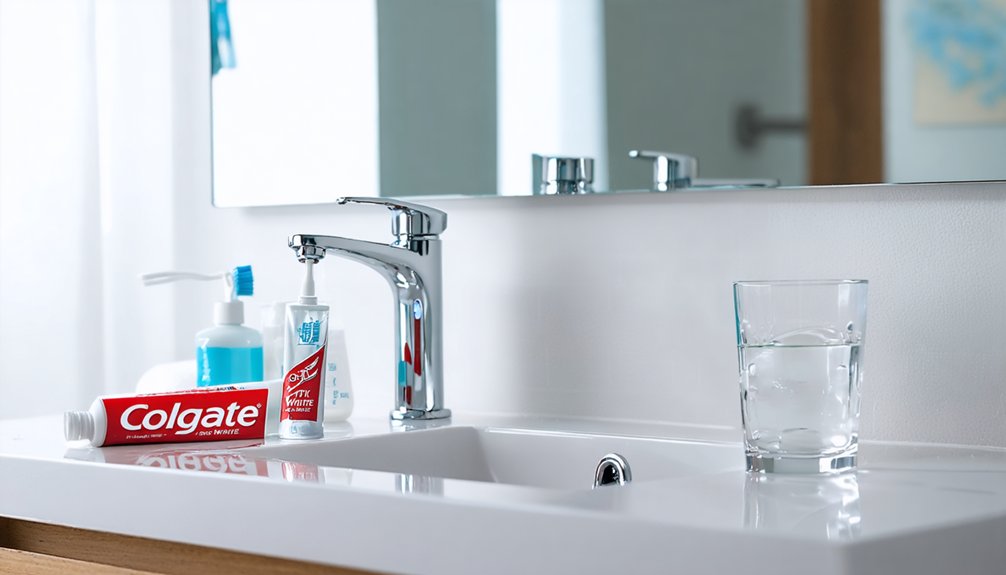
Colgate Optic White consistently appears in dentist-recommended whitening toothpaste roundups, making it one of the most clinically visible OTC options for daily whitening support. Its formulas target surface tooth stain removal while some advanced versions incorporate whitening gels or hydrogen peroxide concentrations that work beneath the enamel surface.
You’re getting a product designed for sustained, incremental results rather than a single dramatic shift. Dentists frequently recommend it for patients who want consistent whitening integrated into their daily brushing routine without committing to strips or tray systems.
Multiple product lines exist within the Optic White range, so you can select an intensity level that matches your sensitivity threshold and whitening goals. It’s a practical, dentist-endorsed entry point for structured daily whitening.
Supersmile: The Premium Toothpaste for Gradual Whitening
For users wanting a step up in toothpaste quality without moving to strips or trays, Supersmile positions itself as a premium daily whitening option. It focuses on gradual stain removal techniques rather than aggressive bleaching, making it distinct from peroxide-heavy systems. Dentist-reviewed roundups consistently rank it among the best overall whitening toothpastes for everyday use.
One of the teeth whitening myths Supersmile helps counter is that visible results require harsh chemicals or intense treatment cycles. Its formulation targets surface stains progressively, allowing you to maintain whitening as part of your standard brushing routine.
If you’re prioritizing consistent, controlled results over dramatic overnight changes, Supersmile offers a clinically supported path to gradual improvement without the sensitivity concerns associated with higher-concentration whitening products.
Boka: Best Whitening Toothpaste for Sensitive Enamel
If you have sensitive enamel, Boka’s hydroxyapatite-based formula offers a remineralizing alternative to conventional peroxide whitening.
Hydroxyapatite bonds to enamel surfaces, helping to restore mineral density while gently reducing surface stains over time.
You’ll find this approach particularly useful if you want daily whitening support without the irritation that stronger bleaching agents can cause.
Hydroxyapatite and Remineralization
Boka’s whitening toothpaste uses hydroxyapatite (HAp) as its primary active ingredient, a biocompatible mineral that makes up roughly 97% of tooth enamel. HAp works by binding directly to enamel surfaces, filling micropores and microcracks that develop through daily wear and acid exposure.
This mechanism supports enamel protection by reinforcing structural integrity rather than stripping surface layers through oxidation. Unlike peroxide-based formulas, HAp doesn’t bleach—it remineralizes, which means whitening consistency comes from cumulative surface restoration rather than a single-use chemical reaction.
If you’re managing sensitivity or enamel erosion, this approach reduces the risk of pulpal irritation while still delivering measurable brightening over time. Clinical studies support HAp’s efficacy for remineralization, making it a science-backed alternative to conventional whitening agents.
Gentle Daily Whitening Benefits
That remineralization mechanism translates directly into a practical daily whitening routine that works without aggravating sensitive enamel. Boka’s hydroxyapatite formula relies on natural ingredients that lift surface stains incrementally, so you’re not trading enamel protection for speed.
Each brushing session deposits mineral content while gently disrupting stain adhesion, giving you consistent brightening without the sensitivity spikes associated with peroxide-based systems. You control the pace entirely—daily use compounds results over weeks rather than delivering a single aggressive treatment.
For users managing thin enamel or chronic sensitivity, that gradual approach isn’t a compromise; it’s a clinical advantage. Boka positions itself as the precise tool for people who want whitening integrated into a protective oral health routine rather than separated from it.
Arm & Hammer and Tom’s of Maine: Budget-Friendly Dentist-Approved Picks
For shoppers prioritizing value without sacrificing dentist-backed credibility, Arm & Hammer and Tom’s of Maine are two whitening toothpaste brands that consistently appear in expert-reviewed roundups. Both deliver dental stain removal through distinct mechanisms, making whitening ingredient comparisons useful before you choose.
Arm & Hammer relies on baking soda, a mild abrasive that targets surface stains while supporting odor control. It’s budget-friendly and widely available.
Tom’s of Maine takes a different approach, using a peroxide-free formula that earned ADA Seal of Acceptance for stain removal. This appeals to users who want gentler daily whitening without harsh chemicals.
If you’re managing sensitivity or prefer simpler ingredient profiles, Tom’s fits that need. If surface stain control on a tight budget is your priority, Arm & Hammer delivers reliably.
Which Whitening Format Matches Your Teeth and Goals?
Choosing the right whitening format depends on your starting shade, sensitivity level, and how quickly you want results.
If your teeth shade reflects moderate-to-severe discoloration, peroxide-based strips like Crest 3D Whitestrips or tray systems like Opalescence Go deliver measurable clinical improvement.
For surface stains and maintenance, whitening toothpastes from Colgate Optic White or Supersmile support gradual, consistent progress.
Whitening longevity varies by format. Tray-based systems typically sustain results longer because they deliver higher peroxide concentrations over extended contact time.
Strips offer a middle ground—effective but requiring periodic retreatment.
Toothpastes require daily commitment with modest long-term payoff.
If you have sensitivity, prioritize lower-peroxide formulas or hydroxyapatite-based options.
Match the format to your clinical needs, not just convenience, for the most durable outcome.
Frequently Asked Questions
How Long Does Teeth Whitening Typically Last Before Results Fade?
Studies show results last 6–12 months. You’ll experience faster fading if you consume staining foods or skip whitening maintenance. If you’ve got dental sensitivity, you’re likely using gentler formulas, which may require more frequent touch-ups.
Can Teeth Whitening Damage Existing Dental Work Like Crowns or Veneers?
Whitening products won’t damage crowns or veneers, but they won’t whiten them either, creating uneven results. You’ll also face tooth sensitivity risk where restorations meet natural enamel. Always assess dental material compatibility with your dentist first.
Is Professional In-Office Whitening Significantly More Effective Than At-Home Products?
Imagine dramatically whiter teeth after one session — professional whitening delivers that faster. You’ll see stronger results, but you’ll face higher cost comparison figures and greater side effect risks than with dentist-recommended at-home products.
At What Age Can People Safely Begin Using Whitening Products?
Most dentists recommend you wait until age 16–18 before using whitening products, as teenagers’ oral health includes still-developing enamel that’s vulnerable to whitening product ingredients like peroxide, which can cause sensitivity or uneven results.
Should Whitening Products Be Avoided During Pregnancy or Breastfeeding?
You should avoid whitening products during pregnancy and breastfeeding. Pregnancy safety concerns stem from limited research on peroxide exposure, and breastfeeding considerations follow the same caution—consult your dentist before resuming any whitening treatment.
References
- https://www.forbes.com/sites/forbes-personal-shopper/article/best-teeth-whitening-kit/
- https://www.health.com/best-whitening-toothpaste-11909626
- https://www.businessinsider.com/guides/health/best-whitening-toothpaste
- https://www.ada.org/-/media/project/ada-organization/ada/ada-org/files/resources/research/science/ada-seal-of-acceptance/ada_seal_reference_guide_2025.pdf?rev=8d4489e57f784e7f8c05205f5a2e502d&hash=A26DD90AD77F30205AECB5335D31E4BC
- https://www.womenshealthmag.com/beauty/g62637531/best-teeth-whitening-products/
- https://www.healthline.com/health/dental-and-oral-health/best-teeth-whitening
- https://www.cnn.com/cnn-underscored/health-fitness/best-whitening-toothpaste
- https://www.cnet.com/health/personal-care/best-whitening-toothpaste/
- https://cosmeticsbusiness.com/american-dental-association-approves-its-first-at-home-tooth-bleaching-product–130762
- https://www.health.com/beauty/best-whitening-products-sensitive-teeth