Your best options for whitening teeth range from professional in-office bleaching, which delivers dramatic results in a single visit, to ADA-approved strips, gels, and whitening toothpastes for gradual at-home improvement. Baking soda paste works as a mild weekly abrasive, while limiting coffee, tea, and tobacco preserves results longer. Always consult your dentist first to protect your enamel and manage sensitivity. Each method carries distinct tradeoffs worth understanding before you commit.
Key Takeaways
- In-office professional bleaching delivers the fastest, most dramatic whitening results in a single visit using high-concentration agents.
- OTC whitening strips and peroxide-based gels effectively remove stains gradually when used as directed.
- Baking soda mixed with water gently scrubs surface stains; limit use to once weekly to protect enamel.
- ADA-approved whitening toothpastes provide safe, gradual daily stain removal suitable for most users.
- Consult a dentist before whitening to assess enamel health and receive personalized treatment recommendations.
Professional Teeth Whitening Treatments That Actually Work
When it comes to fast, reliable results, professional dental treatments outperform every at-home alternative. In-office bleaching delivers dramatic correction of tooth discoloration in a single visit, using high-concentration whitening agents applied directly by your dentist. You’ll leave with measurably brighter teeth without weeks of gradual progress.
For structural or severe discoloration that bleaching can’t resolve, dental veneers offer a precise, long-term solution by covering the tooth surface entirely.
If you prefer treating discoloration at home under professional guidance, your dentist can fabricate custom trays that fit your teeth exactly, producing noticeable results safely.
Over-the-counter products can’t match the potency or customization of professional care. If you want controlled, predictable whitening, consulting your dentist is the most efficient first step.
How Does In-Office Bleaching Compare to At-Home Whitening?
If you want the fastest and most dramatic results, in-office bleaching is your best option. Typically, it requires just one visit where a dentist applies a high-concentration whitening agent directly to your teeth.
At-home alternatives—including custom trays from your dentist, whitening strips, gels, and rinses—offer more flexibility but deliver more gradual results.
Your choice ultimately depends on how quickly you want results and whether you prefer professional oversight or the convenience of at-home treatment.
Professional In-Office Bleaching Benefits
Professional in-office bleaching delivers the fastest and most dramatic whitening results available, surpassing what any at-home product can achieve. Your dentist applies concentrated whitening agents directly to your teeth, eliminating dental plaque interference and maximizing product contact. You’ll complete the entire procedure in a single visit.
Key advantages you should know:
- Speed – One session produces results that at-home treatments take weeks to replicate.
- Precision – Your dentist controls application intensity, reducing unnecessary tooth sensitivity risks.
- Efficacy – Professional-grade whitening agents deliver dramatically superior results compared to over-the-counter alternatives.
If you want measurable, controlled outcomes without prolonged commitment to daily product application, in-office bleaching gives you the most reliable path to significant whitening with professional oversight protecting your enamel throughout.
At-Home Whitening Options
While in-office bleaching sets the benchmark for whitening outcomes, at-home options give you a practical, lower-cost alternative worth understanding. Dentist-prescribed custom trays deliver noticeable results while maintaining safety margins you won’t consistently achieve with generic products.
Over-the-counter strips, gels, and ADA-approved whitening toothpastes offer accessible entry points, though their results remain modest compared to professional care. Your dietary habits directly influence outcomes—limiting coffee, tea, red wine, and tobacco preserves whatever whitening progress you make.
Natural remedies like baking soda paste or oil pulling provide supplemental maintenance when used correctly and sparingly. Overuse risks enamel erosion, so frequency matters.
Ultimately, you control your results by combining the right at-home products with disciplined oral hygiene and informed dietary choices.
What Are the Best Over-the-Counter Products for Whiter Teeth?
If you prefer whitening without a dental visit, you’ll find strips, gels, and toothpastes readily available at most pharmacies. Whitening strips and gels apply peroxide-based formulas directly to your teeth.
While ADA-approved whitening toothpastes offer a more economical, daily-use option. Your dentist can identify which over-the-counter product best suits your specific needs, ensuring you get the safest and most effective results.
Whitening Strips And Gels
Among the most accessible over-the-counter options, whitening strips and gels have become go-to solutions for achieving noticeable results at home. These products deliver teeth whitening agents directly to the enamel surface, gradually improving your dental shade over consistent use.
Key factors to guide your selection:
- Concentration levels — Choose strips or gels with clinically tested peroxide concentrations to ensure effective yet safe enamel contact.
- Application design — Opt for form-fitting strips that maintain consistent product contact across all tooth surfaces for uniform results.
- Dentist guidance — Consult your dentist to identify which specific product suits your current dental shade and sensitivity level.
Used correctly, these products offer a controlled, measurable approach to brightening your smile without requiring an in-office visit.
Whitening Toothpaste Options
Whitening strips and gels work well for targeted treatment cycles, but whitening toothpastes offer a practical daily alternative that fits seamlessly into your existing oral hygiene routine.
Whitening toothpaste ingredients typically include mild abrasives, hydrogen peroxide, or chemical agents that lift surface stains with each brushing session. Choosing an ADA-approved whitening toothpaste ensures the formulation meets verified safety and efficacy standards, giving you measurable confidence in the product you’re using.
Unlike strips or gels, whitening toothpaste integrates directly into twice-daily brushing, requiring no additional steps or scheduling. Results are more gradual but consistently maintained through disciplined use.
If you’re uncertain which formula suits your enamel sensitivity or staining severity, your dentist can identify the specific whitening toothpaste best aligned with your dental profile.
Dentist-Recommended OTC Products
Beyond toothpaste, a broader range of over-the-counter products can deliver noticeable whitening results when selected carefully. Since whitening procedures vary in strength and mechanism, your dentist can identify which OTC options align with your specific dental profile.
Dental insurance typically doesn’t cover cosmetic treatments, making dentist-guided OTC choices a cost-effective alternative.
Consider these three dentist-recommended OTC product categories:
- Whitening strips – Peroxide-based strips applied directly to enamel surfaces for controlled, measurable results.
- Whitening gels – Brush-on formulas offering targeted application to individual teeth.
- Whitening rinses – Daily antiseptic rinses that combine bacteria control with mild bleaching agents.
Selecting products bearing the American Dental Association seal ensures you’re using clinically validated options that balance efficacy with enamel safety.
Are Whitening Strips and Gels Safe for Your Enamel?
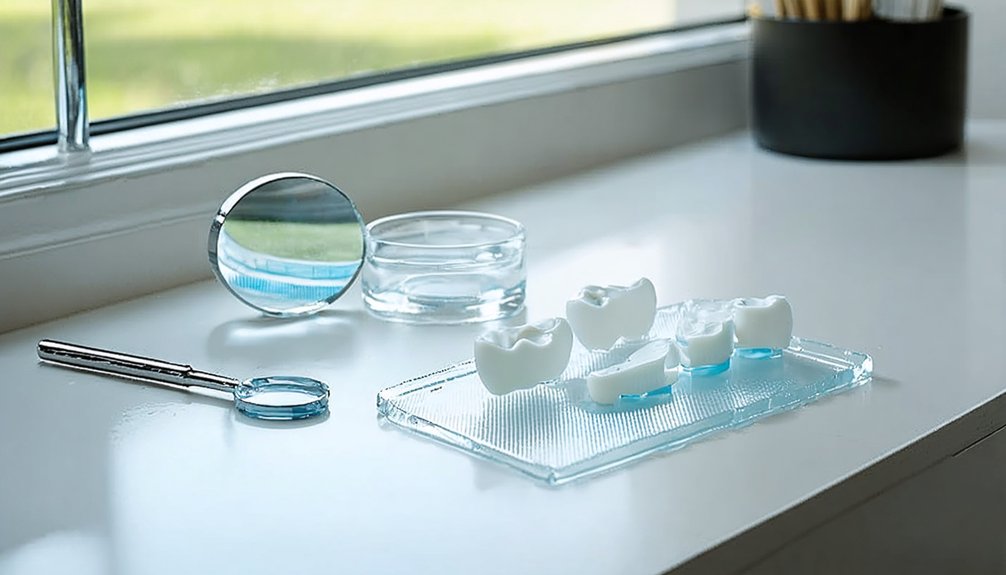
When used as directed, whitening strips and gels are generally safe for enamel, but misuse can cause damage. These products contain peroxide-based agents that penetrate the enamel surface to break down stains.
Chemical safety depends heavily on concentration levels and application frequency. Overuse or leaving strips on longer than recommended increases your risk of enamel erosion and gum irritation.
To protect your enamel, follow the product’s instructions precisely and avoid exceeding the recommended treatment duration. If you experience sensitivity, reduce application frequency or discontinue use.
Your dentist can assess whether your enamel thickness makes you a suitable candidate for these products. Choosing ADA-approved strips and gels gives you an added layer of confidence that the formula meets established safety standards.
Does Baking Soda Actually Whiten Teeth?
Baking soda works as a mild abrasive that gently scrubs surface stains from your enamel, making it a clinically recognized option for basic whitening.
You should limit your use to once per week, as exceeding that frequency risks eroding the enamel over time.
Combining baking soda with hydrogen peroxide creates a paste that enhances its stain-removing effectiveness for regular brushing sessions.
Baking Soda’s Whitening Mechanism
There are 2 primary ways baking soda works to whiten teeth: it physically scrubs surface stains through mild abrasion, and its alkaline properties help neutralize acids that contribute to discoloration.
Among natural remedies, it’s one of the most evidence-supported options available. However, enamel safety depends entirely on controlled usage.
Follow these precise guidelines to maximize results:
- Limit application to once weekly — overuse erodes enamel, causing long-term discoloration.
- Mix with water to form a paste — direct application without dilution increases abrasive risk.
- Combine with hydrogen peroxide cautiously — this enhances whitening but requires careful concentration control.
You’re working with a clinically recognized ingredient, but disciplined use determines whether it protects or damages your teeth.
Safe Usage Frequency
How often you use baking soda directly determines whether it whitens your teeth or damages them. Limit application to once per week. Exceeding this frequency accelerates enamel erosion, which ironically worsens teeth discoloration over time — the opposite outcome you’re seeking.
One of the persistent whitening myths is that more frequent use produces faster results. It doesn’t. Enamel doesn’t regenerate once worn down, and thinner enamel exposes the yellowish dentin beneath, making teeth appear darker.
Follow this precise protocol: mix baking soda with water to form a paste, brush gently for two minutes, then rinse thoroughly. Maintain your standard brushing routine on all other days.
Controlled, infrequent use delivers surface stain removal without compromising your enamel’s structural integrity.
Hydrogen Peroxide Combination Benefits
Combining baking soda with hydrogen peroxide enhances whitening effectiveness beyond what either ingredient achieves alone. This combination targets surface stains more efficiently while maintaining hydrogen peroxide safety through proper dilution. You’ll create a controlled whitening paste by mixing both ingredients to a brushable consistency.
Three evidence-based reasons this combination works:
- Dual-action stain removal — baking soda mechanically scrubs while hydrogen peroxide chemically oxidizes discoloration.
- Controlled pH balance — baking soda neutralizes hydrogen peroxide’s acidity, reducing enamel exposure risk.
- Cost-effective natural whitening tips — both ingredients are affordable and accessible without professional intervention.
Apply this paste during your regular brushing routine, but limit use to a few times weekly. Avoid using undiluted hydrogen peroxide directly, as concentrated solutions damage enamel and irritate gum tissue.
Does Oil Pulling or Eating Fruit Really Whiten Teeth?
While natural whitening methods like oil pulling and eating certain fruits have gained popularity, the evidence supporting their effectiveness is limited. Natural remedies like coconut, sesame, or sunflower oil pulling may gently reduce surface bacteria, but they won’t dramatically whiten teeth.
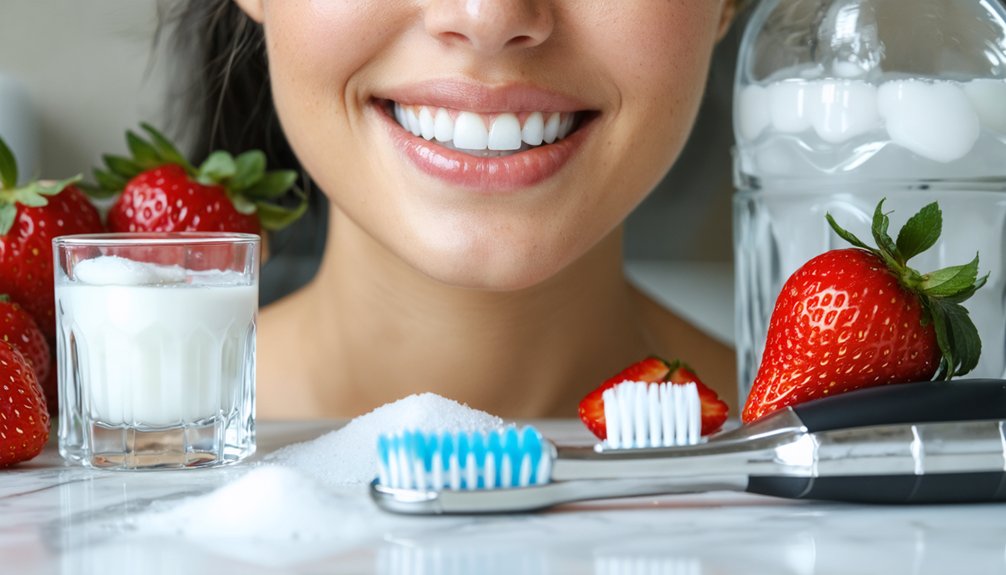
Fruit benefits are similarly modest. Pineapple and strawberries contain enzymes and mild acids that may target surface stains, but consistent scientific evidence remains sparse. Crunchy fruits like apples mechanically scrub tooth surfaces during chewing, offering minor cleaning effects.
You should approach these methods as supplementary rather than primary whitening solutions. They’re unlikely to replace professional treatments or proven over-the-counter products.
If you’re seeking meaningful results, consult your dentist to identify targeted strategies that align with your specific whitening goals.
Which Daily Habits Keep Your Teeth White Longest?
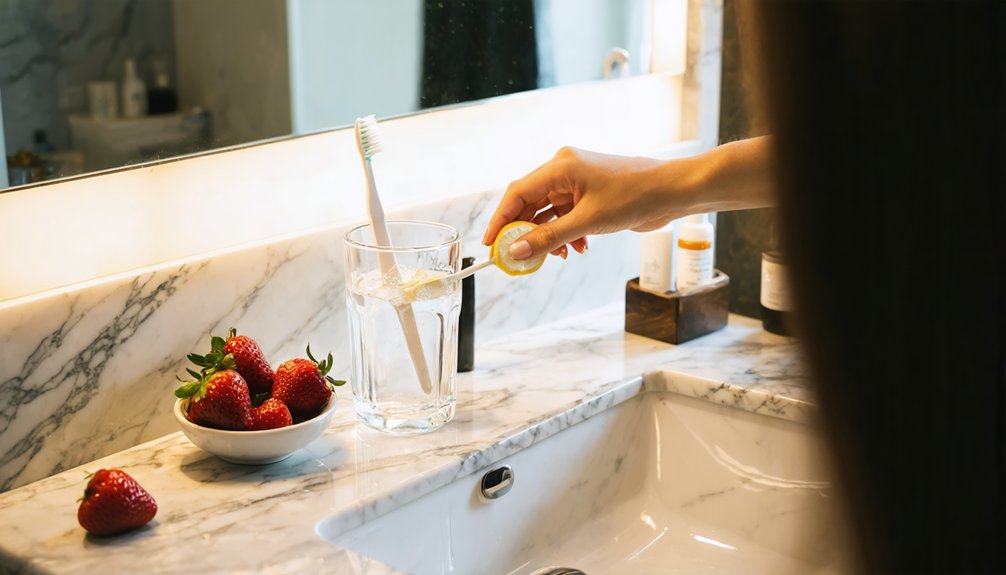
Maintaining your whitening results long-term depends on consistent daily habits that address both stain prevention and oral hygiene. You’ll preserve tooth brightness most effectively by controlling what contacts your enamel daily and eliminating bacterial buildup systematically.
- Brush twice daily for two minutes — this removes surface stains before they penetrate enamel.
- Practice dental flossing once daily — interproximal plaque accelerates yellowing between teeth where brushing can’t reach.
- Add tongue cleaning to your routine — bacteria on the tongue redistribute onto tooth surfaces, contributing to discoloration.
Additionally, limit coffee, tea, red wine, and tobacco, as these compounds directly stain enamel. Rinsing with antiseptic mouthwash daily reduces plaque-forming bacteria.
You control your results through disciplined, repeatable actions.
Foods That Naturally Whiten and Clean Your Teeth
Your diet directly influences tooth color, and certain foods mechanically or chemically reduce surface staining.
Crunchy vegetables like celery, carrots, and apples act as natural abrasives, scrubbing plaque from enamel as you chew. Cheese and other high-calcium foods strengthen enamel while supporting overall whiteness.
Pineapple and strawberries function as natural remedies through enzymatic and mild acidic action that targets surface discoloration.
While not classified as herbal remedies, these fruits offer evidence-supported benefits when consumed regularly as part of a balanced diet.
Prioritize produce-rich meals to leverage these mechanical and biochemical cleaning effects consistently.
Pairing these dietary choices with disciplined brushing and flossing amplifies results.
You control your tooth color considerably through deliberate, sustained nutritional decisions rather than relying solely on external whitening interventions.
Teeth Whitening Methods You Should Never Try
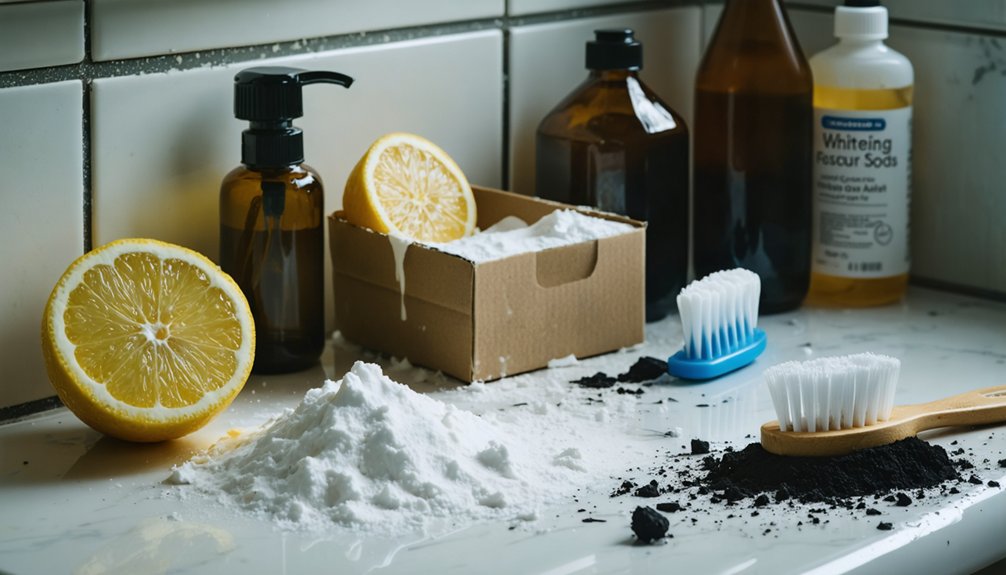
Not every whitening method available online or in stores is safe for your enamel or gum tissue. Some approaches accelerate oral discoloration rather than reversing it, depleting dietary minerals essential for enamel integrity.
Not all whitening methods reverse discoloration — some accelerate it, stripping the minerals your enamel depends on.
Avoid these three high-risk methods:
- Activated charcoal – Its abrasive texture erodes enamel permanently, increasing long-term discoloration risk.
- Lemon juice or vinegar – These acidic substances strip protective enamel, undermining dietary minerals your teeth depend on for strength and whiteness.
- Undiluted hydrogen peroxide – Applied directly from the bottle, it burns gum tissue and destabilizes tooth structure.
You control what contacts your teeth. Choosing clinically unsupported methods transfers that control to irreversible damage.
Consult your dentist before adopting any unconventional whitening approach.
How to Choose the Right Whitening Method for Your Budget and Sensitivity
Choosing the right whitening method depends on two practical factors: your budget and your tooth sensitivity.
For cost considerations, over-the-counter strips, gels, and ADA-approved whitening toothpastes offer affordable entry points. While professional in-office treatments deliver faster, more dramatic results at a higher price. Custom dentist-provided trays sit in the middle range, balancing cost with effectiveness.
For sensitivity management, avoid abrasive options like activated charcoal or acidic substances like lemon juice, which damage enamel and worsen sensitivity.
If your teeth react easily, start with gentler methods like baking soda paste once weekly or low-concentration OTC gels.
Consult your dentist before choosing any method—they’ll identify which products suit your enamel condition and recommend concentrations that whiten effectively without triggering discomfort.
Frequently Asked Questions
How Long Does Professional Teeth Whitening Typically Last Before Fading?
Like a freshly painted wall fading under sunlight, your results typically last six to twelve months. Whitening gels and dental sensitivity vary by habit, but you’ll maintain brightness longer by avoiding staining foods and beverages consistently.
Can Teeth Whitening Damage Existing Dental Work Like Crowns or Veneers?
Whitening treatments won’t alter crowns or veneers due to dental material compatibility differences. You’ll notice uneven color matching. Veneer durability considerations matter, so consult your dentist before whitening to maintain consistent, controlled aesthetic results across all restorations.
At What Age Is Teeth Whitening Considered Safe for Younger Patients?
While it seems harmless early, you shouldn’t pursue whitening before age 14. Teen oral health guidelines confirm permanent teeth must fully erupt first. Children’s dental safety standards recommend consulting your dentist before starting any whitening treatment.
Does Drinking Water After Staining Beverages Help Prevent Tooth Discoloration?
Yes, rinsing with water after staining beverages helps reduce discoloration. You’ll maximize hydration benefits by acting immediately, as water absorption dilutes pigments before they set, protecting your enamel and maintaining your teeth’s natural brightness effectively.
Can Certain Medications Cause Teeth to Resist Whitening Treatments Entirely?
Like a locked door, some medications create medication interactions that block whitening results. You’ll find tetracycline antibiotics permanently stain dentin, resisting treatments. Tooth sensitivity may also increase, so you should consult your dentist before proceeding.
References
- https://www.northeastdentalarts.com/blog/what-is-the-least-damaging-way-to-whiten-your-teeth/
- https://www.hopkinsmedicine.org/health/treatment-tests-and-therapies/teeth-whitening
- https://www.dentalcareofmidfl.com/six-simple-ways-whiten-teeth-naturally/
- https://www.pleasantfamilydentistry.com/blog/6-natural-ways-to-whiten-your-teeth
- https://www.webmd.com/oral-health/teeth-whitening
- https://health.clevelandclinic.org/how-to-whiten-teeth
- https://www.healthpartners.com/blog/safe-teeth-whitening/
- https://www.medicalnewstoday.com/articles/322421
- https://www.aarp.org/health/conditions-treatments/teeth-whitening/
- https://www.youtube.com/watch?v=i8yqDgT0tCE