Whitening strips can lighten fluoride-stained teeth by one to two shades, but only if your fluorosis is mild. They work by using peroxide to break down surface chromogens within your enamel, making deeper stains from moderate to severe fluorosis largely unreachable. You’ll also want to know that strips won’t whiten crowns, fillings, or implants. Matching the right strip to your fluorosis severity is what separates effective treatment from wasted effort—and that’s exactly where this guide takes you.
Key Takeaways
- Whitening strips lighten fluoride-stained teeth by 1-2 shades in mild fluorosis but are less effective for moderate to severe cases.
- Peroxide-based strips penetrate enamel to break down surface stains, but deeper fluorosis staining often requires professional clinical treatment.
- Sensitive teeth benefit from peroxide-free options like Crest 3D Whitestrips Sensitive, reducing irritation while targeting mild discoloration.
- Proper strip placement, avoiding gum overlap, maximizes effectiveness and minimizes side effects like gum irritation and enamel demineralization.
- No visible improvement after two weeks signals the need for professional evaluation and potentially stronger in-office whitening treatments.
Do Whitening Strips Actually Work on Fluoride Stains?
When it comes to fluoride stains, whitening strips deliver inconsistent results depending on the severity of your fluorosis. For mild discoloration, teeth whitening strips can lighten your teeth by one to two shades, making them a viable at-home option. However, moderate to severe fluorosis typically doesn’t respond well to strip-based treatments.
The active peroxides in these strips penetrate your enamel and break down chromogens in the dentin layer. While effective for surface discoloration, they can’t fully reverse deep fluoride-related staining.
Peroxide-based strips break down surface stains but fall short against deep fluoride discoloration embedded in the dentin layer.
Enamel protection becomes a critical concern here, as high peroxide concentrations increase demineralization risk.
If your fluorosis is significant, consult your dentist before investing in home products. In-office treatments offer stronger, more targeted results for cases that strips can’t adequately address.
Why Crowns, Fillings, and Implants Won’t Whiten
Before committing to any whitening regimen, you’ll need to account for one hard limitation: whitening strips don’t change the color of crowns, fillings, bridges, or implants. Peroxides only bleach organic chromogens within natural enamel and dentin. Synthetic restorative materials don’t respond to chemical bleaching agents.
If you whiten your natural teeth first, existing restorations may appear noticeably mismatched afterward. This creates a clinical problem that often requires replacing those restorations to achieve color consistency. Replacement falls under cosmetic procedures, which dental insurance typically doesn’t cover, making it a significant out-of-pocket expense.
Before starting treatment, map out every restoration in your mouth. Consult your dentist to establish a sequenced plan that accounts for both your natural teeth and existing dental work.
Mild vs. Severe Fluorosis: What Strips Can Realistically Fix
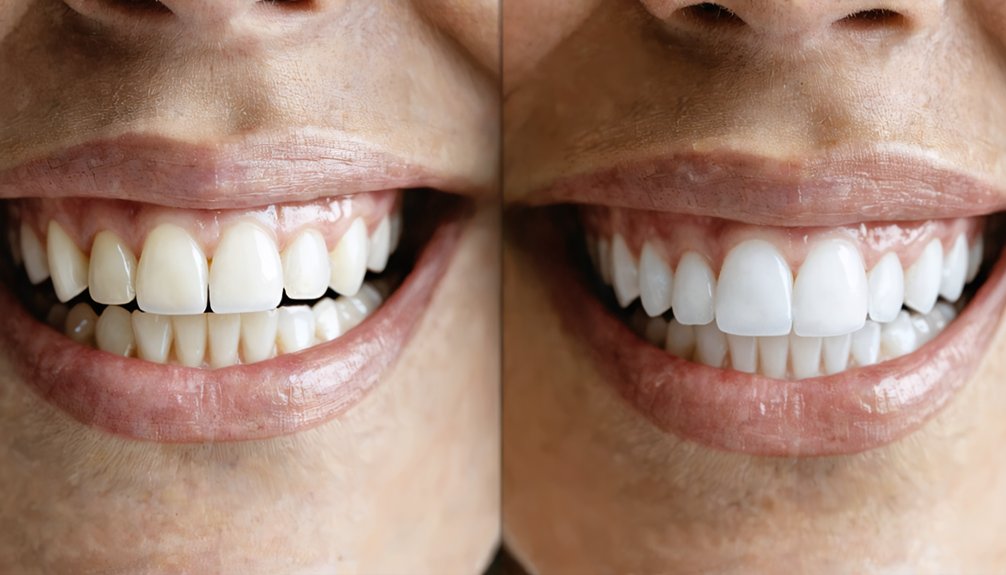
If you have mild fluorosis, whitening strips can realistically lighten your teeth by one to two shades, making them a reasonable first-line option.
Moderate to severe fluorosis, however, doesn’t respond well to over-the-counter peroxide-based products, as the staining penetrates too deeply for strips to address effectively.
If your discoloration is significant or home treatment yields no visible improvement after two weeks, you should consult a dentist to explore in-office whitening or other clinical interventions.
Mild Fluorosis Strip Effectiveness
Although whitening strips can lighten teeth by one to two shades, their effectiveness depends heavily on the severity of your fluorosis. For mild cases, strips containing hydrogen or carbamide peroxide penetrate the enamel and break down surface chromogens, producing measurable improvements in tooth color.
Your enamel health directly influences how well peroxide absorbs and acts on discoloration. Stronger enamel structure allows for more uniform whitening results.
Dietary influence also plays a role — consuming staining agents like coffee or tea during treatment undermines strip efficacy.
For mild fluorosis, consistent twice-daily application over two weeks delivers the most reliable outcomes.
However, if your discoloration involves deeper intrinsic staining beyond surface level, home strips won’t provide sufficient correction, and professional intervention becomes the more clinically appropriate choice.
Severe Fluorosis Treatment Limits
When fluorosis advances beyond mild discoloration, whitening strips lose their clinical utility. Moderate to severe fluorosis involves structural changes within your tooth enamel that peroxide compounds simply can’t reverse.
Surface-level bleaching agents penetrate the enamel to target chromogens, but intrinsic fluoride deposits require professional intervention beyond what any home product delivers.
You’ll need to consult a dentist to assess viable treatment options, which may include microabrasion, composite bonding, or porcelain veneers. These procedures address enamel damage at a structural level rather than cosmetic.
Check whether your dental insurance covers fluorosis-related treatment, as some plans classify it as a developmental condition eligible for partial coverage.
Pursuing strips for severe cases wastes your time and money while delaying effective care.
When To See Dentist
Distinguishing between mild and severe fluorosis determines whether whitening strips offer you any realistic benefit. Mild fluorosis—characterized by faint white spots—typically responds to home whitening, lightening teeth one to two shades.
Moderate to severe fluorosis, involving brown staining or enamel pitting, requires professional intervention that strips can’t deliver.
Schedule a dental consultation if you notice significant discoloration, experience persistent tooth sensitivity during treatment, or see no improvement after two weeks of consistent strip use. Your dentist can assess fluorosis severity and recommend in-office procedures like microabrasion or professional bleaching.
Before pursuing treatment, verify your dental insurance coverage, as cosmetic procedures are frequently excluded. Early professional evaluation prevents wasted time on ineffective home products and guides you toward treatments that produce measurable results.
How Peroxide Penetrates Enamel to Lift Fluoride Stains
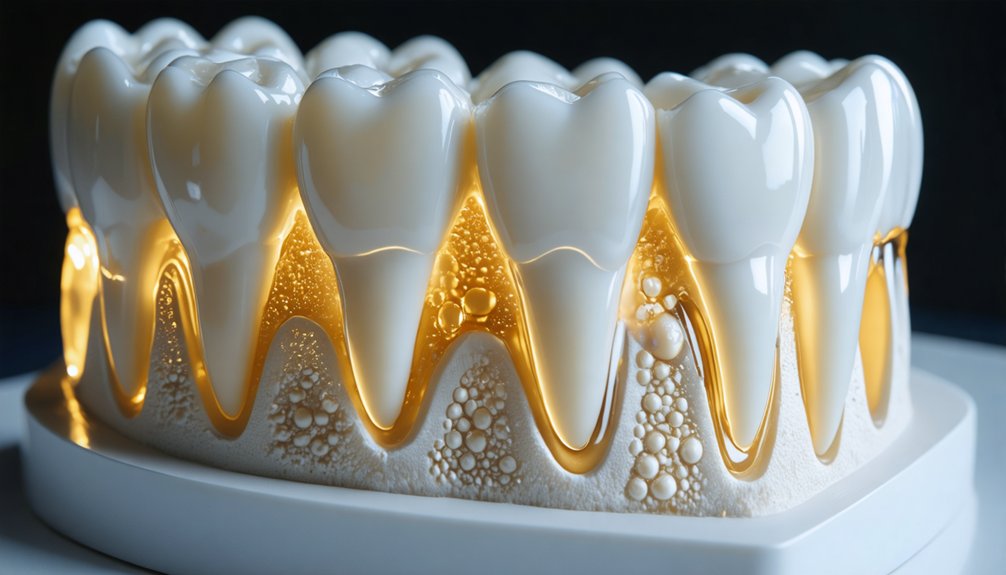
How peroxide works to lift fluoride stains comes down to its ability to penetrate beyond the enamel’s surface. Enamel permeability allows hydrogen peroxide or carbamide peroxide to diffuse through the enamel and reach the dentin layer beneath.
Once inside, the peroxide initiates stain molecular breakdown by targeting chromogens—the compounds responsible for discoloration. Free radicals released during this process oxidize and fragment the stain molecules, reducing their visible color intensity.
For fluoride stains specifically, this mechanism has limitations. Fluorosis-related discoloration often originates within the enamel structure itself, making superficial penetration insufficient for moderate to severe cases.
You’ll likely see improvement only with mild fluorosis. Higher peroxide concentrations accelerate the process but also increase demineralization risk, so balancing efficacy with enamel protection remains clinically essential.
Best Whitening Strips for Fluoride-Stained Teeth in 2026
Understanding peroxide’s penetration limits helps frame which products are worth trying for fluoride-stained teeth. Your financial investment should target clinically supported options that match your stain severity.
Top picks for 2026 include:
- Crest 3D Whitestrips Professional – delivers up to 23 shades of whitening over 24 days
- Opalescence Go Prefilled Trays – contains 15% hydrogen peroxide for accelerated, measurable results
- Crest 3D Whitestrips Sensitive – formulated for users managing peroxide-induced sensitivity
- Lumineux Whitening Strips – peroxide-free, using coconut oil and essential oils for lower-risk application
Product longevity matters here. Mild fluorosis responds best to consistent, extended-use strips like Crest Professional.
Moderate-to-severe cases rarely improve with home products alone, making a dental consultation the more controlled, cost-effective decision before purchasing.
Peroxide-Free Whitening Strips for Sensitive Teeth
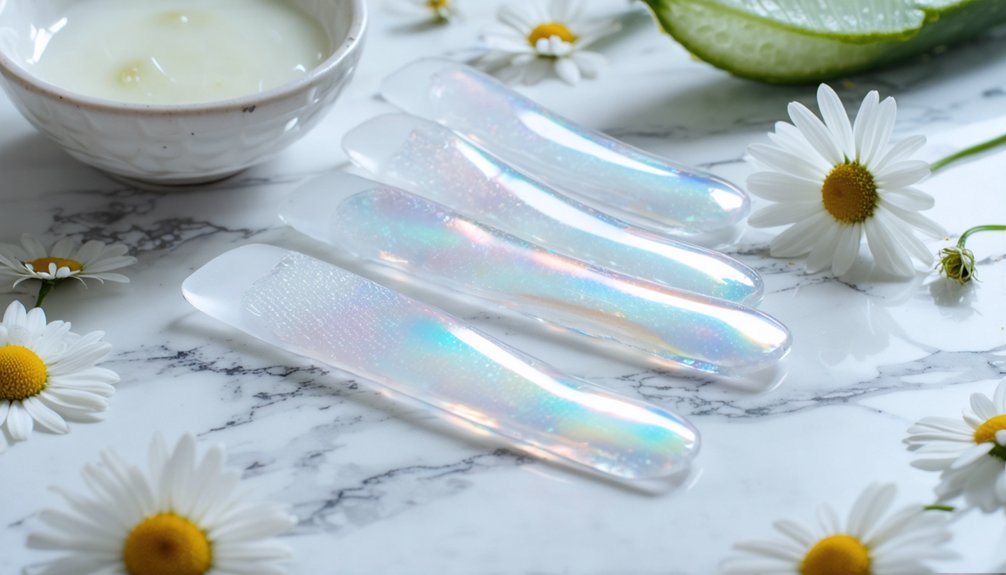
For those with sensitive teeth, peroxide-free whitening strips offer a lower-risk alternative that sidesteps the demineralization concerns tied to hydrogen and carbamide peroxide. These strips rely on natural remedies like coconut oil, lemon peel, and sage as active ingredients, reducing irritation risk while still targeting mild discoloration.
You should understand, however, that peroxide-free options deliver more modest results compared to professional treatments or peroxide-based strips. They’re best suited for individuals managing mild fluorosis who prioritize comfort over speed.
Clinical evidence supports their tolerability, but their efficacy on moderate to severe fluoride staining remains limited.
If you’re weighing your options, peroxide-free strips can serve as a controlled, low-risk starting point before escalating to dentist-supervised interventions for more significant staining.
Side Effects of Whitening Strips Most People Don’t Anticipate
When you use whitening strips, gum irritation can appear within the first day of treatment, even if the strips don’t visibly contact soft tissue.
You should also be aware that high concentrations of peroxide increase your risk of enamel demineralization, weakening tooth structure over time.
These side effects are particularly relevant if you’re treating fluoride-stained teeth, since the enamel may already be compromised.
Unexpected Gum Irritation
Many users focus on tooth sensitivity as the primary concern with whitening strips, yet gum irritation often catches them off guard. Gum sensitivity can begin within the first day of treatment and persist for several days afterward. Proper irritation management starts before you apply the strips.
Take these precautions to minimize gum exposure:
- Position strips so they contact only enamel, not gum tissue
- Avoid overlapping strip edges onto the gumline
- Reduce application frequency if irritation develops
- Choose peroxide-free formulas if your gums are already reactive
The irritation typically stems from peroxide contacting soft tissue directly. You’re in control of this outcome by adjusting placement technique and product selection.
Most symptoms remain mild, but persistent irritation warrants a dental consultation before continuing treatment.
Demineralization Risk Factors
Beyond sensitivity and gum irritation, high concentrations of hydrogen peroxide can compromise your enamel’s mineral structure—a risk that doesn’t always get adequate attention. Peroxide accelerates demineralization by disrupting the enamel matrix, leaving teeth more vulnerable to acid erosion and decay over time.
Your individual risk level isn’t uniform. Genetic factors influence enamel density and thickness, meaning some individuals are inherently more susceptible to mineral loss than others. Dietary habits compound this further—frequent consumption of acidic foods or beverages during a whitening regimen markedly amplifies demineralization potential.
To protect yourself, avoid acidic foods throughout treatment, use fluoride-based remineralization products post-application, and select strips with clinically appropriate peroxide concentrations.
If you’re genetically predisposed to weaker enamel, consulting your dentist before starting any whitening protocol is non-negotiable.
How Proper Strip Placement Affects Your Whitening Results
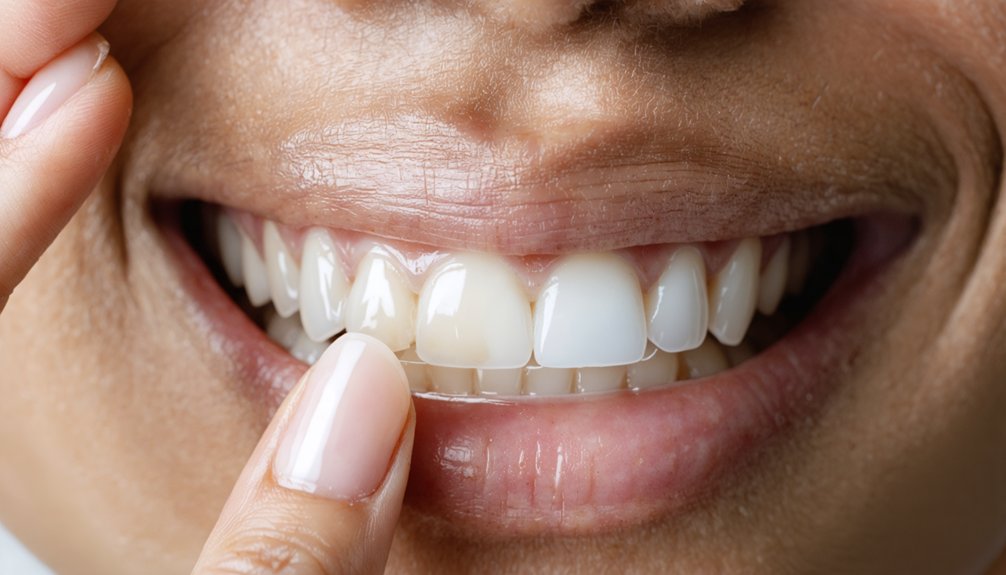
Proper strip placement directly determines how evenly and effectively the active ingredients contact your tooth surfaces. Poor alignment reduces whitening efficacy and increases your risk of gum irritation. Maintaining consistent dental hygiene before application guarantees strips adhere correctly and maximize peroxide penetration.
Follow these placement guidelines to control your results:
- Press strips flush against teeth, eliminating air gaps that block active ingredient contact
- Keep strips off gum tissue entirely to prevent irritation from day one
- Guarantee coverage extends across most visible tooth surfaces for uniform whitening
- Monitor tooth sensitivity during treatment, adjusting wear time if discomfort escalates
Strips that shift or fold deliver uneven results, leaving untreated patches. You’re investing time in this process, so precise, deliberate placement is non-negotiable for achieving measurable improvement.
When Home Whitening Strips Are Not Enough
Even with precise strip placement, home whitening products have hard limits—particularly when fluorosis is moderate to severe. Peroxides penetrate enamel effectively for surface-level discoloration, but deeper fluorotic staining resists standard home treatment.
If you’re not seeing results after two weeks of consistent use, continuing won’t improve outcomes—it’ll only increase tooth sensitivity and compromise your dental hygiene routine.
At this stage, in-office intervention becomes the clinically appropriate next step. Professional whitening systems deliver higher peroxide concentrations under controlled conditions, producing results that home strips can’t replicate.
For significant structural staining, your dentist may recommend microabrasion, veneers, or bonding instead.
Recognizing when to escalate your care isn’t a setback—it’s a strategic decision. Consult your dentist to identify which clinical option matches your specific fluorosis severity.
Which Whitening Strips Match Your Fluorosis Severity
Matching the right whitening strip to your fluorosis severity determines whether treatment produces results or simply causes unnecessary sensitivity. Your dental hygiene history and stain depth directly influence which product delivers meaningful change.
Matching the right whitening strip to your fluorosis severity determines results—your stain depth changes everything.
- Mild fluorosis: Standard peroxide strips (10–15% hydrogen peroxide) typically achieve one to two shades of improvement.
- Moderate fluorosis: Sensitivity increases while results diminish; peroxide-free strips reduce tooth sensitivity risk without guaranteed effectiveness.
- Severe fluorosis: Home strips rarely produce visible change; in-office intervention becomes necessary.
- Sensitive teeth: Crest 3D Whitestrips Sensitive or Lumineux peroxide-free strips minimize tooth sensitivity while maintaining some efficacy.
Selecting a product beyond your fluorosis severity doesn’t accelerate results—it amplifies side effects.
Consult your dentist before committing to any regimen to confirm the treatment matches your specific condition.
Frequently Asked Questions
Can Whitening Strips Be Used Safely During Pregnancy or Breastfeeding?
Like treading on thin ice, pregnancy safety demands caution—you shouldn’t use whitening strips while pregnant or breastfeeding. For breastfeeding advice, consult your dentist first, as peroxide absorption risks to your baby aren’t fully established.
How Long Do Whitening Strip Results Typically Last Before Fading Occurs?
Your results typically last three to six months before fading occurs. Durability concerns include diet and habits, while longevity factors like avoiding staining foods and consistent touch-ups help you maintain control over your whitening outcomes.
At What Age Is It Safe to Start Using Whitening Strips?
Like a double-edged sword, whitening strips aren’t recommended before age 18. You’ll risk teeth sensitivity and gum irritation on developing enamel. Consult your dentist before starting treatment to guarantee you’re a suitable candidate.
Can Whitening Strips Worsen Existing Enamel Erosion or Cavities?
Yes, whitening strips can worsen enamel damage and increase cavity risk. High peroxide concentrations accelerate demineralization, making compromised enamel more vulnerable. You should consult your dentist before use if you’ve got existing erosion or untreated cavities.
Should Whitening Strips Be Used Before or After Brushing Teeth?
Ever wonder if timing considerations matter? You should brush *before* applying whitening strips. This optimizes your oral hygiene routines by removing plaque, allowing better strip adhesion and peroxide penetration—maximizing whitening efficacy without interference from residual debris or toothpaste fluoride compounds.
References
- https://www.reddit.com/r/beauty/comments/1l6bdtz/do_teeth_whitening_strips_work_on_stains_someone/
- https://www.healthline.com/health/do-whitening-strips-work
- https://www.health.com/condition/oral-health/teeth-whitening-kits
- https://www.nbcnews.com/select/shopping/best-teeth-whitening-strips-rcna201114
- https://www.cnet.com/health/personal-care/best-teeth-whitening-strips/
- https://www.vogue.com/article/best-teeth-whitening-strips
- https://www.newmouth.com/dentistry/cosmetic/whitening/best-teeth-whitening-strips/
- https://www.cosmopolitan.com/style-beauty/beauty/g35534500/best-teeth-whitening-strips/