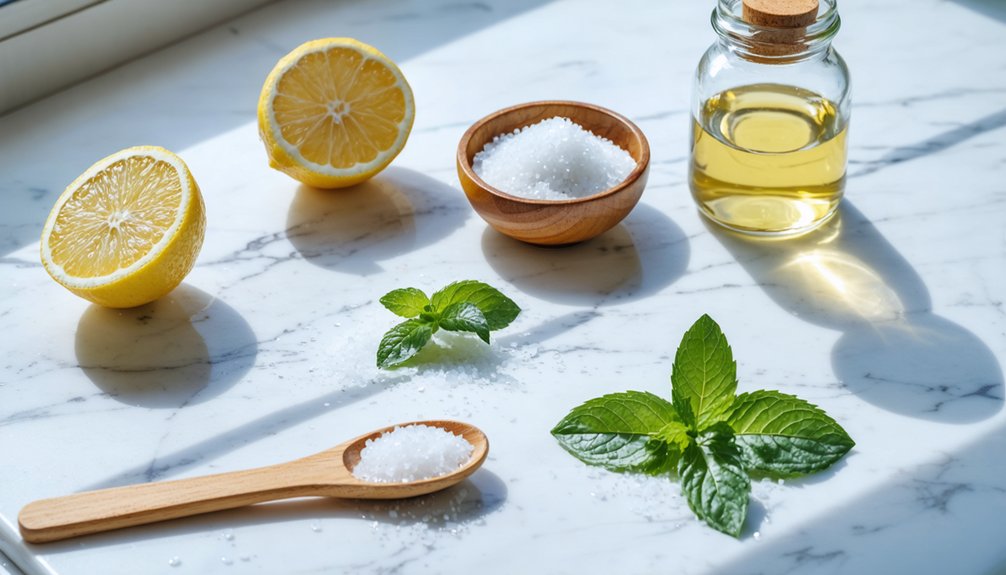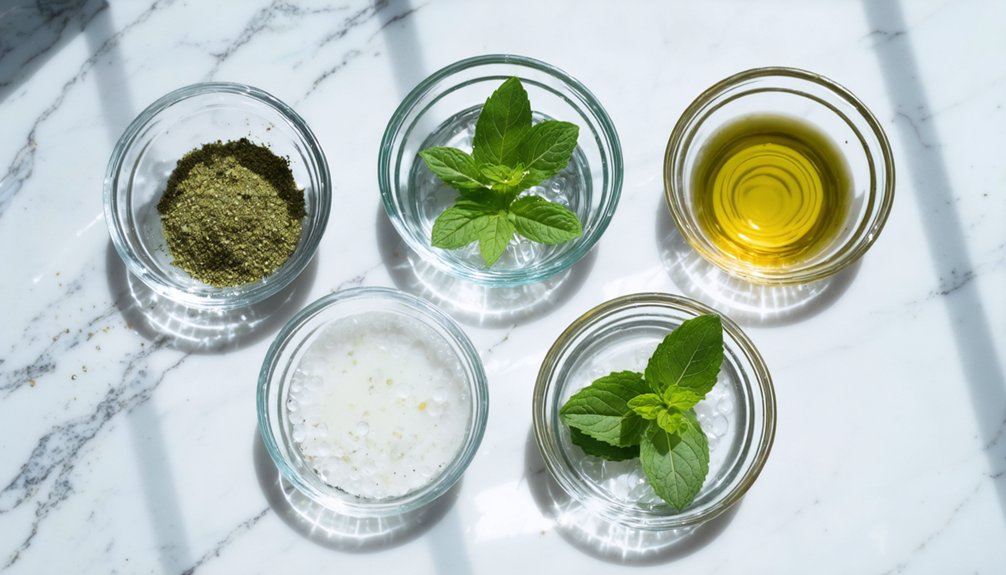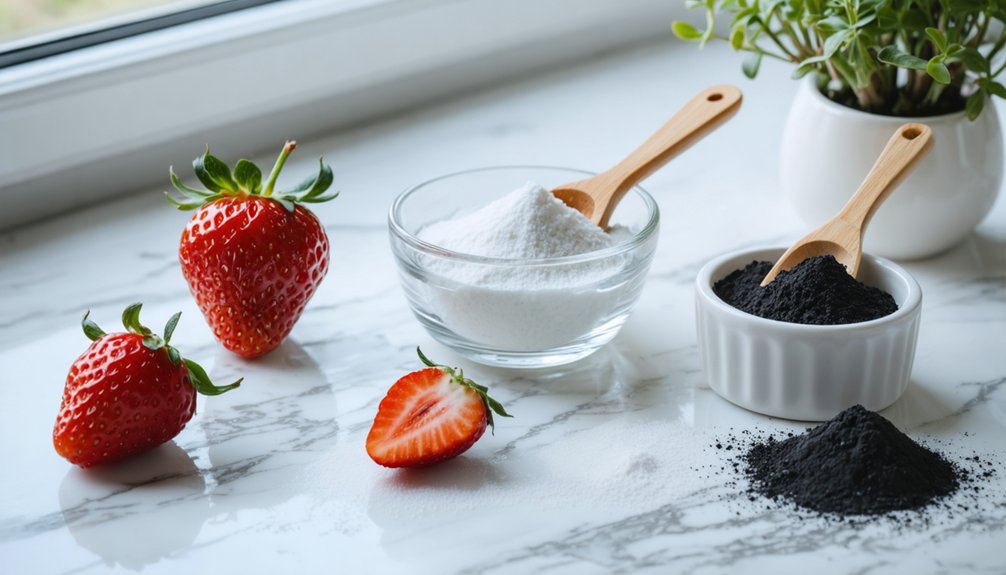
You can whiten your teeth at home using five proven methods: baking soda, coconut oil pulling, apple cider vinegar, activated charcoal, and whitening strips. Baking soda removes surface stains through mild abrasiveness, while coconut oil pulling reduces plaque buildup. Apple cider vinegar and activated charcoal tackle stubborn discoloration, and peroxide-based whitening strips deliver faster results. Each method varies in effectiveness and timeline, and there’s much more to know before choosing the right approach for you.
Key Takeaways
- Baking soda paste removes surface stains through mild abrasiveness and neutralizes acids, making it an effective, affordable whitening option used a few times weekly.
- Coconut oil pulling reduces plaque and bacterial growth by swishing one tablespoon for 10–20 minutes daily, gradually brightening teeth over time.
- Diluted apple cider vinegar breaks down surface stains when swished for one minute, though overuse risks enamel damage and should be avoided.
- Activated charcoal absorbs stains and plaque by gently brushing with powder for two minutes, producing visible results within approximately 2–4 weeks.
- Over-the-counter whitening strips use peroxide-based agents to deliver faster results within days to two weeks, though sensitivity and gum irritation may occur.
Can Baking Soda Actually Whiten Your Teeth?
Baking soda does whiten teeth, and the mechanism behind it’s straightforward. It functions as a mild abrasive, physically removing surface stains while its alkaline properties neutralize acid-based discoloration from coffee, tea, and red wine.
Beyond aesthetics, baking soda supports teeth health by creating an alkaline oral environment that inhibits bacterial growth.
To use it effectively, mix one teaspoon of baking soda with two teaspoons of water, forming a paste you brush onto your teeth. Limit application to a few times per week — overuse risks enamel erosion.
You won’t see overnight results, but consistent use produces measurable whitening over time. If you want a controlled, low-cost whitening method, baking soda delivers reliable, evidence-supported results without unnecessary complexity.
Does Coconut Oil Pulling Whiten Your Teeth?
Coconut oil pulling does whiten teeth, though its mechanism differs from abrasive or bleach-based methods. Among coconut oil benefits, its antimicrobial properties inhibit bacterial growth, reducing plaque accumulation that dulls tooth surfaces.
Coconut oil pulling whitens teeth by targeting bacteria, reducing plaque buildup that diminishes your smile’s natural brightness.
Cleaner surfaces naturally reflect more light, producing a brighter appearance over time.
To execute the oil pulling technique correctly, place one tablespoon of coconut oil in your mouth and swish it thoroughly for 10–20 minutes. Spit the residue out completely, then rinse with hot water.
Repeat twice daily for best results.
You won’t see overnight transformation, but consistent practice yields measurable improvement while supporting broader oral health. This method suits those preferring chemical-free approaches without sacrificing meaningful whitening outcomes.
Do Apple Cider Vinegar and Charcoal Whiten Teeth?
Both apple cider vinegar and activated charcoal can whiten teeth, though through distinct mechanisms.
Apple cider’s acetic acid breaks down surface stains effectively. Dilute it with water, swish for one minute, then rinse thoroughly to prevent enamel erosion. Use it once daily or after meals for consistent results.
Charcoal benefits your whitening routine through a different process—absorption. Activated charcoal physically draws plaque and stains from your tooth surface. Wet your toothbrush, dip it in charcoal powder, brush gently for two minutes, then rinse completely. Avoid overusing it to protect your enamel from abrasion.
Both methods deliver measurable results when you use them correctly and consistently. Incorporate them strategically into your routine to maximize their individual strengths while minimizing potential risks to your enamel.
Do Whitening Strips Actually Whiten Your Teeth?
Whitening strips do work—they contain peroxide-based bleaching agents that break down surface stains and lighten your tooth color. Their whitening effectiveness is well-documented, with visible results appearing within a few weeks of consistent use.
However, you should understand their limitations before committing to them. Results are temporary, requiring continuous use to maintain your desired shade. Coverage can also be uneven, as strips don’t always reach between teeth or along the gumline.
Regarding long term safety, repeated use can cause tooth sensitivity and gum irritation, which signals potential enamel stress.
You’re in control of minimizing these risks. Follow application instructions precisely, avoid overuse, and consult your dentist if sensitivity develops. Strips are effective tools, but disciplined, informed use determines your outcome.
How Soon Will You See Results?
Results timelines vary depending on which method you’re using.
Natural remedies like baking soda, oil pulling, and strawberry scrubs require consistent application over several weeks before noticeable changes appear. You won’t see overnight transformations with these approaches, but steady use delivers gradual improvement.
Apple cider vinegar and activated charcoal follow a similar whitening duration, with visible brightening emerging after two to four weeks of regular use.
Over-the-counter whitening strips work faster, typically producing measurable results within a few days to two weeks. However, those results are often temporary, requiring you to maintain continuous use to preserve them.
Your whitening duration ultimately depends on stain severity, method consistency, and your commitment to the routine.
Track your progress to determine which approach delivers the most effective results for your teeth.
Frequently Asked Questions
Are Home Whitening Methods Safe for People With Dental Crowns?
You should consult your dentist before using home whitening products on dental crowns. Crown sensitivity is a real concern, as these methods won’t whiten artificial materials and may cause uneven, undesirable results.
Can Teeth Whitening Methods Worsen Existing Cavities or Tooth Decay?
Yes, whitening methods can worsen existing cavities. Natural remedies and over-the-counter treatments penetrate decayed enamel, intensifying sensitivity issues. You’ll want to consult your dentist before applying any whitening treatment to compromised teeth.
Is It Safe to Combine Multiple Whitening Methods at Once?
You shouldn’t combine multiple DIY whitening techniques simultaneously. Stacking natural whitening alternatives increases enamel erosion and sensitivity risks. Space out methods strategically, allowing recovery time between applications to maintain enamel integrity while achieving controlled, measurable whitening results.
Can Children or Teenagers Safely Use Home Teeth Whitening Methods?
Ironically, you’d think younger teeth need less protection—they don’t. Children and teenagers shouldn’t use home whitening methods due to sensitivity concerns and strict age recommendations; developing enamel’s vulnerable, and dentists advise waiting until adulthood before you attempt any whitening treatments.
How Do I Maintain Whitening Results After Achieving My Desired Shade?
To maintain your results, you’ll need consistent whitening maintenance tips: limit coffee, tea, and wine, brush with baking soda weekly, and address lifestyle factors like smoking. Regular oil pulling sustains brightness effectively.
References
- https://www.mydentaloffice.com/10-home-remedies-for-whiter-teeth-that-actually-work/
- https://drtopping.com/top-5-ways-to-whiten-your-teeth-at-home/
- https://kesslerdental.net/blog/ways-to-whiten-teeth-naturally-at-home/
- https://mytoothhq.com/6-simple-ways-to-naturally-whiten-your-teeth-at-home/
- https://www.aarp.org/health/conditions-treatments/teeth-whitening/
- https://www.healthline.com/nutrition/whiten-teeth-naturally
- https://www.healthpartners.com/blog/safe-teeth-whitening/
- https://www.northeastdentalarts.com/blog/what-is-the-least-damaging-way-to-whiten-your-teeth/
- https://www.webmd.com/oral-health/teeth-whitening