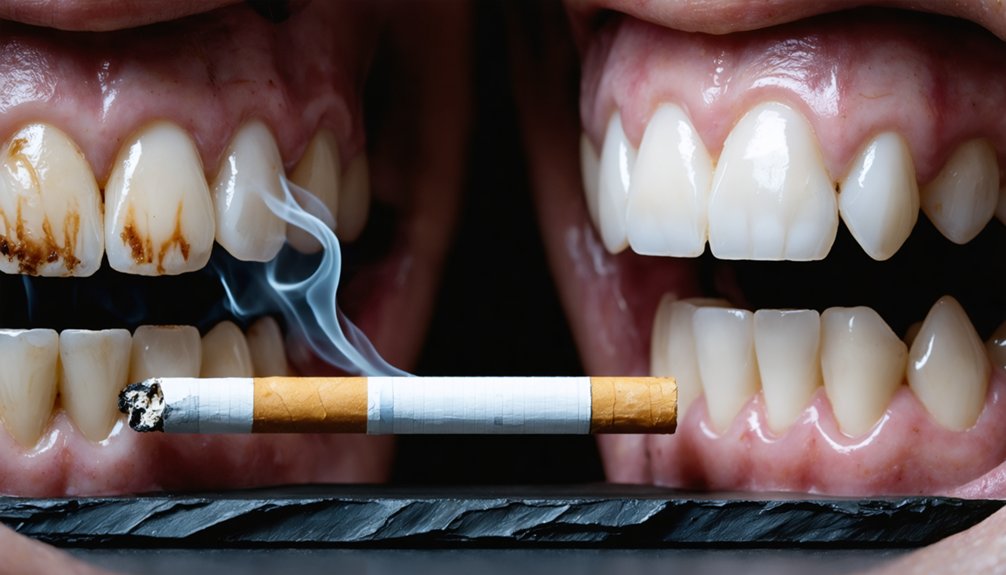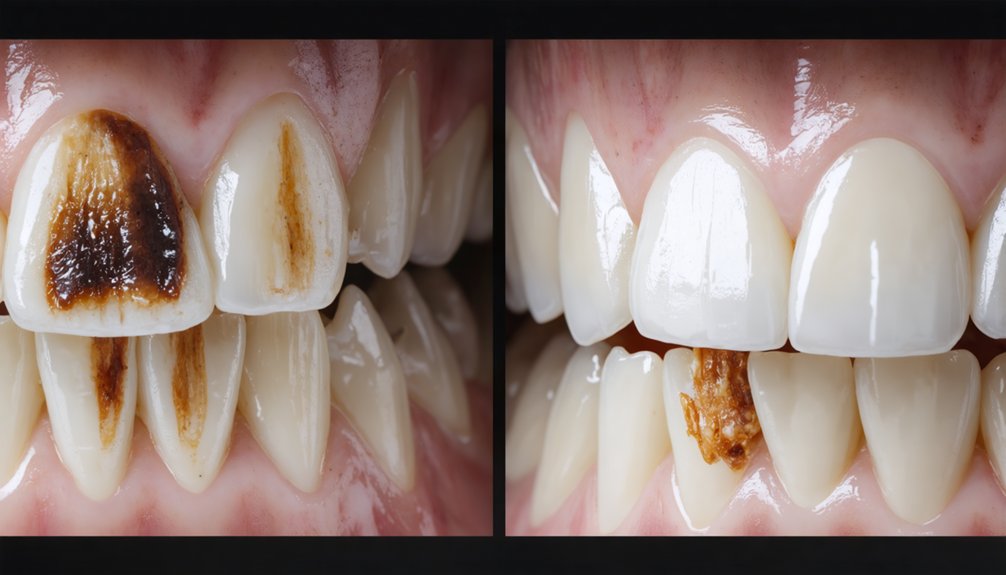
The seven best teeth whitening methods for smokers include in-office treatments like Zoom! whitening, dentist-prescribed take-home kits, dental veneers, whitening strips, whitening toothpaste, natural remedies like oil pulling and baking soda, and consistent daily maintenance habits. Because tobacco stains penetrate deeply into enamel, professional treatments deliver the most clinically significant results. Each method varies in effectiveness, cost, and suitability depending on your stain severity, and understanding these distinctions will help you choose the right approach.
Key Takeaways
- In-office whitening treatments like Philips Zoom use high-concentration hydrogen peroxide to lighten teeth up to eight shades in one appointment.
- Dentist-prescribed take-home kits with custom-fitted trays ensure even gel distribution, delivering professional-strength stain removal over one to two weeks.
- Dental veneers offer a lasting solution for deeply set tobacco stains that professional whitening treatments cannot fully correct.
- Over-the-counter options like whitening strips, toothpaste, and LED kits can effectively target surface-level tobacco discoloration with consistent daily use.
- Natural remedies like baking soda and oil pulling reduce surface stains but should supplement, not replace, professional whitening treatments.
In-Office Whitening: The Fastest Way to Remove Tobacco Stains
When tobacco stains penetrate beyond the enamel surface, over-the-counter products rarely deliver meaningful results.
In-office whitening gives you access to the most effective stain removal techniques available, using hydrogen peroxide concentrations far exceeding anything sold retail.
Philips Zoom and Opalescence Boost represent leading whitening gel comparisons worth considering. Zoom lightens teeth up to eight shades in a single appointment, while Opalescence Boost uses chemically activated hydrogen peroxide without light.
Zoom whitens up to eight shades in one visit, while Opalescence Boost activates chemically — no light required.
Laser bleaching offers a third option, using light to activate the whitening gel and accelerate stain breakdown.
Professional supervision lets your dentist monitor sensitivity, protect soft tissue, and adjust treatment intensity.
If you’re dealing with deep tobacco stains, one professional session delivers results that weeks of at-home treatment often can’t match.
Zoom! Whitening: Remove Tobacco Stains Up to 8 Shades in One Visit
whitening uses a high-concentration hydrogen peroxide gel activated by a specialized LED light, breaking down deep tobacco stains at a molecular level in a single clinical appointment.
Among its most notable Zoom Benefits, the system delivers up to 8 shades of lightening within approximately 45 minutes, making it the most time-efficient stain removal solution available for smokers.
Your dentist applies the gel in three 15-minute intervals, maximizing penetration into enamel compromised by prolonged tobacco exposure.
A desensitizing agent minimizes post-treatment sensitivity, allowing you to resume normal activity immediately.
Results are clinically measurable and considerably superior to over-the-counter alternatives.
To sustain outcomes, you’ll need maintenance sessions every 3-6 months, particularly if you continue smoking or consume staining beverages regularly.
Are Veneers the Answer for Stubborn, Resistant Tobacco Stains?
Whitening produces measurable results for most smokers. However, deeply set tobacco stains that have penetrated enamel over years of use may resist even high-concentration bleaching protocols. When repeated professional treatments fail to achieve acceptable stain coverage, dental veneers become a clinically sound alternative.
Whitening has limits. When bleaching fails stubborn tobacco stains, veneers become the clinically sound next step.
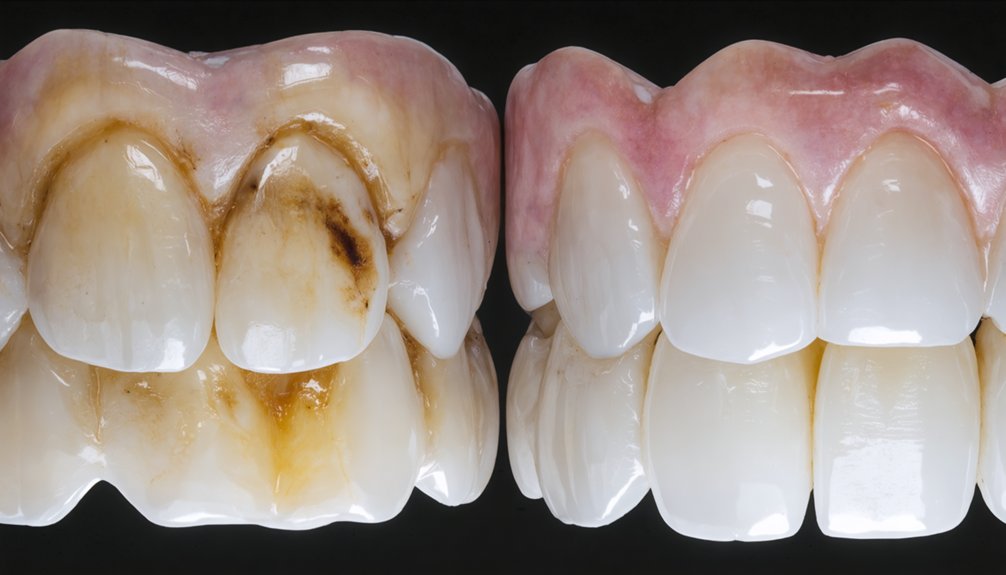
Veneers are thin porcelain or composite shells bonded directly to the tooth’s front surface, concealing discoloration that bleaching can’t correct. Their longevity is significant—porcelain veneers typically last 10–15 years with proper care, making them a durable, long-term investment for heavy smokers.
However, you must reduce smoking to protect that investment. Tobacco accelerates veneer degradation and stains composite materials.
Combined with routine professional cleanings, veneers offer permanent aesthetic control when whitening alone reaches its clinical limits.
Dentist-Prescribed Take-Home Kits That Target Smoker’s Stains
If you’re a smoker struggling with persistent tooth discoloration, dentist-prescribed take-home kits offer a clinically proven middle ground between over-the-counter products and in-office treatments.
Your dentist custom-fits trays to your teeth, ensuring even gel distribution and minimizing gum exposure while you apply professional-strength carbamide or hydrogen peroxide formulations that penetrate deeper tobacco stains more effectively than store-bought alternatives.
You’ll typically wear the trays 30–60 minutes daily for one to two weeks, a structured regimen that progressively lifts stubborn staining with measurable results.
Custom-Fitted Tray Benefits
Custom-fitted trays prescribed by your dentist offer a more targeted approach to tackling smoker’s stains than anything you’ll find on a drugstore shelf. The tailored fit guarantees the whitening gel maintains consistent, uninterrupted contact with every tooth surface, eliminating the gaps that generic trays leave behind.
That precision directly translates into one of the most significant custom tray advantages: uniform, predictable results across all treated surfaces.
Because your dentist controls the gel concentration and wear schedule, you’re not guessing—you’re following a clinically structured protocol designed around your specific stain severity.
The snug seal also minimizes gel leakage onto soft tissue, reducing sensitivity and irritation. For smokers dealing with deep, layered staining, that level of control isn’t a luxury—it’s what makes the difference between noticeable improvement and disappointing outcomes.
Professional-Strength Gel Formulations
Dentist-prescribed gels typically contain carbamide peroxide concentrations ranging from 10% to 35%, or hydrogen peroxide formulations between 6% and 15%—both markedly stronger than anything available over the counter.
This elevated concentration directly determines gel effectiveness, penetrating enamel deeply enough to break down the stubborn chromogens tobacco deposits over time. You’re not simply treating surface discoloration; you’re targeting oxidative reactions within the tooth structure itself.
Your dentist selects the appropriate concentration based on stain severity, enamel sensitivity, and treatment timeline. Higher concentrations accelerate stain removal but require careful application to avoid tissue irritation.
Worn consistently for the prescribed duration—typically 30 to 60 minutes daily over one to two weeks—these formulations deliver measurable, clinically validated results that over-the-counter alternatives can’t reliably replicate.
Daily Usage And Duration
Because tobacco stains penetrate deeper into enamel over time, dentist-prescribed take-home kits require consistent daily use to produce measurable results.
You’ll typically wear custom-fitted trays loaded with professional-strength gel for 30 to 60 minutes each day over one to two weeks. Establishing a structured daily routine guarantees the active ingredients maintain sustained contact with stained surfaces, accelerating breakdown of embedded tobacco pigments.
Your whitening frequency matters greatly. Skipping sessions extends treatment timelines and reduces cumulative effectiveness.
For smokers, dentists often recommend completing a full cycle every three to six months, with monthly touch-ups maintaining brightness between major treatments. Results typically last six months to one year, depending on your smoking habits and adherence to the prescribed protocol.
Consistency, not intensity, drives ideal outcomes.
The Best OTC Whitening Products for Smokers
Several over-the-counter whitening products can effectively address tobacco stains when used consistently. Whitening strips like Crest 3D Whitestrips deliver hydrogen peroxide directly to enamel, targeting surface tobacco discoloration over one to two weeks.
You’ll want to apply them daily as directed for measurable results.
Your toothpaste options include formulas containing hydrogen peroxide or mild abrasives, which reduce surface stains without professional intervention. Pairing whitening toothpaste with strips accelerates visible improvement.
LED kits with peroxide-based gels offer an upgraded at-home solution, producing results within seven to ten days.
Whitening pens help you maintain brightness between full treatment cycles, which is particularly useful if you smoke regularly. Selecting products with clinically validated peroxide concentrations guarantees you’re targeting tobacco stains with appropriate efficacy.
Oil Pulling, Baking Soda, and Natural Remedies Worth Trying
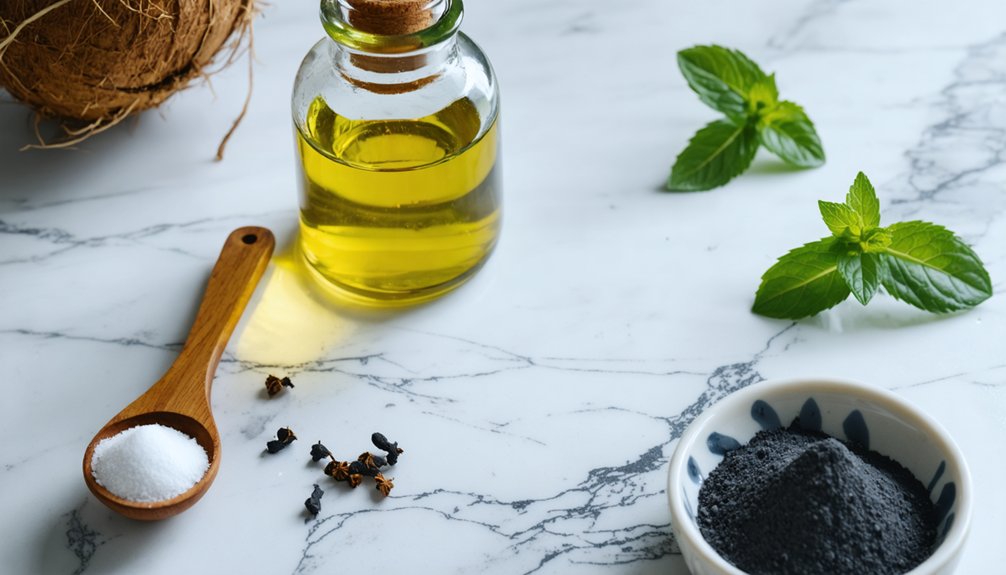
If you’re looking for supplemental options between professional treatments, natural remedies like oil pulling and baking soda offer modest but measurable benefits for smokers.
Swishing coconut oil for 10–20 minutes daily can reduce surface stains by mechanically binding to lipid-soluble residue left by tobacco, while baking soda acts as a mild abrasive and alkaline bleaching agent that disrupts stain adhesion on enamel.
You can also incorporate whitening toothbrushes and hydrogen peroxide rinses into your routine, though none of these approaches match the stain-removal capacity of professional or peroxide-based treatments.
Oil Pulling Benefits
Natural remedies like oil pulling, baking soda, and whitening toothbrushes won’t replace professional treatments, but they can meaningfully reduce surface tobacco stains between whitening sessions.
Oil pulling involves swishing coconut oil or other whitening oils in your mouth for 15–20 minutes daily, a practice rooted in traditional oral care that’s gained some clinical attention for its dental hygiene benefits.
The process works by binding surface debris and bacteria, supporting oral health while contributing to stain prevention over time.
As a natural alternative to chemical-based products, coconut oil pulling fits easily into your existing oral care routine.
While evidence remains limited compared to professional methods, consistent use can complement your whitening strategy by reducing plaque accumulation—one of the primary barriers to achieving brighter results as a smoker.
Baking Soda Effectiveness
Baking soda offers a more direct mechanical and chemical approach to stain removal than oil pulling. Its mild abrasive texture physically buffs tobacco stains from enamel, while its alkaline chemistry neutralizes acid that accelerates discoloration.
You can integrate it strategically into your routine for measurable results.
Use baking soda effectively by following these four protocols:
- Mix one teaspoon with water to form a paste and brush gently for two minutes.
- Limit use to 2–3 times weekly to prevent enamel erosion.
- Combine with your standard whitening toothpaste to amplify stain removal.
- Rinse thoroughly after each application to clear residue.
Consistency determines your outcome.
Baking soda won’t replace professional treatment, but it’s a clinically supported tool you control daily.
Other Natural Remedies
While baking soda and oil pulling get the most attention in natural remedy circles, several other low-cost options can support your whitening routine when used correctly.
Activated charcoal is a popular natural whitening agent that adsorbs surface stains, though you should use it sparingly to avoid enamel erosion.
Apple cider vinegar contains acetic acid, which can reduce surface discoloration, but limit its use to once or twice weekly due to its erosive potential.
Herbal solutions like neem twigs have demonstrated mild antibacterial and stain-reducing properties in limited studies.
Hydrogen peroxide rinses at low concentrations also offer measurable surface-stain reduction.
None of these remedies penetrate deep tobacco stains effectively, so treat them as supplementary tools rather than primary whitening strategies.
How Smokers Can Keep Teeth White Between Treatments
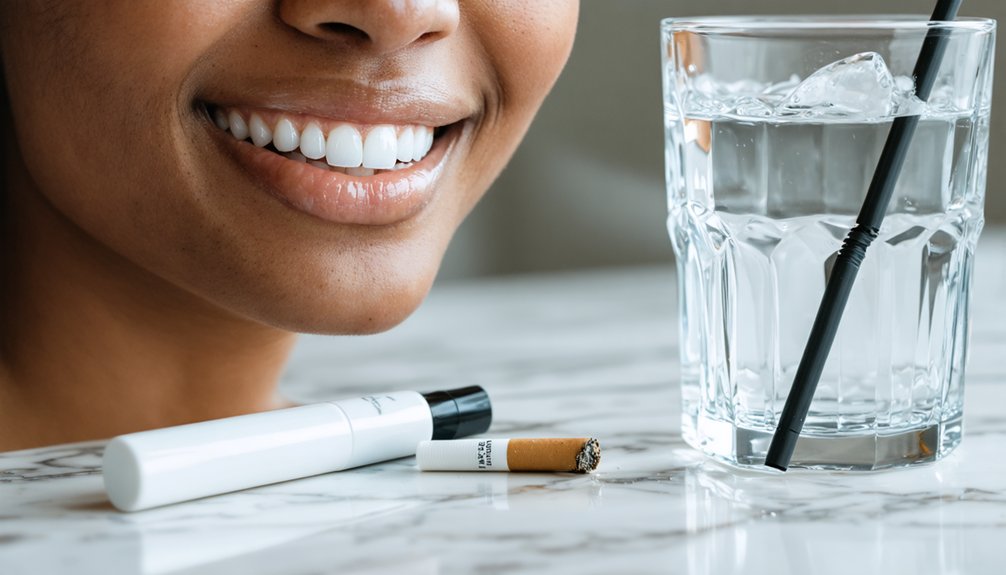
Maintaining whitening results between treatments requires consistent daily habits that actively combat tobacco stains. Your smoking habits directly accelerate discoloration, making proactive maintenance essential for extending whitening frequency intervals.
- Brush immediately after smoking to prevent tar and nicotine from bonding to enamel.
- Rinse with antiseptic mouthwash post-smoking to neutralize staining compounds before they penetrate.
- Use whitening toothpaste daily containing hydrogen peroxide or mild abrasives to reduce surface buildup consistently.
- Apply a whitening pen between professional sessions to maintain brightness and counteract tobacco-related yellowing.
Combining these habits with professional cleanings every three to six months removes tartar barriers that trap stains.
You control how long your results last by actively managing your daily oral care routine.
Frequently Asked Questions
Can Teeth Whitening Treatments Damage Enamel in Long-Term Smokers?
Overusing whitening treatments can cause enamel erosion, especially if you’re a long-term smoker. You’ll minimize long term effects by following dentist-recommended protocols, spacing treatments every 3-6 months, and avoiding excessive peroxide concentrations between professional sessions.
Is Teeth Whitening Safe for Smokers With Sensitive Gums?
Like walking a tightrope, you can safely whiten, but gum sensitivity demands caution. Smoking effects worsen irritation, so you’ll want lower peroxide concentrations and dentist supervision to protect vulnerable gum tissue effectively.
How Soon After Quitting Smoking Will Whitening Results Improve?
Once you’ve committed to smoking cessation, you’ll notice whitening results improving within 2–4 weeks as stain accumulation halts. Maintaining consistent oral hygiene accelerates this progress, allowing whitening treatments to work more effectively without continuous tobacco interference.
Does Smoking Cigars or Pipes Stain Teeth Differently Than Cigarettes?
Like ancient alchemists knew, yes — cigar staining and pipe residue penetrate deeper into enamel than cigarette smoke. You’ll face darker, more stubborn discoloration requiring professional-grade hydrogen peroxide treatments and consistent maintenance protocols to achieve meaningful results.
Can Whitening Treatments Remove Stains Caused by Smokeless Tobacco Products?
Yes, whitening treatments can address smokeless tobacco effects, but you’ll need professional-grade options for deep tobacco stain removal. Zoom! or Opalescence Boost deliver the strongest results, while consistent maintenance every 3-6 months maximizes your long-term success.
References
- https://parkwaysmiles.com/teeth-whitening-for-smokers/
- https://friedmandentalgroup.com/dental-related/teeth-whitening-for-smokers-solutions-to-remove-tobacco-stains/
- https://thewhiteningstore.com/blogs/smileblog/teeth-whitening-for-smokers
- https://simpletooth.com/teeth-whitening-options-for-smokers/
- https://tysondental.com/teeth-whitening-for-smokers-strategies-and-recommendations/
- https://1dentalgrouptx.com/blog/best-teeth-whitening-methods/
- https://www.theweymouthdentist.com/teeth-whitening-for-smokers-what-you-should-consider/
- https://bellaviadental.com/blog/how-to-keep-teeth-white-while-smoking/
- https://www.thesmilenova.com/post/the-ultimate-guide-to-teeth-whitening-for-smokers