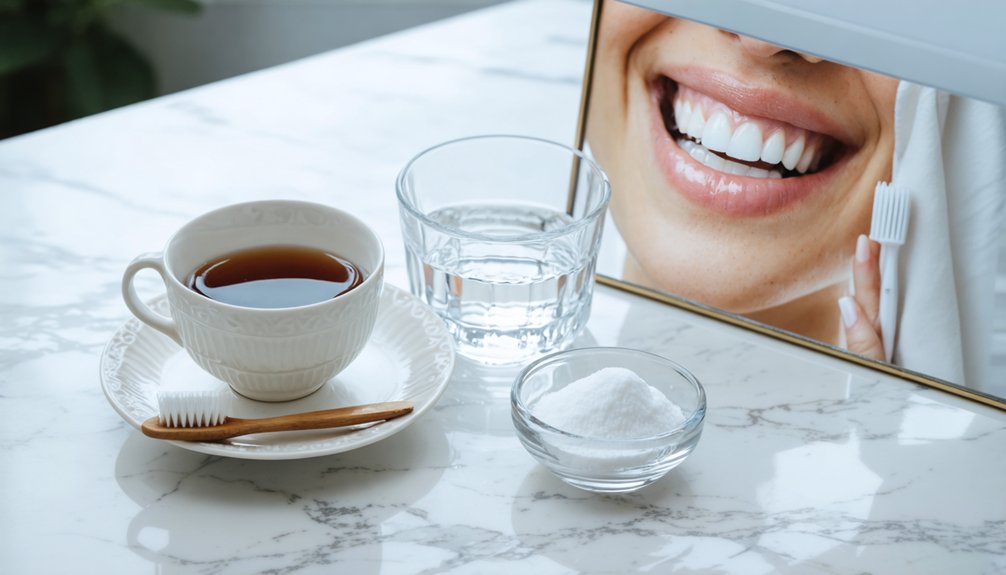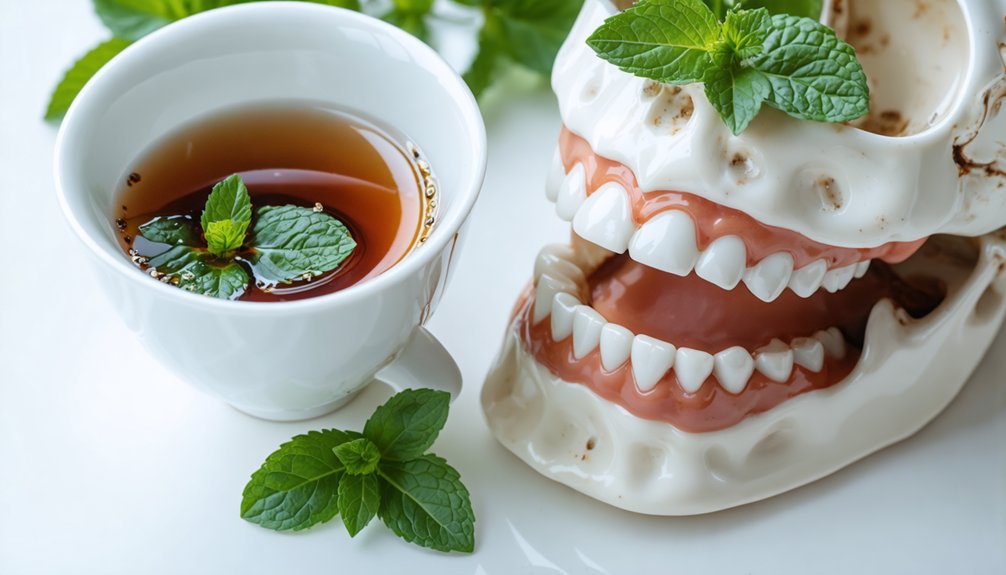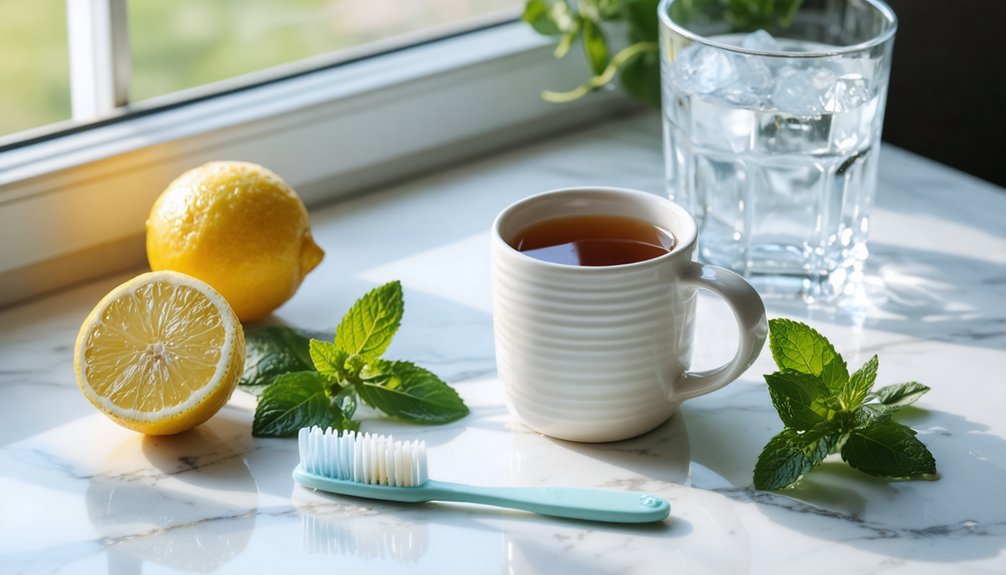
Tannins from coffee, tea, and red wine bind to your teeth’s pellicle layer and penetrate enamel’s microscopic pores, making yellowing progressively harder to reverse. You can combat this by cutting back on staining beverages, using a straw, rinsing with water immediately after consumption, and brushing 30 minutes later. Daily techniques like oil pulling, baking soda paste, and hydrogen peroxide rinses lift existing stains effectively. Keep exploring to uncover the full toolkit for a noticeably brighter smile.
Key Takeaways
- Reduce coffee, tea, and red wine intake, using alternatives like herbal teas or rooibos to slow tannin-related discoloration over time.
- Rinse with water immediately after consuming tannin-rich beverages and brush teeth 30 minutes later to minimize stain embedding.
- Use diluted hydrogen peroxide (1.5–3%) as a daily rinse to lift discoloration by one to two shades over three months.
- Apply baking soda mixed with water or hydrogen peroxide a few times weekly as a mild abrasive to remove surface stains.
- Schedule biannual professional cleanings and consider in-office bleaching, which can brighten teeth up to eight shades in one visit.
Why Tannins Turn Your Teeth Yellow
Tannins — naturally occurring polyphenols found in coffee, tea, and red wine — bind to the protein-rich pellicle layer coating your teeth, creating stubborn chromogenic compounds that gradually yellow your enamel.
Tannins bind to your teeth’s pellicle layer, forming stubborn chromogenic compounds that slowly steal your smile’s brightness.
These tannin sources don’t just sit on the surface; they penetrate tooth enamel’s microscopic pores, making discoloration increasingly difficult to reverse over time. Your enamel’s porosity fundamentally works against you, absorbing pigmented molecules with every sip.
The more frequently you consume tannin-rich beverages without intervention, the deeper those stains embed. Understanding this mechanism isn’t just academic — it’s strategic.
Once you recognize how tannins interact with your tooth enamel, you’re better positioned to disrupt that process deliberately, using targeted treatments and lifestyle adjustments that restore brightness rather than simply masking the problem.
Cut Back on Coffee, Tea, and Red Wine
Since tannins embed deeper into your enamel with every uninterrupted exposure, cutting back on coffee, tea, and red wine is one of the most direct ways to slow discoloration at its source. You don’t have to eliminate these beverages entirely, but strategic reduction makes a measurable difference.
Explore coffee alternatives like herbal lattes or chicory blends, and consider tea replacements such as rooibos or peppermint, which carry considerably fewer staining compounds.
When socializing, wine substitutes like sparkling water with citrus keep your enamel safer without sacrificing the experience.
Oral hydration also plays a critical role. Drinking water consistently throughout the day rinses residual tannins before they bond to enamel.
Use a straw when consuming staining beverages to further minimize direct tooth contact.
Foods and Habits That Reduce Tannin Staining Daily
What you eat and drink between your morning coffee and evening glass of wine shapes how quickly tannins embed into your enamel.
Crunchy produce like apples, celery, and carrots act as natural whitening agents, physically scrubbing surface deposits before they settle.
Biting into an apple does more than satisfy hunger — it sweeps away surface stains before they take hold.
Drinking staining beverages through a straw minimizes direct tooth contact, reducing cumulative discoloration markedly.
After consuming tannin-rich foods, rinse immediately with water, then brush roughly 30 minutes later to avoid spreading acids across softened enamel.
These small, consistent habits create a powerful stain prevention routine without requiring costly interventions.
Quitting or reducing tobacco use eliminates one of the most aggressive contributors to yellowing.
Daily discipline around these choices determines how effectively you maintain brightness between professional treatments and at-home whitening efforts.
Use Oil Pulling to Clear Tannin Stains Daily
Oil pulling offers a simple yet effective way to combat the tannin stains that accumulate from daily coffee, tea, and wine consumption. The oil benefits extend beyond surface cleansing — coconut or sesame oil binds to staining compounds, pulling discoloration away from enamel before it deepens.
A 2015 study confirmed that coconut oil pulling reduces plaque buildup, a key contributor to yellowing.
Mastering proper swishing techniques maximizes your results. Each morning, before brushing, swish one tablespoon of oil vigorously through your teeth for 15 to 20 minutes.
Don’t swallow — spit into a trash bin, rinse thoroughly with water, then brush normally. Consistent daily practice gradually lifts tannin-based discoloration, improving both your oral health and the overall brightness of your smile.
Baking Soda Paste to Scrub Tannin Stains Away
Baking soda’s mild abrasive properties make it one of the most accessible tools for scrubbing away tannin stains left by coffee, tea, and red wine. For effective stain removal, mix baking soda with water or hydrogen peroxide to form a paste, then brush gently for two minutes.
Baking soda’s mild abrasive properties make it an accessible, effective tool for scrubbing away stubborn tannin stains.
You’re using natural whitening power backed by a 2012 study confirming that baking soda and hydrogen peroxide toothpaste measurably reduces discoloration.
You can also combine baking soda with crushed strawberries, as malic acid enhances its brightening effect. However, you’ll want to limit use to a few times per week to protect enamel integrity.
Incorporating this method into your dental hygiene routine gives you precise, controlled results without relying on harsh commercial treatments.
Hydrogen Peroxide Rinses That Actually Work
To use hydrogen peroxide safely, you’ll want to dilute it to a 1.5–3% concentration before swishing it as a mouthwash.
This diluted rinse reacts with tannin-based staining compounds, lifting discoloration by one to two shades over roughly three months of consistent use.
Limit your rinses to twice daily for one minute each session, ensuring proper dilution to prevent gum irritation or enamel sensitivity.
Dilution Ratios That Matter
When using hydrogen peroxide as a whitening rinse, dilution isn’t optional — it’s essential. Standard 3% hydrogen peroxide from pharmacies requires further dilution before use. Mix one part hydrogen peroxide with two parts water to achieve a safe, effective concentration.
These dilution ratios aren’t arbitrary — they’re among the most effective methods for lifting tannin-based stains without damaging enamel or irritating soft tissue. Higher concentrations increase sensitivity risk and can compromise gum health over time.
Swish the diluted solution for one minute, twice daily, and rinse thoroughly with water afterward.
Consistency matters more than intensity here. You’re targeting gradual, cumulative results — not instant transformation. Respect the process, maintain proper ratios, and you’ll see measurable improvement within three months.
Lifting Stains Effectively
Hydrogen peroxide rinses work because they react directly with the chromogenic compounds responsible for tannin-based discoloration — breaking them down at a molecular level rather than simply masking them.
Unlike many natural remedies that offer surface-level results, hydrogen peroxide delivers measurable improvement, with consistent use producing one to two shade enhancement over three months.
You’re targeting stain prevention at its source by disrupting the bond between tannins and enamel before discoloration deepens.
Rinse for one minute, twice daily, using a properly diluted solution to avoid tissue irritation.
Pair it with baking soda for a compounded whitening effect backed by a 2012 study.
This approach gives you precise, science-supported control over your whitening results rather than relying on guesswork.
Safe Usage Frequency Tips
While hydrogen peroxide rinses deliver real whitening results, using them correctly means respecting a clear frequency limit — twice daily, one minute per session.
Following these frequency guidelines protects your enamel while maximizing stain-lifting potential. Overuse causes sensitivity and irritation, undermining the aesthetic results you’re working toward.
Stick to usage recommendations by diluting properly — a 1.5% to 3% solution is effective without damaging soft tissue.
You’re targeting tannin-based discoloration, not stripping enamel, so restraint is strategic, not optional. If sensitivity develops, reduce sessions to once daily and monitor your response.
Pair rinsing with consistent brushing and dietary adjustments for compounding results.
Control over your whitening routine starts with discipline — precise, measured use delivers the clearest, most sustainable improvement over time.
Whitening Toothpaste for Tannin Discoloration
Whitening toothpastes offer a practical, accessible solution for combating tannin-induced tooth discoloration. These products contain low concentrations of peroxide, enabling you to lift surface stains caused by coffee, tea, and red wine during your regular oral hygiene routine.
Whitening toothpastes combat tannin-induced discoloration from coffee, tea, and red wine using low peroxide concentrations during routine brushing.
A 2014 study confirms their effectiveness in removing tough food stains, delivering one to two shades of improvement with consistent use.
If you prefer natural alternatives, toothpastes formulated with fruit enzymes like papain and bromelain break down tannin compounds on enamel surfaces, as supported by 2012 research.
Activated charcoal-based options also absorb stains, though you should use them cautiously to avoid abrasion.
Incorporating whitening toothpaste into your twice-daily brushing routine gives you direct, manageable control over tannin-related discoloration without requiring professional intervention.
Try Activated Charcoal or Fruit Enzymes for Gentler Whitening
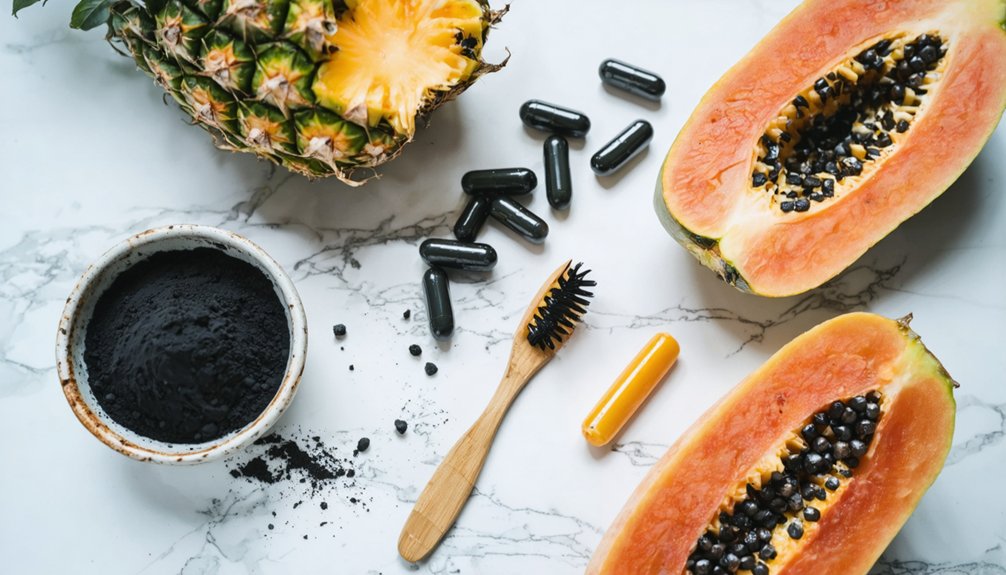
For a gentler approach to tannin-related discoloration, activated charcoal and fruit enzyme-based products offer compelling alternatives worth considering.
Activated charcoal works by absorbing surface stains, effectively pulling discoloring compounds away from your enamel. However, you’ll want to use it cautiously—its abrasive nature can wear down enamel with overuse, so limiting application to a few times weekly is advisable.
Fruit enzymes, specifically papain derived from papaya and bromelain from pineapple, offer a biochemically distinct mechanism. A 2012 study confirmed that enzyme-based toothpastes effectively break down protein-based staining compounds, delivering measurable whitening without harsh abrasion.
If you’re sensitive to peroxide-based treatments, these enzyme formulas provide a scientifically supported, enamel-friendlier path toward noticeably brighter teeth while keeping your long-term oral health intact.
How to Choose Over-the-Counter Whitening Kits
Maneuvering through the crowded market of over-the-counter whitening kits can feel overwhelming, but knowing what to look for makes the decision straightforward.
Prioritize kits containing low-concentration peroxide, as research confirms their effectiveness in gradually lifting tannin-related discoloration. Always verify ingredient safety by checking for ADA-approved formulations that minimize sensitivity risks.
If you prefer natural alternatives, look for kits incorporating fruit enzymes like papain or bromelain, which research supports for stain removal without harsh abrasives.
Match the kit’s strength to your staining severity — mild discoloration responds well to standard strips, while deeper tannin stains may need gel trays. Consistency matters most, so choose a format you’ll realistically maintain.
If sensitivity develops, discontinue use and consult your dentist immediately.
When Dentist Treatments Are Worth It for Tannin Stains

When over-the-counter options fall short, professional treatments offer measurable results that home remedies can’t match.
Your dentist can remove tannin-based tartar and surface stains through professional cleaning, while in-office bleaching can brighten your teeth by up to eight shades in a single visit.
If your staining runs deeper, veneers or bonding provide a lasting cosmetic solution that restores both color and confidence.
Professional Cleaning Benefits
Professional cleanings offer a level of stain removal that at-home remedies simply can’t replicate, especially if tannins from coffee, tea, or red wine have built up over time.
A dental hygienist removes hardened tartar and surface discoloration that brushing simply can’t reach, restoring your teeth’s natural brightness.
Biannual visits are your strongest tool for stain prevention, keeping tannin-related buildup from compounding into deeper discoloration.
Combined with consistent oral hygiene habits like twice-daily brushing and flossing, professional cleanings maintain the results you’re actively working toward.
Think of each appointment as a reset that amplifies everything you’re doing at home.
If you’re investing in whitening treatments, regular cleanings guarantee those efforts aren’t undermined by tartar or residual tannin deposits accumulating between sessions.
In-Office Bleaching Results
Regular cleanings reset your baseline, but if tannin stains from years of coffee, tea, or red wine have penetrated beyond the surface, in-office bleaching takes results considerably further.
Among available bleaching options, professional treatments deliver up to eight shades of improvement in a single appointment—results no at-home method can replicate at that speed.
In-office techniques typically use high-concentration hydrogen peroxide gels, often activated by specialized light or laser technology, targeting deeply embedded tannin compounds your toothbrush can’t reach.
You’re getting precision, controlled application, and immediate, visible outcomes under professional supervision.
If surface-level approaches haven’t met your expectations, in-office bleaching gives you the control and efficiency worth investing in—particularly when tannin exposure has been consistent and long-term.
Veneers For Deep Stains
For tannin stains that have penetrated enamel too deeply for bleaching to correct, veneers offer a permanent cosmetic solution worth serious consideration.
Your dentist bonds these thin porcelain or composite shells directly onto your teeth’s front surface, completely masking discoloration that no whitening treatment can reach.
Your veneers options include porcelain, which resists future tannin staining exceptionally well, and composite resin, a more affordable alternative requiring periodic replacement.
Porcelain veneers typically last 10–15 years when properly maintained.
Veneer maintenance demands consistent oral hygiene and strategic lifestyle adjustments.
You’ll still need to limit coffee, tea, and red wine exposure, particularly with composite versions.
Brush gently with non-abrasive toothpaste, attend biannual cleanings, and avoid biting hard objects to protect your investment long-term.
Frequently Asked Questions
Can Tannin Stains on Teeth Become Permanent if Left Untreated?
While tannin sources like coffee and wine seem harmless, you’ll find neglected stains can become permanent. Use prevention methods—rinsing, limiting intake, and brushing regularly—to maintain control over your smile’s brightness before stains set deeply.
Are Children’s Teeth More Vulnerable to Tannin Staining Than Adults?
Yes, children’s teeth are more vulnerable to tannin staining. Their developing enamel is thinner and more porous, making tannin exposure particularly damaging. You’ll protect their smile by prioritizing children’s dental hygiene and limiting staining beverages early.
Does Drinking Tannin Beverages Hot Versus Cold Worsen Tooth Staining?
Like a forge heating metal for deeper impressions, hot beverages drive tannins deeper into enamel than cold beverages. You’ll experience more staining with heat, so you should cool your drinks or sip them through a straw.
Can Certain Medications Increase Teeth’s Susceptibility to Tannin Discoloration?
Yes, certain medication types like antihistamines, antihypertensives, and chemotherapy drugs can dry your mouth, reducing saliva’s protective role. You’ll need stronger staining prevention strategies—limit tannin beverages, rinse promptly, and maintain consistent professional cleanings.
Do Tannins Stain Dental Implants, Veneers, or Crowns Like Natural Teeth?
Just as coffee meets your morning routine, tannin sources meet your restorations. Veneers, crowns, and implants can stain from tannins. You’ll benefit from staining prevention strategies—rinsing after tannin exposure and maintaining professional cleanings to preserve their appearance.
References
- https://www.aguafriadental.com/blog/10-effective-ways-to-whiten-your-yellow-aging-teeth/
- https://topellicottcitydentists.com/blog/10-causes-of-yellow-teeth-how-to-treat-them/
- https://www.medicalnewstoday.com/articles/321172
- https://watertowndentistryma.com/6-tried-tested-tips-you-can-do-to-avoid-yellowing-teeth/
- https://www.texaschoicedental.com/blog/2023/03/10/tannins-and-tooth-stains/
- https://www.dentistryofoldtownscottsdale.com/dental-blog/how-to-remove-yellow-stains-from-teeth/
- https://www.listerine.com/articles/teeth-whitening/causes-yellow-teeth
- https://www.bupa.co.uk/newsroom/ourviews/teeth-staining-foods
- https://www.colgate.com/en-us/oral-health/adult-oral-care/ten-causes-of-yellow-teeth-and-how-to-avoid-them