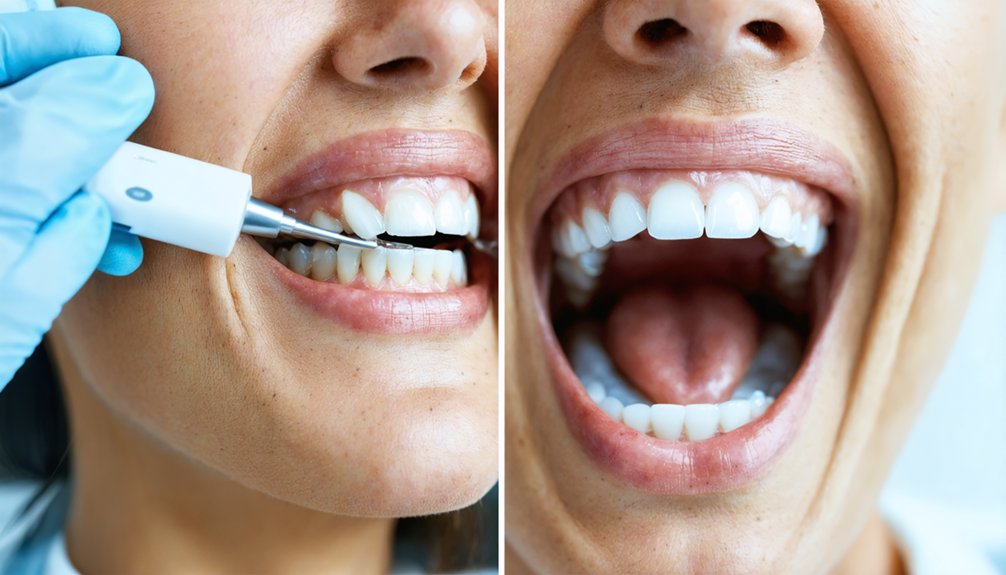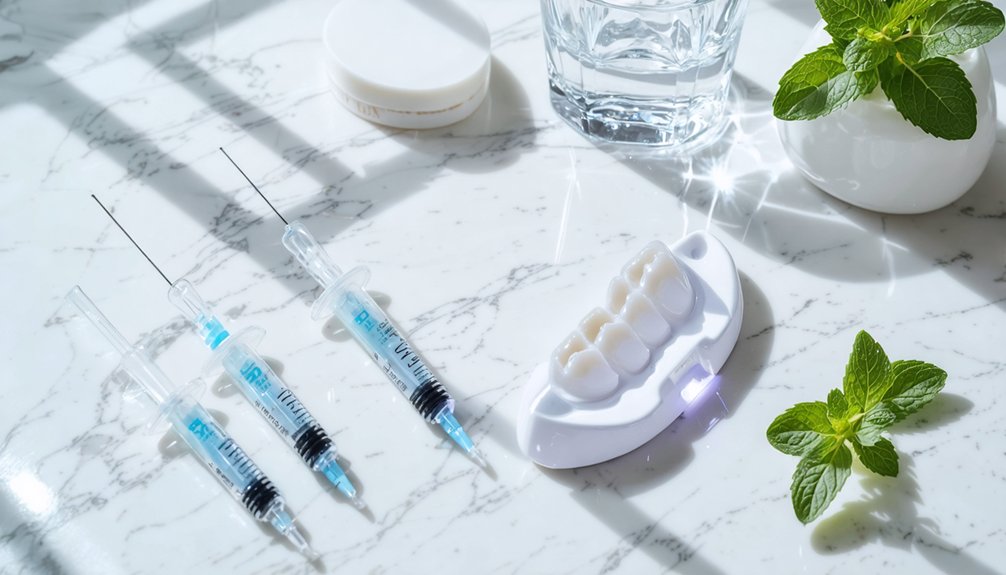
At-home whitening kits can rival professional results, but only under the right conditions. Custom-fitted trays and LED peroxide systems come closest, delivering 2–4 shade improvements over roughly 20 days of consistent use. Standard strips and pens typically offer just 1–2 shades. Your stain type, peroxide concentration, and how carefully you follow instructions all determine your outcome. Deep stains from aging or tobacco usually still require professional care. Keep exploring to find out exactly which options deliver the strongest results.
Key Takeaways
- Custom-fitted trays offer the closest at-home results to professional treatments through precise fit, consistent coverage, and minimized gel leakage.
- LED mouthpieces paired with peroxide gels can achieve 2-4 shade improvements after approximately 20 days of consistent use.
- Dentist-dispensed trays contain stronger peroxide concentrations, making them more effective against deeper stains than standard retail options.
- Carbamide peroxide formulas reduce sensitivity while still delivering meaningful whitening, making them ideal for extended at-home treatment plans.
- Deep stains from aging, tobacco, or medications typically require professional intervention, as even the best at-home kits have limitations.
Can At-Home Kits Match Professional Whitening?
At-home whitening kits can produce visible results, but they don’t match professional in-office treatments in speed or intensity. If you’re seeking control over your whitening routine, understanding that distinction matters.
Most reputable kits using hydrogen peroxide or carbamide peroxide deliver one to two shades of improvement, while professional treatments produce more dramatic, immediate changes.
Most at-home kits offer one to two shades of improvement — professional treatments deliver faster, more dramatic results.
Unlike natural remedies or alternative treatments, clinically tested peroxide-based kits have measurable evidence behind them. Custom trays and LED systems come closest to professional-grade outcomes, whereas strips and pens typically offer modest, uneven improvement.
Deeper stains from aging, tobacco, or medications often require professional intervention regardless of kit quality.
At-home options work best for surface discoloration and maintenance. Expect gradual progress, not transformation, and commit to consistent, correct use to maximize results.
Hydrogen Peroxide vs. Carbamide Peroxide: Which Works Better?
When choosing a whitening kit, you’ll encounter two primary active ingredients: hydrogen peroxide and carbamide peroxide.
Hydrogen peroxide acts faster, which can accelerate visible results, but it’s more likely to cause tooth and gum sensitivity.
Carbamide peroxide releases its bleaching agent more slowly, reducing sensitivity risk, though higher concentrations of either ingredient generally improve effectiveness within safe use limits.
Speed Versus Sensitivity
Both hydrogen peroxide and carbamide peroxide can whiten teeth effectively, but they don’t work the same way—and that difference matters depending on your sensitivity threshold.
Hydrogen peroxide acts faster, delivering quicker aesthetic improvements but increasing your risk of tooth and gum sensitivity. If you’re chasing speed, you’re accepting a trade-off.
Carbamide peroxide releases hydrogen peroxide more slowly, which reduces sensitivity but extends your treatment timeline. For cost considerations, slower formulas often require longer use periods, meaning more product consumed over time.
Your sensitivity history should drive this decision. If you’ve experienced discomfort with whitening before, carbamide peroxide is the more cautious choice.
If your teeth tolerate bleaching well and you want faster results, hydrogen peroxide delivers—provided you follow application guidelines precisely.
Concentration And Effectiveness
Choosing between hydrogen peroxide and carbamide peroxide isn’t just about speed—concentration plays an equally important role in determining how much whitening you’ll actually see.
Higher peroxide concentrations generally remove deeper stains, producing more measurable shifts in color stability over time. Lower concentrations tend to address only surface discoloration, delivering subtler, less lasting results.
However, concentration isn’t unlimited. Exceeding safe thresholds compromises enamel health, increasing porosity and long-term sensitivity risk. You’ll want to match concentration to your stain severity—not simply choose the strongest formula available.
Independent testing suggests meaningful improvement typically falls between one and four shades over roughly 20 days, depending on formula strength. Treat concentration as a controlled variable, not a shortcut, and you’ll make a more informed, protective whitening decision.
Which At-Home Whitening Kit Type Gets Closest to Professional Results?
If you’re aiming for results closest to professional whitening, custom trays outperform other at-home formats because their precise fit limits gel leakage and guarantees consistent coverage across all tooth surfaces.
LED mouthpieces paired with peroxide-based gels also deliver strong results and rank among the more effective store-bought options.
Strips offer convenience but tend to produce uneven coverage, while pens are best reserved for touch-ups rather than meaningful whitening goals.
Custom Trays Dominate
When it comes to replicating professional results at home, custom trays consistently outperform other kit formats. Their precise tray fit ensures even gel distribution across tooth surfaces, reducing the patchy coverage common with strips or generic trays. That tight seal also minimizes gel contact with soft tissue, directly lowering your gingivitis risk from prolonged peroxide exposure.
Generic one-size-fits-most trays frequently leak, increasing gum irritation and delivering inconsistent whitening. Custom-fitted options eliminate most of that variability, giving you greater control over both coverage and safety.
Dentist-dispensed take-home trays use stronger peroxide concentrations than store-bought versions, making them more effective against deeper stains.
If you’re committed to measurable results while managing sensitivity and tissue exposure, a well-fitted tray system is your most defensible choice.
LED Mouthpieces Perform Well
Custom trays set a high bar, but LED mouthpieces represent a strong second option worth examining. When paired with peroxide-based gels, LED systems can deliver meaningful results—some tests recorded two to four shades of improvement after roughly 20 days of daily use.
Before you commit, apply color matching techniques to document your baseline shade. Without that reference point, you can’t objectively measure progress or avoid falling for whitening myths that overstate typical outcomes.
One caution: LED light accelerates the peroxide reaction, which can increase sensitivity. If your enamel is already compromised, the added activation speed may cause discomfort.
Follow timing instructions precisely—overuse won’t accelerate gains, it will damage enamel. Used correctly, LED mouthpieces offer a credible, controlled path toward professional-adjacent results.
Strips Versus Pens
Strips and pens occupy the more accessible end of the at-home whitening spectrum, but neither performs as closely to professional results as trays or LED systems.
Strips can deliver one to two shades of improvement, but uneven coverage remains a consistent limitation, particularly around curved surfaces. If your oral hygiene routine isn’t consistent, or if sugar cravings have contributed to surface staining, strips may produce patchy rather than uniform results.
Pens are designed for touch-ups, not primary treatment, and their gel contact time is too brief for meaningful shade change. Both formats use lower peroxide concentrations, which limits their depth of action.
If you’re targeting moderate discoloration, understand that strips and pens offer convenience at the cost of precision and performance.
How Many Shades Whiter Can Whitening Kits Realistically Deliver?
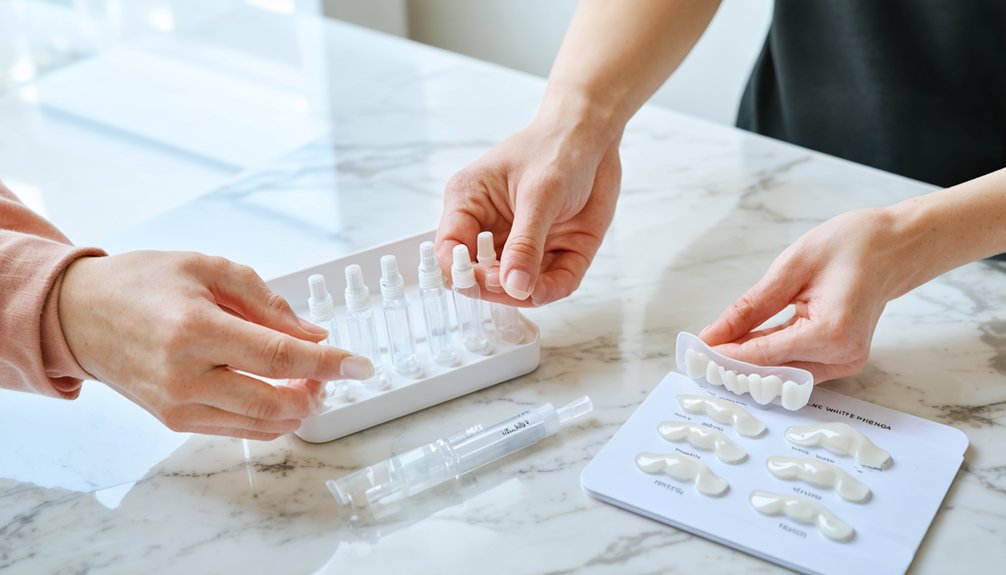
Most at-home whitening kits realistically deliver one to two shades of improvement, though stronger formulas and consistent use can push that range to two to four shades over roughly 20 days. Independent lab testing supports the higher end of that range for peroxide-based systems used daily.
Brand claims of up to 18 shades remain unverified by independent sources, so treat those figures skeptically.
Your results depend on stain type, peroxide concentration, and how strictly you follow dietary restrictions after each session—avoiding deeply pigmented foods and drinks for at least 48 hours matters.
Solid oral hygiene between treatments also preserves your gains. Surface stains respond most predictably; deeper discoloration from aging or medications typically requires professional intervention to achieve comparable improvement.
How to Avoid Sensitivity and Enamel Damage While Whitening
Sensitivity and enamel damage are the two most common risks with at-home whitening, and both are largely preventable if you follow instructions carefully. Never exceed the recommended application time, and space treatments as directed.
If you experience sensitivity, switch to a carbamide peroxide formula, which releases more slowly and causes less irritation than hydrogen peroxide. Look for kits containing potassium nitrate, which actively reduces nerve sensitivity.
Custom-fit trays limit gel leakage onto gum tissue, reducing both irritation and uneven results. For oral hygiene, brush gently before each session rather than immediately after, as enamel is temporarily more vulnerable post-treatment.
Diet restrictions matter too — avoid heavily pigmented foods and drinks for at least 30 minutes, and exercise extra caution for up to 48 hours.
How Long Do At-Home Whitening Kit Results Actually Last?
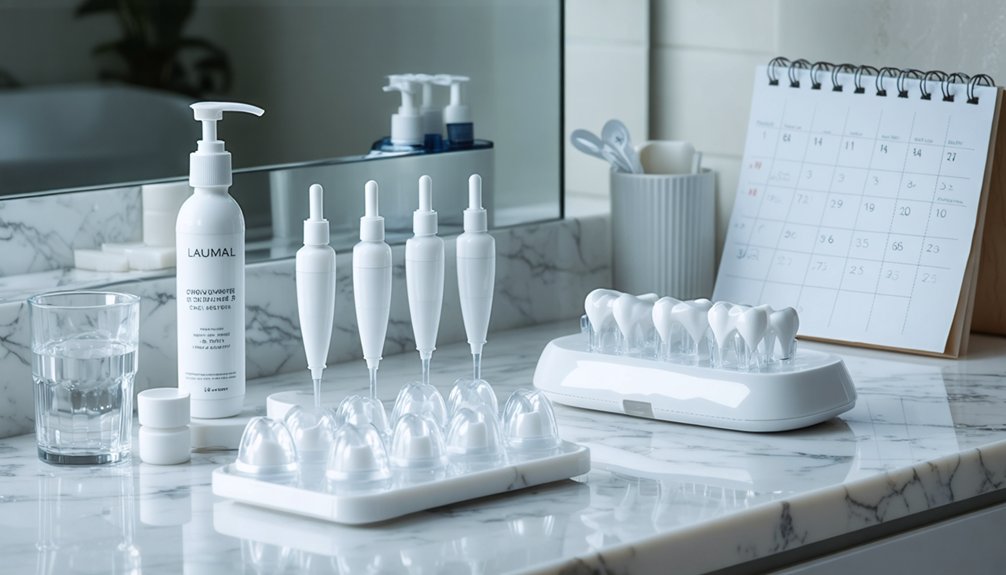
Results from at-home whitening kits don’t last indefinitely, and how long they hold depends on the formula strength, your diet, and whether you maintain a touch-up routine. Despite teeth whitening myths suggesting otherwise, no kit delivers permanent results. Most outcomes fade gradually, and experts recommend touch-ups roughly every six months to preserve visible improvement.
Practical stain removal tips to extend your results:
- Avoid heavily pigmented foods and drinks for at least 48 hours post-treatment.
- Limit consistent exposure to coffee, red wine, and tobacco, which accelerate re-staining.
- Use a touch-up pen or short strip session monthly to maintain baseline brightness.
Controlling these variables directly influences longevity. Without maintenance, even strong peroxide-based results will diminish as surface exposure and dietary habits reintroduce discoloration.
When to Skip the Kit and See a Dentist Instead
At-home kits work well for surface stains and mild discoloration, but they’re not the right tool for every situation. If your discoloration stems from aging, medications, or tobacco use, deeper stains typically require professional-strength gels and custom trays only a dentist can provide.
You should also skip the kit if you have gingivitis concerns, since applying peroxide to inflamed or compromised gum tissue can worsen irritation and delay healing. Active cavities, exposed roots, or recent dental work are additional reasons to consult a dentist first.
Check your insurance coverage before assuming professional treatment is out of reach, as some plans partially cover dentist-dispensed whitening systems. Prioritizing a clinical evaluation safeguards your enamel and ensures any whitening approach you choose is actually appropriate for your specific oral condition.
Frequently Asked Questions
Can You Use At-Home Whitening Kits on Dental Crowns or Veneers?
Whitening gels won’t change your crowns or veneers — dental material compatibility stops that. Whitening gel effectiveness only targets natural enamel, so you’ll risk visible mismatching. Consult your dentist before proceeding.
Is It Safe to Whiten Teeth While Pregnant or Breastfeeding?
Most dentists recommend you avoid whitening during pregnancy or breastfeeding. Dental safety guidelines cite limited research on peroxide absorption, so pregnancy precautions suggest you postpone treatment until after you’ve finished breastfeeding to eliminate any potential risk.
How Soon After Getting Fillings Can You Start Whitening Treatments?
You’ll want to let your smile settle for at least two weeks post-filling before starting treatments. Beginning too soon heightens dental sensitivity and compromises whitening longevity, as fresh restorations don’t respond to peroxide the same way natural enamel does.
Do Whitening Kits Work Differently on Naturally Yellow Versus Gray Teeth?
Yes, teeth color substantially impacts whitening effectiveness. If your teeth are naturally yellow, you’ll likely respond well to peroxide-based kits. Gray teeth, often caused by medications or trauma, don’t respond as predictably—you’d need professional intervention.
Can You Combine Multiple Whitening Kit Types for Faster Results?
You can combine types, but it’s risky. Stacking strips with trays raises sensitivity and enamel damage odds. Weigh cost considerations and customization options carefully—you’ll likely get better, safer results by optimizing one evidence-backed method consistently.
References
- https://www.forbes.com/sites/forbes-personal-shopper/article/best-teeth-whitening-kit/
- https://www.mydentistgrandprairie.com/blog/professional-take-home-kits-vs-store-bought/
- https://elitesmilesdental.com/blog/how-to-whiten-your-teeth-with-take-home-kits/
- https://www.goodhousekeeping.com/health-products/g28723133/best-at-home-teeth-whitening-products/
- https://www.health.com/condition/oral-health/teeth-whitening-kits
- https://www.elle.com/beauty/health-fitness/g39983465/best-at-home-teeth-whitening-kits/
- https://www.goodhousekeeping.com/uk/product-reviews/fashion-and-beauty/g29589571/best-teeth-whitening-kits/
- https://www.advancedsmilesmarion.com/resources/best-at-home-professional-teeth-whitening-kit