Finding the right teeth whitening treatment matters because the wrong choice can damage your enamel, irritate your gums, and deliver results that fade fast. Not all stains respond the same way—what works for surface discoloration won’t fix deeper, intrinsic staining. Your lifestyle habits, existing restorations, and oral health all influence which method actually works for you. Get it right, and you’ll protect your smile while maximizing your results—everything covered ahead will show you exactly how.
Key Takeaways
- Different stain types respond differently to treatments, so choosing the right method ensures effective results without wasting time or money.
- Misused whitening products can cause enamel erosion and gum sensitivity, making proper selection essential for safety.
- Existing restorations like crowns and veneers don’t respond to whitening, requiring careful planning to avoid uneven results.
- The right whitening method, whether in-office or at-home, depends on stain type, diet, and overall oral condition.
- Professional oversight ensures correct product concentration, application, and personalized recommendations that minimize risks and maximize effectiveness.
What Type of Staining Do You Have: and Can Whitening Fix It?
Before selecting a whitening treatment, you need to understand what’s actually causing your tooth discoloration. Staining types fall into two categories: extrinsic and intrinsic.
Extrinsic stains sit on the enamel surface, typically from coffee, tea, or tobacco, and respond well to most whitening methods.
Intrinsic stains penetrate deeper into the tooth structure and require more targeted approaches.
Treatment matching is critical because applying the wrong method wastes time, money, and risks unnecessary irritation.
Yellow-toned, unrestored teeth respond best to peroxide-based whitening.
Gray or brown discoloration from trauma or medication often doesn’t respond the same way.
Some conditions won’t improve with whitening at all.
Professional evaluation gives you the precise diagnosis needed to choose a method that actually works for your specific staining type.
Is Teeth Whitening Safe for Your Enamel and Gums?
When used correctly, teeth whitening products containing hydrogen peroxide or carbamide peroxide are considered safe and effective. However, misuse or overuse raises your risk of enamel erosion and gum sensitivity—two consequences that are entirely avoidable with the right approach.
Enamel erosion can occur when you apply whitening agents too frequently or leave them on longer than directed. Gum sensitivity typically results from product contact with soft tissue, often due to poorly fitting trays or improper application.
Temporary sensitivity is the most commonly reported side effect and generally resolves after treatment.
Professional supervision gives you greater control over concentration levels, application time, and tray fit—reducing risk while optimizing results.
Choosing the correct product and following instructions precisely protects both your enamel and gums throughout the whitening process.
How Teeth Whitening Affects Your Fillings and Crowns
Protecting your enamel and gums is only part of the whitening equation—your restorations are a separate concern entirely. Whitening agents don’t alter fillings, crowns, or veneers. That creates a real risk of restoration mismatch—your natural teeth brighten while your restorations stay fixed in their original shade.
Whitening your natural teeth won’t touch your restorations—and that mismatch will show.
Here’s what you need to control for:
- Color stability gaps – Restorations maintain their manufactured shade, creating visible contrast after whitening.
- Timing matters – Whiten before getting new restorations so your dentist can match the final shade accurately.
- Professional evaluation is non-negotiable – A dental assessment identifies which restorations will be affected and whether whitening is appropriate.
Without a proper plan, you risk an uneven smile that demands costly corrective work.
In-Office vs. At-Home Whitening: Which Works Better?
Once you’ve addressed the restoration question, the next decision is delivery method—and it’s one of the most consequential choices in your whitening plan. In-office treatment delivers faster, stronger shade changes—ideal if you need results quickly.
At-home bleaching, when done correctly, typically produces less sensitivity, making it a smarter option if comfort drives your priorities.
Choosing products without professional consultation is where most people go wrong. Light-activated systems, despite their marketing appeal, show no measurable advantage in whitening amount, longevity, or sensitivity reduction.
What actually moves the needle is concentration, application time, and consistency.
Your diet, staining type, and oral condition all influence which method performs best for you. A professional consultation removes the guesswork and positions you to get the outcome you’re actually targeting.
Can Whiter Teeth Change How People See You?
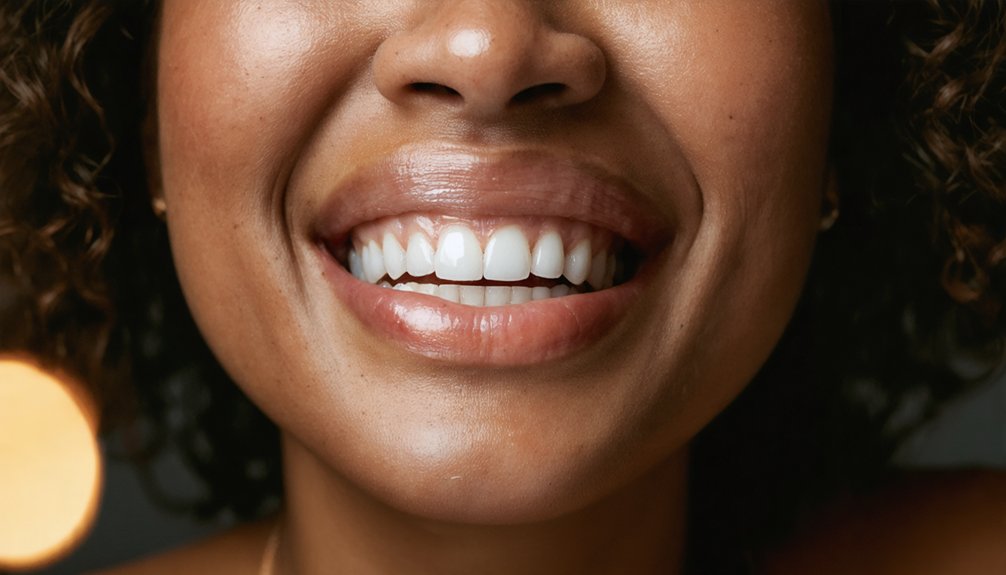
Beyond method and mechanics, whitening carries a social dimension that’s just as worth your attention. Whiter teeth directly shape how others perceive you and how confidently you engage with them. Research consistently links brighter smiles to stronger first impressions, greater perceived friendliness, and higher attractiveness ratings.
Personal confidence shifts when you’re not self-conscious about your tooth color. You speak more freely, smile without hesitation, and project authority in professional settings.
Social perception responds to visible cues, and your smile is one of the first. Consider what a targeted whitening plan can do:
- Reduce self-monitoring during conversations
- Strengthen professional presence and credibility
- Improve how approachable others find you
Choosing the right whitening method isn’t just cosmetic—it’s a direct investment in how you show up.
How to Keep Your Teeth White After Treatment
Once you’ve achieved your target shade, consistent oral hygiene—brushing twice daily and flossing regularly—forms your first line of defense against re-staining.
You’ll also want to limit coffee, tea, red wine, and other chromogenic foods and drinks that accelerate discoloration.
Scheduling monthly at-home touch-ups or periodic professional sessions helps you lock in your results and prevent gradual shade regression.
Maintain Consistent Oral Hygiene
After whitening treatment, consistent oral hygiene is your primary defense against rapid restaining. Your dietary habits directly influence how long your results last, so pairing smart food choices with disciplined care is non-negotiable.
Protect your investment with these three core practices:
- Brush twice daily using a whitening toothpaste to remove surface deposits before they penetrate enamel.
- Floss daily to eliminate interproximal buildup that accelerates discoloration between teeth.
- Rinse after consuming staining agents—coffee, tea, or red wine—to minimize pigment absorption immediately after exposure.
Strong oral hygiene doesn’t just preserve whitening results; it actively prevents the conditions that accelerate staining.
You’ve already made the investment—now control the outcome through deliberate, repeatable daily habits.
Limit Stain-Causing Foods
What you eat after whitening treatment directly determines how long your results last. Your dietary habits in the days and weeks following treatment are critical.
Freshly whitened enamel is more porous and vulnerable to staining agents, making smart beverage choices essential. Coffee, tea, red wine, and dark sodas accelerate discoloration and compromise your investment.
Acidic foods soften enamel temporarily, increasing its susceptibility to pigmentation.
Follow the “white diet” principle for at least 48 hours post-treatment—prioritize light-colored, low-acid foods and clear beverages.
When consuming staining drinks, use a straw to minimize contact with enamel.
Professional guidance helps you identify specific triggers based on your individual staining history, allowing you to make targeted adjustments that protect and extend your whitening results long-term.
Schedule Regular Touch-Ups
Even the best whitening treatments fade over time, so scheduling regular touch-ups is essential to maintaining your results. Your lifestyle habits directly influence how quickly your shade shifts, making a structured maintenance plan non-negotiable.
Follow these three steps to stay in control of your results:
- Schedule dental consultations every six months to assess your shade and adjust your whitening frequency accordingly.
- Perform monthly at-home touch-ups using professional-grade carbamide peroxide trays to counter gradual staining.
- Track your lifestyle habits—tobacco use, coffee, and wine accelerate fading, so adjust exposure or increase touch-up frequency when necessary.
Whitening isn’t a one-time fix; it’s an ongoing commitment. With consistent professional oversight and disciplined home care, you maintain full control over your smile’s longevity.
Frequently Asked Questions
How Does Teeth Whitening Improve Your Overall Smile Aesthetics?
Brilliantly bright, beautiful smiles boost your confidence instantly. Teeth whitening removes stains, enhances your dental health, and elevates oral hygiene standards—making your natural teeth appear visibly whiter, improving your overall aesthetic impact and first impressions powerfully.
Can Whitening Help if You Avoid Smiling Due to Tooth Color?
Yes, whitening can restore your cosmetic confidence if tooth color’s holding back your smile. By brightening your teeth, you’ll engage more freely in social interactions, eliminating self-consciousness and taking control of how you present yourself professionally and personally.
What Ingredients Make Teeth Whitening Products Safe and Effective?
Like a shield for your smile, hydrogen peroxide and carbamide peroxide are the gold-standard ingredients ensuring chemical safety. Unlike unproven natural remedies, these clinically validated compounds whiten effectively when you follow manufacturer instructions, keeping your enamel protected.
Do Yellow-Toned Teeth Respond Better to Whitening Than Other Shades?
Yes, your yellow-toned teeth respond better to whitening than gray or brown shades. Shade matching confirms your enamel sensitivity levels and stain type, helping you choose treatments that’ll deliver the strongest, most predictable results effectively.
How Often Should You Whiten Teeth to Maintain Lasting Results?
Even if results fade, you can preserve them with monthly home touch-ups after in-office treatment. A personalized treatment plan from a professional consultation ensures your whitening schedule matches your diet, habits, and oral conditions.
References
- https://oakhillsdentistry.com/the-benefits-of-teeth-whitening-you-might-not-have-thought-of/
- https://pmc.ncbi.nlm.nih.gov/articles/PMC4058574/
- https://www.healthline.com/health/how-does-teeth-whitening-work
- https://www.hunimed.eu/news/benefits-teeth-whitening-2/
- https://www.universaldentistry.net/teeth-whitening-facts-you-should-know-about/
- https://www.hopkinsmedicine.org/health/treatment-tests-and-therapies/teeth-whitening
- https://www.ada.org/resources/ada-library/oral-health-topics/whitening
- https://www.webmd.com/oral-health/teeth-whitening
- https://www.mouthhealthy.org/all-topics-a-z/teeth-whitening
- https://www.modernagedentistry.com/blog/the-10-best-reasons-to-have-your-teeth-professionally-whitened