You can prevent soy sauce from staining your teeth by rinsing your mouth with water immediately after eating. Time your brushing correctly—wait about 30 minutes after acidic foods before scrubbing. Eat crunchy vegetables like carrots or celery to naturally scrub pigments away. Limit how long soy sauce contacts your front teeth by directing food toward your back molars. Build a consistent daily hygiene routine with fluoride toothpaste and flossing—each tip ahead breaks this down further.
Key Takeaways
- Rinse your mouth with water immediately after eating soy sauce to limit pigment contact time and reduce discoloration risk.
- Brush twice daily with fluoride or whitening toothpaste, waiting 30 minutes after acidic foods before brushing.
- Eat crunchy vegetables like carrots or celery, which naturally scrub teeth and stimulate stain-clearing saliva.
- Use utensils instead of sipping soy sauce directly, guiding food toward back molars to minimize front tooth exposure.
- Floss daily, chew xylitol gum after meals, and schedule regular dental checkups for consistent stain prevention.
Rinse Your Mouth Right After Eating Soy Sauce
Rinsing your mouth with water right after eating soy sauce is one of the simplest ways to reduce staining. Soy sauce contains dark pigments that begin adhering to enamel quickly, so acting fast limits contact time.
Rinsing with water right after soy sauce limits pigment contact time and helps prevent enamel staining fast.
Among effective oral rinsing techniques, swishing water vigorously for several seconds moves residue off tooth surfaces before it sets. This straightforward enamel protection strategy requires no special tools — just a glass of water after your meal.
If brushing isn’t immediately possible, rinsing serves as your first defensive step. Don’t let soy sauce linger; the longer it stays on your teeth, the greater your discoloration risk.
Make post-meal rinsing a consistent habit, and you’ll actively reduce pigment buildup before it becomes a harder problem to correct.
Time Your Brushing to Prevent Soy Sauce Stains
Brushing at the right time makes a measurable difference in how well you control soy sauce stains. Brush twice daily using fluoride toothpaste to support enamel preservation and maintain baseline stain resistance. When practical, brush after meals to clear pigments before they adhere to enamel surfaces.
However, if you’ve eaten acidic foods alongside soy sauce, wait approximately 30 minutes before brushing. Acid temporarily softens enamel, and brushing too soon accelerates wear rather than protecting it.
For persistent discoloration, incorporate a whitening toothpaste into your routine as a targeted dental whitening measure.
Consistent timing isn’t optional if you want real control over staining. Strategic brushing, combined with the right toothpaste, removes surface pigments efficiently while protecting enamel from long-term damage.
Foods That Reduce Soy Sauce Staining While You Eat
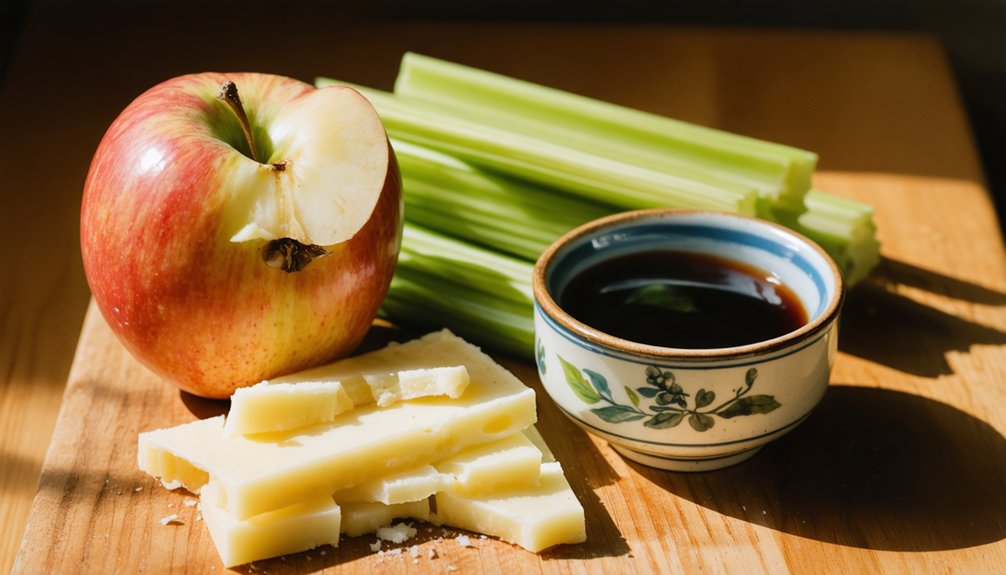
What you eat alongside soy sauce directly influences how much pigment contacts your enamel. Strategic flavor pairing with crunchy vegetables like carrots, celery, or radishes creates a natural scrubbing effect that reduces staining during the meal itself. These foods stimulate saliva flow, which dilutes and clears pigment before it settles.
Limiting soy sauce quantity also lowers total enamel contact. Diluting it with water or pairing it with lighter condiments reduces staining intensity without sacrificing flavor.
Utensil techniques add another layer of control. Using a fork to direct food toward your back molars minimizes front-to-tooth exposure to dark pigments. Eating efficiently rather than grazing extends your protection further.
Finish the meal with a water rinse to clear residual soy sauce from enamel surfaces.
Cut the Time Soy Sauce Spends on Your Teeth
Choosing what you eat alongside soy sauce helps limit pigment exposure, but how you behave during and after the meal matters just as much. Minimizing contact time directly reduces the chemical interactions between soy sauce pigments and enamel surfaces.
Avoid sipping soy sauce directly from dishes. Use utensils to guide food toward back molars, keeping front teeth less exposed.
Eat efficiently rather than grazing slowly over soy-sauce-heavy dishes, since prolonged exposure intensifies staining risk.
Finish every meal with a thorough water rinse to flush residue before it adheres. These behavioral adjustments support enamel protection by limiting how long dark pigments remain in contact with tooth surfaces.
Less contact time means fewer opportunities for discoloration to develop and accumulate.
Build a Daily Routine That Stops Stains From Setting
Behavioral adjustments reduce contact time, but they won’t hold stains at bay unless you back them up with consistent daily hygiene. Build a structured routine that targets stain accumulation before it becomes resistant discoloration:
- Brush twice daily with fluoride or whitening toothpaste to clear surface pigments
- Floss daily to remove trapped particles that anchor stains between teeth
- Chew xylitol gum after meals to stimulate saliva and cleanse enamel
- Schedule a dental checkup regularly so professional cleaning removes buildup home care misses
If staining persists despite this routine, ask your dentist about teeth whitening options suited to your exposure level.
Consistency is the controlling factor—each step compounds the others, and skipping one weakens the entire system’s effectiveness against repeated soy sauce exposure.
Frequently Asked Questions
Can Professional Whitening Treatments Reverse Existing Soy Sauce Stains Effectively?
Hit the nail on the head: yes, professional treatments offer strong whitening efficacy for stain removal. You’ll see noticeable reversal of soy sauce discoloration, though consistent preventive habits guarantee you maintain lasting, controlled results afterward.
How Often Should Dental Cleanings Be Scheduled to Manage Soy Sauce Discoloration?
Schedule dental cleanings every six months to maintain dental hygiene and stain prevention. If you’re consuming soy sauce regularly, you’ll want to discuss more frequent visits with your dentist to control cumulative discoloration effectively.
Does Diluting Soy Sauce With Water Noticeably Reduce Its Staining Potential?
Yes, dilution effectiveness is real—you’ll achieve measurable stain reduction by mixing soy sauce with water, lowering pigment concentration on enamel. It’s not elimination, but you actively reduce discoloration risk with each diluted serving.
Which Whitening Toothpaste Works Best Against Dark Sauce Stains?
No single brand’s clinically superior, but you’ll want one with mild abrasives like silica. It’s a smart dietary adjustment and natural remedy complement—use it consistently twice daily to actively control dark sauce surface stains on enamel.
Can Xylitol Gum Actually Help Reduce Soy Sauce Staining Between Meals?
A clean mouth is a defended mouth—yes, chewing gum with xylitol actively supports stain prevention. It stimulates saliva flow, which neutralizes residue and rinses soy sauce pigments from your enamel between meals effectively.
References
- https://www.bupa.co.uk/newsroom/ourviews/teeth-staining-foods
- https://www.colgate.com/en-us/oral-health/teeth-whitening/discolored-teeth-five-foods-that-cause-stains
- https://dentree.co.za/2018/11/29/5-foods-that-turn-your-teeth-yellow/
- https://www.portraitdentaledmonton.com/foods-to-avoid-to-prevent-teeth-discolouration/
- https://www.drhappysmiles.com/post/the-top-5-foods-that-stain-your-teeth-and-how-to-avoid-them
- https://www.bbc.co.uk/food/articles/c4glpdle5dlo
- https://www.drsamcan.com/post/common-teeth-staining-culprits-and-how-to-prevent-them.html
- https://www.trysnow.com/blogs/news/does-soy-sauce-stain-teeth
- https://www.cinoll.com/blog/oh-my-does-soy-sauce-stain-teeth/
- https://mydental.blog/foods-that-stain-your-teeth-and-how-to-avoid-them/