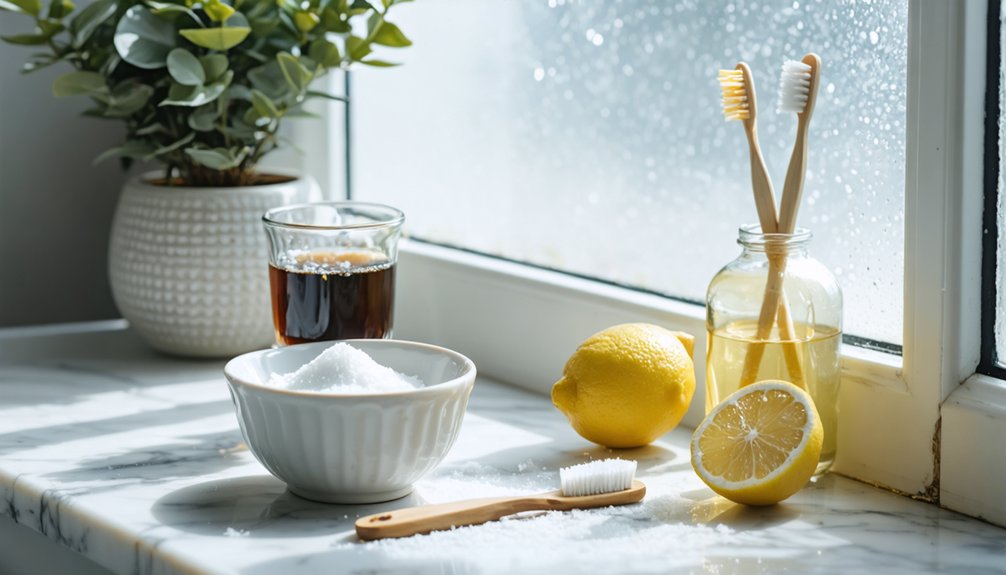
To remove tea stains from your teeth, rinse your mouth with water immediately after drinking, then wait 30 minutes before brushing with a fluoride or whitening toothpaste. Use a baking soda paste once or twice weekly to lift surface stains gently. If discoloration persists, peroxide-based whitening strips or professional cleaning can help. Your brewing habits and tea variety also play a bigger role in staining than you might expect.
Key Takeaways
- Rinse your mouth with water immediately after drinking tea to displace residual tannins before they bind to enamel.
- Wait 30 minutes after tea consumption before brushing to avoid damaging softened enamel.
- Brush gently twice daily using whitening toothpaste with circular motions to gradually lift surface stains.
- Apply a baking soda and water paste once or twice weekly, brushing gently for one to two minutes.
- Use peroxide-based whitening strips for stubborn stains, and consult a dentist if discoloration persists after several weeks.
Why Tea Stains Your Teeth in the First Place
Tea stains your teeth because of tannins, naturally occurring compounds that bind to the protein film on your enamel surface. The longer your tea brewing time, the higher the tannin concentration released into your cup, which increases stain penetration risk.
Tannins bind to your enamel’s protein film — and the longer you brew, the deeper they penetrate.
Dark teas, such as black and oolong, contain considerably more tannins than green or white varieties.
These stains are classified as extrinsic, meaning discoloration accumulates on the enamel surface rather than within the tooth structure itself.
Plaque buildup accelerates this process by trapping pigments against your enamel, making discoloration progressively worse.
Because the staining mechanism is surface-level, you have meaningful control over both prevention and removal.
Understanding how tannins interact with your teeth gives you a clear starting point for addressing the problem effectively.
What to Do Right After Tea to Prevent Stains
The minutes immediately after finishing your tea are your best window for limiting stain development. Rinse your mouth thoroughly with water to displace residual tannins before they adhere to enamel. This step is effective regardless of brewing temperature or tea flavor intensity.
If you’ve consumed a high-tannin variety brewed at elevated temperatures, rinsing becomes even more critical, as heat opens enamel pores slightly. Chew sugar-free gum afterward to stimulate saliva production, which neutralizes acids and clears pigment.
Avoid brushing immediately; wait at least 30 minutes to prevent brushing softened enamel. For iced tea, using a straw reduces direct contact with front teeth.
These immediate post-tea habits markedly reduce cumulative staining when practiced consistently.
How Your Brushing Routine Affects Tea Stains
Your brushing frequency directly influences how much tea residue accumulates on your enamel over time, so brushing twice daily is the standard recommendation for managing surface stains.
Consistency matters more than intensity—aggressive scrubbing can wear down enamel, making teeth more vulnerable to discoloration rather than less.
Pairing a regular brushing schedule with a whitening toothpaste gives you a practical, low-cost strategy for gradually reducing existing tea stains over several weeks.
Daily Brushing Frequency Matters
Brushing twice daily with a fluoride toothpaste is one of the most reliable ways to keep tea stains from accumulating on your enamel. Consistent oral hygiene disrupts plaque before it traps tannin pigments and hardens into stubborn buildup.
Skipping sessions—even occasionally—gives residue more time to bond with your enamel surface.
For effective stain prevention, brush once in the morning and once before bed, using gentle circular motions. Aggressive scrubbing won’t accelerate results; it’ll damage enamel and make teeth more vulnerable to discoloration over time.
An electric toothbrush can improve consistency and coverage compared to a manual brush.
Pairing twice-daily brushing with daily flossing removes pigment-trapping plaque between teeth, giving you more complete control over where stains develop.
Choosing The Right Toothpaste
Selecting the right toothpaste makes a measurable difference in how effectively your brushing routine combats tea stains. Whitening toothpastes contain mild abrasives that lift extrinsic discoloration from enamel, making them more effective than standard formulas for tea drinkers.
Since caffeine effects often drive higher daily tea consumption, your staining exposure compounds over time, making toothpaste selection a deliberate, strategic choice rather than an afterthought.
Look for fluoride-based whitening toothpastes with proven surface-stain removal claims. Avoid heavily flavored options marketed through flavor enhancement alone, as appealing taste doesn’t indicate clinical effectiveness.
Confirm that your chosen product carries a recognized dental association approval seal. Used consistently twice daily, the right whitening toothpaste progressively reduces surface buildup, giving you measurable control over discoloration without requiring immediate professional intervention.
How to Remove Tea Stains With Baking Soda
Baking soda is a mild abrasive that lifts external tea stains from enamel without chemically bleaching the tooth. If your tea brewing techniques produce strong, tannin-rich brews, you’ll likely see more surface buildup and need more consistent treatment.
Baking soda lifts tea stains from enamel gently — stronger brews mean more buildup and more consistent treatment needed.
To use baking soda effectively, follow these steps:
- Mix a small amount with water to form a paste.
- Apply it to your toothbrush.
- Brush gently for one to two minutes.
- Rinse thoroughly.
Limit this method to once or twice weekly to avoid enamel abrasion. Unlike stain-resistant coatings found on some dental materials, natural enamel is vulnerable to overuse.
Baking soda removes existing deposits but won’t prevent future staining, so pair it with consistent daily brushing for lasting results.
Which Whitening Products Actually Work on Tea Stains?
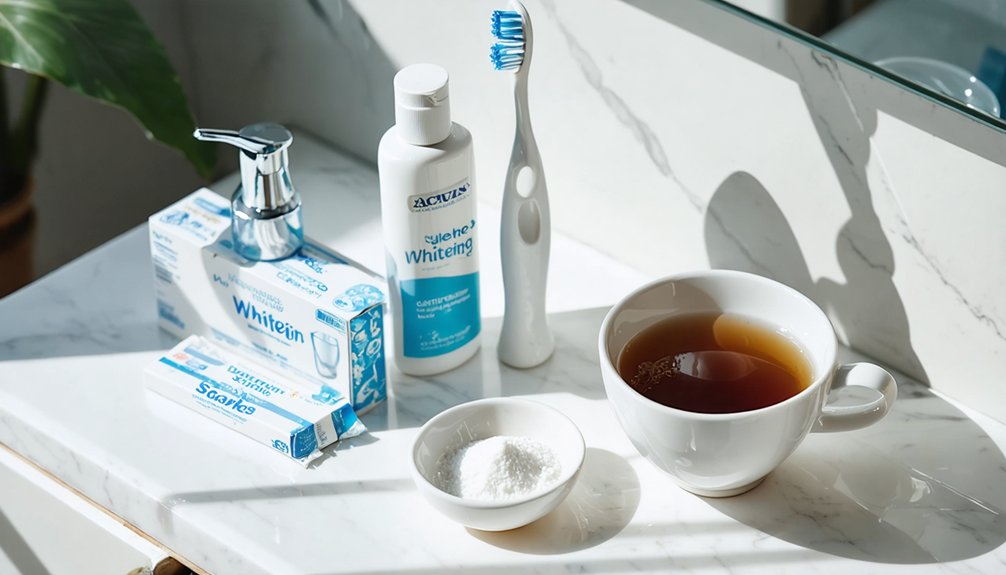
When surface stains don’t respond to daily brushing alone, whitening products can help close the gap. Tea stains are extrinsic, which makes them responsive to peroxide-based treatments. Whitening strips containing hydrogen or carbamide peroxide are among the most consistently supported options for visible surface discoloration. Whitening toothpastes work more gradually but deliver reliable results with sustained use.
If you’ve already tried natural remedies like baking soda without sufficient improvement, peroxide-based home kits offer a stronger next step. For stains that resist over-the-counter products, cosmetic procedures performed in a dental office—such as professional polishing or in-office whitening—provide more controlled, measurable results.
Choose products with verified active ingredients, follow usage instructions precisely, and monitor your enamel sensitivity throughout treatment to avoid unnecessary damage.
When to See a Dentist for Tea Stain Removal
Most tea stains respond well to at-home whitening products, but there are situations where professional care becomes the more appropriate path.
Most tea stains yield to home treatments, but some call for a professional touch.
If stains persist after several weeks of consistent whitening toothpaste use or peroxide-based treatment, schedule a dental cleaning. A hygienist can scale and polish deposits that home products can’t reach.
You should also see a dentist if you notice sensitivity, rough texture, or unusual discoloration, as these may signal enamel health concerns rather than surface staining alone.
Stains that have hardened into tartar won’t lift with brushing or whitening strips.
Routine professional cleanings also support long-term tea stain prevention by removing buildup before it compounds.
Don’t wait until staining becomes severe—earlier intervention keeps your enamel health intact and results more manageable.
Does the Type of Tea You Drink Matter?

Not all teas stain equally, and the type you drink can meaningfully affect how much discoloration builds up on your enamel over time. Black tea contains the highest tannin concentration and produces the most significant staining. Green and white teas deliver a lighter tea flavor with fewer tannins, making them noticeably less likely to discolor your teeth. Herbal teas vary depending on their ingredients.
Brewing temperature also plays a role. Higher temperatures extract more tannins from the leaves, increasing staining potential. Steeping black tea at lower temperatures or for shorter durations can reduce tannin release.
If you’re committed to managing discoloration, switching to lighter varieties or adjusting your brewing habits gives you direct control over how much pigment reaches your enamel.
How to Stop Tea Stains From Coming Back
Preventing tea stains from returning comes down to building consistent habits that limit tannin contact and reduce plaque buildup between cleanings. Rinse with water immediately after drinking, and wait 30 minutes before brushing to protect enamel. Use a whitening toothpaste twice daily and floss to eliminate plaque that traps pigments.
Consistent habits limit tannin contact, reduce plaque buildup, and keep tea stains from coming back.
Consider adjusting your brewing techniques — shorter steeping times produce lighter tea with fewer tannins. Switching to green or white tea reduces staining risk without sacrificing flavor enhancement options like citrus or mint additions. Adding milk may also reduce tannin adhesion.
Schedule regular professional cleanings to remove buildup that home care misses. Using a straw for iced tea further limits front-tooth exposure.
Consistent daily habits, not occasional interventions, provide the most reliable long-term control.
Frequently Asked Questions
Can Drinking Tea Through a Straw Really Reduce Tooth Staining Significantly?
Using a straw reduces tea acidity contact with your front teeth, limiting stain buildup there. It won’t eliminate staining entirely, but it’s a practical preventive step that complements your overall stain removal routine.
Does Adding Milk to Tea Actually Lower Its Staining Potential on Teeth?
Forsooth, adding milk may slightly reduce tea’s staining mechanisms by binding tannins, but it doesn’t eliminate them. You’re still exposed to tea acidity, so don’t rely solely on milk for meaningful stain prevention.
How Long Does It Take Whitening Toothpaste to Visibly Reduce Tea Stains?
You’ll typically see visible results from whitening toothpaste within two to six weeks of consistent twice-daily use. Unlike natural remedies, it works gradually; stubborn stains may require professional treatments for faster, more controlled outcomes.
Is It Safe to Use Baking Soda on Sensitive Teeth or Dental Restorations?
Before you scrub—pause. If you’ve got sensitive teeth or restorations, baking soda’s abrasiveness can worsen tooth sensitivity and accelerate dental erosion. You’ll want to consult your dentist before incorporating it into your routine.
Can Chewing Sugar-Free Gum After Tea Genuinely Help Prevent Stain Buildup?
Yes, it genuinely helps. When you chew sugar-free gum after tea, you’ll stimulate saliva production, which neutralizes acids, reduces dental erosion risk, minimizes tooth sensitivity, and washes away tannin residue before it settles onto enamel.
References
- https://www.advantagedental.com/blog/how-to-remove-coffee-and-tea-stains-from-your-teeth
- https://mypenndentist.org/dental-tips/2024/02/13/how-to-remove-stains-from-teeth/
- https://www.reddit.com/r/tea/comments/39kk1u/tips_for_stained_teeth/
- https://crest.com/en-us/oral-care-tips/teeth-stains/tea-coffee-teeth-stains-how-to-avoid-remove-them
- https://www.docklandsdental.ie/how-to-remove-tea-stains-from-teeth/
- https://www.wikihow.com/Remove-Tea-Stains-from-Teeth
- https://www.dentaly.org/us/teeth-whitening/tea-stain-teeth/
- https://www.smilearizonadentistry.com/blog/remove-coffee-stain-from-teeth
- https://tealoves.com/how-to-remove-tea-stains-from-teeth/
- https://scienceinsights.org/how-to-remove-tea-stains-from-teeth-what-works/