To maintain whitening results, you’ll need to combine smart dietary choices, consistent oral hygiene, and timely professional care. Avoid staining agents like coffee, tea, and red wine—especially during the critical 48-hour post-treatment window. Brush twice daily, use whitening toothpaste 2–3 times weekly, and rinse with water after pigmented foods. Schedule professional cleanings every six months and plan touch-ups when yellowing reappears. Everything you do next determines how long your results actually last.
Key Takeaways
- Avoid staining foods, drinks, and tobacco for at least 48 hours after whitening treatment to protect open enamel pores.
- Rinse with water immediately after consuming pigmented foods or beverages to dilute and disrupt chromogen deposits.
- Use whitening toothpaste 2–3 times weekly, alternating with fluoride toothpaste to balance stain removal and enamel protection.
- Schedule biannual professional cleanings to remove tartar, polish embedded stains, and preserve overall whitening results.
- Plan touch-up treatments every 6–12 months, or earlier if staining foods and drinks are frequently consumed.
Why Whitening Results Fade: And How to Stop It
Whitening results fade because your enamel is porous, and pigments from food, drinks, and tobacco gradually re-enter those microscopic pores after treatment.
Enamel erosion accelerates this process by thinning the surface layer, making it more susceptible to pigment absorption and structural compromise.
Salivary effects also play a role — saliva begins remineralizing enamel post-treatment, which gradually closes pores but simultaneously traps surface chromogens if staining agents are introduced too early.
You can slow fading by controlling what contacts your teeth during the critical 48-hour window, maintaining consistent oral hygiene, and eliminating tobacco.
Strategic touch-up treatments and professional cleanings further extend your results.
Understanding the mechanism gives you a precise framework for making decisions that directly protect your investment.
Foods and Drinks That Stain Teeth the Fastest
Some beverages stain teeth faster than others, with coffee, tea, red wine, and dark sodas ranking among the worst offenders due to their high chromogen and tannin content.
Stain-causing foods like berries, chocolate, and strongly pigmented candies pose similar risks by depositing color directly onto enamel.
You can reduce daily stain exposure by using a straw, rinsing with water immediately after consuming pigmented foods or drinks, and brushing shortly after meals.
Worst Offending Beverages
Although whitening treatments can brighten your smile considerably, certain foods and drinks can reverse those results faster than others. Coffee, tea, and red wine rank among the most aggressive staining beverages due to their high chromogen and tannin content, which bind directly to enamel.
Dark sodas and berry-based juices follow closely, accelerating discoloration with consistent exposure.
Protecting your results requires deliberate choices. Use a straw to minimize contact between staining drinks and your front teeth, and rinse with water immediately after consumption.
Adequate oral hydration also dilutes pigment concentration in your mouth, slowing stain adhesion. Supporting gum health through consistent hydration further reduces the porous tissue conditions where pigments accumulate.
Controlling your beverage intake is one of the most direct ways to extend your whitening investment.
Stain-Causing Foods To Avoid
Beverages aren’t the only culprit working against your whitening results—certain foods deliver concentrated pigments and tannins that bind just as aggressively to enamel. Berries, tomato-based sauces, soy sauce, balsamic vinegar, and dark chocolate are among the highest-risk offenders.
Strongly colored candies introduce artificial dyes that penetrate enamel surface quickly, particularly if tooth sensitivity has temporarily increased your enamel’s porosity post-treatment.
Chocolate and berry-based foods also introduce acidity that can compromise gum health and weaken enamel integrity over time, accelerating stain absorption.
Rinsing with water immediately after consuming these foods reduces pigment contact time.
During the critical 48-hour post-whitening window, eliminate these foods entirely.
After that window, strategic limitation—not complete avoidance—gives you practical control over long-term results.
Reducing Stain Exposure Daily
Daily exposure to staining agents compounds gradually, and four beverages alone—coffee, tea, red wine, and dark sodas—account for the majority of post-whitening discoloration in most patients.
Stain prevention requires deliberate daily decisions, not periodic ones.
Integrate these four protective habits into your oral hygiene routine:
- Use a straw when drinking dark beverages to minimize direct contact with enamel surfaces.
- Rinse immediately with water after consuming pigment-heavy foods or drinks to dilute chromogens before they bind.
- Brush within 30 minutes of consuming staining agents to mechanically disrupt surface deposits.
- Limit frequency—reducing how often you consume staining substances matters as much as limiting quantity.
Consistency across these behaviors controls cumulative discoloration more effectively than any single corrective action.
The 48-Hour White Diet That Protects Your Whitening Results
The first 48 hours after whitening treatment represent your highest-risk window for restaining, as enamel remains porous and especially receptive to pigment absorption. During this period, you’ll want to stick to white or light-colored foods — think chicken, rice, white fish, eggs, and cauliflower — while eliminating coffee, tea, red wine, and dark sodas entirely.
Avoiding colored toothpaste, mouthwash, and other pigmented oral care products during these 48 hours further protects your initial results before enamel fully re-mineralizes.
Why 48 Hours Matters
After whitening treatment, your enamel enters a heightened stain-absorption window that typically lasts 48 hours. During this period, compromised enamel health and reduced saliva production leave your teeth highly vulnerable. Every exposure decision you make compounds or protects your result.
Visualize what’s happening inside your mouth:
- Open tubules — bleaching temporarily widens enamel pores, accelerating pigment absorption
- Reduced saliva buffer — post-treatment dryness limits your mouth’s natural stain-clearing defense
- Unprotected mineral layer — enamel health remains compromised until remineralization stabilizes the surface
- Rapid pigment bonding — dark chromogens lock into weakened enamel within minutes of contact
Respecting this 48-hour threshold isn’t precaution — it’s precision. Controlling what contacts your teeth during this window directly determines how much of your whitening result you actually keep.
White Diet Food Choices
Protecting that 48-hour window starts with knowing exactly what you can eat and drink without risk. Dietary restrictions during this phase are non-negotiable if you want to lock in your results.
Stick to white or light-colored foods: plain chicken, fish, white rice, pasta without sauce, eggs, cauliflower, bananas, and plain yogurt.
For beverages, water and clear liquids are your safest options.
Stain prevention during this window also extends beyond food. Avoid colored toothpaste, pigmented mouthwash, and any tinted oral care products until the 48 hours have passed.
Your enamel remains highly porous immediately after treatment, absorbing pigment faster than it normally would.
Every food choice you make during this period directly controls how well your whitening result holds.
Drinks To Avoid Immediately
What you drink during the first 48 hours after whitening can determine how well your results last. Your enamel is most porous immediately after treatment, making it highly vulnerable to pigment absorption.
Eliminate these drinks from your routine during this window:
- Coffee and tea — dark tannins penetrate freshly treated enamel rapidly
- Red wine — deep chromogens bind to vulnerable enamel surfaces immediately
- Dark sodas — acidic pigments accelerate staining and weaken enamel simultaneously
- Fruit juices and sports drinks — colored varieties act like colorful candies and dark sauces, delivering concentrated pigment directly onto exposed surfaces
Stick strictly to water, clear broths, and milk. You’ve invested in your results — protecting that window requires deliberate, controlled choices about everything that contacts your teeth.
Daily Habits That Actually Keep Teeth White Longer
Keeping your whitening results intact comes down to a few consistent daily habits that prevent stain buildup before it starts. Despite common teeth whitening myths, natural remedies like oil pulling or activated charcoal don’t replace structured daily care.
What actually works is disciplined, repeatable behavior.
Brush at least twice daily and floss once to eliminate plaque where stains anchor between teeth. Use whitening toothpaste a few times per week rather than exclusively, reducing unnecessary enamel abrasion. Rinse with water immediately after consuming pigmented foods or drinks to dilute residual staining compounds. An antibacterial mouthwash can further reduce plaque bacteria that dull tooth surfaces over time.
These habits compound. Consistent execution controls discoloration systematically, extending your whitening results far beyond what sporadic effort can achieve.
Does Whitening Toothpaste Help Maintain Whitening Results?
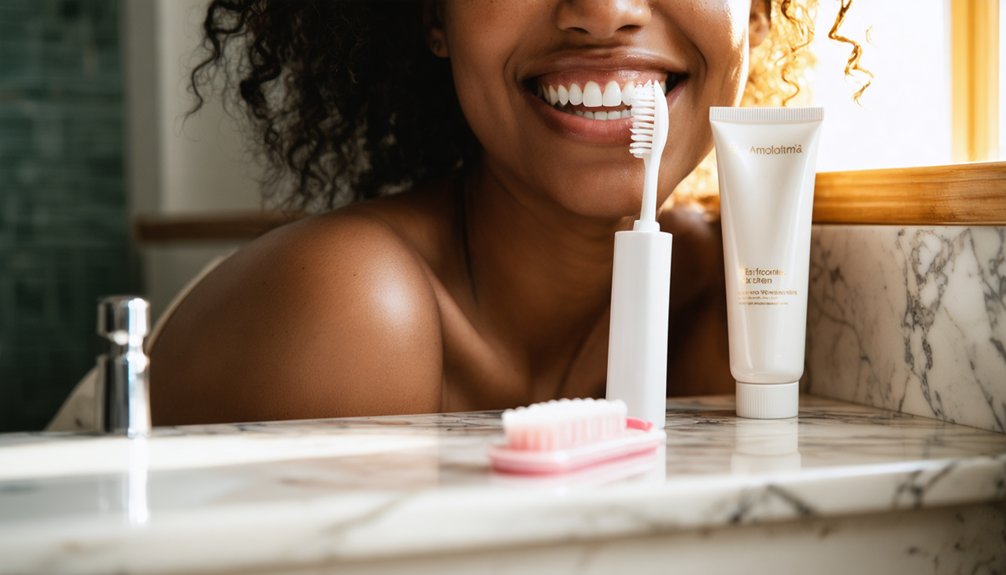
Whitening toothpaste can support your maintenance routine, but its effectiveness depends on how and how often you use it. It removes surface stains through mild abrasives or whitening technology, not deep bleaching. Use it strategically to protect your results without compromising enamel protection.
- Use it 2–3 times per week, not daily, to minimize abrasion risk on enamel.
- Pair it with a standard fluoride toothpaste on alternate brushings to balance stain removal and enamel protection.
- Apply it after staining foods or drinks to actively target pigment before it sets.
- Check for the ADA Seal to confirm the whitening technology meets established safety and efficacy standards.
Consistent, controlled use keeps surface discoloration in check without overworking your enamel.
How Tobacco Use Reverses Whitening Results
Managing surface stains with whitening toothpaste only goes so far if tobacco use is part of your routine. Tobacco health risks extend directly into your enamel—cigarettes, chewing tobacco, and vaping products all accelerate discoloration at a rate that outpaces most maintenance strategies.
Nicotine effects on tooth color are aggressive. Tar and nicotine compounds penetrate enamel and embed deeply into porous tooth structure, producing yellow-to-brown staining that surface-level hygiene can’t effectively reverse.
Tar and nicotine don’t just stain teeth—they penetrate deep into enamel in ways surface hygiene can’t undo.
Each exposure compounds the previous one, steadily undoing your whitening investment.
If you’re committed to preserving your results, reducing or eliminating tobacco use isn’t optional—it’s foundational. No touch-up treatment or professional cleaning can fully compensate for continued tobacco exposure.
Controlling your habits directly controls your outcome.
When to Schedule a Whitening Touch-Up Treatment
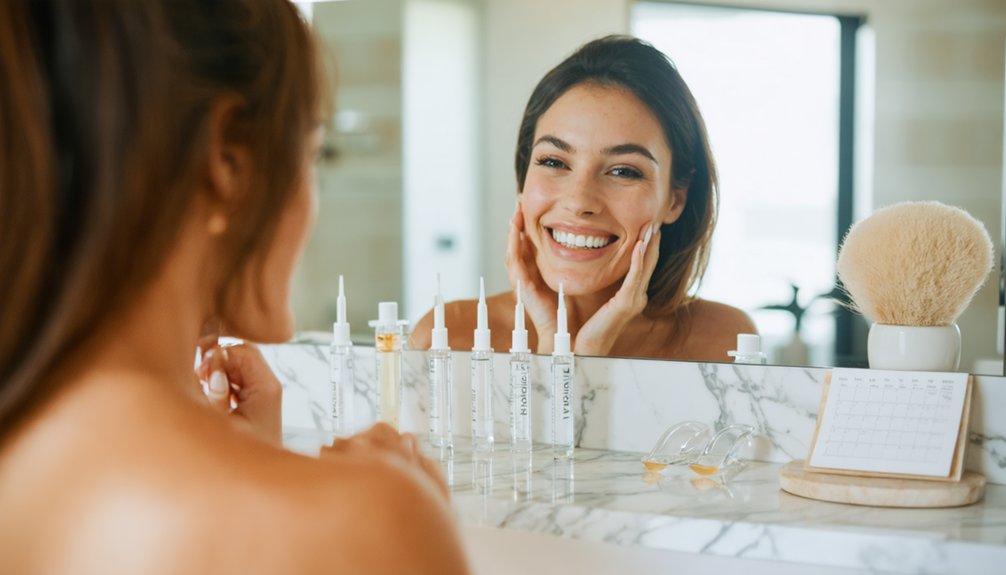
Even with consistent daily hygiene and careful dietary habits, your whitening results will gradually fade and require periodic touch-up treatments. Scheduling strategically keeps your dental aesthetics sharp and your oral health routine purposeful.
Schedule a touch-up when you notice:
- Visible yellowing returning along the central incisors or canine edges
- Six to twelve months have passed since your last professional or at-home whitening session
- Lifestyle shifts—increased coffee, tea, or wine consumption—have accelerated discoloration
- An upcoming event demands peak aesthetic results within a controlled timeframe
Custom trays with professional-grade gel offer the most precise maintenance method. Use them consistently within your dentist’s recommended cycle to sustain results without overexposing enamel to unnecessary treatment frequency.
What Professional Cleanings Do That Brushing Can’t
Touch-up treatments and daily brushing handle what’s visible and accessible—but they can’t fully substitute for what happens in the dental chair. Professional cleanings remove calcified tartar and subgingival plaque that your toothbrush physically can’t reach—deposits that dull color and compromise enamel protection over time.
Polishing tools lift embedded surface stains from enamel without the abrasion risks tied to overusing whitening toothpaste daily. One of the more persistent teeth whitening myths is that consistent brushing alone maintains professional-level results—it doesn’t.
Your hygienist also monitors for sensitivity, enamel wear, and product overuse that you mightn’t detect yourself. Scheduling cleanings twice yearly isn’t just routine maintenance; it’s a clinical checkpoint that keeps your whitening results accurate, your enamel intact, and your strategy calibrated.
Lifestyle Swaps That Make Your Whitening Results Last Longer

Professional treatments and cleanings create the foundation, but your daily habits determine how long the results actually hold. Small, deliberate swaps compound over time and protect against enamel erosion and premature discoloration.
- Swap dark drinks for lighter alternatives — or use a straw to minimize front-to-tooth contact with coffee, tea, and wine.
- Swap colored toothpaste and mouthwash during the 48-hour post-treatment window to prevent pigment absorption into vulnerable enamel.
- Swap tobacco for nothing — cigarettes and vaping products reverse whitening faster than nearly any dietary habit.
- Swap inconsistent brushing for a twice-daily routine — plaque buildup accelerates staining and can compromise dental bonding restorations adjacent to whitened teeth.
These aren’t dramatic changes. They’re calculated decisions that directly extend your results.
Frequently Asked Questions
Can Whitening Results Differ Between Natural Teeth and Dental Veneers?
Yes—Natural vs. Veneers react oppositely: your natural teeth whiten, but veneers don’t respond to bleaching agents. Color Compatibility becomes critical, as mismatched shades can make restorations appear noticeably different after each whitening session.
Is Teeth Whitening Safe for People With Sensitive Teeth or Gums?
Yes, you can whiten sensitive teeth, but you’ll need to manage tooth sensitivity and gum irritation carefully. Use lower-concentration formulas, shorter application times, and desensitizing agents to maintain control over discomfort while achieving effective results.
Does Teeth Whitening Work on Crowns, Bridges, or Bonded Teeth?
Whitening agents don’t affect crowns, bridges, or bonded teeth due to dental material compatibility limitations. You’ll need restoration color matching with your dentist to guarantee your restorations align with your newly whitened natural teeth.
At What Age Is It Appropriate to Start Whitening Your Teeth?
Most dentists recommend you wait until age 14–16, once permanent teeth fully erupt. These age considerations and timing tips matter—studies show enamel matures until 18, making earlier whitening potentially less effective and riskier.
Can Certain Medications Affect How Long Whitening Results Last?
Yes, certain medications can impact the longevity of results. Medication interactions with antihistamines, antipsychotics, or tetracycline may accelerate restaining or reduce whitening efficacy, so you’ll want to consult your dentist before beginning any whitening protocol.
References
- https://www.smilegrovecity.com/articles/how-to-keep-your-teeth-white-after-professional-teeth-whitening
- https://www.suttonpda.com/teeth-whitening-results/
- https://getyourdentist.com/blog/how-to-maintain-teeth-whitening-results/
- https://www.orchardhilldental.com/2025/09/24/how-to-maintain-teeth-whitening-treatment/
- https://www.mercadodentalstudio.com/blog/maintaining-whitening-results-long-term
- https://perfectwisdomteeth.com/how-to-keep-your-teeth-white-longer/
- https://www.drjuancarrillo.com/blog/how-to-retain-the-results-of-teeth-whitening