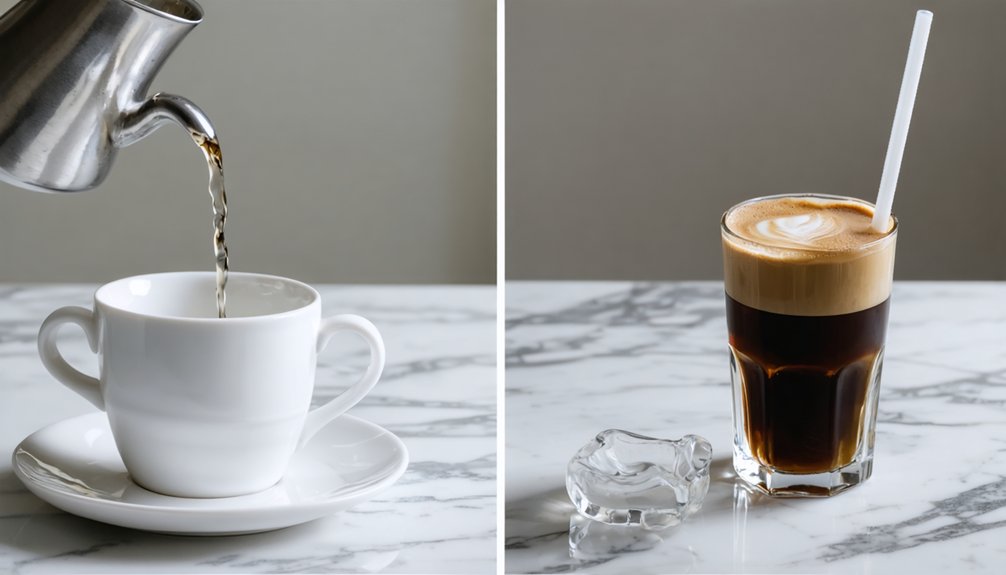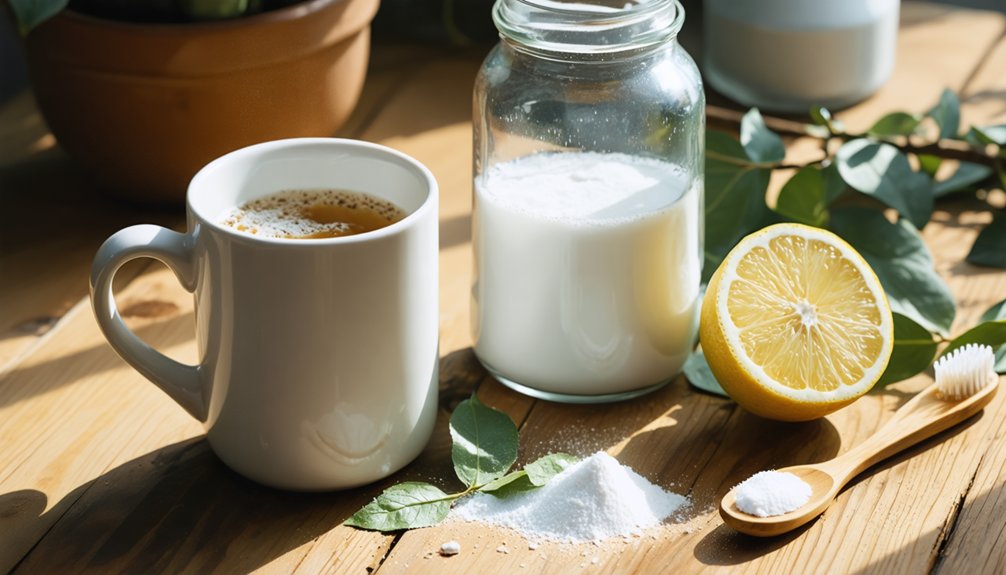
Tea stains your teeth because tannins bind to your enamel’s protein pellicle, pulling chromogens into microscopic pores with every sip. You can fight back by rinsing immediately with cold water after drinking, using a straw to limit contact, and brushing with baking soda paste two to three times weekly. Whitening toothpaste and hydrogen peroxide rinses tackle stubborn surface stains effectively. The methods ahead give you a complete, evidence-based strategy to restore and protect your smile.
Key Takeaways
- Rinse your mouth with cold water immediately after drinking tea to dilute tannins and prevent permanent pigment binding to enamel.
- Brush with a baking soda paste two to three times weekly to gently buff away surface tea stains without harsh chemicals.
- Use whitening toothpaste containing hydrogen peroxide or blue covarine to reduce surface discoloration when combined with consistent brushing habits.
- Drink tea through a straw to minimize direct contact with teeth, significantly reducing tannin exposure and subsequent staining.
- For persistent deep stains unresponsive to home remedies, consult a dental professional for thorough cleaning and safe stain removal.
Why Tea Stains Your Teeth in the First Place
Tea contains tannins—naturally occurring polyphenolic compounds that bind readily to the protein pellicle coating your tooth enamel. Understanding tea chemistry helps you intervene before staining becomes structural.
Tannins are astringent molecules that latch onto proteins and pigments, pulling chromogens—color-producing compounds—deep into your enamel’s microscopic pores. Darker teas, particularly black varieties, carry higher tannin and chromogen concentrations, accelerating visible discoloration.
Stain prevention starts with recognizing that repeated exposure compounds the effect. Each cup deposits another layer of pigment onto an already-compromised pellicle. Drinking through a straw, rinsing immediately with water, and maintaining consistent oral hygiene disrupts this accumulation cycle.
You don’t have to quit tea—you have to manage its contact with your enamel strategically.
Act Fast: What to Do Right After Drinking Tea
The moment you finish your last sip, your response time determines how much pigment binds permanently to your enamel. Tea brewing releases tannins that adhere quickly, so acting within minutes matters. Rinse your mouth immediately with cold water to dilute residual tannins before they settle. This single step meaningfully supports stain prevention without requiring additional products.
If you’re drinking tea regularly, consider rinsing after every session as a non-negotiable habit. Avoid brushing immediately after drinking, since enamel is temporarily softened by acidity and brushing can cause abrasion. Wait at least 30 minutes before brushing, then use a whitening toothpaste with mild polishing agents.
Consistency in these post-tea habits gives you measurable control over long-term discoloration.
Remove Tea Stains From Teeth With Baking Soda
Baking soda works as a mild abrasive that physically buffs surface stains from enamel without the harshness of commercial whitening agents.
For basic teeth whitening, wet your toothbrush, dip it lightly into baking soda, and brush for two minutes. You’ll notice the gritty texture lifting tannin deposits that tea leaves behind. Rinse thoroughly afterward.
Wet your toothbrush, dip it in baking soda, brush for two minutes, and rinse to lift tea stains.
Limit this method to two or three times per week. Overuse can gradually erode enamel, undermining the oral hygiene benefits you’re working toward.
If you wear braces or have dental restorations, consult your dentist before incorporating baking soda into your routine.
For best results, brush with baking soda shortly after drinking tea, when surface stains haven’t yet bonded deeply with enamel.
Consistency matters more than intensity here.
Does Whitening Toothpaste Actually Remove Tea Stains?
Whitening toothpastes can reduce tea stains, but their effectiveness depends on their active ingredients and how deeply tannins have bonded to your enamel. Most formulas rely on mild abrasives to polish surface discoloration, while others include hydrogen peroxide or blue covarine for deeper or optical whitening effects.
As a core oral hygiene practice, brushing twice daily with a whitening formula helps prevent tannin buildup before it sets. However, these products work primarily on extrinsic stains—they won’t reverse intrinsic discoloration.
For stronger results, combine whitening toothpaste with professional dental tips like regular hygienist cleanings and timed brushing after tea consumption. Check for the ADA Seal of Acceptance to confirm a product’s safety and efficacy claims before committing to long-term use.
Natural Remedies That Actually Whiten Tea-Stained Teeth
You can make a baking soda paste by mixing a small amount of water with baking soda and applying it directly to your teeth to help lift tea residue from enamel.
A diluted white vinegar rinse works as a mild acid wash that breaks down tannin buildup, though you should limit its use to avoid enamel erosion.
Both remedies offer low-cost, evidence-supported options for managing surface stains before they become harder to reverse.
Baking Soda Paste Benefits
Among natural remedies for tea-stained teeth, baking soda paste stands out for its mild abrasive and alkaline properties, which help lift surface discoloration without harsh chemicals. You can apply it consistently for effective stain prevention and visible brightening.
- Mix a small amount of baking soda with water to form a paste.
- Apply it directly to your teeth using a soft-bristled toothbrush.
- Brush gently for two minutes, focusing on stained surfaces.
- Rinse thoroughly with cold water afterward.
- Limit use to two or three times per week to protect enamel.
This controlled approach lets you manage tea-related discoloration proactively. Baking soda’s alkaline nature neutralizes acids while its texture buffs away surface buildup, giving you a clinically supported, chemical-free stain prevention strategy.
Vinegar Rinse Techniques
White vinegar’s mild acidity makes it a practical natural option for lifting tea-related tooth discoloration before it sets. Understanding tea stain chemistry helps you act strategically: tannins bond to enamel quickly, so timing your vinegar rinse shortly after consumption limits adhesion.
Dilute white vinegar with equal parts cold water before rinsing—undiluted acidity can erode enamel over time. Swish the solution for approximately 30 seconds, then rinse thoroughly with plain water.
Integrating this step into your oral hygiene routines two to three times weekly provides consistent preventative benefit without overexposure. Avoid brown malt vinegar entirely, as it carries pigmentation that worsens discoloration rather than reducing it.
Track your results across two weeks to assess whether the method suits your enamel sensitivity.
Natural Whitening Remedies
Beyond vinegar rinses, several natural remedies offer measurable whitening action against tea-stained enamel. You can integrate these into your routine alongside mindful tea brewing and stain prevention habits.
- Baking soda paste: Apply a small amount to your toothbrush twice weekly; its mild abrasive action lifts surface pigment.
- Activated charcoal: Use sparingly—no more than once weekly—to adsorb tannin deposits without excessive enamel wear.
- Oil pulling: Swish coconut oil for 10–15 minutes before brushing to reduce chromogen adhesion.
- Strawberry and baking soda mix: Malic acid in strawberries chemically breaks down surface stains.
- Hydrogen peroxide rinse (3%): Dilute with equal parts water and rinse for 60 seconds to oxidize discoloration.
Track your results monthly to assess effectiveness objectively.
Try Hydrogen Peroxide for Stubborn Tea Stains
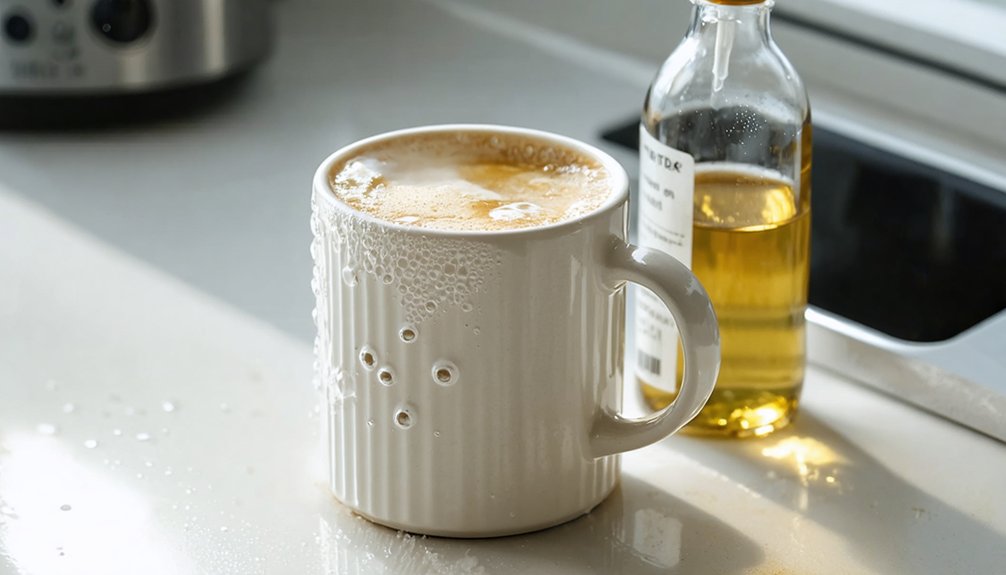
When standard detergents and soaking methods don’t fully lift a stubborn tea stain, hydrogen peroxide can serve as an effective oxidizing treatment. It works by breaking down the chromogenic compounds in tea that bond to fabric fibers.
Apply a 3% hydrogen peroxide solution directly to the stain, allow it to sit for several minutes, then rinse thoroughly with cold water.
You should test hydrogen peroxide on an inconspicuous area first, since it can lighten certain fabrics. Avoid using it on silk, wool, or deeply dyed materials without confirming colorfastness.
For maximum stain removal efficacy, combine hydrogen peroxide treatment with a follow-up wash at approximately 30°C.
Acting promptly and methodically gives you the best outcome before the stain sets permanently into the fibers.
When Home Methods Aren’t Enough for Tea Stains
Even thorough home treatments—hydrogen peroxide, oxygen bleach, repeated soaking cycles—sometimes fail to fully lift a tea stain, particularly if it’s dried, set deep into fibers, or on a delicate fabric like silk or wool.
When that happens, escalating to specialty products or professionals is the evidence-based next step.
- Use stain removers specifically labeled safe for silk or wool
- Apply commercial oxidizing agents following precise dilution instructions
- Consult a dry cleaner for set-in stains on delicate or structured garments
- Incorporate preventative mouth rinses and dental flossing into your routine to reduce oral tea staining before it transfers to fabric
- Follow product timing guidelines exactly—guessing undermines results
Controlling outcomes means recognizing when home methods have reached their limit and acting decisively with targeted, appropriate interventions.
Stop Tea Stains Before They Set on Your Teeth

Preventing tea stains on your teeth follows the same core logic as treating fabric: act fast, limit absorption, and don’t let residue set. Tea stain prevention starts the moment you finish your cup. Rinse your mouth with water immediately after drinking to dilute tannins before they bind to enamel. Don’t wait hours before brushing; the longer residue contacts your teeth, the deeper it penetrates.
Tooth enamel protection also means using a straw when possible, reducing direct surface contact. Drinking tea in sittings rather than sipping continuously throughout the day minimizes repeated exposure cycles. If you’re drinking black tea regularly, consider rinsing with water between sips.
These aren’t complex interventions—they’re deliberate habits that give you measurable control over discoloration before it compounds.
Frequently Asked Questions
Can Tea Stains on Teeth Become Permanent if Left Untreated?
Yes, if you don’t address dental stain causes early, tea stains can penetrate enamel and become stubborn. You’ll need professional stain removal techniques to reverse deep discoloration, so act promptly to maintain control over your smile.
Does the Type of Tea Affect How Badly Teeth Stain?
Not all tea types are created equal—stain intensity varies considerably. Black tea stains your teeth most aggressively due to high tannins. Green and herbal teas you drink produce noticeably lighter staining, giving you more control over discoloration.
Are Professional Whitening Treatments Safe for Sensitive Teeth?
If you have teeth sensitivity, professional whitening safety depends on your dentist’s evaluation. You can manage risks by using desensitizing agents before treatment, choosing lower-concentration formulas, and consulting your dentist to control outcomes effectively.
How Often Should You Whiten Teeth Without Causing Damage?
Want lasting results without the risks? You shouldn’t whiten more than once every three months. Maintaining this whitening frequency guarantees damage prevention, protecting enamel integrity. Always follow your dentist’s guidance to keep sensitivity and erosion under control.
Can Diet Changes Help Prevent Tea Stains on Teeth?
Yes, diet modifications support stain prevention. You’ll reduce tea stains by limiting frequency, drinking through a straw, rinsing with water afterward, and avoiding acidic foods that soften enamel, making it more vulnerable to discoloration.
References
- https://www.persil.com/uk/laundry/laundry-tips/stains/how-to-remove-tea-stains.html
- https://www.thespruce.com/how-to-remove-tea-stains-1901022
- https://site.extension.uga.edu/textiles/care/stain-removal/remove-stains-from-coffee-tea/
- https://www.goodhousekeeping.com/uk/house-and-home/household-advice/a686566/the-secret-to-getting-rid-of-tea-stains/
- https://www.stainout.org/stain/tea
- https://blog.englishteastore.com/2012/09/11/removing-unwanted-tea-stains/
- https://www.wikihow.com/Remove-Tea-Stains
- https://the-rugs.com/blogs/how-to-guides-for-home-owners/how-to-remove-tea-stains-from-carpet
- https://liftstain.com/stains/tea/
- https://cooking.stackexchange.com/questions/120174/how-to-clean-tea-stains-from-a-mug-with-steel-interior