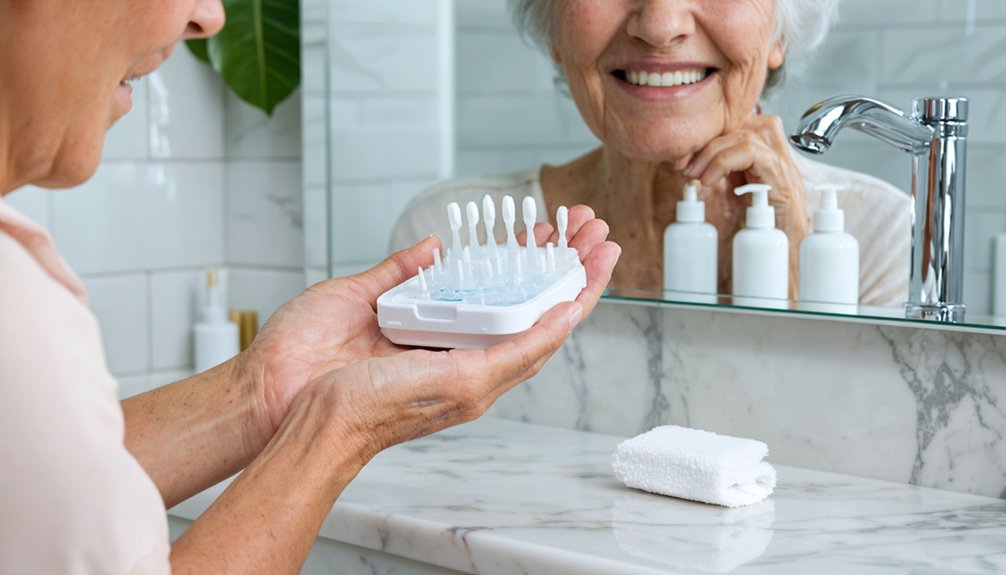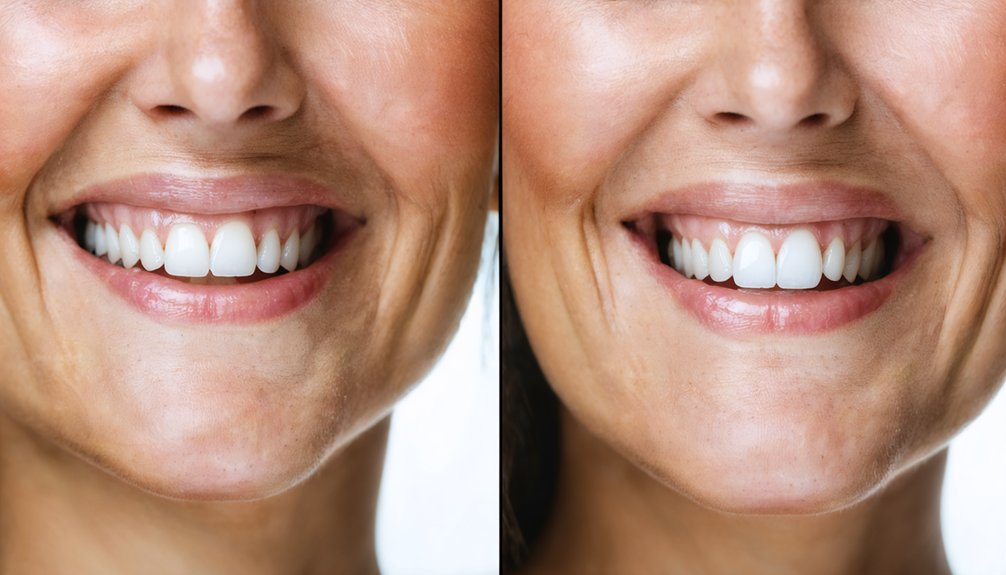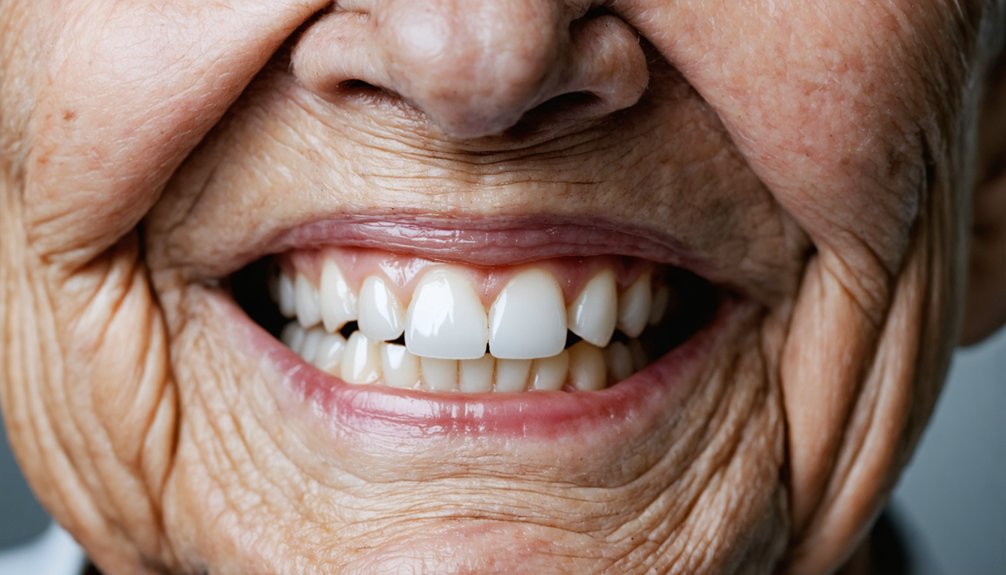
Whitening trays work for aging teeth because they hold peroxide gel in direct, continuous contact with your enamel long enough to penetrate deeply. As you age, stains embed further into porous enamel and dentin darkens naturally—surface methods simply can’t reach that far. Peroxide diffuses through enamel and oxidizes those darkened chromogen molecules at the source. Custom trays make this process safer and more precise, and there’s far more to understand about getting it right.
Key Takeaways
- Custom trays hold peroxide gel in continuous contact with teeth, allowing it to penetrate deeply through porous, aged enamel.
- Peroxide oxidizes darkened chromogen molecules embedded in aging enamel, chemically eliminating both extrinsic and intrinsic stains.
- Aged enamel’s increased porosity enhances gel absorption, allowing whitening agents to reach the dentin layer effectively.
- Custom-fitted trays distribute gel evenly across tooth contours, preventing gaps that compromise results and minimizing gum irritation.
- Lower-concentration peroxide gels used in dentist-supervised trays protect thinning enamel while still targeting deep dentin discoloration.
Why Aging Teeth Stain Differently Than Younger Ones
As you age, your teeth stain more deeply and resist whitening more stubbornly than they did in your younger years—and there’s a clear biological reason for that.
Decades of coffee, tea, red wine, and tobacco exposure embed chromogenic molecules deeper into increasingly porous enamel. Simultaneously, your dentin thickens and darkens naturally, creating intrinsic yellow and brown tones that surface-level stain prevention techniques can’t touch.
These aging discoloration causes operate on two fronts—extrinsic buildup and intrinsic structural change—making the problem compoundingly harder to reverse.
Unlike younger teeth with denser enamel, your aging enamel’s porosity allows stains to migrate toward the dentin layer. Understanding this mechanism gives you the strategic clarity to pursue treatments that actually address the root of the discoloration rather than just its surface appearance.
How Whitening Trays Actually Reach Deep Stains
Knowing why aging teeth stain so deeply points directly to why whitening trays work where other methods fall short. Your enamel becomes more porous with age, which actually works in your favor during treatment.
Custom trays hold peroxide gel in continuous contact with every tooth surface, allowing it to diffuse through enamel and reach the dentin layer where most aging discoloration lives.
Surface-level stain removal methods like whitening toothpaste can’t penetrate that deeply. Trays can. The peroxide oxidizes darkened chromogen molecules embedded in the dentin, breaking them apart at the source.
Maintaining enamel health throughout this process matters, which is why lower-concentration gels under dental supervision protect your structure while still delivering results.
You’re not masking discoloration—you’re chemically eliminating it from within.
Does Enamel Porosity Help or Hurt Whitening Results?
Enamel porosity cuts both ways, and understanding which direction it works in your favor changes how you approach treatment.
As the aging process thins enamel, increased porosity effects actually improve gel absorption, letting peroxide reach deeper chromogens faster. That’s a measurable advantage for stain removal when stain duration spans decades.
However, thinner enamel thickness also means sensitivity rises, requiring you to control treatment frequency carefully to avoid overexposure.
This is where tray design becomes critical—custom-fitted trays regulate exactly how much gel contacts each surface, preventing irritation while maximizing whitening effectiveness.
You’re not fighting your enamel’s porosity; you’re leveraging it strategically.
With the right protocol, aged enamel’s structural changes become an asset rather than a liability in achieving significant, lasting results.
Why Dentin Darkening Is the Real Problem in Aging Teeth
While enamel porosity determines how well whitening gel reaches its target, dentin darkening is what’s actually causing the discoloration you’re trying to reverse.
Aging factors like dentin thickening, lifestyle impacts from coffee and tobacco, and cumulative stain types embedded over decades make intrinsic discoloration far more resistant than surface stains. Enamel changes simply expose how deep the real problem runs.
Key reasons dentin darkening controls your whitening effectiveness:
Dentin darkening is the real force controlling how well your whitening treatment works.
- Dentin structure naturally thickens and yellows as you age, shifting your tooth’s core color.
- Intrinsic stain types resist surface-level treatment without peroxide penetration.
- Oral health decline accelerates dentin darkening when left unmanaged.
- Treatment options must target the dentin layer directly to produce meaningful, lasting shade changes.
Controlling this requires precise, consistent tray use.
Are Whitening Trays Safe for Sensitive Aging Teeth?
If you’re concerned about sensitivity, dentist-supervised take-home trays use lower-strength peroxide gels that minimize discomfort while still penetrating aging enamel effectively.
Custom-fitted trays distribute the gel evenly across your teeth, preventing overexposure that could irritate receding or sensitive gum tissue.
You can further manage sensitivity by applying desensitizing gel before or after each whitening session, keeping your treatment both safe and effective.
Managing Sensitivity With Gels
Aging teeth present unique sensitivity challenges, but whitening trays remain a safe and effective option when you use the right gel formulation and protocol.
Proper sensitivity management starts with selecting lower-concentration peroxide gels that penetrate enamel gradually without overwhelming exposed dentin. Strategic gel application reduces discomfort while still delivering measurable whitening results.
- Choose 10–16% carbamide peroxide formulas designed specifically for sensitive aging enamel
- Apply desensitizing potassium nitrate gel 30 minutes before each whitening session
- Limit tray wear to 30–60 minute intervals rather than extended overnight use initially
- Use fluoride gel immediately after whitening to remineralize and calm irritated enamel
You control the pace of your treatment, adjusting wear time and gel strength to balance comfort with consistent, visible results.
Custom Trays Prevent Irritation
Custom-fitted trays eliminate the uneven gel distribution that causes gum irritation and enamel overexposure in aging teeth. When trays conform precisely to your dental anatomy, the peroxide gel stays where it belongs—against the tooth surface—rather than pooling against receding gum tissue. This custom tray comfort directly reduces chemical burns and sensitivity that generic trays routinely cause.
Irritation prevention depends on precise fit. Aging teeth often feature irregular recession patterns and thinning enamel that standard trays can’t accommodate. Your dentist’s custom molds account for these variations, ensuring controlled gel contact across every surface.
You’re not gambling with overexposure; you’re directing treatment with accuracy. This precision lets you whiten consistently without interrupting protocols due to preventable discomfort, keeping your results on schedule and your soft tissue protected.
Lower Strength Ensures Safety
Because aging teeth feature thinner enamel and receding gums, dentist-supervised trays use lower-strength peroxide gels that deliver effective whitening without triggering the sensitivity that high-concentration formulas cause.
Lower concentrations applied consistently still achieve strong whitening effectiveness by working gradually through aging enamel without compromising its structural integrity.
You maintain control over your results while protecting vulnerable tissue:
- Controlled gel strength minimizes nerve irritation in teeth with thinning enamel
- Extended wear protocols compensate for lower concentration by maximizing contact time
- Custom tray fit prevents gel from pooling against receding gum margins
- Graduated treatment schedules allow aging enamel to respond without inflammation or pain
This precision-driven approach prioritizes both safety and whitening effectiveness, giving you measurable results without sacrificing the long-term health of your aging enamel.
Custom Trays vs. OTC Trays for Older Adults
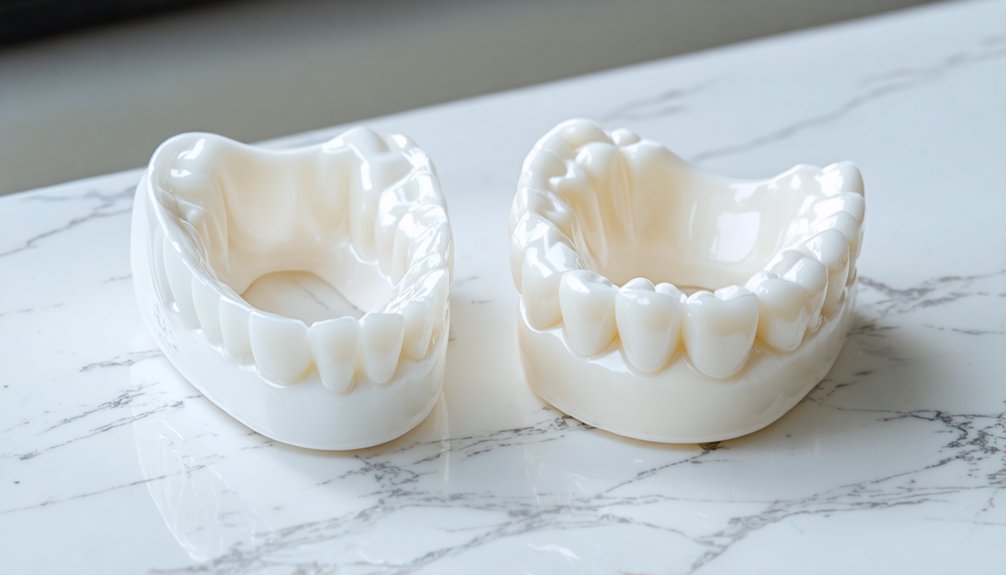
When you choose custom-fitted trays over OTC options, you’re getting a precise fit that delivers whitening gel evenly across all tooth surfaces while protecting receding gum tissue from chemical irritation.
OTC trays use generic sizing that allows gel to pool unevenly, increasing the risk of sensitivity and gum exposure—particularly problematic for aging enamel that’s already thinner and more vulnerable.
Your dentist’s custom trays also use controlled-strength peroxide formulations specifically calibrated for older adults, reducing discomfort while still targeting the deep intrinsic stains that decades of exposure have embedded into your dentin.
Custom Fit Benefits
For older adults managing tooth whitening, the choice between custom trays and over-the-counter options carries real clinical consequences.
Custom fit trays deliver precise gel placement against your specific tooth contours, eliminating gaps that compromise results and reduce tray comfort.
Custom trays give you direct control over your whitening outcomes through:
- Targeted gel contact — covers every surface without pooling or gaps
- Reduced gum exposure — minimizes peroxide contact with receding or sensitive tissue
- Consistent pressure distribution — guarantees uniform enamel penetration across aging dentition
- Predictable dosing — controls gel volume precisely, preventing overexposure on thinning enamel
OTC trays can’t replicate this precision.
When your enamel is thinner and your gums have receded, poorly fitted trays introduce unnecessary risk and deliver inconsistent results you can’t control.
OTC Tray Limitations
Over-the-counter trays undermine exactly what custom fitting protects. Generic trays don’t conform to your specific arch shape, creating uneven gel contact across tooth surfaces.
For aging teeth with gum recession and enamel thinning, that inconsistency matters greatly in the effectiveness comparison between OTC and professional options.
Over the counter limitations become especially problematic because ill-fitting trays allow gel to pool against gum tissue, increasing irritation while leaving stained surfaces undertreated.
You’re applying a whitening agent without controlling where it actually goes.
Additionally, OTC gels use lower peroxide concentrations that can’t penetrate the deeper dentin discoloration aging teeth develop.
You end up spending weeks on a protocol that delivers surface-level results at best, without addressing the intrinsic staining that’s actually driving your discoloration.
Sensitivity And Safety
Sensitivity becomes a defining concern once you’re managing aging teeth with thinning enamel and receding gums. Custom trays give you precision that OTC options simply can’t match—delivering controlled, lower-strength gels through sensitivity management protocols designed for compromised tooth structure.
- Even gel distribution prevents overexposure on vulnerable gum margins
- Lower peroxide concentrations reduce nerve irritation without sacrificing penetration depth
- Custom fit eliminates pooling that triggers tissue inflammation
- Dentist-supervised safety protocols confirm sufficient enamel and healthy gums before treatment begins
OTC trays skip these safeguards entirely, placing ill-fitting gel against already-stressed tissue. You’re not just choosing comfort—you’re controlling risk.
Professional custom trays let you whiten effectively while protecting the structural integrity your aging teeth still have.
How Long Do Whitening Trays Take on Aging Stains?
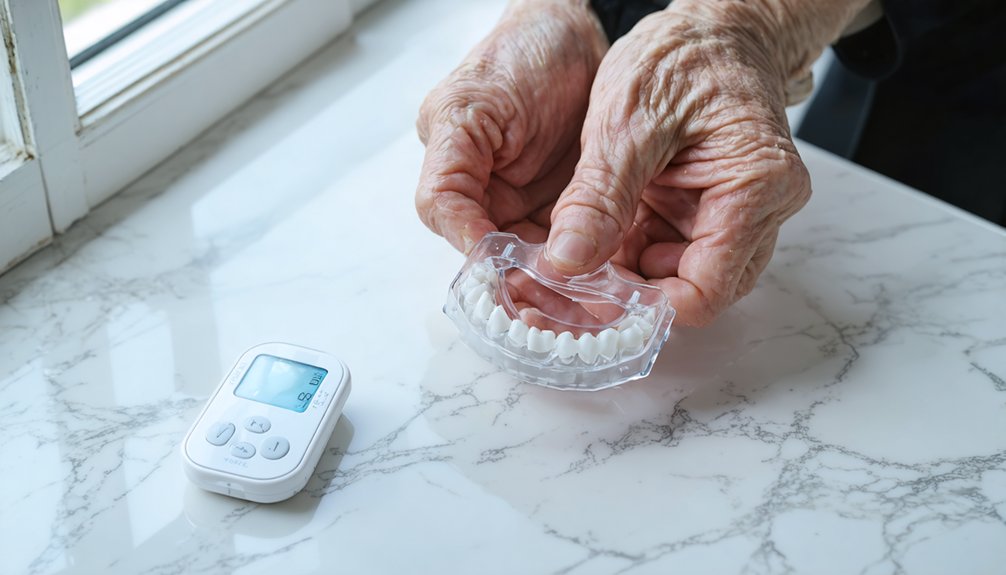
How long whitening trays take on aging stains depends largely on the depth of discoloration and your treatment consistency. Most patients achieve visible results within 2–3 days, but full whitening duration for deep dentin stains typically runs 3–4 weeks.
You’ll likely see 2–6 shades of improvement over 10–14 days with professional-grade gels used consistently.
Older adults in their 60s and 70s often require extended protocols because intrinsic staining penetrates deeper dentin layers over decades.
Overnight tray use maximizes gel contact time, accelerating oxidation of stubborn chromogens. Skipping sessions resets your progress, so treatment consistency is non-negotiable if you want measurable results.
Commit to the full protocol, and you’ll gain the control over discoloration that shorter, inconsistent treatments simply can’t deliver.
How Many Shades Can Aging Teeth Actually Lighten?
Realistically, aging teeth can lighten 2–6 shades with professional-grade whitening trays used consistently over 10–14 days. Your actual shade improvement depends heavily on aging factors like dentin darkening, enamel porosity, and decades of stain accumulation.
Deeper intrinsic staining may limit results, but consistent tray use maximizes your outcome.
- Extrinsic stains from coffee, tea, and tobacco typically respond fastest, showing visible changes within 2–3 days.
- Intrinsic dentin discoloration requires the full 4-week protocol for meaningful shade improvement.
- Enamel thickness directly influences how deeply peroxide penetrates and oxidizes chromogenic molecules.
- Aging factors like receding gums and thinning enamel may require lower-concentration gels, slightly moderating final results.
You control the outcome by maintaining consistency and following your dentist’s prescribed protocol precisely.
How To Keep Whitening Results From Fading Quickly
Once whitening trays deliver your results, protecting them requires deliberate daily habits that target the same stain pathways your treatment just cleared.
Diet impact is immediate—coffee, tea, red wine, and tobacco reintroduce chromogenic molecules into freshly opened enamel pores within hours. Avoid these substances for at least 48 hours post-treatment, then minimize ongoing exposure using a straw for beverages and rinsing after staining foods.
Chromogenic molecules from coffee, tea, and wine penetrate freshly opened enamel pores within hours of whitening treatment.
Schedule touch-up tray sessions every one to two months to oxidize new stain accumulation before it embeds into the dentin layer.
Brush twice daily to disrupt extrinsic deposits before they mineralize. Following these whitening maintenance tips systematically extends your results from months to over a year, keeping dentin discoloration controlled rather than allowing it to progressively rebuild.
Frequently Asked Questions
Can Whitening Trays Work if You Have Dental Crowns or Veneers?
Whitening trays won’t change your crowns or veneers—they don’t respond to peroxide. For crown compatibility and consistent whitening efficacy, you’ll need to discuss replacement timing with your dentist to achieve uniform, controlled results across all surfaces.
How Does Smoking History Affect How Long Whitening Results Last?
Your smoking history shortens whitening results considerably. Nicotine and tar accelerate stain removal challenges by re-embedding chromogens into porous enamel faster, so you’ll need touch-up treatments every 4–6 weeks to maintain brightness effectively.
Should Aging Adults Consult a Doctor Before Starting Whitening Treatments?
Before you release modern whitening treatments, consult your dentist first. They’ll assess your teeth sensitivity and oral health, ensuring your enamel and gums can handle peroxide gels safely, giving you full control over your results.
Can Whitening Trays Worsen Receding Gums in Older Adults?
Whitening trays won’t worsen receding gums if you use dentist-supervised, lower-strength gels. Custom-fitted trays minimize gum sensitivity by controlling gel exposure. Maintaining strong oral hygiene habits guarantees you’re protecting vulnerable gum tissue throughout your whitening protocol.
Do Certain Medications Taken by Seniors Interfere With Whitening Gel Effectiveness?
Some medication types you take can reduce whitening gel effectiveness while increasing dental sensitivity. Blood pressure drugs and antihistamines cause dry mouth, limiting gel activation—so you should always consult your dentist before beginning treatment.
References
- https://www.kirklanddentalexcellence.com/blog/cosmetic-dentist/teeth-whitening-trays-work/
- https://toothfairyapp.co.uk/knowledge/teeth-whitening-trays/
- https://www.padmel.com/archives/49775
- https://www.senovadental.com/wordpress/everything-you-need-to-know-about-teeth-whitening-trays/
- https://ryanmccalldds.com/blog/a-comprehensive-guide-to-take-home-dental-whitening-trays
- https://crest.com/en-us/oral-care-tips/teeth-whitening/teeth-whitening-trays-how-they-work-alternatives
- https://www.animated-teeth.com/teeth_whitening/t1_teeth_bleaching.htm
- https://drprashanthdentist.com/do-teeth-whitening-trays-from-dentist-work/
- https://kososkidental.com/teeth-whitening-at-every-age-what-to-know/
- https://www.trysnow.com/blogs/news/teeth-whitening-for-seniors-safer-brighter-smiles-after-60