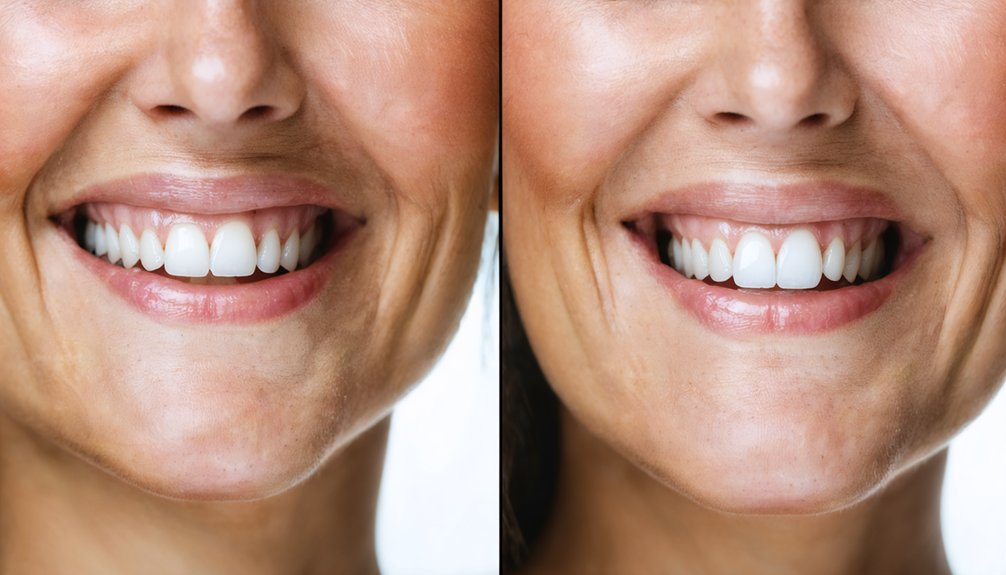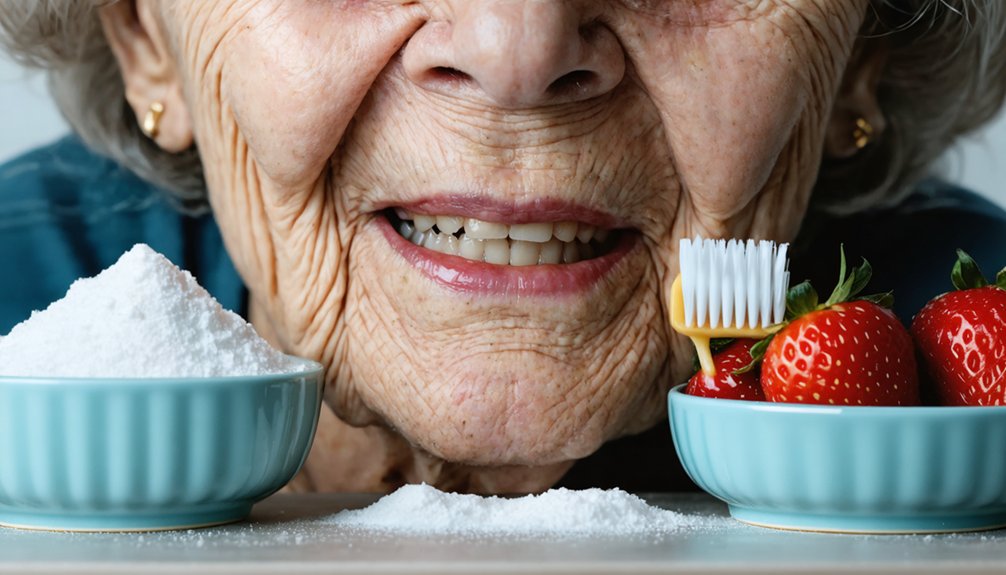
Aging thins your enamel, exposing the darker dentin underneath while years of coffee, tea, tobacco, and acidic foods layer pigments deep into your tooth structure. Your stains are either extrinsic, forming on enamel’s surface, or intrinsic, embedded within the tooth itself. You can address surface stains with baking soda, hydrogen peroxide rinses, and consistent brushing, while intrinsic discoloration often needs professional whitening, laser treatments, or veneers. There’s much more to uncover about protecting your smile long-term.
Key Takeaways
- Aging thins enamel, exposing darker dentin underneath, while years of consuming pigmented foods and drinks accumulate stubborn surface stains.
- Extrinsic stains from coffee, tea, and tobacco respond well to consistent brushing, whitening toothpaste, and hydrogen peroxide rinses.
- Intrinsic stains embedded within tooth structure require professional treatments like laser whitening, veneers, or composite bonding.
- Brushing twice daily with a soft-bristled brush and flossing once daily prevents plaque hardening into tartar, which worsens staining.
- Rinsing with water immediately after consuming pigmented beverages significantly reduces chromogen buildup and slows age-related discoloration.
Why Do Teeth Turn Yellow and Stained With Age?
As you age, your teeth naturally yellow because the outer enamel layer thins, exposing the darker dentin beneath. This structural shift is one of the primary tooth discoloration causes you’ll encounter over time.
Beyond aging effects on enamel, your daily habits accelerate discoloration considerably. Pigmented foods and drinks like coffee, tea, and red wine bind directly to your enamel, leaving persistent surface stains.
Tobacco use compounds this by embedding smoke particles deep into tooth structure. Acidic substances from citrus, soda, and wine erode enamel faster, making your teeth increasingly vulnerable to staining.
Certain medications, particularly tetracycline used during childhood, cause deep intrinsic staining that no surface treatment can reverse.
Chronic illness and liver disease can also alter both enamel and dentin coloration internally.
Are Your Teeth Stains on the Surface or Coming From Within?
Understanding what’s driving your tooth discoloration determines which treatments will actually work.
Extrinsic staining develops on your enamel’s surface from lifestyle choices like coffee, tobacco, and wine. Strong dental hygiene practices and stain prevention strategies effectively address these surface deposits.
Intrinsic staining originates within your tooth’s structure, where age factors like dentin yellowing and enamel erosion create discoloration no amount of brushing can reverse. Trauma, tetracycline use, and chronic illness also trigger internal staining.
These cases require cosmetic dentistry interventions like veneers, bonding, or professional bleaching.
Accurately identifying your stain type prevents wasted effort. Surface stains respond to consistent hygiene and whitening products. Internal discoloration demands clinical treatment.
Knowing the difference puts you in control of selecting the most targeted, effective solution.
What Foods and Habits Stain Aging Teeth Most?
Your diet and daily habits directly determine how quickly aging teeth accumulate stains. Coffee, tea, and red wine are the most aggressive staining beverages, as their pigments bind tightly to enamel surfaces.
Your daily habits determine how fast teeth stain — coffee, tea, and red wine are the worst offenders.
Grape juice, berries, tomatoes, and dark fruits compound this effect considerably. Tobacco use — whether smoked or chewed — deposits persistent yellow and brown residues that resist routine brushing.
Dietary acids from citrus, soda, and wine accelerate staining by eroding enamel, creating a rougher surface that traps pigments more efficiently.
Once enamel weakens, discoloration penetrates deeper and becomes harder to reverse. You can reduce accumulation by rinsing with water immediately after consuming staining beverages, waiting one hour before brushing following acid exposure, and eliminating tobacco entirely.
Controlling these inputs directly controls your outcome.
How Do You Remove Aging Teeth Stains at Home?
You can reduce aging teeth stains at home by brushing twice weekly with a baking soda and salt mixture, which mechanically lifts surface pigments from enamel.
Rinsing with a low-concentration hydrogen peroxide solution gradually lightens discoloration over consistent use.
Switching to an electric toothbrush enhances plaque removal between dental visits, reducing the pigment buildup that deepens stains over time.
Baking Soda Brushing Method
Baking soda mixed with salt offers a straightforward, low-cost method for removing surface stains at home.
You’ll combine a small amount of baking soda with a pinch of salt, apply the mixture to your toothbrush, and brush gently for two minutes. Limit this method to twice weekly, as overuse can gradually erode enamel.
Baking soda’s mild abrasiveness physically disrupts stain bonds on tooth enamel, making it effective for extrinsic stain removal without harsh chemicals.
Its alkaline pH also neutralizes acids that weaken enamel between sessions. You won’t achieve results comparable to professional bleaching, but consistent application produces measurable lightening over several weeks.
If sensitivity develops, reduce frequency and consult your dentist before continuing.
Hydrogen Peroxide Rinses
Hydrogen peroxide rinses at low concentration offer another accessible home option for gradually lightening aging teeth stains. You can dilute a 3% hydrogen peroxide solution with equal parts water, then rinse for 60 seconds before spitting thoroughly.
The hydrogen benefits stem from its oxidizing properties, which break down pigmented compounds embedded in enamel without aggressive abrasion.
Regarding peroxide safety, you shouldn’t exceed recommended concentrations or frequency, as overuse risks temporary sensitivity and gum irritation. Clinical evidence supports concentrations at or below 1.5% for safe, sustained use.
You’ll notice gradual improvement over several weeks rather than immediate results. Avoid swallowing the rinse, and discontinue use if sensitivity develops, consulting your dentist to adjust your whitening protocol appropriately.
Electric Toothbrush Benefits
Electric toothbrushes provide deeper cleaning between dental visits, making them a practical tool for managing aging teeth stains at home. Their electric toothbrush features enhance cleaning efficiency beyond what manual brushing achieves, giving you greater control over surface discoloration.
Key advantages include:
- Oscillating or sonic technology breaks down plaque and pigment deposits more effectively than manual strokes.
- Built-in timers guarantee you brush the full recommended two minutes per session.
- Pressure sensors prevent enamel erosion by alerting you when you’re brushing too hard.
Using an electric toothbrush consistently twice daily removes stain-trapping plaque before it hardens into tartar.
Pair it with a whitening toothpaste containing baking soda to maximize surface stain removal.
You’ll maintain cleaner enamel and slow the progression of visible discoloration between professional cleanings.
What Professional Treatments Remove Stubborn Teeth Stains?
When stubborn teeth stains resist over-the-counter solutions, professional dental treatments offer more reliable and lasting results.
Professional whitening performed by your dentist delivers stronger bleaching agents than retail products, targeting both intrinsic and extrinsic discoloration effectively.
Cosmetic dentistry also provides laser treatments that activate whitening compounds, accelerating stain removal in a single session.
For severe or deeply embedded stains, dental veneers offer a durable cosmetic solution by concealing discoloration beneath a porcelain surface.
White composite bonding replaces darkened fillings, restoring a uniform appearance.
Your dentist can also recommend stain prevention protocols following treatment, including professional-grade rinses and customized take-home trays.
Scheduling checkups every six months guarantees your dentist monitors stain recurrence and intervenes before discoloration becomes resistant to correction.
What Daily Habits Keep Aging Teeth From Discoloring?
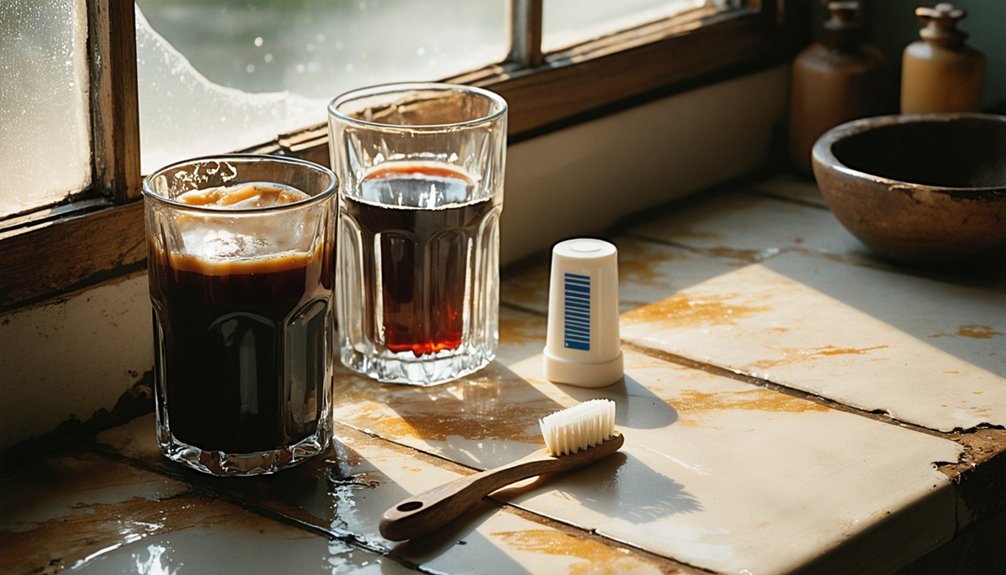
Brushing your teeth twice daily with a soft-bristled brush removes plaque before it traps surface pigments and hardens into tartar.
After consuming coffee, tea, or red wine, you should rinse your mouth with water immediately to wash away residual pigments before they bind to enamel.
Flossing daily clears food particles from interdental spaces, preventing the buildup that accelerates discoloration over time.
Daily Brushing Prevents Stains
Daily habits form your strongest defense against the discoloration that accumulates as teeth age. Consistent brushing techniques and plaque control determine whether pigments bind permanently to enamel or get cleared before damage sets in.
Apply these evidence-backed practices:
- Brush twice daily using a soft-bristled brush, applying gentle circular strokes to dislodge plaque before it traps surface pigments.
- Wait one hour after consuming acidic foods or beverages before brushing, protecting temporarily softened enamel from abrasion.
- Use whitening toothpaste containing baking soda to address mild surface stains during routine cleaning sessions.
You control the accumulation rate. Skipping brushing sessions allows plaque to harden into tartar, creating surfaces where staining compounds from coffee, tea, and tobacco adhere more aggressively and resist removal.
Rinsing After Staining Beverages
Rinsing your mouth with water immediately after drinking coffee, tea, red wine, or other pigmented beverages washes away residual compounds before they bind to enamel.
Effective rinsing techniques involve swishing water vigorously for 30 seconds, ensuring contact across all tooth surfaces. This mechanical action dilutes chromogens and acidic residues simultaneously, reducing both staining and enamel erosion risk.
You shouldn’t brush immediately after consuming staining beverages, since acidic exposure temporarily softens enamel, making it vulnerable to abrasion. Rinsing first neutralizes the oral environment, then waiting one hour before brushing protects compromised enamel structure.
Incorporating consistent rinsing techniques into your daily routine gives you measurable control over extrinsic discoloration, minimizing pigment accumulation between professional cleanings without requiring additional products or interventions.
Flossing Removes Food Particles
Flossing once daily removes food particles and prevents tartar formation between teeth, targeting the interproximal spaces your toothbrush can’t effectively reach. Mastering proper flossing techniques maximizes the flossing benefits you gain against stain-causing plaque accumulation.
Key flossing benefits for stain prevention:
- Disrupts plaque colonies that trap pigments from coffee, tea, and wine before they calcify.
- Reduces tartar buildup along gumlines where surface discoloration accelerates most rapidly.
- Clears residual food debris that feeds stain-producing bacteria between contact points.
Use 18 inches of floss, wrapping it firmly around each finger for controlled tension. Curve the floss into a C-shape against each tooth, sliding it beneath the gumline.
Consistent daily execution of correct flossing techniques gives you measurable control over interproximal staining progression.
Frequently Asked Questions
Can Certain Medications Cause Permanent Teeth Staining That Cannot Be Reversed?
Yes, certain medication types like tetracycline can cause permanent intrinsic staining in your developing teeth. Stain permanence makes reversal impossible, but you can manage discoloration effectively through veneers, bonding, or professional dental interventions for improved aesthetics.
Does Teeth Whitening Work Differently on Crowns Versus Natural Teeth?
Yes, teeth whitening doesn’t affect crowns like natural teeth. Whitening agents can’t penetrate crown materials, so you’ll notice uneven results. To maintain crowns longevity and whitening effectiveness, consult your dentist before treatment to match shades appropriately.
Are Teeth Stains From Aging Covered by Dental Insurance Plans?
Most teeth insurance plans don’t cover aging coverage for cosmetic staining. You’ll typically find whitening, veneers, and bleaching classified as elective procedures. Review your policy carefully and consult your provider to identify any applicable restorative exceptions.
Can Drinking Through a Straw Significantly Reduce Teeth Staining Over Time?
Like a medieval moat shielding a fortress, straw benefits your teeth through stain prevention — you’ll bypass direct contact with pigmented beverages, reducing enamel exposure markedly, though it doesn’t eliminate staining entirely without consistent oral hygiene practices.
Do Genetics Play a Role in How Quickly Aging Teeth Discolor?
Yes, genetic factors influence how quickly your teeth discolor. Your hereditary traits determine enamel thickness and dentin density, meaning you’ve inherited a baseline vulnerability to staining that lifestyle choices can either accelerate or help you manage effectively.
References
- https://crest.com/en-us/oral-care-tips/teeth-stains/teeth-stains-causes-types-how-remove-teeth-stains
- https://www.cied.net/blog/why-do-teeth-lose-their-whiteness-as-we-age
- https://yourcommunitydental.com/chemistry-behind-teeth-staining/
- https://www.tlnfamilydental.com/post/why-do-teeth-become-discolored-with-age
- https://hovedentalclinic.co.uk/blog/stained-teeth/
- https://www.healthline.com/health/tooth-discoloration
- https://drewfamilydentistry.com/blog/why-do-teeth-turn-yellow-with-age/
- https://www.nature.com/articles/4800959
- https://annapolis.dental/dentistry/what-makes-older-adults-more-susceptible-to-tooth-stains-dentist-in-annapolis/
- https://www.listerine.com/articles/teeth-whitening/causes-yellow-teeth