Your teeth don’t actually turn yellow overnight — it only looks that way. During sleep, your saliva flow drops considerably, leaving enamel dry and more translucent. This altered light reflection amplifies yellow tones you wouldn’t normally notice. Surface debris and plaque also accumulate without saliva’s cleansing action, adding a yellowish film by morning. Understanding exactly what’s happening — and what’s making it worse — can help you fix it faster.
Key Takeaways
- Saliva flow decreases during sleep, reducing its natural cleansing effect and allowing surface debris and plaque to accumulate on teeth.
- Dry enamel reflects light differently overnight, amplifying yellow tones that appear more noticeable upon waking.
- Plaque buildup during sleep creates a yellowish film on teeth, contributing to perceived discoloration by morning.
- Harsh morning lighting and warm-toned bulbs can enhance yellow undertones, making teeth appear more discolored than they are.
- True yellowing develops gradually through enamel erosion, dietary staining, and habits like smoking rather than occurring overnight.
Why Teeth Don’t Actually Turn Yellow Overnight
Although it may seem like your teeth turned yellow overnight, that’s rarely what actually happened. True tooth discoloration develops gradually through enamel wear, plaque accumulation, and dietary staining — processes that unfold over weeks, months, or years.
What you’re noticing in the morning often reflects shifted visibility: overnight dry mouth reduces saliva’s cleansing effect, altering how surface debris and stains appear under morning light.
Understanding this distinction matters because it shapes how you respond. Reaching for tooth whitening products or natural remedies without addressing root causes won’t produce lasting results.
Sustainable oral health requires consistent dental hygiene, enamel care, and deliberate lifestyle changes. Meaningful improvement comes from dietary adjustments that reduce staining exposure and, when appropriate, professionally guided cosmetic treatments — not reactive fixes based on a misleading overnight observation.
Why Teeth Look More Yellow When You First Wake Up
When you sleep, your mouth produces less saliva, which means surface debris and plaque sit undisturbed on your enamel for hours.
That reduced overnight cleansing allows discoloration to appear more pronounced when you look in the mirror each morning.
Morning light, often harsher or more direct than evening lighting, can also make existing yellow tones more visible than they actually are throughout the rest of the day.
Overnight Dryness Affects Appearance
If you’ve ever noticed your teeth looking more yellow right after waking up, overnight dryness is likely the cause. Reduced saliva function during sleep compromises tooth hydration, leaving surface debris more visible by morning.
Overnight dryness affects appearance through four mechanisms:
- Saliva flow drops during sleep, removing its natural cleansing effect from enamel surfaces.
- Surface debris accumulates without saliva’s mechanical flushing action, making stains more pronounced.
- Tooth hydration decreases, causing enamel to appear slightly more translucent and exposing underlying dentin’s yellow tone.
- Dry enamel surfaces reflect light differently than hydrated ones, amplifying the perception of yellowing.
Rinsing with water immediately after waking restores surface moisture and reduces this temporary discoloration effect quickly.
Morning Lighting Reveals Discoloration
Have you ever noticed your teeth looking noticeably more yellow in the bathroom mirror first thing in the morning?
Morning reflections under artificial bathroom lighting can exaggerate discoloration that isn’t as visible in natural daylight. Lighting effects directly influence how your eyes perceive tooth shade, since warm-toned bulbs amplify yellow undertones in enamel.
This doesn’t mean your teeth changed color overnight, but the visual environment reveals what’s already present. Thin enamel, surface plaque, and underlying dentin all become more apparent under certain light conditions.
Understanding this helps you distinguish between perceived discoloration and actual structural change. If the yellowing persists across multiple lighting conditions throughout the day, that’s a stronger signal that surface staining or enamel thinning requires clinical attention.
When Enamel Wears Down, Yellow Dentin Shows Through
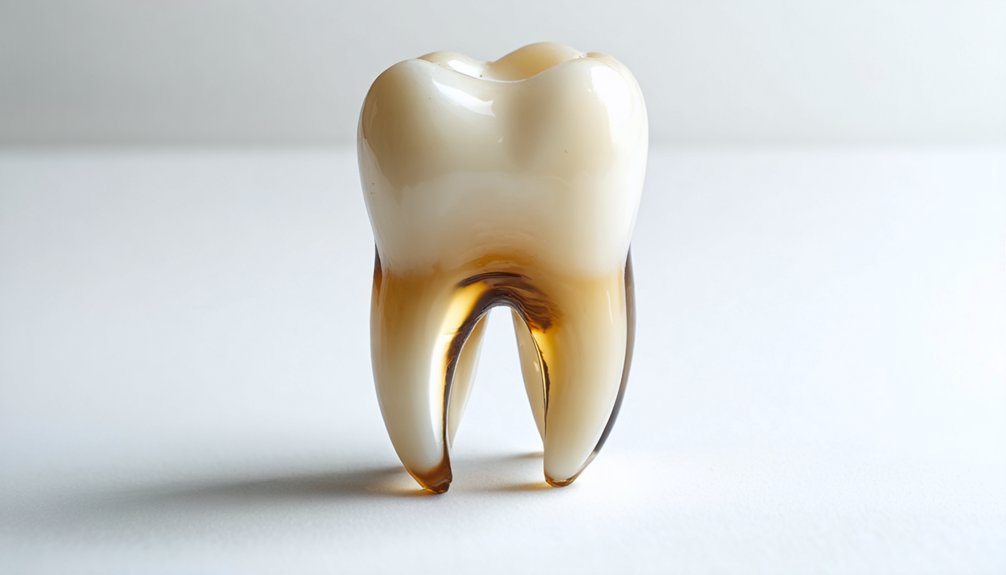
Enamel, the hard outer layer of your teeth, gradually thins from years of chewing, acid exposure, and general wear—and as it does, the naturally yellow dentin underneath becomes increasingly visible.
Enamel thins over time—and the yellow dentin beneath it becomes more visible as it does.
This process—enamel erosion leading to dentin exposure—is a primary driver of natural discoloration tied to tooth aging.
Four factors accelerate this shift:
- Acidic foods and drinks dissolve enamel over time.
- Abrasive brushing physically wears the surface layer.
- Inherited enamel thickness determines your baseline vulnerability.
- Age-related thinning occurs even without decay or damage.
You can’t reverse existing enamel loss, but you can slow further erosion.
Understanding this mechanism gives you actionable control—protecting remaining enamel directly limits how much yellow dentin shows through.
Are Your Naturally Yellow Teeth Just Genetic?
Sometimes, yellow teeth aren’t a sign of poor hygiene or dietary habits—they’re simply what you inherited. Genetic factors directly influence both enamel thickness and baseline tooth color.
If your enamel is naturally thinner due to inherited traits, the yellow dentin beneath shows through more prominently—regardless of how well you brush.
Natural teeth also aren’t uniformly white. Several baseline shades exist across the population, and your genetic makeup largely determines where you fall on that spectrum.
If yellower teeth run in your family, you’re likely seeing hereditary variation rather than a hygiene problem.
Recognizing this distinction matters. If genetics are driving your tooth color, whitening strategies that target surface stains won’t fully address the underlying structural cause.
How Plaque Buildup Makes Teeth Look Yellow Overnight
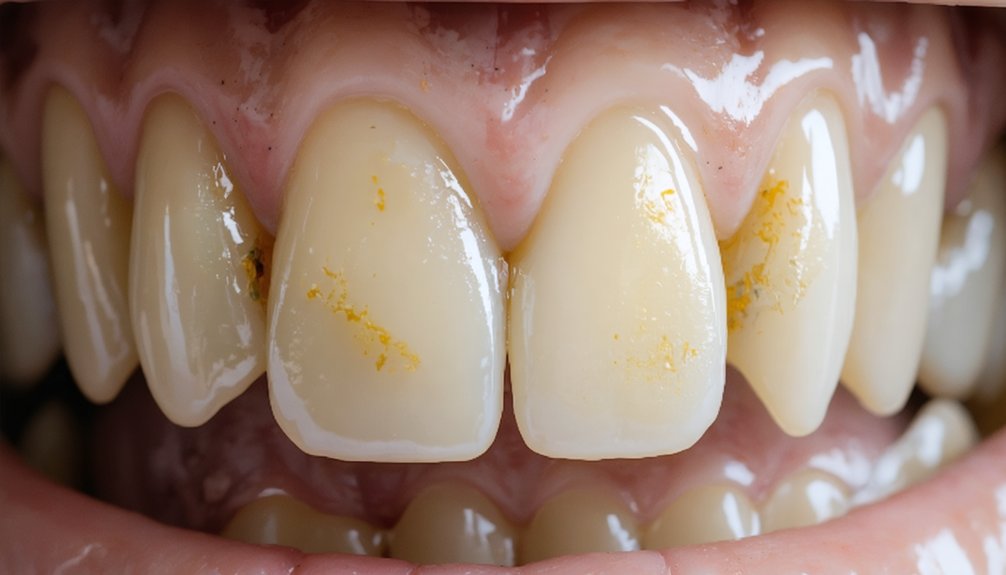
While you sleep, saliva production drops considerably, reducing its natural cleansing effect on your teeth. This allows plaque to accumulate undisturbed on enamel surfaces, making teeth appear noticeably yellower by morning. Consistent plaque removal through proper oral hygiene directly determines how much discoloration develops overnight.
Four mechanisms drive this process:
- Reduced saliva flow lets bacterial biofilm thicken on tooth surfaces without interruption.
- Plaque accumulation creates a yellowish film that visibly alters your tooth color.
- Hardened tartar forms when plaque mineralizes, producing darker, more stubborn discoloration.
- Surface debris becomes more concentrated against dry enamel, amplifying yellow appearance under morning lighting.
Addressing this requires brushing thoroughly before bed and flossing to eliminate the plaque layer before it compounds overnight.
How Dry Mouth Worsens Yellow Teeth by Morning
Saliva plays a critical role in clearing surface debris, neutralizing acids, and rinsing away pigmented particles that would otherwise settle onto enamel. When saliva function decreases overnight, your oral environment shifts. Reduced flow means staining compounds linger longer, plaque accumulation accelerates, and tooth hydration drops.
Saliva rinses away staining particles overnight — when flow drops, those compounds linger and discolor enamel.
All three factors intensify how yellow your teeth appear by morning.
Dry mouth during sleep is common, particularly if you breathe through your mouth or take medications that suppress salivary glands. Without adequate saliva, debris that would normally be flushed away adheres to enamel surfaces for hours.
This contributes directly to overnight stains that look more pronounced when you first wake up. Staying hydrated, using a humidifier, and addressing mouth breathing can meaningfully reduce this effect.
Foods and Drinks That Yellow Teeth Faster Than You Think
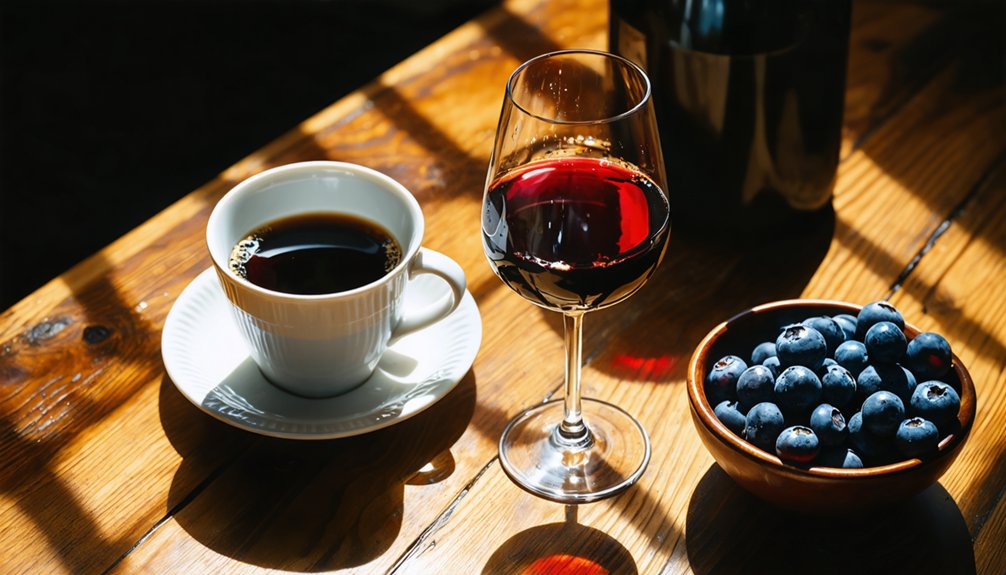
Some of the most common staining culprits you consume daily—coffee, tea, red wine, dark sodas, berries, and curry spices—contain intense pigments that bind directly to enamel surfaces and build up with repeated exposure.
Acidic drinks like citrus juices, sports drinks, and sodas compound the problem by eroding enamel and exposing the naturally yellow dentin underneath.
If you’re not rinsing or brushing after consuming these foods and drinks consistently, you’re accelerating both surface staining and structural discoloration at the same time.
Common Staining Foods
Certain foods and drinks stain teeth faster than most people expect because their pigment molecules, called chromogens, bind directly to enamel. Staining beverages and pigmented foods are the primary culprits behind accelerated surface discoloration.
Key offenders include:
- Coffee and tea — tannins increase chromogen adhesion to enamel surfaces
- Red wine — combines tannins, chromogens, and acid for compounded staining effect
- Dark sauces — soy, tomato, and balsamic vinegar cling to enamel and deposit pigment
- Berries and curry — deeply pigmented foods that transfer color rapidly onto tooth surfaces
Acidic variants of these foods double their impact by thinning enamel first, allowing pigment deeper access.
Controlling your intake and rinsing promptly reduces cumulative staining considerably.
Enamel-Eroding Acidic Drinks
Acidic drinks erode enamel before staining pigments even make contact, which makes them a compounding threat rather than a simple surface problem.
When you consume acidic beverages like citrus juices, sodas, sports drinks, or sparkling water, the acid demineralizes enamel, thinning the protective layer over time. That thinning exposes more of the yellow dentin underneath, producing discoloration that whitening products can’t fully reverse because it’s structural, not superficial.
Enamel damage from acidic beverages also creates a rougher surface texture, which traps pigments more effectively.
You’re fundamentally accelerating both yellowing mechanisms simultaneously: dentin show-through and stain retention.
Limiting acidic drink frequency, using a straw to reduce contact, and waiting thirty minutes before brushing after acid exposure are practical steps that reduce cumulative enamel erosion.
Does Smoking Yellow Teeth Overnight?
Smoking doesn’t yellow teeth overnight in a true biological sense, but it can make existing stains far more visible by morning. Nicotine stains and tar deposits accumulate on enamel with each use, building a yellowish-brown layer that dry mouth conditions at night intensify visually.
Key smoking effects on tooth color:
- Nicotine and tar bind directly to enamel, creating stubborn extrinsic surface stains.
- Reduced overnight saliva flow allows residual tobacco compounds to sit undiluted on tooth surfaces.
- Repeated exposure accelerates stain layering, making discoloration increasingly difficult to reverse.
- Tobacco use also erodes enamel over time, exposing yellow dentin beneath.
If you smoke, you’re not imagining the morning difference. The staining mechanism is real, cumulative, and responds poorly to standard whitening without behavioral change.
Medications and Health Conditions That Cause Yellow Teeth
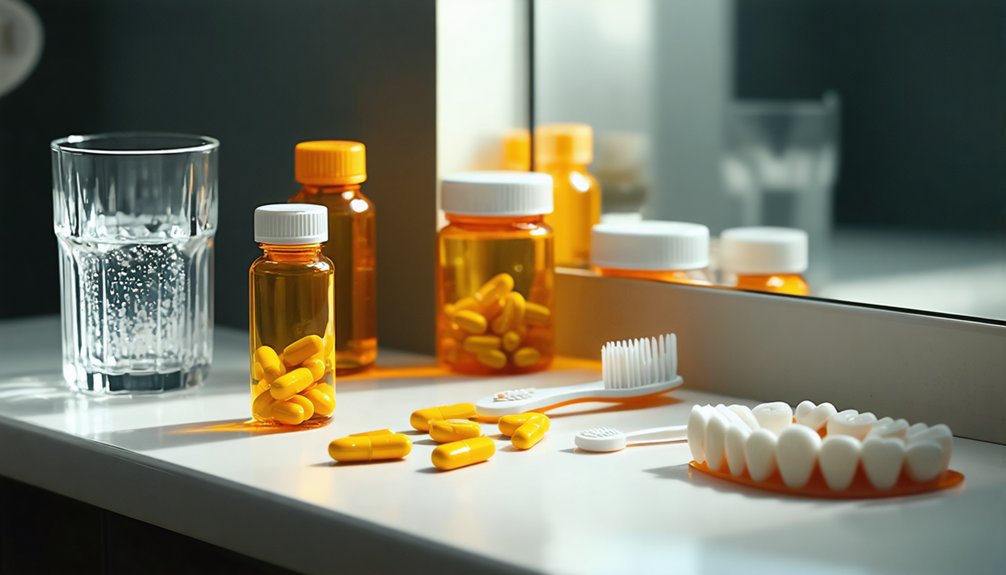
If you took tetracycline or doxycycline during childhood, those antibiotics can permanently stain developing teeth by binding to calcium in the enamel and dentin.
Beyond antibiotics, antihistamines, certain blood pressure medications, and antipsychotics are also linked to tooth discoloration.
Systemic illnesses—including liver disease, celiac disease, and eating disorders—as well as trauma that kills a tooth’s nerve can drive discoloration from the inside out, making surface-level whitening ineffective.
Antibiotics Staining Developing Teeth
Certain antibiotics, particularly tetracycline and doxycycline, can permanently stain teeth when a child’s exposed to them during tooth development.
These antibiotic types bind to calcium in forming enamel, producing gray, brown, or yellow discoloration that no standard dental treatments can reverse.
Key facts to understand:
- Staining occurs primarily when exposure happens before age eight, during active tooth mineralization.
- Tetracycline produces characteristic banded discoloration; doxycycline carries lower but still present risk.
- Discoloration is intrinsic, meaning it’s embedded within the tooth structure, not on the surface.
- Cosmetic dental treatments like veneers or crowns are typically the only effective management options for severe cases.
If your teeth show this pattern, identifying the cause helps you pursue targeted, realistic treatment strategies.
Medications Linked To Discoloration
Tetracycline and doxycycline aren’t the only medications that affect tooth color. Several medication types discolor teeth through distinct discoloration mechanisms.
Antihistamines, certain antihypertensives, and antipsychotic drugs are all clinically linked to surface and structural discoloration. Chemotherapy and radiation targeting the head or neck can damage enamel-forming cells, producing lasting color changes.
Some medications reduce saliva flow, which accelerates plaque accumulation and surface staining. Others interact directly with enamel minerals, altering how light reflects off the tooth surface.
If you take any of these medications long-term, you’re at measurably higher risk for discoloration. Reviewing your medication list with your dentist gives you a clear starting point for identifying whether a drug is driving the yellowing you’re noticing.
Illness And Trauma Effects
Beyond medications, underlying illnesses and physical trauma can drive tooth discoloration through mechanisms that are harder to predict and faster to develop. Understanding these illness impact and trauma effects helps you respond decisively.
- Systemic illness impact: Liver disease, celiac disease, and eating disorders can rapidly alter enamel integrity, producing visible yellowing.
- Cancer treatment effects: Chemotherapy and radiation damage enamel-forming cells, accelerating discoloration beyond surface staining.
- Trauma effects: A physically injured tooth may darken suddenly if the nerve dies or internal bleeding stains the dentin from within.
- Enamel development disruption: Childhood illnesses occurring during tooth formation can permanently compromise enamel structure, creating lasting color irregularities.
Recognizing the root cause determines whether you need dental intervention, medical evaluation, or both.
How to Stop Your Teeth From Looking Yellow by Morning
If your teeth look noticeably yellower in the morning, adjusting your evening routine can reduce overnight surface buildup and improve how your teeth appear by the time you wake up.
Consistent oral hygiene matters most — brush thoroughly before bed, floss, and use a whitening mouth rinse to limit plaque accumulation overnight.
Dietary habits affect surface staining directly, so avoid coffee, tea, or dark pigmented foods close to bedtime.
Targeted dental products containing low-concentration peroxides support gradual teeth whitening without enamel damage.
Stain prevention also requires lifestyle changes like eliminating tobacco use.
Home remedies offer limited evidence, but professional cleaning removes tartar that brushing can’t address.
Understanding natural color variations helps set realistic expectations while you build a consistent, results-driven nightly protocol.
Frequently Asked Questions
Can Teeth Whitening Treatments Reverse Yellowing Caused by Tetracycline Staining?
Tetracycline effects cause deep intrinsic staining that standard whitening options can’t fully reverse. You’ll find professional treatments may lighten discoloration somewhat, but complete correction typically requires veneers or bonding for reliable, lasting results.
Does Fluorosis-Related Yellowing Worsen With Age or Stay the Same?
Fluorosis severity doesn’t typically worsen with age—it’s fixed at tooth formation. However, you’ll notice age effects as enamel thins over time, making existing discoloration appear more pronounced against the increasingly visible yellow dentin beneath.
Are Yellow Teeth More Prone to Cavities Than Whiter Teeth?
Yellow isn’t a cavity’s invitation—color alone doesn’t cause decay. Your dental hygiene habits and tooth discoloration causes matter more. Plaque and poor cleaning drive cavities, not shade, so you control your risk directly.
Can Certain Vitamins or Supplements Cause Teeth to Yellow Over Time?
Yes, certain supplements can yellow your teeth over time. Iron supplements cause surface staining, while vitamin deficiencies weaken enamel, and supplement side effects like dry mouth accelerate plaque buildup—all compounding discoloration you’d want to actively manage.
Does Teeth Grinding Accelerate Enamel Thinning and Yellowing Faster?
You’re fighting a losing battle if you grind your teeth — it accelerates enamel erosion, exposing yellow dentin faster. You’ll likely notice increased teeth sensitivity as thinning progresses, making yellowing more pronounced over time.
References
- https://bondidental.com.au/how-to-get-rid-of-yellow-teeth-overnight/
- https://www.downtowndentalstudio.com/blog/why-are-my-teeth-suddenly-turning-yellow
- https://www.colgate.com/en-us/oral-health/adult-oral-care/ten-causes-of-yellow-teeth-and-how-to-avoid-them
- https://www.colgate.com/en-sa/oral-health/adult-oral-care/ten-causes-of-yellow-teeth-and-how-to-avoid-them
- https://www.theorthodontists.com.au/blog/4-causes-for-yellow-teeth-and-how-to-avoid-them
- https://www.medicalnewstoday.com/articles/322421
- https://adelhannadds.com/blog/why-are-my-teeth-yellow-common-causes-for-discoloration
- https://www.trysnow.com/blogs/news/how-to-get-rid-of-yellow-teeth-overnight
- https://tallmadgedentist.com/blog/10-reasons-your-teeth-are-yellow-and-whitening-tips/
- https://www.livescience.com/54420-yellow-teeth.html