You can whiten your teeth naturally by targeting surface stains from coffee, tea, and red wine using organic methods like baking soda paste, diluted hydrogen peroxide, and fruit-based remedies. Consistent daily habits, like brushing twice daily and limiting staining beverages, help slow future discoloration. While these approaches won’t replace professional treatments, they’re effective for external stains when used correctly. Keep going to discover exactly how each method works and which one suits your needs best.
Key Takeaways
- Baking soda mixed with water forms a mild abrasive paste that gently scrubs surface stains when used a few times weekly.
- Mashing ripe strawberries with baking soda creates a natural surface treatment, as malic acid targets light discoloration effectively.
- Crunchy foods like apples, carrots, and celery naturally scrub enamel and stimulate saliva, supporting a cleaner, brighter smile.
- Oil pulling with coconut oil for 15–20 minutes may reduce plaque, though scientific evidence for whitening benefits remains unproven.
- Limiting stain-causing beverages, using a straw, and brushing twice daily helps slow future staining and maintain natural brightness.
What Natural Whitening Can and Cannot Fix
Although natural whitening methods can genuinely brighten your smile, they’re most effective against surface stains—the kind left by coffee, tea, or red wine—rather than deep discoloration embedded in your enamel.
If your teeth are intrinsically darkened due to aging, medication, or trauma, natural remedies won’t deliver the results that professional whitening gels can.
What you *can* control is how staining progresses. Consistent dental flossing removes plaque buildup between teeth before it hardens into discoloration.
Baking soda and hydrogen peroxide target external stains gradually, and healthy daily habits slow future staining profoundly.
Understanding this distinction keeps your expectations realistic. You’re not powerless—you simply need to match the right method to the right problem for results that actually hold.
The Baking Soda Paste That Actually Removes Surface Stains
Because baking soda is mildly abrasive, it physically scrubs away the surface stains that coffee, tea, and red wine leave behind—and the evidence actually backs this up. You’re not guessing—you’re using a method with real science behind it.
Baking soda doesn’t just promise results—it physically delivers them, backed by real science you can trust.
Here’s how to take control of your results:
- Mix 1 teaspoon baking soda with 2 teaspoons water into a smooth paste.
- Apply gently—aggressive scrubbing undermines fluoride research findings on enamel preservation.
- Limit use to a few times weekly to protect dental sealants and enamel integrity.
- Expect gradual improvement on external stains, not deep discoloration.
You won’t see overnight miracles, but you’ll see honest, measurable progress—earned through consistency and a method your body can actually work with.
How to Use Hydrogen Peroxide Safely for Natural Whitening
If you’re reaching for hydrogen peroxide, you’ll want to stick with a 1.5% or 3% concentration—anything stronger isn’t necessary for natural whitening and raises your risk of sensitivity.
You can dilute a 3% solution with equal parts water to bring it down to 1.5% for a gentler option.
Limit your use to occasional sessions lasting no more than two minutes, since frequent exposure can do more harm than good to your enamel and gum tissue.
Choosing the Right Concentration
When using hydrogen peroxide for natural whitening, concentration matters more than most people realize. Choosing wisely protects your enamel while still addressing dental discoloration effectively.
- Start at 1.5% – Ideal if you experience teeth sensitivity; it’s gentler on enamel while still providing mild bleaching.
- Use 3% cautiously – Dilute it with equal parts water before applying to reduce irritation risk.
- Limit sessions – Use hydrogen peroxide only occasionally; overuse accelerates sensitivity and enamel breakdown.
- Watch your body’s signals – Increased teeth sensitivity or gum irritation means you should stop immediately and reassess.
You’re in control of how this natural method works for you. Choosing the right concentration means balancing effective dental discoloration removal with long-term oral wellness.
Limiting Use Frequency
Even with the right concentration, how often you use hydrogen peroxide shapes whether it helps or harms your teeth. Overuse raises your risk of sensitivity and enamel erosion, so restraint is part of smart dental hygiene.
Treat hydrogen peroxide as an occasional tool rather than a daily habit. Most evidence-based guidance suggests limiting sessions to a few times per week at most, keeping each rinse between 30 seconds and two minutes. Longer or more frequent exposure doesn’t accelerate results — it accelerates damage.
Natural remedies work best when they support your body rather than stress it. Pair hydrogen peroxide use with consistent brushing, flossing, and professional cleanings.
That balanced routine gives you real control over your results without sacrificing the long-term health of your enamel.
Fruit-Based Whitening Methods and How Well They Work
Nature’s pantry offers a few popular options for brightening your smile, though the science behind them is mixed. Fruit acids and peel rubbing have become go-to DIY rituals, but here’s what you should actually expect:
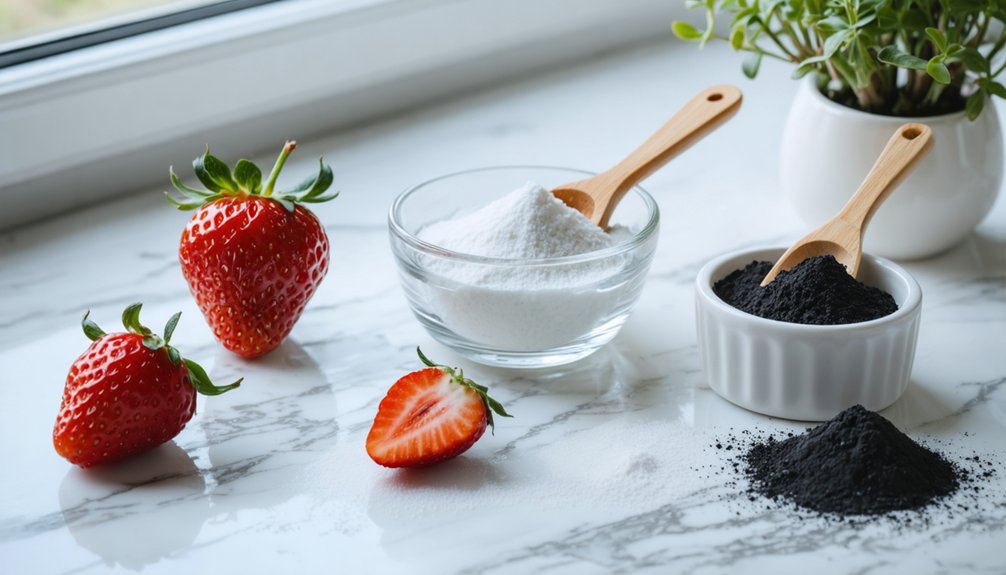
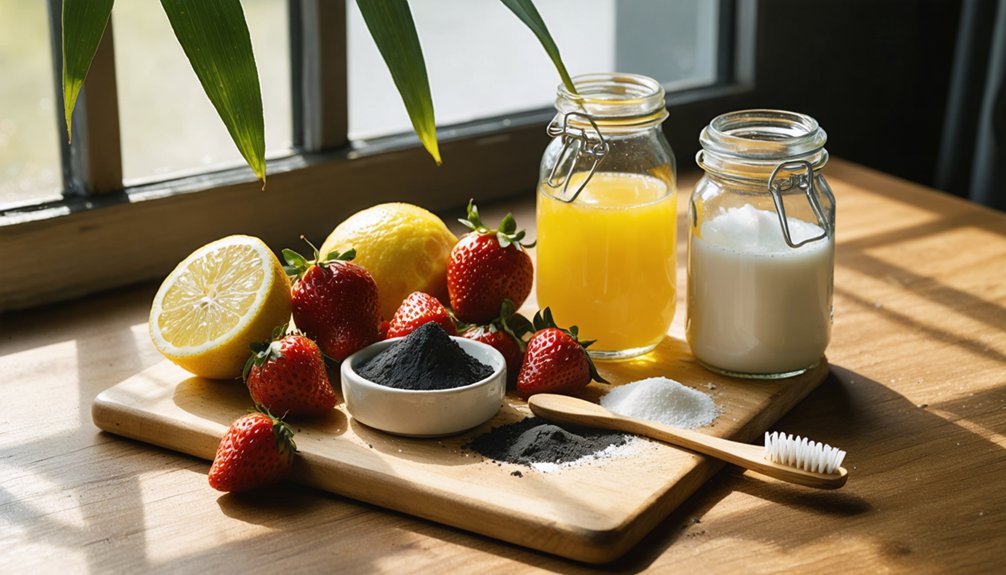
- Strawberry paste combines malic acid with baking soda—mash one ripe strawberry with ½ teaspoon baking soda for a simple surface treatment.
- Banana, orange, and lemon peel rubbing may temporarily polish away light stains.
- Crunchy fruits like apples naturally scrub enamel while you chew.
Scientific backing remains limited—these methods target surface stains only and can’t replace proven hygiene habits.
You’re in control, so set realistic expectations and pair fruit-based methods with consistent brushing for better results.
Does Oil Pulling Actually Whiten Teeth?
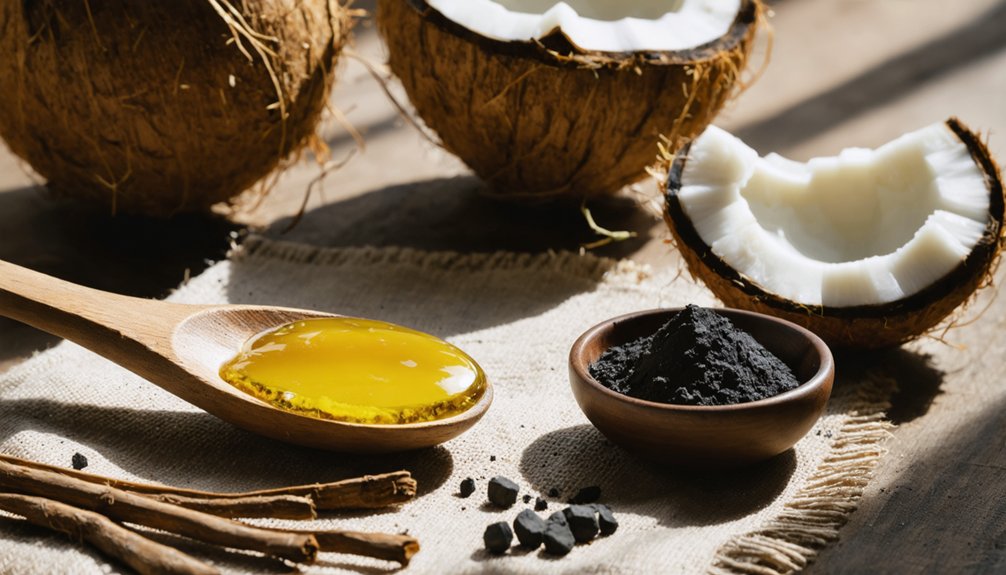
Oil pulling involves swishing about one tablespoon of coconut oil through your mouth for 15 to 20 minutes.
Proponents claim it removes stains alongside improving overall oral cleanliness.
While some people swear by it as a natural whitening method, the American Dental Association confirms there’s no reliable scientific evidence supporting those whitening claims.
You can try it as a supplemental oral hygiene habit, but don’t expect it to replace proven stain-removal methods.
What Is Oil Pulling
Though it sounds like an unusual wellness ritual, oil pulling simply involves swishing about a tablespoon of coconut oil around your mouth for 15 to 20 minutes. Rooted in ancient Ayurvedic practice, it’s gained modern wellness popularity, but myth debunking matters here before you commit.
Understanding ingredient effectiveness helps you set realistic expectations:
- Coconut oil is the most commonly used oil, though sesame and olive oil are also options.
- Proposed benefits center on plaque reduction and oral cleanliness.
- The American Dental Association confirms no reliable scientific evidence supports whitening claims.
- You’re choosing a practice with oral health potential, not a proven brightening solution.
Go in informed, not hopeful, and you’ll make better decisions for your natural care routine.
Whitening Claims Examined
So does oil pulling actually whiten your teeth? Honestly, the evidence is thin. The American Dental Association confirms there’s no reliable scientific proof that oil pulling reverses dental discoloration or produces meaningful bleaching effects. It’s one of the more persistent whitening myths in natural wellness circles.
That doesn’t mean oil pulling is worthless. Swishing coconut oil may reduce plaque and support overall oral cleanliness, which can make your teeth *appear* fresher. But appearance and actual whitening aren’t the same thing.
If you’re serious about taking control of your results, pair oil pulling with better-supported methods like baking soda paste or hydrogen peroxide rinses. Use oil pulling as a complementary oral hygiene habit, not your primary whitening strategy.
Managing your expectations keeps your routine grounded and effective.
Expert Opinions on Evidence
When you look beyond the wellness buzz, expert opinion on oil pulling is fairly clear: the American Dental Association states there’s no reliable scientific evidence that it whitens teeth.
Historical practices and cultural beliefs have kept this ritual alive for centuries, but tradition isn’t the same as proof. You deserve honest information before committing 20 minutes daily to something unverified.
Here’s what the evidence actually supports:
- Oil pulling may reduce plaque, not bleach enamel
- Cultural beliefs surrounding it predate modern dental science entirely
- Historical practices don’t automatically translate into clinically proven results
- Baking soda and hydrogen peroxide have stronger whitening evidence behind them
You’re in control of your choices—just make them informed ones.
The Enamel Risk With Activated Charcoal
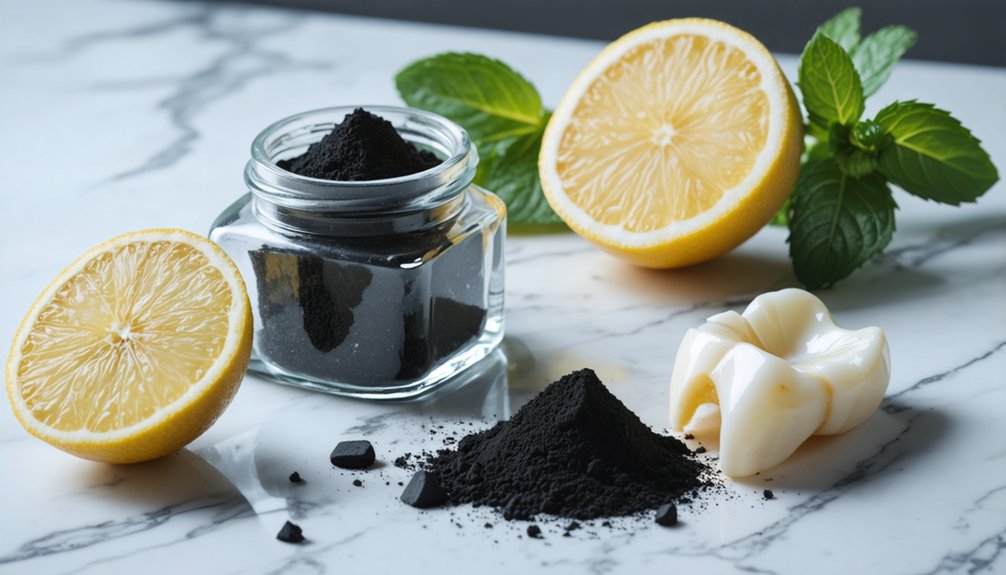
Activated charcoal may seem like a powerful natural whitener, but its abrasive texture puts your enamel at real risk with frequent use. Charcoal abrasiveness can gradually wear down your enamel, the protective outer layer that you can’t regenerate once it’s gone.
Enamel erosion doesn’t just affect appearance — it increases sensitivity and long-term vulnerability to decay.
Sources suggest using activated charcoal only infrequently, giving your enamel time to recover between uses. While charcoal may adsorb some surface stain-causing substances, the evidence for meaningful whitening remains weaker than for baking soda or peroxide-based methods.
If you’re committed to natural whitening, you’re better off prioritizing gentler, better-supported options and reserving charcoal as an occasional supplement — not a daily habit.
Foods That Naturally Reduce Tooth Staining
Beyond topical methods, what you eat between meals can also play a role in managing surface stains. These natural remedies work subtly but consistently, giving you real dietary control over your smile.
- Strawberries – Their malic acid targets surface discoloration naturally.
- Apples – Crunchy texture scrubs enamel as you chew, reducing buildup.
- Carrots – Stimulate saliva production, your mouth’s built-in cleansing agent.
- Celery – Acts like a natural brush, clearing debris between teeth.
These DIY techniques don’t require products or appointments—just intentional choices. Science supports crunchy, fibrous foods for reducing external staining, though results are gradual.
Pair these habits with consistent brushing, and you’re actively protecting your teeth from the inside out.
Daily Habits That Keep Your Teeth White Naturally
Consistency is what separates lasting results from temporary fixes—your daily routine shapes your teeth’s color more than any single remedy.
Strong dental hygiene starts with brushing twice daily for two minutes and flossing once daily to disrupt plaque before it traps stains.
Choose a whitening toothpaste carrying the ADA Seal of Acceptance for reliable stain removal without guesswork.
What you limit matters just as much—cutting back on coffee, tea, red wine, and tobacco reduces new discoloration at the source.
Drink staining beverages through a straw to minimize contact with enamel.
Finally, schedule regular dental cleanings, since professional removal of built-up stains outperforms any home remedy.
These habits compound over time, giving you genuine, lasting control over your smile’s brightness.
When Natural Whitening Isn’t Enough
Natural remedies work best on surface stains, but they can’t reach deep discoloration caused by aging, genetics, or certain medications. When you’ve tried consistent natural care without results, professional options may be your next step.
Watch for these signs that it’s time to consult your dentist:
- Stains haven’t faded after several weeks of natural methods
- You’re experiencing tooth sensitivity that limits your whitening routine
- Discoloration appears internal rather than surface-level
- You want faster, clinically proven results
Professional whitening treatments are often more affordable than expected, especially when you check whether your dental insurance covers any portion. You deserve a smile that reflects your effort.
Knowing when to seek help isn’t giving up on natural care — it’s making an empowered, informed choice.
Frequently Asked Questions
Can Natural Whitening Methods Be Safely Used During Pregnancy?
For pregnancy safety with natural remedies, you should consult your doctor first. You can safely brush twice daily, floss, and limit staining foods — but avoid hydrogen peroxide, activated charcoal, and acidic rinses until you’ve gotten professional guidance.
Do Natural Whitening Remedies Interact With Dental Crowns or Veneers?
Natural remedies won’t bleach crowns or veneers since they don’t respond like enamel. For dental crown compatibility and veneer staining prevention, you’ll want to limit coffee and tobacco while maintaining consistent brushing habits.
How Long Before a Special Event Should Natural Whitening Begin?
Like planting seeds before harvest, start your timing considerations four to six weeks ahead. For smart event planning, you’ll want consistent baking soda or peroxide use, giving gradual, natural results time to visibly develop.
Are Natural Whitening Methods Safe for Children and Teenagers?
Most natural whitening methods aren’t fully safe for children’s dental safety or teen oral health. You should consult a dentist first, as developing enamel is more vulnerable to abrasives like baking soda and acids than adult teeth.
Can Natural Whitening Worsen Existing Tooth Sensitivity Conditions?
Could sensitivity worsen? Yes, it can. Abrasive or acidic natural methods may damage your tooth enamel and trigger gingival irritation. You’ll want to limit use, choose gentler options, and consult your dentist to protect your oral wellness.
References
- https://www.healthline.com/nutrition/whiten-teeth-naturally
- https://www.mouthhealthy.org/all-topics-a-z/natural-teeth-whitening
- https://oralhealthhq.com/teeth-whitening/whiten-teeth-naturally/
- https://mypenndentist.org/dental-tips/2024/02/29/safe-ways-to-whiten-teeth-naturally/
- https://www.berkeleyhillsdentist.com/brighten-your-smile-naturally-berkeley-home-remedies-for-teeth-whitening/
- https://www.pleasantfamilydentistry.com/blog/6-natural-ways-to-whiten-your-teeth
- https://www.medicalnewstoday.com/articles/322421
- https://pmc.ncbi.nlm.nih.gov/articles/PMC10024105/
- https://www.webmd.com/oral-health/ss/slideshow-natural-teeth-whitening
- https://timesofindia.indiatimes.com/life-style/health-fitness/health-news/7-easy-home-remedies-to-whiten-your-teeth-naturally/articleshow/122944697.cms