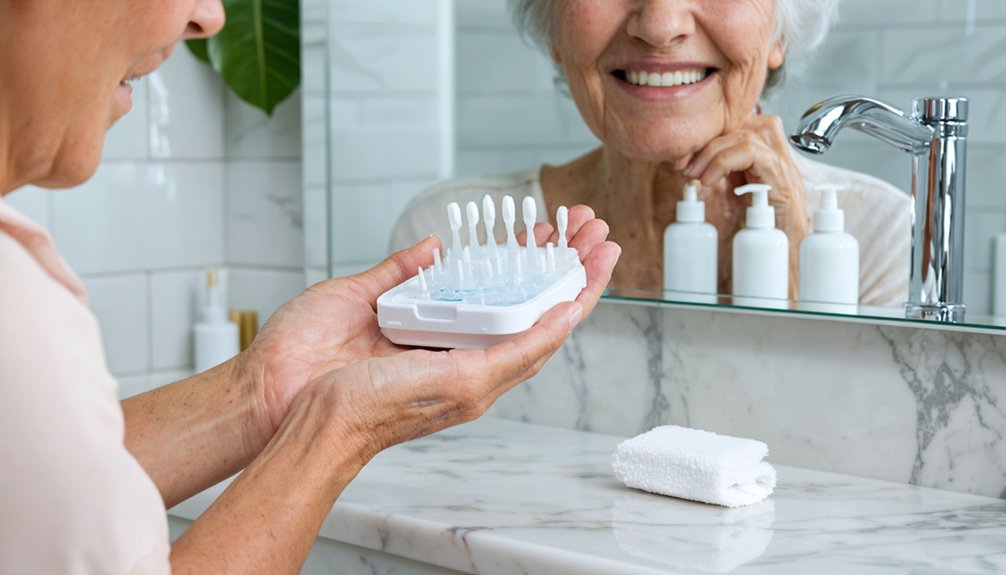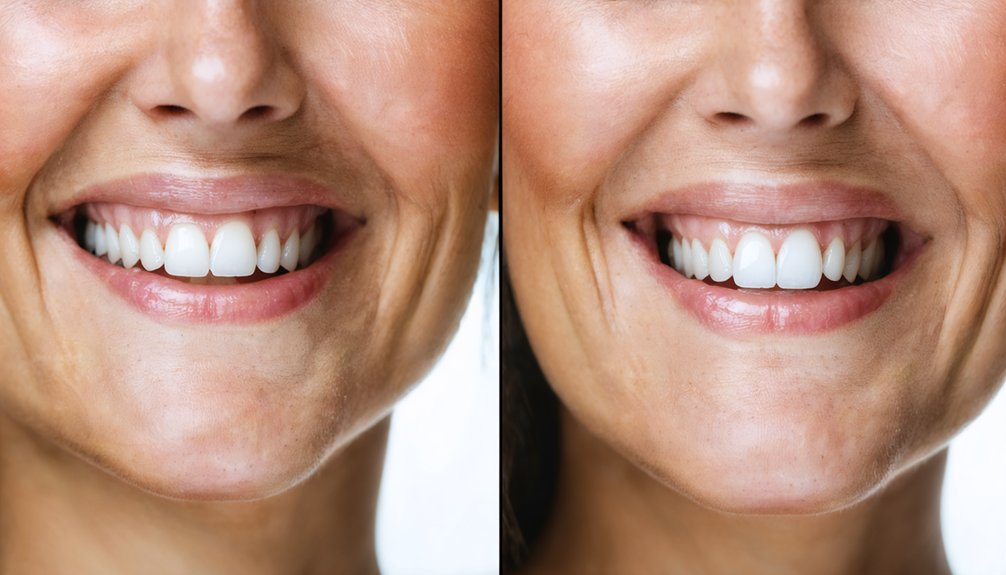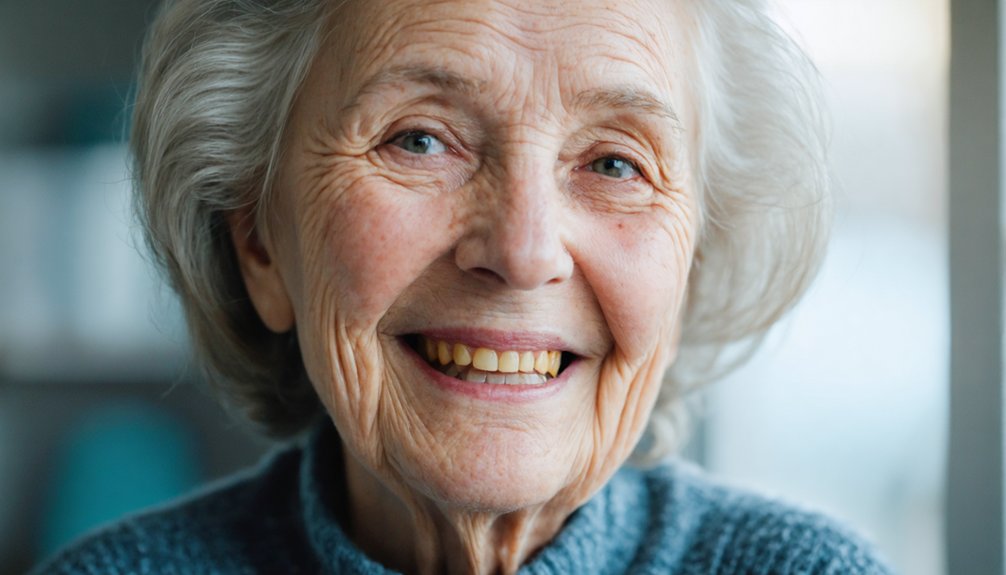
As you age, your teeth undergo structural changes that standard whitening protocols aren’t designed to address. Enamel thins and becomes more porous, dentin darkens from within, and gum recession exposes root surfaces that don’t respond to peroxide. If you have crowns, fillings, or veneers, they won’t whiten at all, creating uneven results. Specialized treatment accounts for these variables to keep whitening both safe and effective—and there’s much more to understand about getting it right.
Key Takeaways
- Aging causes enamel thinning and dentin exposure, creating discoloration that standard whitening treatments may not effectively address.
- Older adults often have sensitive, porous enamel requiring lower-strength peroxide formulations to minimize irritation and damage.
- Common dental restorations like crowns and veneers don’t respond to whitening, requiring individualized treatment planning for uniform results.
- Age-related gum recession exposes darker root surfaces that are unresponsive to peroxide-based whitening agents.
- Conditions like cavities and gum disease, more prevalent with age, require screening before any whitening treatment begins.
Why Aging Teeth Make Whitening Less Predictable
As teeth age, several structural changes make whitening outcomes harder to predict. Enamel erosion thins the outer layer over time, allowing the yellowish dentin beneath to show through more prominently. This shift means much of your tooth discoloration originates internally, where standard peroxide formulas can’t reach as effectively.
Gum recession exposes darker root surfaces that don’t respond to traditional whitening agents. Meanwhile, decades of dietary and environmental wear can create uneven color distribution across your teeth, making uniform results difficult to achieve.
Older enamel also tends to become more porous and sensitive, limiting how aggressively you can treat it.
Understanding these structural realities lets you set accurate expectations and make informed decisions before beginning any whitening protocol.
Is Teeth Whitening Safe for Seniors?
Those structural changes raise a practical question: can seniors safely whiten their teeth at all? The short answer is yes, but only under the right conditions. Age related concerns like thinning enamel, gum recession, and existing restorations mean that whitening isn’t one-size-fits-all for older adults.
Safety depends largely on your oral health baseline. Untreated cavities, active gum disease, or insufficient enamel can make whitening harmful rather than helpful.
Whitening without a healthy baseline isn’t harmless — cavities, gum disease, and weak enamel turn treatment into damage.
A dental evaluation before starting any treatment lets you identify and address those issues first.
Sensitivity management is equally critical. Lower-strength formulations and professional oversight reduce the risk of irritation to already-vulnerable tissue.
When you approach whitening with proper screening and clinical guidance, it remains a viable and safe option at any age.
How Dental Restorations Affect Your Whitening Results
One of the most important factors shaping your whitening outcome is whether you already have crowns, bridges, veneers, or fillings. These restorations don’t respond to peroxide-based agents, so they’ll retain their original shade while your natural teeth lighten.
This mismatch directly undermines color consistency, leaving your smile looking uneven rather than refreshed.
The older you are, the more likely you’re to have multiple restorations, making individualized planning essential. A dental evaluation before treatment lets you identify exactly where restorations are positioned and how whitening might affect surrounding teeth.
In some cases, restoration matching becomes necessary after whitening, requiring replacement of older restorations to align with your new tooth shade. Skipping this step means risking visible color discrepancies that undermine your results.
Which Whitening Treatments Work Best for Older Adults
Selecting the right whitening method depends heavily on the condition of your enamel, gum health, and existing restorations.
Dentist-supervised take-home trays with lower-concentration peroxide gels offer the most controlled approach for aging teeth, minimizing sensitivity while delivering gradual, measurable results.
Dentist-supervised take-home trays deliver gradual, controlled whitening results while keeping sensitivity manageable for aging teeth.
In-office treatments remain effective when enamel integrity supports higher-concentration application.
If receding gums or thin enamel limits your options, cosmetic bonding options may address discoloration more precisely than peroxide-based systems.
Alternative natural remedies lack clinical evidence supporting meaningful whitening outcomes and may introduce unnecessary abrasion risk to already-vulnerable enamel.
Custom-fitted trays distribute gel more evenly than over-the-counter strips, reducing uneven results around restorations.
Your dentist can assess which method aligns with your oral health status and realistic whitening expectations.
How to Make Your Whitening Results Last Longer
Achieving a whiter smile takes effort, but keeping those results requires an equally deliberate plan—particularly for older adults whose enamel is thinner and more porous, making teeth more susceptible to restaining.
Whitening longevity depends heavily on lifestyle habits you control daily. Avoid dark-colored foods, beverages, and tobacco for at least 24 to 48 hours post-treatment, when enamel pores remain most vulnerable. Use a straw when consuming staining drinks like coffee or red wine.
Incorporate whitening toothpaste into your regular oral hygiene routine to reduce surface buildup between professional sessions. Depending on your individual response, full retreatment every six to twelve months—or every one to two years—helps sustain your results.
Consistent, targeted maintenance preserves what professional treatment achieves.
Frequently Asked Questions
Can Teeth Whitening Interfere With Medications Commonly Taken by Older Adults?
Teeth whitening can affect medication safety, so you’ll want to discuss drug interactions with your dentist. Certain medications increase sensitivity or photosensitivity, making professional evaluation essential before you begin any whitening treatment.
How Much Does Professional Whitening Typically Cost for Seniors on Fixed Incomes?
Professional whitening costs $300–$1,000 in-office. If you’re managing fixed income options, dentist-supervised take-home trays offer lower cost considerations at $100–$400, delivering controlled, evidence-based results without compromising your aging enamel’s integrity.
Are There Natural Alternatives to Peroxide Whitening for Older Adults?
Natural alternatives like oil pulling and herbal remedies exist, but they’re not evidence-based for significant whitening. You’ll achieve safer, more controlled results by consulting your dentist, especially given your aging enamel and sensitivity concerns.
Does Dental Insurance Ever Cover Whitening Treatments for Older Adults?
Wondering if your plan will help? Most insurance policies exclude cosmetic coverage for whitening. You’ll typically pay out-of-pocket, so consult your dentist to explore cost-effective, professionally supervised options tailored to your aging dentition’s specific needs.
How Do I Find a Dentist Experienced in Whitening Treatments for Seniors?
Ask your primary dentist for a referral to a specialist in senior oral health. You’ll want someone experienced with age-related enamel changes. Seek dental hygiene tips from providers who demonstrate evidence-based, gerontological approaches to mature tooth restoration and sensitivity management.
References
- https://www.willowstreetdental.com/age-related-yellowing-whitening-solutions-for-seniors/
- https://mtviewfamilydentaltn.com/teeth-whitening-for-older-adults-special-considerations/
- https://sunlakesdentistry.com/can-senior-teeth-be-whitened/
- https://www.aspendental.com/dental-services/cosmetic-dentistry/teeth-whitening/
- https://www.aarp.org/health/conditions-treatments/teeth-whitening/
- https://www.trysnow.com/blogs/news/teeth-whitening-for-seniors-safer-brighter-smiles-after-60
- https://tarpondental.com/teeth-whitening-for-seniors-tips-and-tricks-for-optimal-dental-care/
- https://www.vieradentalarts.com/teeth-whitening-options-for-adults-over-50/
- https://clubwhitesmile.com/best-teeth-whitening-products-for-seniors/