Medication stains respond to different treatments depending on whether they’ve penetrated your enamel’s surface or settled deep within the tooth’s structure. At-home remedies like baking soda can reduce surface discoloration, while professional bleaching targets deeper stains. Walking bleach works internally, achieving 60%–75% effectiveness for moderate cases. Microabrasion and porcelain veneers handle stains that resist bleaching entirely. Consistent preventive habits slow future discoloration. Each method’s effectiveness depends on your specific stain type, and the details ahead will help you choose correctly.
Key Takeaways
- At-home remedies like baking soda and hydrogen peroxide reduce surface stains, with visible results typically within 5-7 days of consistent use.
- Professional in-office bleaching uses high-concentration hydrogen peroxide gels, lightening teeth up to 8-10 shades in a single session.
- Walking bleach places whitening paste inside the tooth chamber, achieving 60%-75% effectiveness for medication-induced internal stains over 4-6 weeks.
- Microabrasion removes a thin enamel layer, achieving approximately 95% success for mild stains, with better outcomes when combined with bleaching.
- Porcelain veneers permanently mask severe, treatment-resistant medication stains, making them ideal when other whitening methods prove ineffective.
Do At-Home Remedies Actually Work on Medication Tooth Stains?
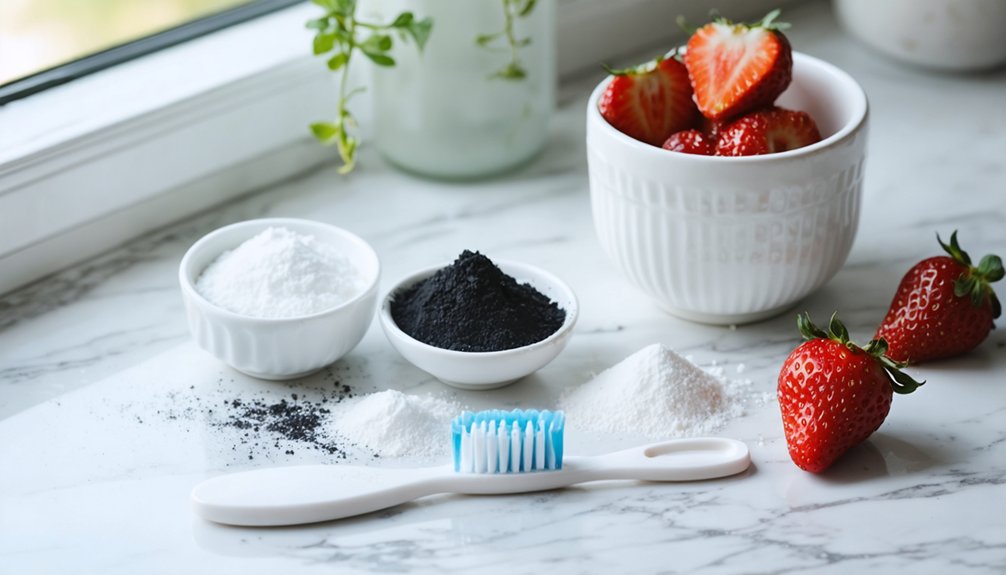
When it comes to medication-induced tooth stains, at-home remedies can reduce surface discoloration, but they won’t fully correct deeper intrinsic staining. Natural remedies like baking soda paste and hydrogen peroxide rinses work by polishing or bleaching extrinsic stains caused by food, beverages, or tobacco. You can expect visible results within five to seven days when paired with consistent oral hygiene.
However, medication stains often originate inside the tooth, where these treatments can’t reach effectively. Stain prevention becomes equally important—use a straw when drinking pigmented beverages and brush approximately 60 minutes after consuming staining foods.
While at-home options offer limited but measurable benefits, they’re best used as a complementary strategy rather than a primary solution for medication-induced discoloration.
Which Professional Bleaching Option Targets Medication Stains Best?
Because medication stains often originate inside the tooth, professional bleaching treatments tend to outperform at-home remedies by a significant margin. Your dentist can apply high-concentration hydrogen peroxide gels in-office, potentially lightening teeth by eight to ten shades in a single session.
Professional bleaching treatments work from the inside out, lifting medication stains up to ten shades in a single session.
For deeper intrinsic staining, walking bleach delivers whitening paste directly inside the tooth, with treatment cycles spanning four to six weeks and a reported success rate of sixty to seventy-five percent.
If bleaching proves insufficient, dental bonding or enamel sealing can mask residual discoloration while reinforcing tooth structure.
Dentist-supervised take-home kits offer a gradual alternative over two to four weeks.
Selecting the right protocol depends on your stain severity, tooth condition, and how quickly you want measurable results.
What Is Walking Bleach and How Well Does It Work?
Walking bleach stands apart from external whitening methods by targeting discoloration from inside the tooth itself. Your dentist places a whitening paste directly into the tooth’s internal chamber, sealing it for three to seven days before repeating the process.
This cycle continues over four to six weeks, allowing the agent to work progressively against deep tooth discoloration.
Bleaching effectiveness with this method reaches approximately 60% to 75% for moderate medication-induced staining. Because it preserves your natural tooth structure, it’s a conservative option before considering veneers or crowns.
You’re not masking the stain externally — you’re addressing its actual source. If standard professional treatments haven’t delivered adequate results, walking bleach gives you a more precisely targeted path toward measurable improvement.
Can Microabrasion or Veneers Fix Stains Bleaching Can’t Remove?
Some medication stains resist even the most aggressive bleaching protocols, and that’s where microabrasion and porcelain veneers become clinically relevant options. Both cosmetic dentistry procedures address tooth discoloration that bleaching can’t resolve.
Some medication stains resist even aggressive bleaching—making microabrasion and porcelain veneers clinically necessary alternatives.
Microabrasion removes a thin enamel layer, reporting roughly 95% success for mild stains. Combining it with bleaching improves moderate-stain outcomes to 70%–85%.
When staining exceeds what microabrasion can correct, porcelain veneers permanently mask the discoloration. Consider your options:
- Microabrasion: Best for superficial staining with minimal enamel loss
- Combined microabrasion and bleaching: Targets moderate intrinsic discoloration more aggressively
- Porcelain veneers: Permanently conceals severe, treatment-resistant tooth discoloration
You’ll want to consult your dentist to determine which approach matches your stain severity and long-term aesthetic goals.
How Do You Stop Medication Stains From Getting Worse?
Preventing medication stains from deepening requires consistent daily habits that limit external pigment exposure and support enamel integrity. Your dietary habits directly influence how quickly surface discoloration accumulates.
Use a straw when consuming coffee, tea, wine, or dark juices to reduce direct contact with enamel. Brush approximately 60 minutes after consuming staining foods or beverages, allowing saliva to neutralize acidity first.
Maintain strict oral hygiene by brushing twice daily, flossing once daily, and rinsing after meals. These practices limit the buildup of pigmented biofilm that bonds to existing medication-related discoloration.
Schedule professional cleanings every six months to remove calcified staining deposits before they penetrate deeper. You can’t eliminate intrinsic discoloration through prevention alone, but you can considerably slow its visible progression with disciplined daily management.
Frequently Asked Questions
Are Medication Tooth Stains Permanent if Left Untreated for Years?
While they’re stubborn, medication stains aren’t truly permanent. You can reverse deep discoloration using professional bleaching or internal treatments. Alternative remedies and natural whitening options also support gradual improvement, giving you control over lasting results.
Can Children Safely Use Whitening Treatments for Medication-Related Tooth Discoloration?
You shouldn’t use standard whitening treatments on children without dental supervision. Children’s safety requires a dentist’s evaluation first, as most whitening options aren’t approved for young patients with medication-related tooth discoloration.
Does Dental Insurance Typically Cover Treatments for Medication-Induced Tooth Staining?
Dental insurance typically won’t cover medication-induced staining treatments, as they’re deemed cosmetic. You’ll likely bear treatment costs out-of-pocket. Review your insurance coverage carefully and consult your dentist about financing options to maintain control over expenses.
How Long Do Professional Whitening Results Last on Medication-Stained Teeth?
Your smile’s cosmetic procedures typically last 1 to 3 years, though medication-stained teeth may fade faster. You’ll maintain results longer by pairing professional treatments with natural remedies and avoiding stain-causing beverages consistently.
Are Certain Medications More Likely to Cause Severe Tooth Staining Than Others?
Yes, certain medications increase staining severity more than others. Tetracycline antibiotics and drug interactions during tooth development cause the deepest intrinsic discoloration. You’ll also find iron supplements and chlorhexidine rinses considerably darken your enamel surface.
References
- https://www.healthline.com/nutrition/whiten-teeth-naturally
- https://www.medicalnewstoday.com/articles/322421
- https://pmc.ncbi.nlm.nih.gov/articles/PMC10024105/
- https://www.carecredit.com/well-u/health-wellness/best-ways-to-whiten-teeth/
- https://dentalpedia.co/article/teeth-whitening-for-stained-teeth-from-medications.html
- https://clubwhitesmile.com/best-ways-to-remove-medication-stains-from-teeth/
- https://auraglow.com/blogs/articles/teeth-stain-removal
- https://biologyinsights.com/how-to-clean-stained-teeth-what-works-and-what-doesnt/
- https://clubwhitesmile.com/category/stubborn-and-medical-stain-whitening/