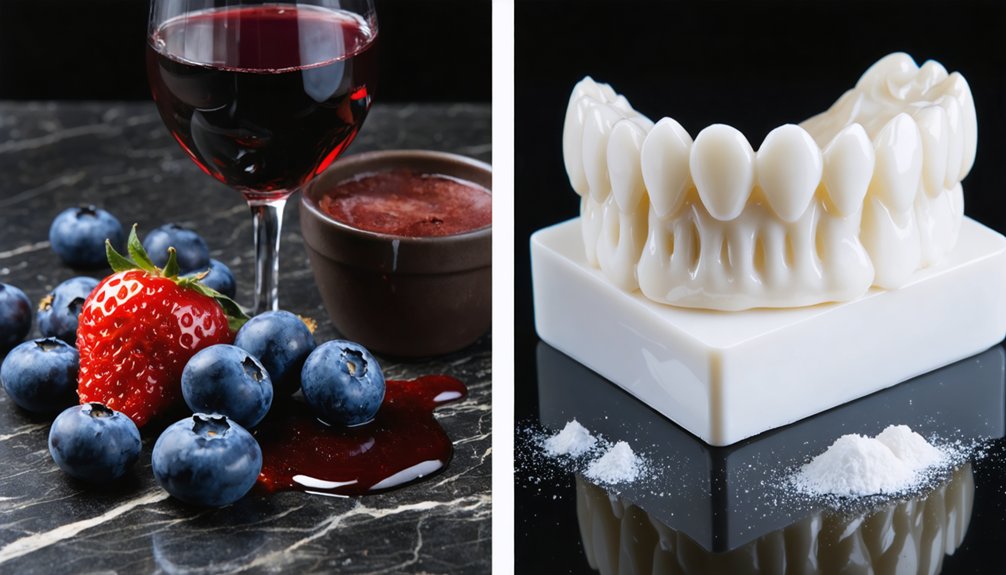
Foods and drinks like coffee, red wine, black tea, and dark berries contain chromogens and tannins that bind aggressively to your enamel, causing stubborn discoloration. Acidity from sodas and citrus weakens enamel further, making pigment penetration easier. Professional whitening treatments using peroxide can reverse most surface stains, while intrinsic discoloration may require restorative options. Your daily habits, including rinsing after meals and avoiding frequent sipping, considerably reduce long-term staining risk—and there’s much more you should know.
Key Takeaways
- Coffee, red wine, black tea, and dark sodas contain tannins, chromogens, and acids that aggressively stain and erode enamel.
- Berries, tomato sauces, beetroot, turmeric, soy sauce, and balsamic vinegar are among the most potent staining foods.
- Acidity from foods and drinks weakens enamel, exposing yellowish dentin and increasing susceptibility to staining and discoloration.
- Rinsing with water immediately after consuming staining substances and using a straw minimizes contact time and pigment buildup.
- Professional whitening treats stubborn stains effectively, while intrinsic stains from trauma or medication may require restorative treatments like veneers.
Why Foods and Drinks Stain Teeth
Tooth discoloration from food and drink comes down to three main factors: chromogens, tannins, and acidity. Chromogens are highly pigmented compounds that bind directly to enamel surfaces.
Three factors drive tooth discoloration: chromogens, tannins, and acidity—each working to stain and degrade your enamel.
Tannins amplify this process by increasing pigment adherence, allowing stains to grip your teeth more effectively. Acidity compounds the problem through enamel erosion, which weakens the protective outer layer and exposes the yellowish dentin beneath.
The more frequently you consume staining substances, the greater your cumulative exposure. Repeated contact gives chromogens and acids more opportunity to degrade enamel and embed pigments deeper into the tooth surface.
Understanding these mechanisms puts you in a stronger position to make deliberate choices about what you consume and how you manage contact time with stain-causing foods and drinks.
The Worst Drinks for Tooth Discoloration
When it comes to staining, not all drinks carry equal risk. Coffee ranks among the worst because its tannins and chromogens bind aggressively to enamel.
Black tea follows closely, despite assumptions that natural remedies like herbal teas are safer alternatives.
Red wine combines dark pigments, tannins, and acidity into a potent staining agent.
Cola and dark sodas add dyes and acid to the equation, accelerating discoloration.
Even fruit juices from cranberries, blueberries, and pomegranates carry concentrated pigments that adhere stubbornly to tooth surfaces.
Dietary supplements in liquid form, particularly those containing dark botanical extracts, can also contribute to staining.
Understanding which drinks pose the highest risk lets you make deliberate choices, reduce exposure, and protect your enamel before discoloration becomes difficult to reverse.
Foods That Are More Staining Than You Think
Drinks get most of the attention when tooth staining comes up, but several foods carry comparable or greater discoloration risk than most people expect. Tomato-based sauces combine high acidity with intense pigmentation, making them particularly damaging with frequent exposure.
Berries—including blueberries, blackberries, and cherries—deposit dark chromogens directly onto enamel. Beetroot and curry containing turmeric are among the most potent staining sources in any diet.
Soy sauce and balsamic vinegar add further risk through concentrated dark pigments. Incorporating lifestyle changes, such as rinsing with water immediately after these foods, reduces contact time markedly.
If you’re exploring natural remedies for early discoloration, dietary modification remains a foundational step. Controlling what stays on your enamel longest gives you the most direct influence over stain progression.
How Acidity Makes Teeth More Vulnerable to Stains
When you consume acidic foods or drinks, the acid temporarily softens and weakens your enamel, stripping away its natural protective layer.
This erosion leaves your teeth more porous and receptive to chromogens, meaning staining compounds penetrate more easily and adhere more stubbornly.
The more frequently you expose your teeth to acid, the greater your cumulative erosion risk and, consequently, your vulnerability to discoloration.
Acid Weakens Enamel Protection
Acid doesn’t just damage enamel—it actively sets the stage for deeper, more persistent staining. When you consume acidic foods or drinks, they lower your mouth’s pH balance, triggering enamel erosion that compromises your teeth’s protective outer layer.
Once enamel thins, chromogens and tannins penetrate more easily, binding to the exposed surface and producing stains that resist simple brushing.
You’re compounding the problem if you brush immediately after consuming acidic items. Softened enamel abrades faster under friction, accelerating structural loss rather than preventing it.
Rinsing with water first stabilizes pH balance and reduces acid contact time before you brush.
Controlling enamel erosion means controlling your staining risk. The two processes are directly linked, and managing one actively protects against the other.
Erosion Increases Stain Risk
Enamel erosion and staining don’t operate independently—each condition accelerates the other. When acid damage thins your enamel, it exposes more of the underlying dentin, which is naturally yellowish and highly absorbent.
That structural compromise means chromogens and tannins from coffee, wine, or dark sauces penetrate more easily and cling more effectively.
You’re not dealing with surface-level discoloration at that point—you’re dealing with pigments embedding into a weakened, porous structure. Enamel erosion fundamentally removes your teeth’s primary defense against staining agents.
The practical implication is clear: if you’re regularly consuming acidic foods or drinks without managing exposure, you’re not just risking erosion—you’re actively increasing your vulnerability to deeper, harder-to-reverse staining.
Controlling acid damage directly reduces your staining risk.
Can Teeth Whitening Remove Food and Drink Stains?
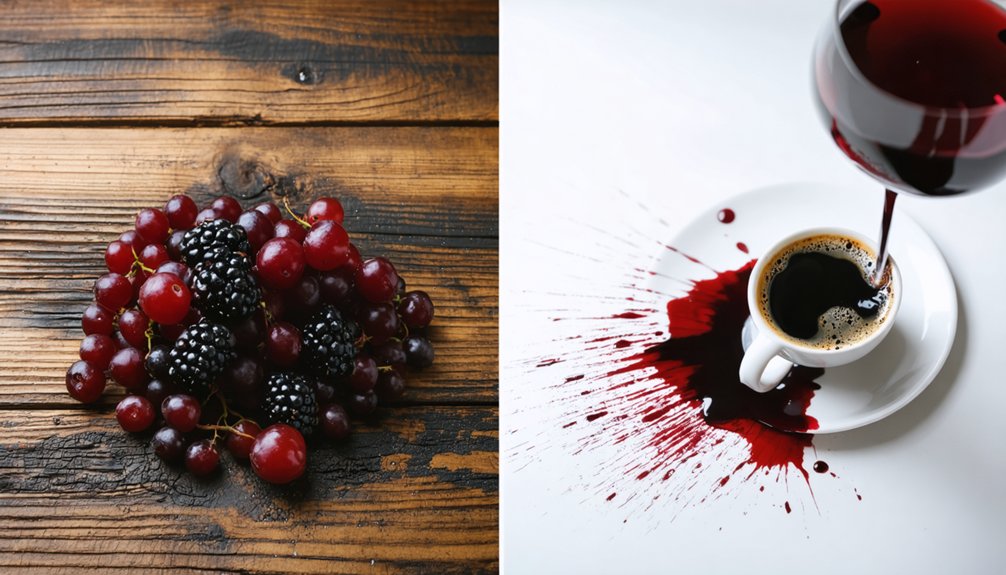
Teeth whitening works by targeting external stains—the kind left by coffee, wine, berries, and similar chromogen-rich foods and drinks—making it most effective when discoloration sits on or near the enamel surface rather than within the tooth itself.
If your stains are surface-level, you can often address them with over-the-counter whitening products like strips or trays, though results vary depending on stain severity and enamel condition.
For deeper or more stubborn staining, professional whitening delivers stronger concentrations of bleaching agents and tends to produce faster, more consistent outcomes.
How Whitening Works
Whitening products work through one of two main mechanisms: bleaching agents that chemically break down stain compounds within the enamel, or abrasive agents that physically buff surface discoloration away. Unlike natural remedies or dietary supplements, clinically formulated whitening products follow established mechanisms with measurable outcomes. Understanding which mechanism applies to your product helps you set accurate expectations.
Key distinctions to know:
- Peroxide-based bleaches penetrate enamel to oxidize chromogen compounds
- Abrasive whitening toothpastes remove surface stains through mechanical polishing
- Professional-grade formulas use higher peroxide concentrations for deeper stain removal
- Over-the-counter strips and trays deliver lower-concentration bleaching at a slower rate
- Weakened enamel reduces whitening effectiveness and increases sensitivity risk
Matching the right mechanism to your stain type directly determines your results.
Types of Stains Treated
Knowing how whitening works only gets you so far—what matters next is whether your specific stain type responds to it. Whitening targets extrinsic stains—surface discoloration caused by chromogens from coffee, wine, berries, and sauces. These respond well to peroxide-based treatments.
Intrinsic stains, rooted in dentin or caused by medication and trauma, don’t respond the same way.
If your stains stem from diet, you have two angles of control: whitening to reverse existing discoloration, and diet modifications to prevent new stains from forming.
Natural remedies like oil pulling or activated charcoal lack consistent clinical evidence for meaningful stain removal. Relying on them delays proven treatment.
Identify your stain source first—then match your intervention to what the evidence actually supports.
Professional Versus Over-the-Counter
Both professional and over-the-counter whitening can remove food and drink stains, but their effectiveness differs based on stain depth and concentration of active ingredients.
- Professional treatments use higher-concentration peroxides, delivering faster, more pronounced results on stubborn stains.
- Over-the-counter strips and gels work on milder surface discoloration but require consistent, extended use.
- Enamel remineralization support before or after whitening helps stabilize enamel and improve treatment outcomes.
- Dental sealants can protect freshly whitened teeth from renewed pigment exposure in high-risk areas.
- Weakened enamel limits whitening effectiveness, making pre-treatment enamel assessment essential.
Your stain severity, enamel condition, and exposure habits should guide which option you choose.
Consulting a dental professional gives you the clearest picture of which approach delivers measurable, lasting results for your specific situation.
Professional vs. At-Home Whitening: Which Works on Food Stains?
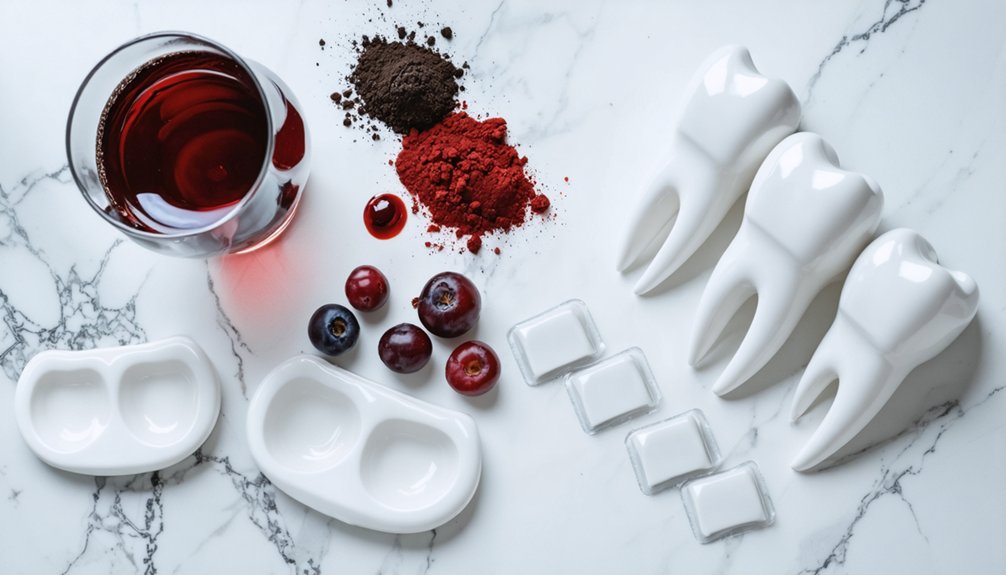
When food and drink stains are primarily external, both professional and at-home whitening can be effective — but they don’t perform equally.
Professional treatments use higher-concentration bleaching agents, delivering faster and more consistent results on stubborn stains from coffee, wine, or berries.
Professional whitening agents work faster and more effectively on deep stains from coffee, wine, and berries.
At-home options work on milder surface discoloration but require longer, more consistent use.
Dietary adjustments strengthen either approach — reducing staining foods during treatment improves outcomes noticeably.
Some people explore natural remedies like oil pulling or baking soda, though evidence supporting their whitening effectiveness remains limited compared to peroxide-based treatments.
Your enamel condition determines which option suits you best.
Weakened enamel may respond poorly to stronger formulas, making professional guidance essential before choosing a whitening method.
Daily Habits That Stop Tooth Stains Before They Set
Preventing stains starts long before they become visible on enamel. Your oral hygiene and dietary habits directly determine how much pigment accumulates over time. Small, consistent actions reduce stain adhesion before it becomes a whitening problem.
- Rinse with water immediately after coffee, tea, wine, or pigment-heavy sauces.
- Wait at least 30 minutes before brushing after acidic foods or drinks.
- Use a straw when consuming dark or acidic beverages to limit front-tooth contact.
- Avoid frequent sipping throughout the day, since repeated exposure compounds staining risk.
- Schedule regular professional cleanings to remove surface deposits before they penetrate deeper.
Each habit targets a specific mechanism—chromogen contact time, enamel vulnerability, or pigment buildup—giving you precise, evidence-backed control over discoloration before it sets.
What to Do When Stains Don’t Respond to Whitening
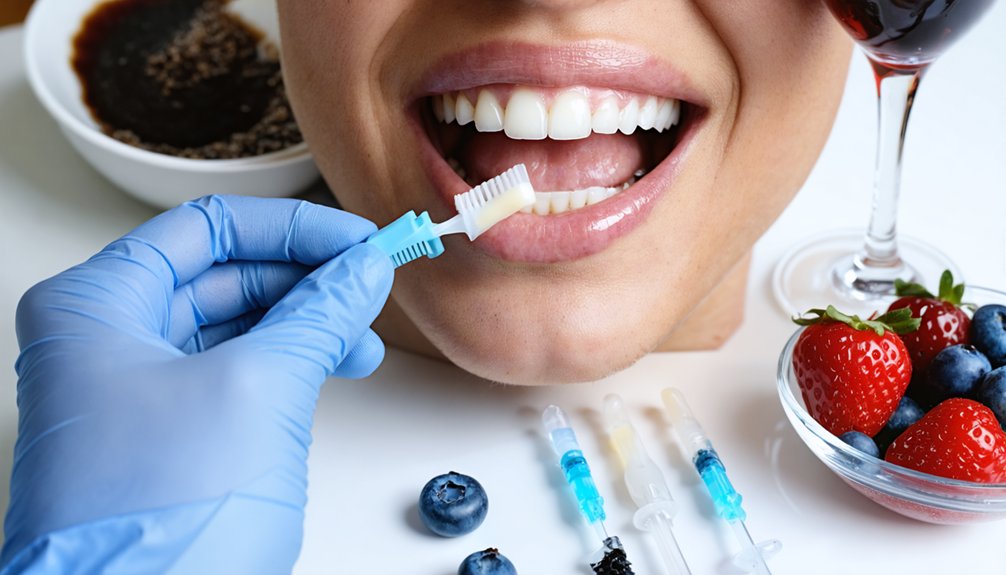
Even consistent prevention habits won’t erase every stain—some discoloration resists standard whitening because it originates from within the tooth rather than on its surface.
Internal staining from medications, trauma, or enamel thinning doesn’t respond to over-the-counter products or most professional bleaching treatments.
If your oral hygiene routine and whitening efforts aren’t producing results, consult a dentist to identify the stain’s origin.
Internal discoloration may require veneers, bonding, or other restorative options.
You should also evaluate whether dietary supplements containing iron or certain vitamins are contributing to surface deposits that mimic deeper staining.
Don’t assume more whitening product means better results—overuse can weaken enamel and worsen visible discoloration.
Accurate diagnosis gives you targeted options instead of repeated treatments that won’t address the actual cause.
Frequently Asked Questions
Does the Temperature of Coffee Affect How Much It Stains Teeth?
Coffee temperature doesn’t markedly change stain absorption. While you might think hotter coffee stains more, tannins and chromogens cause discoloration regardless of temperature. You’re better off rinsing promptly after drinking to actively reduce pigment contact time.
Can Chewing Gum Help Reduce Staining After Eating Pigmented Foods?
Chewing gum doesn’t directly achieve stain removal, but it stimulates saliva production, which helps neutralize acids and rinse away pigments after eating. You’ll reduce discoloration risk more effectively by also rinsing with water afterward.
Are Certain Tooth Shapes or Sizes More Prone to Visible Staining?
Tooth morphology does influence stain susceptibility. If your teeth have deeper grooves, wider surface areas, or thinner enamel, you’re giving pigments more opportunity to adhere, making visible discoloration more likely with repeated exposure.
Does Saliva Production Play a Role in Protecting Teeth From Stains?
Yes, your saliva actively shields teeth by neutralizing acids through saliva pH regulation and supporting enamel remineralization, reducing stain vulnerability. Higher flow rates dilute chromogens and tannins faster, giving pigments less time to adhere to your enamel.
Can Whitening Toothpaste Prevent New Stains From Forming Over Time?
Whitening toothpaste can’t perform miracles, but it does help you manage surface discoloration. It removes dental plaque and light stains, yet it won’t fully shield your tooth enamel from new stains forming over time.
References
- https://www.bupa.co.uk/newsroom/ourviews/teeth-staining-foods
- https://familydentistottawa.com/7-foods-staining-teeth/
- https://www.healthline.com/health/foods-that-stain-teeth
- https://www.lwdentist.com/20-foods-and-drinks-that-cause-stains-on-teeth/
- https://crest.com/en-us/oral-care-tips/teeth-stains/20-foods-and-drinks-that-stain-your-teeth
- https://www.goodrx.com/conditions/dental-care/foods-that-stain-your-teeth
- https://www.kidsdentalonline.com/foods-stain-teeth/
- https://www.webmd.com/oral-health/ss/slideshow-foods-stain-teeth
- https://emergencydentalofomaha.com/8-foods-drinks-staining-your-teeth/
- https://www.mynorthlanddental.com/faq/foods-drinks-stain-teeth/35589