To whiten coffee-stained teeth at home, you’ll need to target both surface and deeper discoloration. Brush twice daily with fluoride or whitening toothpaste, and use baking soda paste once or twice weekly as a mild abrasive. Hydrogen peroxide rinses can oxidize deeper stains, while whitening strips deliver concentrated peroxide directly to enamel. Crunchy foods like apples and carrots provide passive maintenance between brushing sessions. Each method works best when combined strategically.
Key Takeaways
- Baking soda acts as a mild abrasive to polish surface stains while creating an alkaline environment that neutralizes coffee’s acids.
- Use a baking soda paste once or twice weekly to remove stains without causing excessive enamel damage.
- Hydrogen peroxide tackles deeper stains through oxidation but should be used sparingly to prevent gum irritation and sensitivity.
- Crunchy foods like apples and carrots naturally scrub teeth surfaces, while malic acid in apples helps break down discoloration.
- Dairy products neutralize coffee’s acidity, protecting enamel integrity and preventing new stains from setting after consumption.
Why Coffee Stains Your Teeth in the First Place
Coffee contains tannins — naturally occurring polyphenols that bind directly to tooth enamel, making pigments stick more easily to the surface.
Over time, repeated exposure allows coffee pigments to penetrate deeper into enamel, producing yellow or brown discoloration that becomes harder to reverse. Plaque buildup accelerates this process by trapping additional pigments against your teeth.
The deeper coffee penetrates enamel, the harder discoloration becomes to reverse — and plaque only accelerates the damage.
Frequent sipping compounds the problem. The longer your teeth stay in contact with staining compounds, the greater your risk of visible discoloration.
Darker roasts intensify exposure, and without consistent oral hygiene, staining becomes cumulative.
Enamel erosion is another concern. Acidic beverages weaken enamel’s surface, making it more porous and susceptible to staining.
Understanding these mechanisms gives you a clear advantage in preventing discoloration before it sets in.
Build Daily Brushing Habits That Prevent Coffee Stains
Brushing twice daily removes plaque before coffee pigments can settle into buildup and cause visible discoloration.
You should also floss once daily to clear stain-causing debris from between teeth, where a toothbrush can’t reach.
Choosing a whitening toothpaste with mild abrasives or peroxide can further help lift minor surface stains before they become harder to treat.
Brush Twice Daily
Keeping teeth clean through consistent daily brushing is one of the most effective ways to prevent coffee stains from setting into enamel. Brushing twice daily removes plaque before coffee pigments bind to accumulated buildup. Incorporate brushing into your morning routine immediately after your first cup to reduce prolonged exposure to tannins.
Brush again before bed to clear any residue that settled throughout the day.
Strong dental hygiene means brushing all tooth surfaces, including inner surfaces and the tongue, where stain-causing compounds collect. Use a soft-bristled brush and fluoride toothpaste, applying gentle circular strokes for two full minutes.
Whitening toothpastes containing mild abrasives or peroxide may provide additional surface-stain control. Consistent execution of this twice-daily protocol gives you direct, measurable control over discoloration before it progresses.
Floss To Remove Debris
Plaque trapped between teeth creates pockets where coffee pigments settle and accumulate, making interdental cleaning just as important as surface brushing.
Flossing once daily disrupts this buildup before staining compounds embed deeper into residue layers. Proper flossing techniques require guiding the floss in a C-shape around each tooth and sliding it beneath the gumline to lift trapped debris effectively.
Skipping this step leaves interdental surfaces vulnerable to discoloration that brushing alone can’t address. Integrating consistent flossing into your dental hygiene routine gives you direct control over one of the primary conditions that accelerates coffee staining.
If standard floss feels difficult to maneuver, interdental brushes or water flossers provide effective alternatives that still disrupt the plaque buildup responsible for trapping pigments between teeth.
Choose Whitening Toothpaste
Switching to a whitening toothpaste is one of the simplest adjustments you can make to your daily brushing routine to address coffee staining before it sets in.
These formulas typically rely on mild abrasives or low-concentration peroxide to improve whitening effectiveness against surface discoloration.
When evaluating ingredient safety, look for products carrying an American Dental Association seal, which confirms the formula meets established standards for both efficacy and enamel protection.
Avoid options with overly abrasive compounds, as repeated use can wear down enamel and increase sensitivity.
Whitening toothpaste works best as a preventative measure rather than a corrective one, so pairing it with consistent twice-daily brushing gives you the most control over keeping coffee pigments from accumulating on your enamel.
Add Stain-Fighting Foods and Drinks to Your Routine
What you eat between coffee servings can work passively against surface staining.
Crunchy produce like apples, carrots, and celery acts as a mild mechanical scrub, helping dislodge pigment and plaque from enamel as you chew.
Dairy foods such as milk and cheese help neutralize coffee’s acidity, which supports enamel integrity and reduces the conditions that allow stains to set.
Crunchy Produce Scrubs Teeth
Certain crunchy fruits and vegetables can work as natural abrasives against surface stains while you chew. Foods like apples, carrots, and celery act as crunchy vegetables that mechanically scrub tooth surfaces during normal chewing. This friction helps dislodge loose debris and plaque before pigments from coffee can settle in.
Cleansing fruits like apples also contain malic acid, which may assist in breaking down minor surface discoloration. While these foods won’t reverse deep staining, incorporating them regularly into your diet adds a functional layer of protection between brushing sessions.
Think of them as passive maintenance tools. They won’t replace brushing or flossing, but they can reduce accumulation throughout the day, especially when you can’t brush immediately after drinking coffee.
Dairy Neutralizes Coffee Acidity
Dairy foods like milk and cheese offer more than basic nutrition—they can help neutralize the acidity that coffee leaves behind on your enamel.
These dairy benefits extend beyond general health; calcium sources like milk and cheese actively support enamel remineralization and help counteract the low pH environment coffee creates in your mouth.
A weakened enamel surface absorbs staining compounds more readily, so reducing acidity after coffee consumption gives you a structural advantage.
Consider ending your morning coffee with a small serving of cheese or rinsing with milk.
While dairy won’t remove existing stains, it helps you prevent new ones from setting in.
Combining these calcium sources with consistent brushing reinforces your enamel’s natural defense against pigment absorption.
Use Baking Soda to Polish Away Surface Coffee Stains
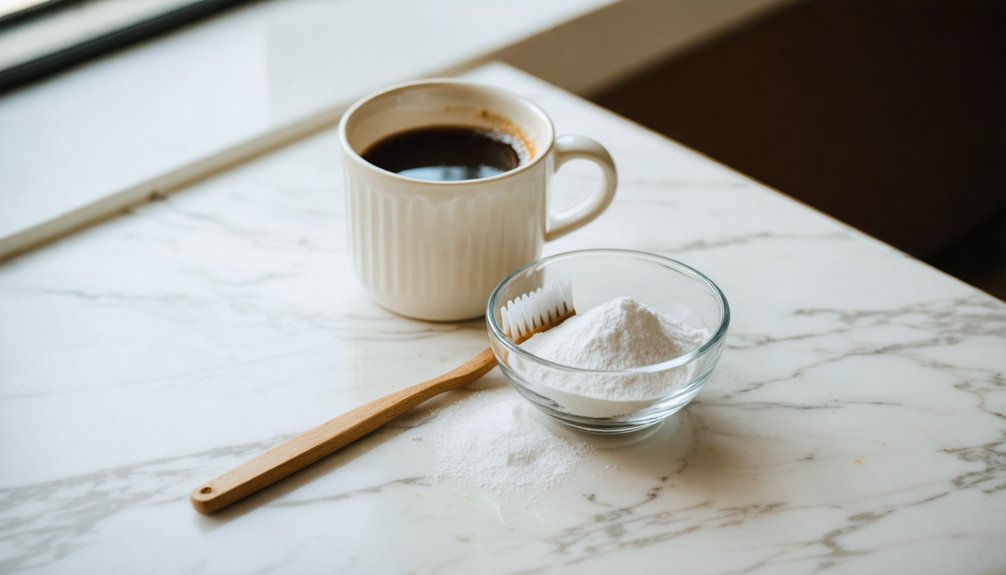
Baking soda acts as a mild abrasive that can polish away surface stains left behind by coffee. Its baking soda benefits extend beyond simple scrubbing — it also creates an alkaline environment that may help neutralize acids that weaken enamel.
To use it, mix a small amount with water to form a paste, then brush gently for one to two minutes. Limit use to once or twice per week to prioritize enamel protection, since overuse can erode enamel and increase sensitivity.
You can also combine baking soda with a small amount of hydrogen peroxide for added whitening effect. If you notice increased sensitivity or gum irritation, reduce frequency immediately and consult your dentist before continuing.
Try Hydrogen Peroxide to Tackle Deeper Coffee Stains
When surface stains resist basic brushing, hydrogen peroxide can help oxidize deeper discoloration that baking soda alone may not address.
Mix equal parts 3% hydrogen peroxide and water, then swish the solution for 30–60 seconds before spitting. For stronger action against deeper stains, combine a small amount of hydrogen peroxide with baking soda to form a paste and brush gently for one to two minutes.
Limit either method to once or twice weekly. Overuse raises your risk of gum irritation and increased tooth sensitivity. If sensitivity develops, reduce frequency immediately.
You can also alternate hydrogen peroxide rinses with your regular brushing routine to maintain consistency without overexposure. For stains that don’t respond to this approach, consult a dentist about prescription-strength peroxide options.
Use Whitening Strips Safely to Remove Stubborn Stains
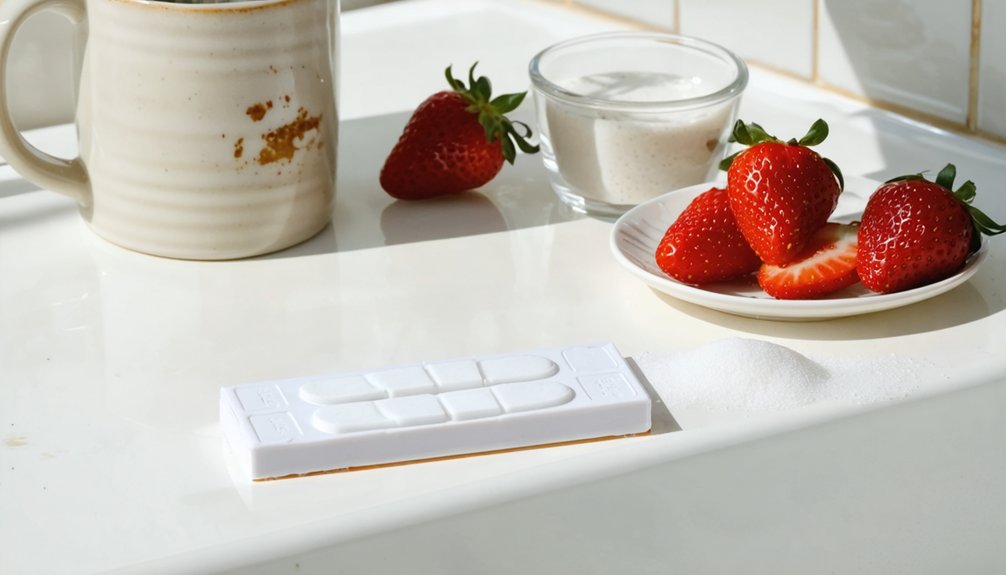
Whitening strips tend to outperform whitening toothpaste because they deliver peroxide directly to the enamel surface for an extended contact period. Over-the-counter strips typically contain low-concentration hydrogen peroxide and produce measurable results when you use them consistently.
For whitening safety, follow the manufacturer’s instructions precisely—overuse increases sensitivity and gum irritation. Apply strips to clean, dry teeth and avoid coffee for at least one hour afterward to prevent fresh pigments from settling into freshly treated enamel.
For long-term stain prevention, combine strip treatments with twice-daily brushing and limit prolonged coffee sipping. If you experience persistent sensitivity, reduce application frequency or consult your dentist before continuing.
Prescription-strength systems are available for stubborn discoloration that over-the-counter options can’t adequately address.
Frequently Asked Questions
Can Drinking Coffee Through a Straw Help Reduce Tooth Staining?
Using a straw benefits you by reducing direct contact between coffee and your enamel. You’ll limit staining exposure, though it’s not foolproof. Consider coffee alternatives like lighter roasts to further preventatively protect your teeth from discoloration.
How Long Does It Take Home Remedies to Show Visible Results?
Results aren’t instant—you’ll typically notice natural whitening changes within two to four weeks of consistent use. Effective ingredients like baking soda and hydrogen peroxide work gradually, so you’ll need disciplined, regular application to see measurable improvement.
Does the Temperature of Coffee Affect How Badly It Stains Teeth?
Temperature doesn’t directly worsen staining, but hot coffee increases coffee acidity’s impact, accelerating enamel erosion and making your teeth more vulnerable to pigment absorption. You’ll reduce risk by letting coffee cool before drinking.
Are Teeth Whitening Home Remedies Safe During Pregnancy?
Like walking a tightrope, pregnancy safety demands caution — you should avoid peroxide-based whitening remedies. Stick to natural ingredients like baking soda sparingly, but always consult your dentist before starting any whitening routine while pregnant.
Can Coffee Stains Return Quickly After Successful Whitening Treatment?
Yes, coffee stains can return quickly after whitening. You’ll extend your whitening duration by brushing promptly after drinking coffee. Consistent stain prevention habits—like limiting sipping frequency and maintaining daily oral hygiene—help you sustain your results longer.
References
- https://www.barniescoffee.com/blogs/blog/a-coffee-lovers-guide-to-whiter-teeth
- https://www.bridgepointedentistry.com/how-to-remove-coffee-stains-on-your-teeth/
- https://www.mydentaloffice.com/natural-whitening-remedies-for-coffee-and-wine/
- https://dentistinmanvel.com/goodbye-to-coffee-stains-8-effective-methods-to-brighten-your-smile/
- https://www.brownroaddental.com/ways-to-remove-coffee-stains-from-your-teeth/
- https://www.giangrecofamilydental.com/6-ways-to-remove-coffee-stains-from-your-teeth/
- https://www.goodrx.com/conditions/dental-care/remove-coffee-stains-teeth
- https://www.youtube.com/watch?v=CaZIcZEnrkY
- https://www.reddit.com/r/Coffee/comments/ort9jx/coffeestained_teeth/
- https://www.tiktok.com/@annapetersondental/video/7288036091658112288?lang=en