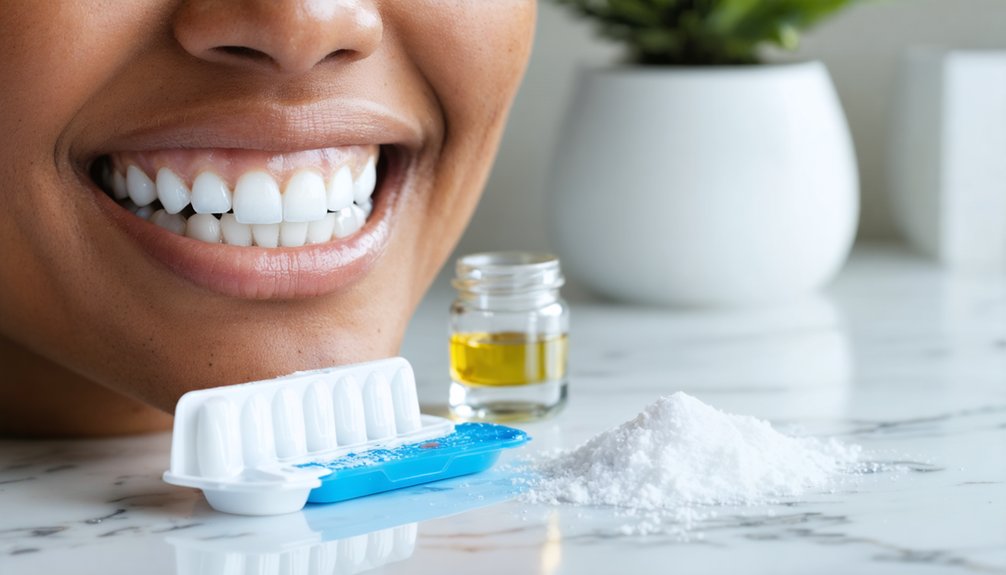
Dark spots on your teeth can stem from surface stains, decay, or intrinsic discoloration, so identifying the cause matters before choosing a treatment. You can brighten mild spots with whitening toothpaste, baking soda, oil pulling, or peroxide-based whitening strips. Cutting back on staining foods, quitting tobacco, and maintaining consistent brushing and flossing habits will help prevent recurrence. For persistent spots, a dentist consultation is essential — and there’s much more to explore about each approach below.
Key Takeaways
- Use whitening toothpaste with baking soda or low-concentration peroxide twice daily to effectively reduce surface stains on teeth.
- Quit tobacco immediately, as nicotine and tar penetrate enamel, causing persistent discoloration that is difficult to reverse.
- Limit coffee, tea, and red wine consumption, rinsing with water immediately after to minimize staining on teeth.
- Try natural remedies like oil pulling with coconut oil or occasional activated charcoal to address mild surface discoloration.
- Consult a dentist if dark spots persist after two to three weeks, as professional bonding or veneers may be necessary.
What Actually Causes Dark Spots on Teeth
Dark spots on teeth don’t always mean the same thing, and identifying the cause determines how effectively you can treat them. Understanding the causes overview helps you target the right solution.
Not all dark spots on teeth share the same cause—identifying the source is the first step toward effective treatment.
Stain types fall into two categories: surface vs. internal. Extrinsic stains affect enamel health through dietary impact—coffee, tea, wine, and tobacco deposit pigment directly onto enamel.
Intrinsic discoloration originates within the tooth structure itself. Genetic factors influence your baseline enamel density and natural tooth color. Age effects gradually thin enamel, exposing darker dentin beneath.
Medications influence tooth color greatly; tetracycline and certain antihistamines cause deep internal darkening. Lifestyle choices like smoking accelerate staining considerably.
Poor oral hygiene allows plaque and tartar to accumulate, compounding discoloration from multiple sources simultaneously.
Try a Whitening Toothpaste for Dark Spots and Surface Stains
Whitening toothpastes work by using mild abrasives to polish and lift extrinsic stains from enamel without chemically bleaching the tooth.
When choosing a product, look for one with the ADA Seal of Acceptance and consider formulas containing baking soda or low-concentration peroxide for added stain-fighting action.
For best results, you’ll need to brush consistently twice daily, as irregular use limits effectiveness and won’t outperform the long-term benefits of routine oral hygiene.
How Whitening Toothpaste Works
Switching to a whitening toothpaste is a simple first step for addressing mild surface stains and dark spots on teeth. These formulas rely on mild abrasives — such as silica or baking soda — as their primary whitening mechanisms, physically polishing stain particles off enamel with each brush stroke.
Some products also include low concentrations of hydrogen peroxide or enzymes to break down discoloration at a chemical level. For enamel care, it’s important to use these products consistently but not excessively, since overuse can wear down protective enamel over time.
You’ll get the best results by brushing twice daily for two minutes and pairing the toothpaste with regular flossing. Whitening toothpaste works best on fresh, extrinsic stains rather than deep structural discoloration.
Choosing The Right Toothpaste
When selecting a whitening toothpaste for dark spots and surface stains, the ingredient list matters more than the marketing claims on the packaging. Check toothpaste ingredients carefully before purchasing.
Look for mild abrasives like hydrated silica or baking soda, which physically lift surface stains from enamel. For stronger whitening effectiveness, choose a formula containing low-concentration hydrogen peroxide or sodium fluoride, which supports enamel integrity while addressing discoloration.
Avoid products with excessive abrasive content, as repeated use can erode enamel and worsen sensitivity. The American Dental Association Seal of Acceptance is a reliable indicator that a product meets safety and efficacy standards.
Pairing the right toothpaste with consistent twice-daily brushing and flossing delivers more measurable results than any single ingredient alone.
Tips For Best Results
Getting the most from a whitening toothpaste requires more than simply swapping products. Technique and consistency determine whether you see measurable improvement or minimal change.
- Brush for two full minutes, twice daily, using small circular strokes to maximize contact between the abrasive formula and stained enamel.
- Limit home remedies like baking soda to two or three uses per week to avoid enamel erosion from overuse.
- Track your progress over four weeks; if dark spots persist, professional treatments such as scaling, bleaching, or composite bonding offer more targeted correction.
Avoid rinsing immediately after brushing to extend fluoride contact time.
Pairing whitening toothpaste with daily flossing removes interproximal plaque before it calcifies into stain-trapping tartar.
Use Baking Soda to Polish Away Mild Discoloration
Baking soda works as a mild abrasive that gently polishes surface stains off enamel without the harsh chemical load of many commercial products.
Mix a small amount with water to form a paste, then brush lightly for two minutes. You can also combine it with hydrogen peroxide for slightly stronger stain-lifting action, though you shouldn’t exceed two to three uses per week.
Overuse compromises enamel care by gradually wearing down the protective outer layer, so restraint matters.
This method targets extrinsic stains from coffee, tea, and food pigments effectively, but it won’t address internal discoloration or decay.
If you notice a dark spot that doesn’t respond after consistent use, that’s your signal to consult a dentist for a deeper evaluation.
Try Oil Pulling and Other Natural Remedies

Oil pulling is a traditional oral-care practice that involves swishing a tablespoon of coconut oil around your mouth for 10 to 20 minutes before spitting it out. Proponents claim it reduces plaque, bacteria, and mild surface discoloration.
Swishing coconut oil for 10 to 20 minutes may reduce plaque, bacteria, and mild surface discoloration naturally.
Activated charcoal is another natural option, marketed for absorbing stain particles from enamel. Use both methods sparingly, as overuse can damage enamel or disrupt oral balance.
Consider these targeted natural strategies:
- Coconut oil pulling – Practice two to three times weekly to manage mild discoloration without chemical agents.
- Activated charcoal paste – Limit use to once weekly to minimize abrasive enamel wear.
- Consistent brushing and flossing – Reinforce any natural remedy with disciplined daily oral hygiene for measurable stain control.
Try Whitening Strips and Peroxide Gels for Dark Spots
Whitening strips and peroxide gels offer a reliable middle ground between daily toothpaste and professional in-office bleaching. These products use low-concentration hydrogen or carbamide peroxide to penetrate enamel and break down extrinsic stain molecules.
Whitening effectiveness depends on consistent application, concentration level, and the nature of your discoloration. Surface stains from coffee, tea, or tobacco respond well; structural discoloration typically does not.
Follow package instructions precisely — exceeding recommended wear time increases gum sensitivity and enamel irritation without improving results. Apply strips only to clean, dry teeth to maximize peroxide contact.
If gum sensitivity develops, reduce application frequency or switch to a lower-concentration formula. For persistent dark spots unresponsive to peroxide products, consult a dentist to rule out decay or internal discoloration.
Know When to Ask Your Dentist About Dark Spots

When should you stop treating dark spots at home and call your dentist? Some spots signal problems that no whitening strip or abrasive paste can fix.
Schedule a dentist consultation if you notice any of these warning signs:
- A dark spot persists after two to three weeks of consistent at-home treatment.
- The spot is accompanied by tooth sensitivity, pain, or a visible crack.
- The discoloration appears on a single tooth without an obvious staining cause.
These scenarios may indicate decay, a fracture, or internal discoloration requiring a professional oral examination.
Your dentist can determine whether the cause is structural, bacterial, or purely cosmetic—then recommend targeted treatment such as bonding, internal bleaching, or a veneer based on precise clinical findings.
Daily Habits That Stop Dark Spots Returning
Once you’ve addressed existing dark spots, you’ll need to commit to daily habits that prevent recurrence.
Brush twice daily with fluoride toothpaste, floss consistently, and rinse with an antibacterial mouthwash to minimize plaque-driven staining.
Quitting tobacco and limiting heavy stain-contributors like coffee, tea, and red wine will greatly reduce your risk of new discoloration forming on enamel surfaces.
Consistent Brushing And Flossing
Keeping dark spots from returning starts with two non-negotiable daily habits: brushing twice a day with a fluoride toothpaste and flossing once a day without skipping.
Consistent oral hygiene disrupts plaque before it hardens into stain-trapping calculus. Stain prevention depends on precision, not just frequency.
Follow these three steps to maximize results:
- Brush for two full minutes, using small circular strokes to reach the gumline where discoloration commonly starts.
- Floss thoroughly between every tooth, removing plaque in contact zones that your toothbrush can’t access.
- Rinse with an antibacterial mouthwash after flossing to reduce residual bacteria that accelerate stain accumulation.
Skipping any step creates gaps in your defense, allowing stains to reestablish faster than whitening treatments can correct them.
Quit Tobacco, Limit Staining Foods
Tobacco is one of the most aggressive sources of dental discoloration, and quitting is the single most effective behavioral change you can make to prevent dark spots from returning. Tobacco cessation eliminates nicotine and tar compounds that penetrate enamel and embed deeply into surface layers.
Beyond tobacco, staining moderation matters considerably. Coffee, tea, red wine, and dark berries deposit chromogens onto enamel with repeated exposure. You don’t have to eliminate these entirely, but limiting frequency and rinsing with water immediately afterward reduces cumulative staining.
Using a straw with cold staining beverages minimizes direct tooth contact. These adjustments aren’t passive—they require deliberate, consistent choices. Combined with your brushing and flossing routine, controlling intake sources gives you meaningful long-term command over discoloration.
Frequently Asked Questions
Can Dark Spots on Teeth Indicate a Serious Underlying Health Condition?
Yes, dark spots can signal cavities, cracks, or internal tooth issues. Your oral hygiene habits and diet impact their severity. If spots don’t respond to cleaning, you should consult a dentist immediately for proper diagnosis.
Are Certain People More Genetically Prone to Developing Dark Spots on Teeth?
Yes, genetic factors can predispose you to thinner enamel or higher cavity risk, yet strong oral hygiene habits you actively maintain can greatly counteract these inherited vulnerabilities, keeping dark spots minimal and manageable.
Do Dark Spots on Teeth Affect Children Differently Than Adults?
Yes, dark spot causes differ in children. Your child’s developing enamel is thinner, making it more vulnerable. Monitoring child dental health early lets you catch decay, fluorosis, or trauma-related discoloration before permanent teeth are affected.
Can Medications Cause Dark Spots That Whitening Treatments Cannot Remove?
Like rust seeping into metal, medication effects can cause deep tooth discoloration that you can’t reverse with whitening treatments. Tetracycline antibiotics and excess fluoride create internal staining requiring bonding, veneers, or crowns for effective correction.
How Long Does Professional Treatment for Dark Spots Typically Take?
Professional treatment duration varies: a single cleaning takes about an hour, while bonding or veneers require one to two visits. Laser treatments work faster than home remedies, and you’ll typically see results within one to three appointments.
References
- https://www.wickerparkdentalgroup.com/how-to-remove-black-spots-from-teeth-at-home/
- https://skincal.com/milia-medical/how-to-get-spots-off-your-teeth/
- https://www.imdentistry.com/blogs/dark-tooth-treatment-guide
- https://wellwisp.com/how-to-get-rid-dark-spots-teeth/
- https://bethanyfamilydental.com/how-to-get-rid-of-brown-spots-on-teeth/
- https://toothworkscalgary.com/blog/removing-black-spots-on-teeth-home-remedies-and-professional-options/
- https://www.youtube.com/watch?v=iLYyxF0Euyw
- https://www.healthline.com/health/black-dot-on-tooth
- https://www.colgate.com/en-us/oral-health/teeth-whitening/teeth-stain-removal-types
- https://www.inglewoodfamilydental.ca/how-to-remove-black-spots-on-teeth-home-professional-treatments/