If you whiten teeth with active cavities, you’re allowing bleaching agents to penetrate already-damaged enamel and dentin, reaching the nerve directly. This causes sharp, prolonged pain and can trigger nerve inflammation or infection. The peroxide doesn’t treat decay — it worsens structural breakdown while masking discoloration. You risk needing a root canal or extraction instead of just a filling. The full picture of what’s actually happening inside your tooth is worth understanding before you proceed.
Key Takeaways
- Bleaching agents penetrate decayed enamel and reach the nerve, causing sharp, prolonged pain beyond typical whitening sensitivity.
- Peroxide infiltrates weakened tooth structure, potentially triggering nerve inflammation, infection, or the need for a root canal.
- Active decay continues worsening beneath whitening treatments, as bleaching masks discoloration without treating underlying damage.
- Whitening compromised teeth risks accelerating structural breakdown, since oxidizing agents are designed for stains, not decay.
- Dentists recommend treating all active cavities before whitening to prevent severe pain and irreversible tooth damage.
What Whitening Chemicals Actually Do Inside a Cavity
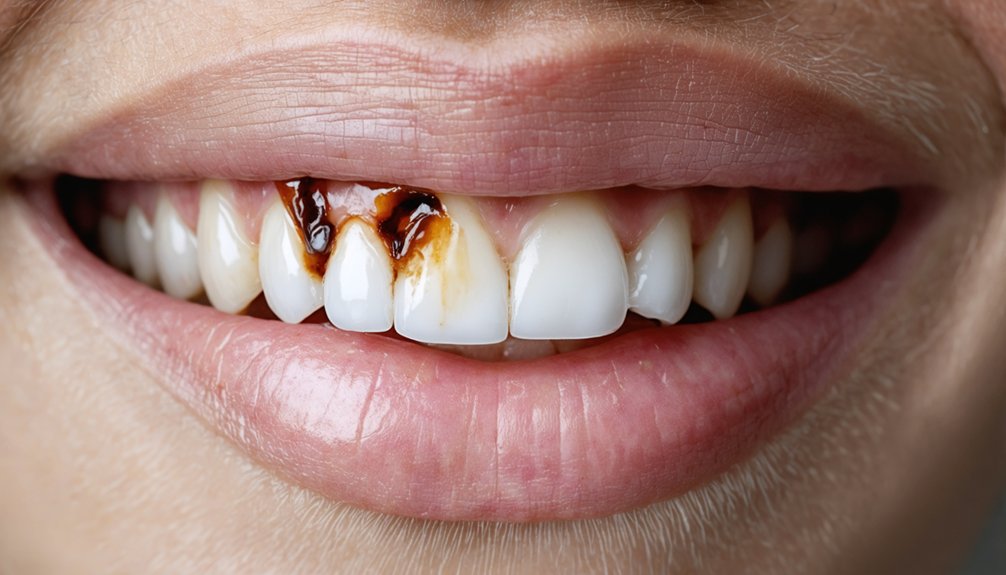
When you apply a whitening product to a tooth with an active cavity, the bleaching agent doesn’t stay on the surface—it penetrates the decayed enamel and dentin and reaches the tooth’s inner layers.
This direct chemical exposure irritates the nerve and can trigger sharp pain, heightened sensitivity, and prolonged discomfort with hot, cold, or sweet substances.
Bleaching agents aren’t designed to treat decay—they’re designed to oxidize stains. Inside a cavity, that oxidizing action works against you, potentially worsening structural breakdown and masking a condition that needs clinical intervention.
Even alternative whitening methods and natural remedies carry similar risks if active decay is present. No cosmetic approach is safe on a compromised tooth.
Treat the cavity first—then evaluate your whitening options from a position of actual control.
Why Cavities Make Teeth Far More Sensitive to Bleaching
A cavity strips away the enamel and dentin that normally insulate your tooth’s nerve from external stimuli, leaving the pulp far more exposed than in a structurally intact tooth. Dental plaque buildup accelerates this breakdown, progressively thinning the protective layers that buffer your nerve against chemical contact.
Cavities don’t just damage teeth—they dismantle the very insulation protecting your nerve from the outside world.
When bleaching agents penetrate through that compromised structure, they reach sensitized nerve tissue far more directly than they’d in a healthy tooth.
Without tooth remineralization to restore lost mineral density, the damaged structure can’t resist peroxide infiltration effectively. Your nerve responds with sharp, sometimes prolonged pain—not just mild sensitivity.
The bleaching agent isn’t causing temporary surface discomfort; it’s chemically irritating already-vulnerable pulp tissue. That distinction matters when you’re deciding whether whitening before treating your cavity is a risk worth taking.
Whitening With a Filled Cavity: What Actually Changes
Once a cavity has been properly filled, the risk profile for whitening shifts considerably—but it doesn’t disappear entirely. Your restored tooth reacts differently than natural enamel, and that distinction matters before you proceed with any bleaching treatment.
Key changes you should know:
- Fillings don’t whiten—composite or amalgam restorations resist bleaching agents, creating potential color mismatches after treatment.
- Tooth remineralization must be supported post-treatment; whitening can temporarily compromise enamel strength, so fluoride use becomes critical.
- Dental plaque removal before whitening improves gel contact with enamel and reduces uneven results around restored areas.
You’re in control here—but only if you confirm with your dentist that no active decay remains and that your restoration is structurally sound before whitening begins.
What Can Actually Go Wrong When You Bleach Over Decay
Bleaching over an active cavity doesn’t just cause discomfort—it can accelerate structural damage to an already compromised tooth. Peroxide penetrates weakened enamel and dentin, reaching the pulp and triggering nerve irritation or infection.
Peroxide doesn’t stop at the surface—it penetrates weakened enamel and attacks the pulp beneath.
What begins as sensitivity can escalate to root canal treatment or extraction.
Tooth discoloration may seem like a cosmetic priority, but masking it with bleach while decay progresses underneath creates a more serious problem. The whitening agent won’t disinfect or repair the cavity—it’ll worsen the breakdown.
Poor dental hygiene habits that contributed to decay compound the risk further, as compromised oral tissues respond more severely to chemical exposure.
You’re not just risking pain—you’re risking irreversible structural loss that no whitening treatment can fix.
Fix the Cavity First, Then Ask About Whitening
Treating the cavity before pursuing any whitening is the only sequence that makes clinical sense. Active decay compromises enamel integrity, and bleaching agents will exploit that weakness. You can’t cosmetically improve a structurally failing tooth without consequences.
Prioritizing dental hygiene and allowing tooth remineralization to stabilize weakened areas gives you a foundation that supports safe whitening later.
- Get a dental exam first to confirm whether active decay or untreated lesions exist before scheduling any cosmetic treatment.
- Complete all restorative work before applying any bleaching agent, including fillings or other decay-related interventions.
- Confirm oral stability with your dentist, ensuring remineralization and dental hygiene are optimized before whitening begins.
Whitening is elective. Treating decay is not. Control the clinical priorities in the right order.
Frequently Asked Questions
Can Whitening Toothpaste Cause the Same Risks as Bleaching Gels?
Whitening toothpaste carries lower risks than bleaching gels, but you can still experience tooth sensitivity and enamel erosion, especially over cavities. You should consult your dentist before use to protect compromised teeth effectively.
How Soon After Cavity Treatment Can Whitening Safely Begin?
Oh, the enthusiasm! Wait at least a few weeks after cavity treatment before whitening. Your dentist confirms when you’re ready, ensuring tooth sensitivity subsides and enamel erosion risks are minimized before you begin bleaching.
Are Children With Cavities at Greater Risk From Whitening Products?
Yes, children face heightened risks. Their pediatric enamel is thinner and less mineralized, so cavity sensitivity intensifies dramatically when whitening agents penetrate. You should avoid all bleaching products until a dentist confirms your child’s oral health is fully stable.
Does Diet Affect How Whitening Interacts With Decayed Teeth?
Yes—diet impact worsens decay influence considerably. If you’re consuming acidic or sugary foods, you’re accelerating cavity progression, making whitening chemicals penetrate deeper, intensifying nerve irritation, and increasing your risk of severe complications markedly.
Can a Dentist Whiten Teeth During the Same Visit as Filling?
A dentist typically won’t whiten during the same visit as a filling. You’ll likely experience heightened dental sensitivity post-procedure, and fresh restorations can cause tooth discoloration inconsistencies. Wait until healing’s complete before pursuing whitening.
References
- https://www.evansstdental.com/blog/2025/04/04/cavities-and-teeth-whitening-a-dangerous-combination/
- https://www.bickfordandshirley.com/blog/cavities-teeth-whitening/
- https://www.moderndaysmiles.com/is-teeth-whitening-possible-with-cavities
- https://pmc.ncbi.nlm.nih.gov/articles/PMC4058574/
- https://www.clearcoastdental.com/blog/2023/12/07/the-risks-of-teeth-whitening-with-cavities-what-you-need-to-know/