Whitening aging teeth requires realistic expectations because thinning enamel exposes yellowish dentin that peroxide can’t fully correct. You’ll get better results treating surface stains than intrinsic discoloration. Use lower-strength formulas like 10% carbamide peroxide, limit sessions to 10–30 minutes, and pair treatments with desensitizing and fluoride toothpaste to protect enamel. Results typically last 3–12 months, with faster restaining on older teeth. The tips ahead will help you get the most out of every whitening cycle.
Key Takeaways
- Use 10% carbamide peroxide formulas to minimize sensitivity and enamel damage, selecting only ADA-approved products for safety assurance.
- Limit whitening sessions to 10–30 minutes every 4–6 months to prevent overexposure and protect aging enamel integrity.
- Apply desensitizing toothpaste containing potassium nitrate or stannous fluoride before and after treatments to manage sensitivity effectively.
- Avoid coffee, tea, red wine, and tobacco after whitening, as aging teeth reabsorb stains faster due to increased enamel porosity.
- Consult a dentist for severe intrinsic staining, as professional whitening offers safer, more predictable results for compromised aging teeth.
Why Aging Teeth Are Harder to Whiten
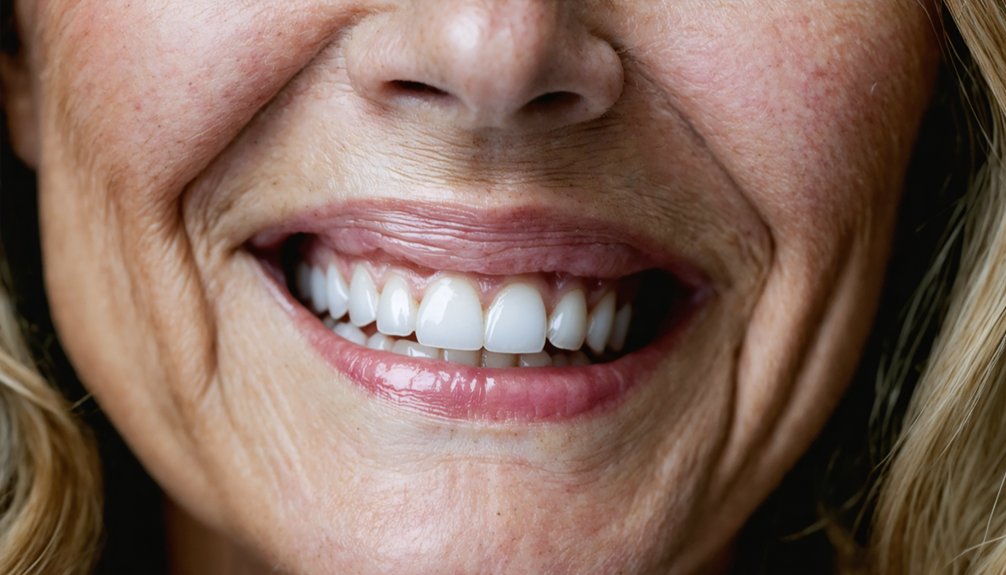
As you get older, your teeth naturally become more difficult to whiten due to two interconnected changes: enamel gradually wears thinner, and the underlying dentin—which is naturally more yellow—shows through more visibly.
Thinner tooth enamel means bleaching agents penetrate more quickly but have less structural whiteness to reveal. Increased dentin visibility creates an intrinsic discoloration that surface-level treatments can’t fully correct.
Thinner enamel and deeper dentin mean whitening treatments can only do so much.
Peroxide-based bleaches can still lighten your teeth a few shades, but results tend to be more modest than what younger teeth achieve. Surface stains from coffee, tea, or tobacco respond better to whitening than age-related intrinsic discoloration does.
Understanding this distinction helps you set realistic expectations and choose treatments that align with what your teeth can actually achieve.
How Much Whiter Can Aging Teeth Actually Get?
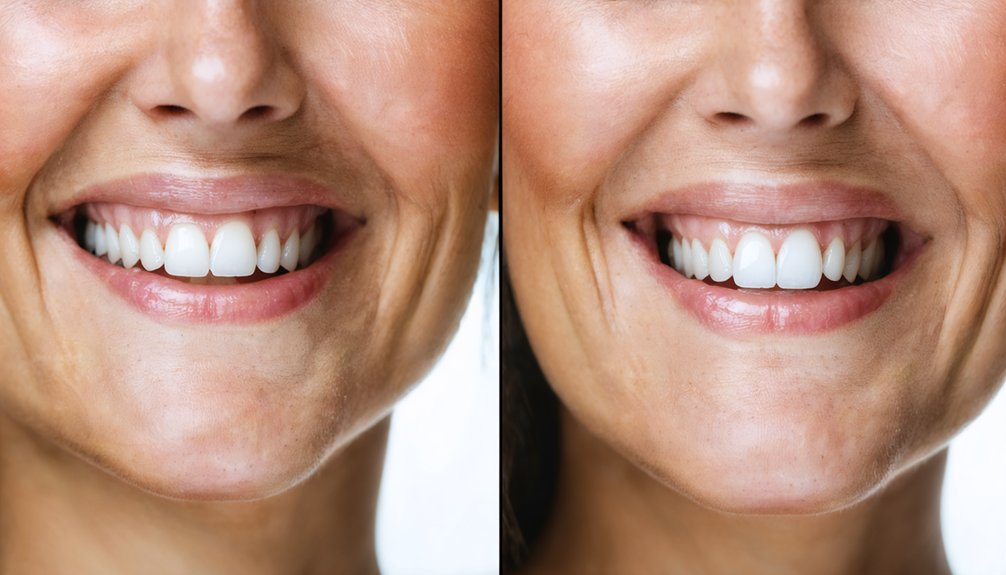
If you’re hoping for dramatic results, you’ll likely find that aging teeth respond more modestly to whitening than younger teeth do.
Enamel thins over time, allowing more of the yellowish dentin beneath to show through, and peroxide-based bleaches can’t reverse that structural change.
You’ll see better results if your discoloration comes from surface stains caused by coffee or tea rather than from the intrinsic changes that come with age and wear.
Realistic Whitening Expectations
Though whitening can still deliver noticeable results for older teeth, you should expect more modest improvements than younger patients typically achieve. Thinning enamel allows underlying dentin to show through more prominently, which limits how light your teeth can appear regardless of treatment strength or whitening gel consistency.
Surface stains from coffee, tea, or wine respond better to bleaching than intrinsic discoloration caused by decades of enamel wear. Toothpaste ingredients like low-abrasion baking soda compounds can address superficial buildup, but they won’t reverse structural aging changes.
Peroxide-based treatments typically produce a few shades of improvement rather than a dramatic transformation.
Setting accurate expectations helps you choose the right treatment intensity and avoid overuse, which can damage already vulnerable enamel further.
Surface Stains Vs. Intrinsic
Understanding the difference between surface and intrinsic staining helps you predict how much whitening treatment can realistically achieve.
Surface stains from coffee, tea, or tobacco respond well to peroxide-based bleaching and professional cleaning. You can typically expect visible improvement with consistent treatment.
Intrinsic discoloration is harder to correct. As enamel erosion progresses with age, dentin exposure increases, revealing the naturally yellow layer beneath. Bleaching agents can penetrate enamel to lighten dentin somewhat, but results are more limited and take longer to achieve. No over-the-counter product fully reverses this structural change.
Knowing which type of staining you’re dealing with lets you set accurate goals. A dental exam can confirm whether your discoloration is surface-based, intrinsic, or a combination of both.
The Safest At-Home Whitening Products for Older Teeth
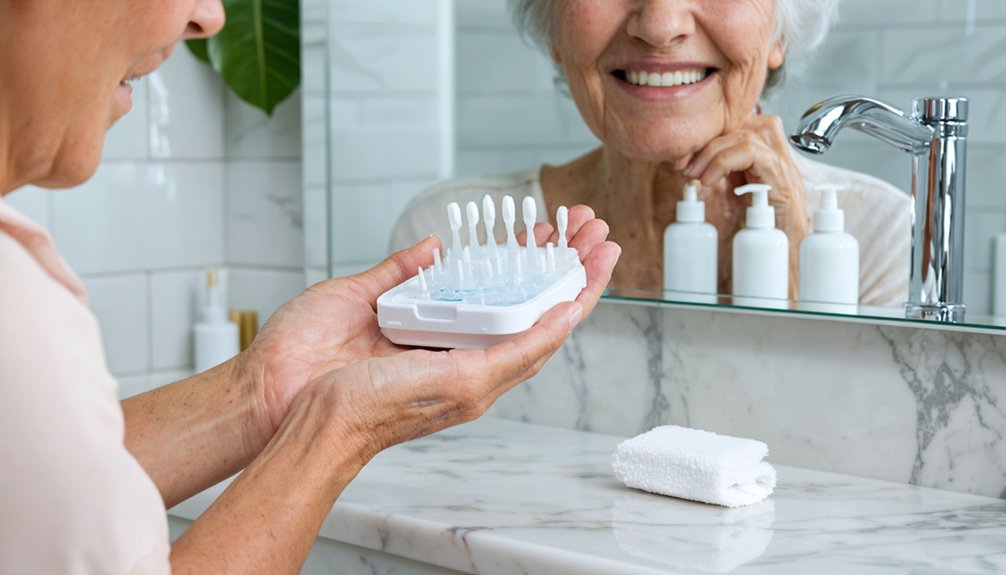
When choosing at-home whitening products for aging teeth, you should look for lower-strength peroxide formulas, such as 10% carbamide peroxide, which reduce sensitivity risk while still providing modest results.
You can further protect your enamel by selecting products that carry the ADA Seal of Acceptance, confirming they’ve met established safety and efficacy standards.
To minimize irritation during application, you should limit session times to 10 to 30 minutes and use a desensitizing toothpaste containing potassium nitrate or stannous fluoride before and after each treatment.
Gentle Peroxide Formula Options
Because aging enamel is more vulnerable to irritation and sensitivity, choosing a gentler peroxide formula is one of the most important decisions you’ll make when whitening at home.
Dentists commonly recommend 10% carbamide peroxide for overnight tray use, as it releases hydrogen peroxide slowly, reducing tissue exposure.
Lower-concentration hydrogen peroxide strips worn 30 to 60 minutes daily over two to three weeks offer comparable control.
Unlike unverified natural remedies, clinically tested peroxide formulas deliver measurable results without compromising enamel integrity.
Pairing your whitening regimen with a fluoride toothpaste supports enamel remineralization, helping offset mineral loss that bleaching can accelerate.
Always select products carrying the ADA Seal of Acceptance.
Controlled peroxide exposure, combined with evidence-based supporting care, gives you the safest path to meaningful whitening results.
ADA-Approved Product Selection
Selecting an ADA-accepted product is one of the most reliable steps you can take to protect aging teeth during at-home whitening. The ADA Seal of Acceptance confirms that a product meets established safety and efficacy standards, reducing your risk of choosing a formula that damages tooth enamel or disrupts oral health.
When browsing whitening kits, strips, or toothpastes, look for that seal before purchasing. It indicates independent verification rather than marketing claims alone.
For older teeth specifically, pair ADA-accepted products with lower-peroxide formulas to minimize sensitivity and enamel exposure. Baking soda-based toothpastes carrying the seal offer a gentler abrasive option for daily use.
Prioritizing verified products gives you greater control over the whitening process while supporting long-term enamel integrity.
Sensitivity-Reducing Application Tips
Reducing sensitivity during at-home whitening starts with choosing the right peroxide concentration. For aging teeth with increased dentin transparency and thinner tooth enamel, opt for 10% carbamide peroxide or a lower-strength hydrogen peroxide formula. These concentrations minimize irritation while still delivering measurable results.
Limit each whitening session to 10 to 30 minutes rather than extended overnight use, which diminishes overexposure risk. Apply desensitizing toothpaste containing potassium nitrate or stannous fluoride both before and after each session to manage discomfort proactively.
If you’re using trays, guarantee they fit properly to prevent gel from contacting your gums. Space at-home applications 4 to 6 months apart.
Consistent, controlled use protects compromised enamel while still achieving gradual, sustainable improvement.
Which Peroxide Strength Is Safe for Older Teeth?
When choosing a peroxide-based whitener for aging teeth, lower concentrations are the safer starting point. Reduced enamel thickness and increased tooth translucency make older teeth more reactive to higher peroxide levels, raising your sensitivity risk.
Start with 10% carbamide peroxide for overnight tray use, or select a lower-strength hydrogen peroxide strip worn 30 minutes daily over two to three weeks. These concentrations produce measurable lightening while limiting irritation to already-compromised enamel.
Avoid products exceeding 16% carbamide peroxide without professional guidance. Look for the ADA Seal of Acceptance before purchasing any over-the-counter bleaching kit.
If sensitivity persists even at lower strengths, consult your dentist, who can recommend custom-fitted trays with precisely controlled concentrations suited to your enamel’s current condition.
How to Reduce Sensitivity When Whitening Older Teeth
Choosing the right peroxide strength limits your exposure risk, but sensitivity can still develop even at lower concentrations. To manage tooth sensitivity, apply a desensitizing toothpaste containing potassium nitrate or stannous fluoride both before and after each whitening session. These compounds help block dentinal tubules and reduce nerve irritation.
Limit each whitening session to 10 to 30 minutes rather than extended wear, which reduces overexposure on already vulnerable enamel. If enamel erosion is present, your dentist may advise postponing whitening until protective measures are in place.
Use fluoride toothpaste daily to support enamel remineralization during and after your whitening cycle. If sensitivity persists beyond 48 hours, discontinue use and consult your dentist before continuing treatment.
When Professional Whitening Makes More Sense for Aging Teeth
Some whitening challenges respond better to professional treatment than to anything available over the counter. Don’t let teeth whitening myths convince you that at-home kits always match clinical results.
Some whitening challenges simply outpace what any over-the-counter kit can realistically deliver.
For aging teeth, professional care often proves among the most cost-effective methods when results matter most.
Consider professional whitening when:
- Severe intrinsic staining doesn’t respond to peroxide strips or trays.
- Existing restorations, such as crowns or veneers, require color-matching that only a dentist can assess accurately.
- High sensitivity makes standard at-home concentrations uncomfortable or impractical.
- Thin or compromised enamel requires controlled peroxide application to avoid further damage.
Your dentist can also use custom-fitted trays and precisely monitor exposure time, giving you measurable outcomes while reducing unnecessary risk to already vulnerable enamel.
How Long Do Whitening Results Last on Aging Teeth?
Whitening results on aging teeth typically last a shorter time than on younger teeth, often requiring touch-ups within a few months due to continued staining and enamel changes.
Your habits, including coffee, tea, tobacco, and red wine consumption, directly affect how quickly discoloration returns.
Most dentists recommend spacing at-home touch-up applications by four to six months and professional retreatments by six to twelve months to avoid overexposure.
Typical Whitening Duration
Results from teeth whitening don’t last forever, and aging teeth tend to lose brightness more quickly than younger ones. Managing expectations helps you maintain control over your whitening routine.
Typical duration ranges by method:
- In-office treatments – Results last roughly 6–12 months before touch-ups are needed.
- At-home tray systems – Expect 3–6 months of maintained brightness with consistent daily habits.
- Whitening strips – Results typically fade within 2–4 months.
- Whitening toothpastes – Surface stain removal is temporary and requires continuous use.
Supporting tooth remineralization through fluoride toothpaste extends results and strengthens aging enamel.
While dental sealants aren’t a whitening tool, they protect enamel surfaces from stain-causing erosion.
Rinsing after staining beverages and scheduling cleanings every 6–12 months slows brightness loss noticeably.
Factors Affecting Result Longevity
How long your whitening results last depends on several overlapping factors, most of which become harder to control as teeth age. Enamel erosion accelerates stain reabsorption because thinner enamel becomes more porous over time.
Your dietary habits—particularly coffee, tea, red wine, and tobacco—directly shorten result longevity. Saliva production also matters; dry mouth reduces natural rinsing, allowing pigments to settle faster.
Touch-up treatments become necessary more frequently with aging teeth, with at-home applications typically spaced every four to six months. If you have dental veneer considerations in your treatment plan, note that veneers don’t respond to bleaching, which can create visible color mismatches over time.
Controlling staining habits and maintaining consistent oral hygiene give you the most reliable influence over how long results hold.
Touch-Up Treatment Timing
Knowing what shortens your results points directly to how often you’ll need to refresh them. Aging teeth restain faster, so spacing touch-ups strategically protects both your results and your enamel preservation goals.
Ignore teeth whitening myths suggesting you can whiten indefinitely without consequence—overuse degrades enamel.
Follow these evidence-based timing guidelines:
- At-home treatments: Repeat every 4 to 6 months to avoid peroxide overexposure.
- Professional in-office treatments: Space sessions 6 to 12 months apart for controlled, safe reapplication.
- Daily staining habits: If you consume coffee, tea, or red wine regularly, schedule touch-ups closer to the shorter interval.
- Sensitivity monitoring: Increase time between sessions if discomfort develops, signaling enamel stress.
Consistent scheduling—not reactive whitening—keeps your results predictable and your enamel intact.
Foods and Drinks That Restain Aging Teeth Fastest
Because aging enamel is thinner and more porous, certain foods and drinks stain teeth faster than they’d in younger mouths. Coffee, tea, red wine, and dark sodas are among the highest-risk sources of chromogen compounds that bind readily to exposed dentin.
Aging enamel stains faster—coffee, tea, and red wine bind to exposed dentin more aggressively than in younger mouths.
Tomato-based sauces, berries, soy sauce, and balsamic vinegar carry similar staining potential.
Your dental hygiene routine directly influences how quickly discoloration returns after whitening. Rinsing with water immediately after consuming these items reduces chromogen contact time and supports enamel protection by minimizing acid exposure.
Using a straw for dark beverages limits surface contact.
Reducing the frequency of high-stain foods—rather than eliminating them entirely—gives you measurable control over how long your whitening results last.
How Often Should You Whiten Aging Teeth?
Whitening frequency matters more as you age because thinner enamel and greater sensitivity leave less margin for overuse. Space treatments carefully to protect tooth enamel from cumulative damage.
Follow these evidence-based intervals:
- Professional in-office whitening: No more than every 6 to 12 months per treatment cycle.
- At-home tray whitening: Limit full courses to every 4 to 6 months using 10% carbamide peroxide.
- Whitening strips: Restrict use to one 2-to-3-week cycle, then pause before repeating.
- Touch-up sessions: Brief, infrequent applications between full cycles help manage restaining without overexposing enamel.
If you have dental veneers, avoid bleaching agents on those surfaces entirely, as peroxide won’t lighten them and may damage surrounding natural tooth structure.
The Right Whitening Routine for Aging Teeth
Building an effective whitening routine for aging teeth starts with a dental exam to rule out sensitivity issues, worn enamel, or restorations that could complicate treatment.
Professional teeth polishing before dental bleaching removes surface buildup that would otherwise block peroxide penetration and reduce results.
For at-home use, choose a 10% carbamide peroxide tray system worn nightly, pairing it with desensitizing toothpaste containing potassium nitrate before and after each session.
Limit application sessions to 10–30 minutes if sensitivity develops.
Use fluoride toothpaste daily to support enamel integrity throughout the process.
Space at-home bleaching cycles every 4–6 months to prevent overexposure.
Between cycles, brush twice daily, floss consistently, and rinse after consuming staining beverages to maintain your results longer.
Frequently Asked Questions
Can Whitening Treatments Affect Dental Implants or Crowns on Aging Teeth?
Whitening treatments won’t alter your implants or crowns. You’ll notice color mismatches since peroxide only affects natural enamel. Prioritize dental implant maintenance and crown color matching consultations with your dentist before bleaching to guarantee uniform, controlled results.
Does Menopause or Hormonal Changes Affect How Aging Teeth Respond to Whitening?
Like a shifting tide, hormonal fluctuations during menopause can heighten enamel sensitivity, making your teeth more reactive to whitening agents. You’ll want to choose lower-concentration peroxide formulas and consult your dentist before beginning any whitening treatment.
Are There Any Medications That Interfere With Whitening Treatments in Older Adults?
Yes, certain medications can reduce your whitening efficacy. Antihistamines, antihypertensives, and antidepressants cause dry mouth, which worsens staining. Medication interactions with peroxide aren’t fully studied, so you should consult your dentist before starting any whitening treatment.
Can Gum Recession in Older Adults Affect Whitening Treatment Safety or Results?
Like exposed roots inviting irritation, gum recession raises your gingival health risks during whitening. You’ll experience heightened enamel sensitivity, so you should consult your dentist before treatment to select lower-concentration peroxide formulas that protect vulnerable root surfaces effectively.
Is Teeth Whitening Covered by Dental Insurance for Older Adults?
Dental insurance typically doesn’t cover whitening coverage, as it’s considered cosmetic. You’ll likely pay out-of-pocket, so compare product costs carefully. Choosing ADA-approved, lower-strength peroxide options helps you manage expenses while protecting aging enamel effectively.
References
- https://www.aarp.org/health/conditions-treatments/teeth-whitening/
- https://sunlakesdentistry.com/can-senior-teeth-be-whitened/
- https://tarpondental.com/teeth-whitening-for-seniors-tips-and-tricks-for-optimal-dental-care/
- https://beamhealthclinics.co.uk/how-to-whiten-teeth-that-have-yellowed-with-age/
- https://mtviewfamilydentaltn.com/teeth-whitening-for-older-adults-special-considerations/
- https://www.cdhp.org/is-it-harder-to-whiten-teeth-as-you-age/
- https://www.health.harvard.edu/diseases-and-conditions/the-aging-mouth-and-how-to-keep-it-younger
- https://clubwhitesmile.com/budget-friendly-whitening-tips-for-aging-teeth/
- https://scienceinsights.org/how-to-whiten-teeth-over-60-what-actually-works/
- https://health.clevelandclinic.org/how-to-whiten-teeth